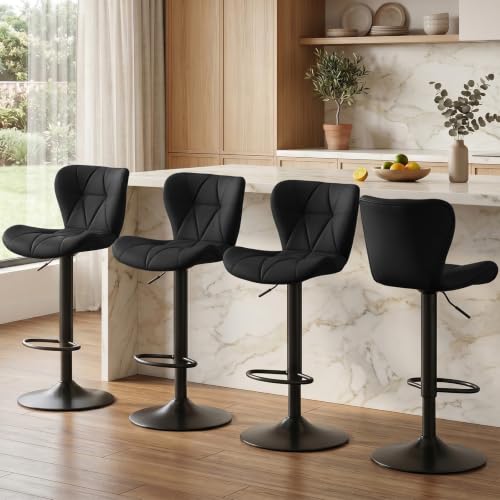
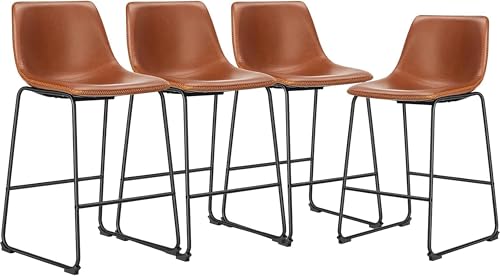
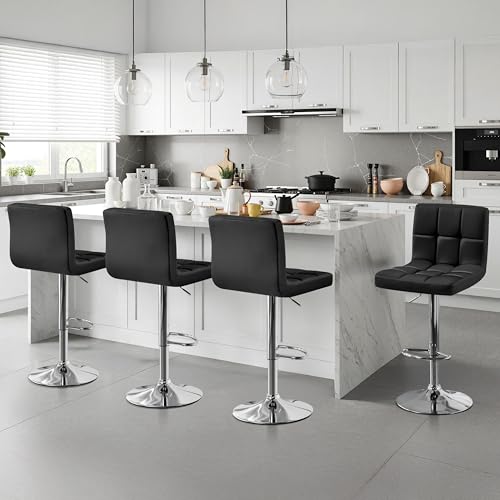
Barstools are no longer an afterthought in kitchen and dining design. They have become a core part of how people use their homes — a place for quick breakfasts, a spot for guests to chat while dinner is prepared, and a casual alternative to the formal dining table. When you are shopping for a set of four, the goal is to find stools that are comfortable, durable, and proportionate to the space they will occupy.
This guide is written for people who already know they want barstools and are now deciding on the specifics. You will learn how to match stool height to your counter, which materials hold up best in busy households, how to arrange four stools comfortably, and which features are worth prioritizing. By the end, you should have a clear picture of what to look for and how to narrow down your options.
Why a Set of Four Barstools Makes Sense
Buying four barstools together is more than a convenience — it is a design decision that pays off in both aesthetics and function. A matching set creates visual rhythm along the counter, which is especially important in open-concept kitchens where the island is visible from the living room. Mismatched stools can look intentional in the right hands, but a coordinated set is the more reliable choice for a clean, finished appearance.
From a practical standpoint, a set of four covers the most common seating needs. It seats a family of four for casual meals, provides enough perches for a small gathering, and fills a standard island without overcrowding it. Sets are also typically designed with consistent seat height, footrest placement, and finish, which removes the risk of subtle mismatches that become more noticeable over time.
Step 1: Match Stool Height to Your Counter or Bar
Height is the single most important specification when buying barstools. A stool that is too tall forces people to hunch; one that is too short leaves legs dangling and makes the counter uncomfortable to use. The table below shows the standard pairings between surface height and seat height.
| Surface Type | Typical Surface Height | Recommended Seat Height | Best For |
|---|---|---|---|
| Standard dining table | 28–30 in | Standard chair height (17–19 in) | Formal and everyday dining |
| Kitchen counter / island | 34–36 in | 24–26 in (counter height) | Breakfast bars, prep islands |
| Bar or raised counter | 40–42 in | 28–30 in (bar height) | Home bars, pub-style counters |
| Extra-tall outdoor bar | 44–46 in | 32–34 in | Outdoor entertaining bars |
A simple rule of thumb is to leave about 10 to 12 inches of clearance between the top of the seat and the underside of the counter. This gives enough room for legs to move comfortably without the stool feeling disconnected from the surface. If you are shopping for a specific height, our guides to 24-inch counter stools and 30-inch bar stools break down the options in detail.
It is also worth checking whether your counter has an overhang. An overhang of at least 12 inches allows knees to fit under the counter, which makes taller stools far more comfortable. Without an overhang, bar height stools can feel cramped even when the height is technically correct.
Step 2: Choose the Right Style for Your Space
Style affects both how the stools look and how they function. The four main categories are backless, low-back, full-back, and swivel. Each has trade-offs worth understanding before you commit to a set.
Backless Barstools
Backless stools are the most space-efficient option. They tuck neatly under the counter, keep sightlines open, and work well in small kitchens or where the island doubles as a prep surface. The downside is comfort: without a back, they are best suited to short sits rather than long conversations. They are a strong choice for a compact breakfast bar or a secondary seating area.
Low-Back and Full-Back Barstools
Stools with backs offer noticeably better support, especially for people who like to linger over coffee or use the island as a workspace. Low-back designs provide gentle lumbar support without blocking the view, while full-back stools feel closer to a dining chair. If your household uses the counter daily, a set with backs is usually the more comfortable long-term choice. Our overview of kitchen bar stools with backs covers the key design variations.
Swivel Barstools
Swivel stools make it easier to turn toward the kitchen or the living room without moving the entire stool. They are particularly useful in open-plan spaces where the island faces multiple directions. The mechanism quality varies by tier: entry-level swivels can feel loose over time, while mid-range and premium models typically offer smoother, more durable rotation. For more on this style, see our guide to swivel bar stools with backs.
Step 3: Pick Materials That Suit Your Household
Barstools take more abuse than dining chairs because they are used casually, often by people in motion. The material you choose should reflect how the stools will be used and how much maintenance you are willing to do.
| Material | Durability | Maintenance | Best Suited For |
|---|---|---|---|
| Solid wood | High — ages well with care | Occasional polish; protect from moisture | Warm, traditional, farmhouse kitchens |
| Metal (steel, aluminum) | High — reinforced frames last for years | Wipe clean; check for rust-proof finish | Industrial, modern, and outdoor-adjacent spaces |
| Upholstered seat | Moderate — depends on fabric | Spot clean; choose stain-resistant fabric | Comfort-focused islands and formal bars |
| Rattan / wicker | Moderate — best in covered areas | Dust regularly; avoid prolonged damp | Coastal, bohemian, and sunroom settings |
| Wood and metal combo | High — combines stability and warmth | Low — wipe frames, polish wood | Most transitional and modern interiors |
For households with young children or pets, easy-to-clean surfaces are a practical priority. Metal frames with wipeable seats tend to hold up well. If you prefer the warmth of wood, look for sealed finishes that resist spills and a solid build with reinforced joints. Our guide to wood and metal swivel bar stools explores how these two materials work together.
Step 4: Understand Quality Tiers
Barstools are available across a wide range of quality tiers, and understanding what each tier typically delivers helps you set realistic expectations. Rather than focusing on numbers, think in terms of construction, materials, and finish.
| Tier | Typical Characteristics | Best For |
|---|---|---|
| Entry-level | Simpler joinery, lighter frames, basic finishes; adequate for occasional use | Guest seating, short-term setups, light daily use |
| Mid-range | Solid construction, smoother swivel mechanisms, better upholstery, consistent finishes | Everyday family use, main kitchen island |
| Premium | High-grade steel or hardwood, reinforced joints, refined detailing, long service life | High-traffic homes, design-focused kitchens |
| Luxury | Designer craftsmanship, premium leather or performance fabric, exceptional finish quality | Statement islands, formal entertaining spaces |
A mid-range set usually offers the best balance for most households: it is well-specified for the category, holds up to daily use, and avoids the compromises that show up in entry-level frames after a year or two. If the stools will be used every day, investing in the next tier up is often worthwhile in the long run.
Step 5: Measure Your Space Before You Buy
Four stools need more room than people expect. Before ordering, measure the length of your counter or bar and plan the spacing.
- Width per stool: Allow 24 to 30 inches per stool along the counter. Wider seats and stools with arms need closer to 30 inches.
- Spacing between stools: Leave 4 to 6 inches between stools so elbows have room and the arrangement does not feel crowded.
- Knee clearance: Aim for at least 12 inches of overhang so legs can tuck under the counter comfortably.
- Walkway clearance: Keep 36 inches of clear floor space behind the stools if people need to walk past while someone is seated.
- Total length: For four stools, plan for roughly 8 to 10 feet of linear counter space.
Step 6: Prioritize Comfort and Safety Features
Comfort details are easy to overlook in photos but make a big difference in daily use. Look for the following when comparing sets:
Comfort & Safety Checklist for a Set of 4 Barstools
- Footrests positioned at a comfortable height for the seat — they reduce pressure on the legs and help people sit upright.
- Seat depth of at least 15 inches for adults, with a slight contour for support.
- Non-marking glides or protective caps on the legs to prevent floor scratches.
- Weight capacity appropriate for all household members and guests.
- Stable base — four legs or a wide pedestal — that does not wobble on tile or hardwood.
- Back height that supports the lower back without blocking sightlines.
- For swivel models, a smooth mechanism with a return feature if you want the stools to align neatly.
If children will use the stools, choose models with backs and consider whether the seat height is appropriate for your household. Tall backless stools can be less safe for younger users. Stability matters more than style in these cases, and a well-built mid-range set with a solid base is usually the safer choice.
Step 7: Coordinate With Your Kitchen and Dining Style
Barstools are visible from multiple rooms in open-plan homes, so they should relate to the surrounding design rather than compete with it. A few guidelines can help:
- Match the wood tone of your cabinets or dining table if you want a cohesive look. If your kitchen has mixed materials, choose stools that echo one of the dominant finishes.
- Use metal finishes to tie in with hardware, light fixtures, or appliances. Matte black and brushed nickel are versatile choices.
- Consider upholstery color as an opportunity to add a subtle accent. Neutral seats are safer; a muted color can add interest without dominating.
- Keep proportions in mind. A large island can handle substantial full-back stools; a small breakfast bar is better served by slim, backless designs.
If your kitchen sits next to a dining area, our guides to modern dining chairs and dining room chairs can help you coordinate the two seating zones so they feel like part of the same design story.
Common Mistakes to Avoid
Most barstool regrets come down to a handful of avoidable errors. Keep these in mind as you shop:
- Buying the wrong height. Measure your counter before ordering, and account for the overhang. Height mismatches are the most frequent return reason.
- Underestimating spacing. Four stools need real estate. If the counter is tight, a set of three will look and function better.
- Ignoring the footrest. Without a properly placed footrest, taller stools become uncomfortable within minutes.
- Choosing style over stability. A wobbly stool is a daily annoyance. Check the base and weight rating before buying.
- Overlooking maintenance. Upholstered seats in light fabrics look beautiful but require care in busy households. Choose materials that match your routine.
Counter Stools vs. Bar Stools: A Quick Comparison
The terms are often used interchangeably, but they refer to different heights. Counter stools are designed for 34–36 inch counters and typically have seat heights of 24–26 inches. Bar stools are taller, with seat heights around 28–30 inches, and are intended for 40–42 inch bars. If you are unsure which you need, measure from the floor to the top of your counter and compare it with the table earlier in this guide. Our detailed pages on counter height stools with backs and arms and 30-inch bar stools go deeper into each category.
Frequently Asked Questions
What is the difference between counter height and bar height stools?
Counter height stools typically have a seat height around 24 to 26 inches and are designed for counters that are 36 inches tall. Bar height stools usually have a seat height around 28 to 30 inches and pair with bars that are 40 to 42 inches tall. Matching the stool height to your surface is essential for comfortable seating.
Should I buy a matching set of 4 barstools or mix styles?
A matching set of four barstools creates a clean, cohesive look that works well in most kitchens and home bars. Mixing styles can add personality but requires more planning to keep the space balanced. For a first purchase or a uniform island, a matching set is usually the safer and more practical choice.
What materials are best for barstools in a busy kitchen?
Solid wood and metal frames are durable and easy to maintain. Upholstered seats add comfort but need fabric that resists stains. For high-traffic areas, look for reinforced joints, rust-proof finishes on metal, and wipeable upholstery. The best material depends on your style preference and how often the stools are used.
Do barstools with backs offer better comfort?
Yes, barstools with backs generally provide more support for longer sitting sessions, making them a good choice for kitchen islands used for casual meals. Backless stools are easier to tuck under the counter and suit tight spaces, but they offer less lumbar support. Consider how long people typically sit when choosing between the two.
How much space do I need for four barstools?
Allow roughly 24 to 30 inches of width per stool along the counter or bar, plus a few inches between stools for elbow room. For four stools, plan for at least 8 to 10 feet of linear counter space. Also leave about 12 inches of knee space beneath the counter and enough clearance behind the stools for walking.
Final Buying Checklist
Before you finalize your choice, run through this checklist to make sure the set will work in your home:
Set of 4 Barstools — Pre-Purchase Checklist
- Counter height measured and matched to the correct stool height.
- Counter length allows 24–30 inches per stool with spacing between them.
- Knee clearance and overhang confirmed for comfortable seating.
- Material chosen to suit household traffic and maintenance preferences.
- Quality tier selected based on how often the stools will be used.
- Back style chosen for comfort versus space-saving needs.
- Footrest height and seat depth checked for adult comfort.
- Finish and color coordinated with surrounding kitchen and dining elements.
- Floor protection and stability features confirmed.