


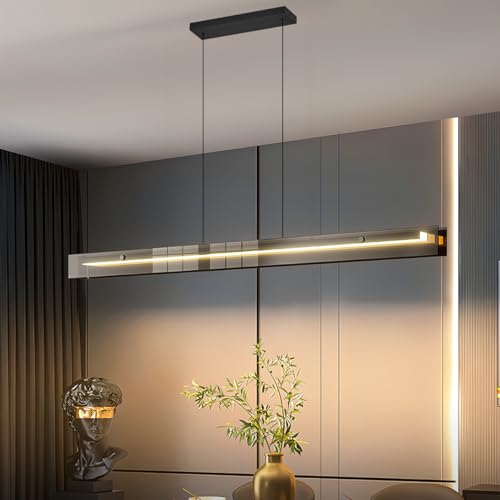

What Is a Bar Chandelier, and Where Does It Belong?
A bar chandelier is a suspended light fixture designed to hang above a bar counter, kitchen island, or peninsula. Unlike a traditional dining chandelier, which centers over a table, a bar chandelier must illuminate a linear or compact zone where people stand, sit, and socialize. That difference in geometry and function drives every choice you will make: size, shape, hanging height, and light output.
The most common locations for a bar chandelier include:
- Kitchen islands and peninsulas — the fixture becomes the focal point of the kitchen's social zone.
- Home bars and basement bars — a dedicated fixture that separates the bar from the rest of the room.
- Breakfast bars and counter-height tables — practical task lighting that still looks designed.
- Open-concept dining and bar zones — a visual divider between cooking, eating, and entertaining areas.
If your bar sits at counter height and you want seating that tucks neatly underneath, pair your lighting plan with bar stools that match the height and style of your counter. The lighting and seating should read as one composition, not two separate purchases.
Design principle: Treat the chandelier as the "ceiling jewelry" of the bar zone. It should be the brightest visual element in the upper third of the room, but it should never compete with the view into the space. In open-plan homes, a chandelier also acts as a soft boundary marker between the kitchen and the living area.
How to Size a Bar Chandelier Correctly
Sizing is the single most common mistake buyers make. A fixture that is too small disappears into the ceiling. A fixture that is too large crowds the counter and blocks sightlines. Use these practical rules to narrow your options before you commit.
Rule 1: Scale to the Counter or Island
For a linear island or bar counter, the fixture (or the combined width of a multi-light arrangement) should span roughly two-thirds to three-quarters of the counter's length. On a compact bar, a single fixture centered over the counter is usually the cleanest solution.
Rule 2: Scale to the Room
A widely used interior design formula is to add the length and width of the room in feet, then treat that number in inches as the ideal fixture diameter. For example, a 12 ft by 14 ft space suggests a fixture around 26 inches across. Treat this as a starting point and adjust for the bar's own footprint.
Rule 3: Scale to the Ceiling Height
Standard 8-foot ceilings favor compact, low-profile fixtures. Nine-foot ceilings open up options like drum shades and multi-arm pendants. Ten feet and above can handle dramatic two-tier chandeliers, linear suspensions, and larger statement pieces without feeling heavy.
| Ceiling Height | Fixture Category | Best For |
|---|---|---|
| 8 ft (standard) | Compact single-light or low-profile drum | Small kitchens, breakfast bars, condos |
| 9 ft | Mid-size drum, multi-arm, or small linear | Most kitchen islands and home bars |
| 10 ft+ | Two-tier, large linear, statement suspension | Open-concept spaces and luxury bars |
Hanging Height: The Rule That Saves You a Headache
Hanging height is where function and aesthetics meet. Too high and the light scatters; too low and guests bump their heads or lose eye contact across the bar.
- Above a bar counter: Keep the bottom of the fixture roughly 30 to 36 inches above the countertop. This clears sightlines while keeping light focused on the work surface.
- Above a dining table: Aim for 30 to 34 inches above the table surface, consistent with standard chandelier practice.
- Above a breakfast bar with stools: If people sit facing the bar, keep the bottom at least 36 inches above the floor to avoid eye-level glare.
If your bar counter is paired with taller seating such as bar height stools with backs, double-check the seated eye level. The fixture should sit comfortably above the tallest person's line of sight when they are seated.
Pro tip: Before you finalize any fixture, mock up the size with cardboard or painter's tape on the ceiling. Photograph the mock-up from where guests will stand. This five-minute step prevents the most common regret: a fixture that photographs beautifully but feels wrong in the actual room.
Types of Bar Chandeliers and Lighting Styles
The term "chandelier" covers a wide family of fixtures. Knowing the main categories helps you match the fixture to both your architecture and your light needs.
Drum and Shade Chandeliers
A drum shade softens light and creates a warm, diffused glow. These fixtures suit transitional, modern farmhouse, and coastal interiors. They are forgiving over bar counters because the shade hides the bulbs and reduces glare at eye level.
Linear and Island Chandeliers
Linear fixtures are purpose-built for long islands and bar counters. They distribute light evenly across the surface and read as an architectural element rather than a decorative add-on. Linear designs work especially well in modern, minimalist, and industrial spaces.
Multi-Arm and Candle-Style Chandeliers
Classic multi-arm fixtures add traditional elegance and a sense of occasion. They suit formal dining rooms and bars with period architecture, but they demand more ceiling clearance and more deliberate placement over a shorter bar.
Pendant Clusters and Mini Chandeliers
Three to five small pendants grouped over a counter is a flexible alternative to a single large fixture. Clusters let you control the spread of light and create rhythm across a long island. Pair them with a consistent finish for a cohesive look.
Statement and Sculptural Fixtures
If your bar is the centerpiece of an open-plan home, a sculptural fixture can carry the entire design. These pieces sit at the top-tier of the category and often combine mixed materials such as brass, glass, and wood. They reward high ceilings and generous sightlines.
For a deeper look at lighting across the whole dining space, our dining room lighting guide covers chandeliers, pendants, and ambient layering in detail.
Matching the Chandelier to Your Bar and Decor Style
The fixture should feel like it was always meant to be there. Use these pairings as a starting point, then adjust for your own materials and finishes.
| Bar Style | Recommended Fixture | Finish Direction |
|---|---|---|
| Modern minimalist | Linear suspension or slim drum | Matte black, brushed nickel, white |
| Farmhouse and rustic | Wood-and-metal drum or lantern cluster | Weathered wood, black iron, aged brass |
| Industrial loft | Cage pendants or exposed-bulb linear | Raw steel, gunmetal, copper accents |
| Luxury and glam | Crystal or sculptural tiered chandelier | Polished brass, chrome, glass |
| Coastal and light | Woven shade or rattan-inspired drum | White, natural fiber, soft brass |
Your bar seating is part of this composition. For example, rattan bar stools pair naturally with woven shades and coastal palettes, while industrial bar stools echo cage pendants and raw metal finishes. If you are still deciding on seating, browse the full bar stools with back collection to find silhouettes that complement your chosen fixture.
Light Output, Color Temperature, and Dimming
A bar chandelier must do two jobs at once: light the counter for practical tasks and set a mood for entertaining. Plan for both.
- Light output: Aim for a fixture that delivers enough brightness to read a menu or prep a drink, but not so much that it flattens the room. A dimmer is the single most useful upgrade you can add.
- Color temperature: Warm white (around 2700K to 3000K) flatters skin tones, wood finishes, and food. Avoid cool white over a bar unless the space is a dedicated task zone.
- Dimming: Choose a dimmable fixture and pair it with a compatible dimmer switch. This lets you shift from bright prep lighting to a soft evening glow without changing bulbs.
- Layering: A chandelier should not be the only light in the room. Combine it with under-cabinet lighting, recessed ceiling lights, or wall sconces so the bar zone has depth.
Practical note: If your bar counter doubles as a workspace, prioritize even, downward light with minimal glare. If it is primarily an entertaining zone, prioritize warmth and dimmability. Most homes need a blend of both, which is why dimmable fixtures with warm bulbs are the safest all-round choice.
Installation and Safety Considerations
Bar chandeliers are electrical fixtures, so installation deserves care. Keep these points in mind before you buy.
- Check ceiling support: Chandeliers can be heavy, especially crystal and multi-arm designs. Confirm that the ceiling box is rated for the fixture's weight, and use a professional electrician if you are unsure.
- Mind the clearance: Verify hanging height against your counter, seating, and traffic paths. People should be able to move around the bar without ducking.
- Plan the junction box location: The fixture should center over the bar or island. If your junction box is off-center, a swag or adjustable suspension may help, but centered is always cleaner.
- Consider sloped ceilings: Sloped or vaulted ceilings require fixtures with adjustable or slope-compatible mounting hardware.
- Follow local codes: If your bar is in a basement or near moisture, check local electrical requirements and choose fixtures rated for the location.
Care and Maintenance for Long-Term Performance
A well-chosen fixture should serve your home for years. Simple habits keep it looking and working its best.
- Dust regularly: Use a soft microfiber cloth or a vacuum brush attachment. Dust dulls the finish and reduces light output.
- Clean glass and crystal carefully: Use a mild glass cleaner on a soft cloth, and avoid spraying directly onto electrical components.
- Inspect hardware: Check suspension chains, rods, and mounting screws periodically, especially in high-traffic bar areas.
- Replace bulbs in sets: When one bulb fails, replace the whole set to keep color and brightness consistent.
Our care and maintenance guides cover additional routines for the materials commonly used in chandeliers, from metal hardware to glass shades.
Common Bar Chandelier Mistakes to Avoid
- Buying before measuring. Always measure the counter, ceiling height, and sightlines first.
- Choosing style before function. A beautiful fixture that throws glare into seated guests' eyes will be dimmed or ignored.
- Ignoring the dimmer. Without dimming, a bar chandelier is either too bright or too dim for half your evenings.
- Overcrowding the ceiling. In open-plan homes, avoid stacking a chandelier directly beside another large fixture. Give each zone its own light story.
- Mismatching heights. If you cluster pendants or pair a chandelier with nearby fixtures, keep the bottoms aligned unless the design intentionally steps.
Frequently Asked Questions About Bar Chandeliers
How high should a bar chandelier hang above a counter?
A good starting point is 30 to 36 inches above the countertop. If guests sit facing the bar, keep the bottom of the fixture at least 36 inches above the floor to avoid glare at eye level.
How large should a bar chandelier be?
For a linear island, the fixture or cluster should span roughly two-thirds to three-quarters of the counter length. As a room-level rule, add the room's length and width in feet and treat that number in inches as a target diameter.
Can I use a dining chandelier over a kitchen island?
Yes, if the size and hanging height are appropriate. Dining chandeliers work well over islands when they are scaled to the counter and hung high enough to clear sightlines. Linear and drum styles are often the most practical choices.
How many pendants should I use over a bar?
Three small pendants suit most compact bars, while five work well over longer islands. Spacing should feel even and rhythmically consistent, with the group centered over the counter.
What color temperature is best for a bar chandelier?
Warm white, around 2700K to 3000K, is the most flattering choice for wood finishes, food, and skin tones. Pair it with a dimmer so you can soften the light in the evening.
Do bar chandeliers need a dimmer?
A dimmer is strongly recommended. It lets one fixture serve both practical tasks and relaxed evening entertaining without changing bulbs or adding extra fixtures.
Final Checklist Before You Buy
- Measure the counter length, ceiling height, and clearance to seating.
- Confirm the fixture size spans roughly two-thirds to three-quarters of the counter.
- Verify the hanging height clears sightlines and traffic paths.
- Choose a finish and style that matches your bar materials and seating.
- Confirm the fixture is dimmable and plan a compatible dimmer.
- Check ceiling support and electrical requirements, and hire a professional if needed.
- Plan complementary lighting layers for depth and balance.
When you are ready to complete the rest of your bar zone, our guides to bar furniture and bar and stool pairings help you bring the whole space together.