
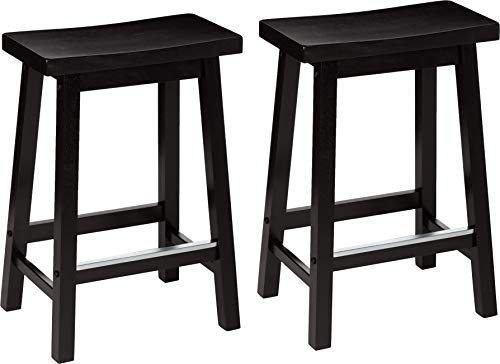


What Defines a Black Wooden Bar Stool?
Black wooden bar stools are counter-height or bar-height seats built primarily from wood and finished in black — either through a painted solid-color coating, a black stain that lets grain show through, or a deeply ebonized treatment. The wood construction is what sets them apart from metal or upholstered stools: they feel warmer underfoot, dampen noise better in an open kitchen, and accept repainting or refinishing far more easily than tubular steel frames.
Three construction approaches dominate the market, and understanding them helps you interpret quality before you ever sit down:
- Solid hardwood construction — typically rubberwood, beech, oak, or ash. These frames hold screws and joinery well and are the most repairable option over the long term.
- Engineered wood with solid wood legs — common in mid-tier models. The seat frame may be plywood or MDF while legs and stretchers are solid. A sensible compromise when the design matters more than heirloom longevity.
- Bentwood and steam-formed frames — the classic café and bistro approach. Curved backrests and rounded seats come from steamed, shaped wood. These models often feel lighter and more elegant, though they generally tolerate less abuse than thick-section frames.
If your space leans industrial or you want a different visual weight, it is worth comparing these against black bar seats in mixed materials or reviewing how they sit relative to black swivel bar stools when you need rotation at a peninsula.
Seat Height: The Single Most Important Measurement
More bar stool purchases go wrong over height than any other factor. The rule is simple: you want roughly 9 to 12 inches of clearance between the top of the seat and the underside of your counter or table. Too little and your knees hit the counter; too much and the seat becomes a perch rather than a chair.
| Stool Type | Typical Seat Height | Pairs With | Best For |
|---|---|---|---|
| Counter-height stool | 24–26 inches | 36-inch countertops | Kitchen islands, breakfast bars |
| Bar-height stool | 28–30 inches | 40–42-inch bars | Home bars, raised peninsula |
| Extra-tall stool | 32 inches and above | 44-inch-plus bars | Commercial-grade or custom bars |
| Adjustable stool | Varies by mechanism | Multiple surfaces | Rentals, multi-use spaces |
Measure from the floor to the top of your counter or bar surface — not to the underside of the overhang. Also confirm your overhang depth: you need at least 12 inches of clear knee space, and 15 inches is more comfortable for full meals. If your island has a shallow overhang, a backless black countertop stool design may slide under more cleanly than one with a tall back.
Black Wood Finishes and What They Hide
Not all black finishes are equal, and the difference matters in a high-traffic kitchen. Here is how the main finish families behave:
Painted Black
A pigment-rich paint film sitting on the wood surface. Painted finishes give you the truest, most uniform black and are the easiest to touch up with a matching brush-on product. The trade-off is that chips at the footrest and seat edges reveal the lighter wood beneath, so painted stools benefit from periodic inspection. A well-applied paint film over a sealed primer is still a durable choice and remains the most popular approach for black wood bar stools aimed at family kitchens.
Black-Stained Wood
Stain penetrates the wood fibers rather than sitting on top, so the grain remains visible and light scratches blend in more forgivingly than they do on paint. Deep-black stains on open-grain species like oak or ash read as sophisticated rather than flat. Stained surfaces usually need a clear topcoat — look for a catalyzed or polyurethane finish described as water-resistant, since kitchen islands see spills.
Ebonized Wood
A traditional treatment using iron-oxide reactions to darken tannin-rich woods to near-black. Ebonized pieces are typically found in premium and luxury tiers and often carry a hand-finished character that paint cannot replicate. Expect visible grain, subtle tonal variation, and a finish that ages rather than degrades.
Durability note: Whichever finish you choose, check that the footrest is either metal-capped or positioned so shoes contact a reinforced rail. The footrest is where black finishes wear first — a wrap-around steel rail or a replaceable wooden stretcher extends the finish life considerably. Models described as having a heavy-duty or reinforced footrest are generally a wiser long-term investment for busy households.
Comfort Features That Actually Matter
Bar stools are often bought on looks and regretted on comfort. These are the details worth checking before you commit:
- Seat depth and shape. A saddle-contoured or slightly scooped seat distributes weight far better than a flat plank. For extended sitting — breakfast, homework, laptops — look for at least 15 inches of usable seat depth.
- Backrest height. Low-back designs (6–10 inches) support the lumbar area without blocking sightlines across an open kitchen. Full-back versions suit formal bars but visually shrink small spaces.
- Footrest height. The footrest should let your feet rest with knees at roughly 90 degrees. Fixed footrests are sturdier; adjustable ones add flexibility but more moving parts.
- Swivel or fixed. Fixed seats are simpler and more stable. Swivel seats make it easier to get in and out at a crowded island but need a quality bearing plate to avoid wobble over time.
- Weight and stability. A stool that is too light slides when you push back. Solid wood construction with cross-stretchers or a splayed-leg footprint resists tipping noticeably better.
If your household includes children or elderly guests, prioritize a full footrest, a modest backrest, and a footprint wide enough to feel planted. Our guide to black bar seating covers additional safety considerations for mixed-age households.
Matching Black Wooden Stools to Your Space
Black is famously accommodating, but the surrounding palette still shapes which black works best.
Warm Neutral Kitchens
Cream cabinets, oak floors, and brass hardware call for a softer black — a stain that reveals grain rather than a high-gloss paint. The combination reads tailored without feeling severe. Pair with black wooden chairs elsewhere in the room to repeat the tone.
Modern and Industrial Spaces
Concrete, steel, and matte black fixtures reward a crisper black finish, often with visible joinery or a squared-off silhouette. Here, a slimmer profile stool keeps the kitchen from feeling furniture-heavy.
Farmhouse and Transitional Rooms
Distressed or rubbed-through black finishes — where edges show a hint of warm wood — bridge rustic and polished styles. Windsor-style backs and turned legs fit naturally; compare these with black Windsor chairs if you want the dining table to echo the island seating.
Small Apartments and Galley Kitchens
In tight footprints, backless or low-back black stools preserve sightlines and make the counter feel less walled-in. A visually lighter leg profile — tapered rather than blocky — helps too. If your kitchen seating doubles as dining seating, consider whether a black kitchen table setup would serve better than a pure bar arrangement.
Comparing Quality Tiers
Rather than shopping by numbers, it helps to understand what separates each tier of black wooden bar stool on the market. Use this framework when comparing listings:
- Entry-level tier: Engineered wood frames with solid legs, painted finish, basic assembly hardware. Perfectly serviceable for light use and secondary seating. Expect to re-tighten fittings periodically.
- Mid-range tier: Solid hardwood frames, more refined joinery (mortise-and-tenon or doweled), water-resistant topcoat, and contoured seats. This is where comfort and finish durability jump noticeably.
- Premium tier: Select hardwood species, hand-applied stains or ebonized finishes, precision joinery, and metal-capped footrests. These are long-term investments built to handle daily family use.
- Luxury and commercial-grade tier: Bench-made or contract-grade construction, denser hardwoods, reinforced corner blocks, and finishes rated for hospitality environments. Appropriate for heavy daily rotation or design-led spaces.
A useful rule: the mid-range tier usually delivers the best balance of comfort, finish durability, and visual refinement for a typical home kitchen. The premium tier makes sense when the stools will be used for daily meals rather than occasional perching. For a broader view of how seating ties into the whole room, see our black dining room furniture overview.
Care and Long-Term Upkeep
Black wooden bar stools are low-maintenance, but a few habits keep them looking sharp:
- Wipe spills promptly with a damp cloth — standing water is the main enemy of any wood finish.
- Avoid abrasive cleaners and scouring pads; a mild dish-soap solution is sufficient.
- Re-tighten leg bolts and stretcher screws every few months, especially on stools used daily.
- Touch up paint chips at the footrest early, before moisture reaches bare wood.
- Use felt pads under legs on hard flooring to prevent both scratches and finish wear from vibration.
- Keep stools out of direct, prolonged sunlight to slow finish fading and wood movement.
If you are refurbishing an older set, a light sanding followed by a fresh coat of black paint or stain can restore a tired pair to like-new condition — one of the practical advantages wooden stools hold over metal or fully upholstered designs.
Frequently Asked Questions
What height bar stool do I need for a 36-inch kitchen island?
Choose a counter-height stool with a seat between 24 and 26 inches. That gives you the ideal 10 to 12 inches of clearance between seat top and counter surface.
Are black wooden bar stools suitable for outdoor use?
Standard indoor models are not. Wood expands and contracts with humidity, and many black finishes are not UV-stable. If you need outdoor seating, look specifically for weather-resistant coating and marine-grade or teak construction.
How many stools fit at a kitchen island?
Allow roughly 24 inches of counter width per stool for comfortable seating. A 6-foot island comfortably seats two to three; a 8-foot island seats three to four.
Should I choose backless or backed black wooden bar stools?
Backless designs tuck under shallow overhangs and keep sightlines open, making them ideal for small kitchens. Backed stools are more comfortable for longer sitting and suit formal bars, but require deeper overhangs and more visual space.
Do black wooden bar stools scratch easily?
Painted finishes can chip at high-contact points like the footrest and seat edges; stained and ebonized finishes tend to hide light scratches better. Regular tightening, felt pads, and prompt touch-ups keep wear minimal.
Can I mix black wooden bar stools with other chair styles?
Yes — black is a unifying neutral. Repeating black in the dining chairs or a black-framed light fixture ties the room together. See our guide to black dining room chairs for pairing ideas.