
Counter Height Bar Stools with Back: The Complete Buying Guide
Everything you need to know before choosing backrest counter stools for your kitchen island, breakfast bar, or open-plan counter. Compare seat heights, back designs, materials, and comfort features with confidence.
Explore Recommended OptionsQuick summary: Counter height bar stools with back are designed to pair with 36-inch countertops and typically measure 24 to 26 inches at the seat. A supportive backrest, a well-placed footrest, and correct spacing are the three factors that separate a stool you tolerate from one you genuinely enjoy every day. This guide walks you through each decision so you can shop with clarity.
What Makes a Stool "Counter Height"?
Bar stools are not one-size-fits-all. The single most important measurement is the seat height, because it determines whether you sit comfortably at your counter or end up with knees pressed against the overhang. Counter height stools are built for standard kitchen counters that rise about 36 inches from the floor, placing the seat around 24 to 26 inches high.
This is different from bar height stools, which are taller and pair with raised pub or bar surfaces around 40 to 42 inches. If you are still sorting out which category your kitchen island falls into, this comparison of counter height versus bar height will help you measure once and choose correctly.
The "with back" part of the equation matters just as much. A backrest transforms a perch into a proper seat. It supports your posture during long breakfasts, homework sessions, and dinner parties, and it signals comfort to guests who may otherwise feel like they are balancing on a ledge. For homes where the island doubles as a dining spot, a backrest is not a luxury, it is a practical requirement.
Seat Height, Clearance, and Spacing Rules
Getting the numbers right before you shop saves returns and frustration. Use these guidelines as your baseline:
- Seat height: 24 to 26 inches for a 36-inch countertop.
- Clearance: aim for 9 to 12 inches between the seat and the underside of the counter so thighs and knees have room.
- Footrest height: roughly 8 to 10 inches above the floor, so feet rest naturally rather than dangling.
- Width per stool: 24 to 30 inches including elbow room; if the stools have arms, plan for the wider end of that range.
- Counter overhang: at least 12 inches of overhang for knee space, 15 inches or more if you plan to tuck the stools fully under.
If your island is smaller than you would like, consider a small kitchen island layout with two well-spaced stools rather than squeezing in three. Two comfortable seats that invite people to linger are far better than three cramped ones.
Backrest Styles: Which One Fits Your Space?
Backrests come in several shapes, and each affects comfort, sightlines, and the visual weight of your kitchen. Here is how the main styles compare.
Low Back
A gentle backrest that rises a few inches above the seat. It offers light lumbar support while keeping sightlines open across an open-plan kitchen. A strong choice for modern and minimalist spaces where you want seating that does not block conversation.
Mid Back
The most versatile option. A mid-height back supports the lower and middle spine, making it comfortable for full meals and longer stretches of sitting. Well suited to family islands and breakfast bars used daily.
Full Back
A taller backrest that reaches well up the torso. These stools feel closest to a dining chair and are ideal for households that use the island as a primary eating space. The trade-off is more visual bulk, which matters in compact kitchens.
Wing and Scoop Backs
Curved backs that wrap slightly around the sitter. They add a touch of character and can feel cozy in transitional or farmhouse settings. Keep proportions in mind so the curves do not crowd a narrow counter.
Materials, Tiers, and Construction Quality
Counter stools with backrests span a wide range of build quality. Rather than chasing a specific figure, think in tiers. This classification helps you match expectations to how the stool will actually be used.
| Tier | Typical Construction | Best For |
|---|---|---|
| Entry-level | Engineered wood frames, basic foam padding, simple metal or wood legs | Occasional seating, rental kitchens, secondary counters |
| Mid-range | Solid wood or reinforced metal frames, higher-density foam, smoother swivel mechanisms | Daily family use, breakfast bars, open-plan islands |
| Premium | Hardwood frames, performance upholstery, precision swivel, refined joinery | Primary dining islands, homes where seating is used for hours |
| Luxury | Hardwood and steel combinations, top-grain leather or premium fabrics, hand-finished details | Design-led kitchens, statement islands, long-term investment pieces |
Mid-range models generally offer the sweet spot for busy households: a smoother swivel and denser foam than entry-level options, without the hand-finished detailing of premium or luxury pieces. When evaluating construction, check the following:
- Frame material: solid hardwood and high-grade steel resist wobble far better than thin engineered panels.
- Joint quality: look for reinforced corner blocks, welded steel joints, and visible hardware that feels substantial.
- Upholstery: performance fabrics and tightly woven textiles hold up better on seats that see daily use.
- Footrest: a sturdy, well-anchored footrest protects both posture and the stool itself, since it takes constant pressure.
- Finish: a rust-proof finish on metal and a sealed, durable topcoat on wood extend the life of the piece considerably.
For a closer look at how backrests and armrests combine, this guide to swivel bar stools with backs and arms explains the ergonomics and where each feature earns its place.
Comfort and Ergonomics: What to Look For
Comfort is not just about softness. It is about the relationship between seat, back, and footrest. A stool with a plush cushion but no footrest will leave legs dangling and circulation compromised. A firm seat with a well-placed footrest and a gently angled back will feel better after an hour than a marshmallow seat with no support.
- Seat depth: enough to support the thighs without pressing behind the knees. Contoured seats often help.
- Back angle: a slight recline of about 100 to 105 degrees feels natural and reduces fatigue.
- Lumbar support: even a modest curve in the lower back area makes a noticeable difference.
- Swivel: handy in open-plan kitchens, letting guests turn toward the living or dining zone without getting up.
- Weight capacity and stability: a wide base and non-slip feet reduce tipping and protect flooring.
If the counter sits beside a table, coordinating chair heights matters too. A set of dining room chairs used nearby should feel proportionate so the room reads as one cohesive space rather than two competing zones.
Styling Counter Stools with Backrests
Counter stools are visible from almost every angle in an open kitchen, so their style carries weight. A few practical approaches:
- Match or complement the island: wood stools with a wood island feel grounded; upholstered stools add softness against stone or composite counters.
- Keep proportions balanced: tall backs on a compact island can dominate the view. Low backs keep the room airy.
- Use texture for interest: rattan, woven, or channel-stitched backs add warmth without adding bulk.
- Coordinate with surrounding seating: if the kitchen opens into a dining area, echo the finish or upholstery of the dining chairs for visual continuity.
For homes with white countertops, light-toned stools can feel seamless, while darker woods and rich upholstery create contrast. If you are also refreshing the surrounding furniture, exploring a white countertop stool palette can help you visualize the lighter end of the spectrum.
Material Durability and Everyday Care
Kitchen seating faces spills, crumbs, and constant use. The right materials make maintenance simple:
Solid Wood
Durable and repairable. Wipe with a soft damp cloth and re-oil sealed finishes occasionally to prevent drying and cracking.
Metal Frames
High-grade steel with a rust-proof finish handles daily wear well. Check feet and joints periodically and tighten hardware as needed.
Upholstery
Performance fabrics resist stains and clean up with mild soap. Vacuum regularly and blot spills promptly rather than rubbing.
Leather and Faux Leather
Easy to wipe clean and ages gracefully. Keep away from direct heat sources and condition genuine leather once or twice a year.
Woven and Rattan
Light and characterful. Dust with a soft brush and avoid prolonged moisture exposure to preserve the weave.
Footrest and Base
Rubberized or padded footrests reduce wear on shoes and flooring. Non-slip feet protect tiles and hardwood alike.
A Practical Buying Checklist
Before you commit, run through this list. It is short, but each item prevents a common regret:
- Measure your counter height and confirm 24 to 26 inch seats are appropriate.
- Check the clearance between seat and counter underside.
- Confirm the footrest height suits the people who will use the stools most.
- Decide between swivel and fixed based on the layout and traffic flow.
- Choose a back height that matches how long people typically sit.
- Verify weight capacity and base stability.
- Match upholstery or finish to your kitchen palette and cleaning habits.
- Plan spacing so each stool has elbow room and the counter looks balanced.
Readers comparing compact dining options alongside island seating often find that a counter height dining set with upholstered chairs offers a complementary solution for homes with limited floor space.
Recommended Counter Height Bar Stools with Back
⚠️ AFFILIATE DISCLOSURE: This website contains affiliate links. As an affiliate Associate, we earn from qualifying purchases. If you make a purchase through these links, we may receive a small commission at no additional cost to you. Read our full affiliate policy.

Nalupatio Modern Bar Stools Set of 2, Adjustable Faux Leather Upholstered Swivel Bar Stools, Counter Height Bar Chairs with Back for Kitchen Island, Black
Check price on Amazon
VATROS Counter Height Bar Stools Set of 3, FSC Certified Upholstered Faux Leather Barstools with Back, Metal Base, 27" Seat Height, Modern Upholstered Counter Stools for Kitchen Island,(Walnut Brown
Check price on Amazon
VATROS Counter Height Bar Stools Set of 3, 360° Swivel Upholstered Barstools with Backs and Metal Legs, 26" H Seat Height, Linen Fabric in Beige
Check price on Amazon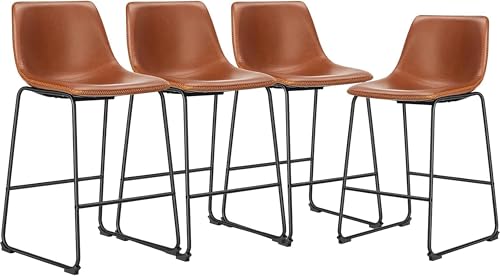
DUMOS Counter Height Bar Stools Set of 4, Faux Leather Metal Bar Chairs | Barstools with Back, Leg, Armless, Upholstered, Kitchen Island, Modern Design, 26 Inch, Brown
Check price on Amazon
Signature Design by Ashley Valebeck Counter Height Bar Stool, Brown | Rustic-industrial wood and metal stool, Cushioned comfort, Tailored nailhead trim, Smooth 360-degree swivel
Check price on Amazon
VASAGLE Wooden Bar Stools Set of 2, Linen-Look Fabric, Cappuccino Beige | Mid Century Modern, Linen-Look Fabric, Solid Wood Legs, Ergonomic Backrest, Beige, MAZIO Collection ULBC125L101
Check price on Amazon
VASAGLE Bar Stools Set of 2, Counter Height Chairs with Backs, 26.4-Inch | Transitional Barstools, Synthetic Leather with Stitching, Caramel Brown and Ink Black, EKHO Collection ULBC116KN01S
Check price on Amazon
Signature Design by Ashley Caitbrook X-Back Bar Stools Set of 2, Gray | Solid acacia wood frame, Antiqued gray wash finish, Textured polyester upholstery, X-back styling, Nailhead trim
Check price on AmazonFrequently Asked Questions
What seat height should counter height bar stools with back have?
Counter height stools typically have a seat height between 24 and 26 inches, which pairs well with countertops that are 36 inches high. Always leave 9 to 12 inches of clearance between the seat and the underside of the counter for comfortable legroom.
Are counter height bar stools with back comfortable for long seating?
Yes. A backrest with gentle lumbar support, combined with a padded seat and footrest, makes counter height stools with back comfortable for meals and longer conversations. Models with upholstered backs and high-density foam tend to offer the most support.
How much space do I need between counter stools with back?
Allow roughly 24 to 30 inches of width per stool, including arm space. For a standard kitchen island, plan for one stool per 24 inches of counter length, and leave at least 12 inches of overhang for knee room.
Do counter height stools with back swivel?
Many do, but not all. Swivel models are ideal for open-plan kitchens because they let guests turn easily toward the living or dining area. Fixed-back stools tend to feel more stable and are a solid choice for busy family islands.
Ready to Choose Your Counter Stools?
Review the recommended counter height bar stools with back above, compare the tiers that match your household, and confirm your measurements. A well-chosen stool is a long-term investment in everyday comfort.
View Recommended Options