
Credenza Sideboard: The Complete Buying Guide
Discover how to choose the perfect credenza sideboard for your dining room. From storage capacity and materials to style and sizing, this guide covers everything you need to make a confident decision.
Why a Credenza Sideboard Matters: A credenza sideboard is more than a storage piece — it's the workhorse of a well-designed dining room. It holds dinnerware, linens, and serveware while doubling as a buffet surface for entertaining. This guide walks you through the key factors so you can choose a piece that fits your space, your style, and your daily needs.
What Is a Credenza Sideboard?
The terms credenza and sideboard are often used interchangeably, though they have historical differences. A sideboard traditionally refers to a large, low storage piece used in dining rooms, often with drawers and cabinets for holding table linens and silverware. A credenza originally described a similar piece used in offices and dining rooms, typically with sliding doors and a more streamlined profile. Today, the two terms describe a versatile storage cabinet that serves as both a functional and decorative anchor in a dining space.
Most modern credenza sideboards share common features: a flat top surface for serving or display, adjustable shelving or drawers inside, and a low profile that keeps sightlines open. They can be freestanding or wall-mounted, and they come in a wide range of materials, finishes, and configurations.
Key Factors When Choosing a Credenza Sideboard
1. Size and Proportion
Size is the first practical consideration. A credenza that is too large will crowd the room, while one that is too small will look lost and offer insufficient storage. As a general rule, a credenza should be roughly 50–75% of the length of your dining table. For example, if your table seats six and measures about 72 inches long, a credenza in the 36–54 inch range will feel proportionate. Depth matters too: most credenzas are 15–20 inches deep, which leaves enough clearance for walkways. If your dining room is narrow, consider a shallow model around 12–15 inches deep. For small dining spaces, a compact credenza can replace a full buffet without overwhelming the room.
2. Storage Configuration
Think about what you need to store and how often you need to access it. Common configurations include:
- Cabinets with adjustable shelves — ideal for dinnerware, serving platters, and bulky items.
- Drawers — best for flatware, napkins, placemats, and smaller accessories.
- Combination units — a mix of drawers and cabinets offers the most flexibility.
- Open shelving — great for display, but requires more frequent dusting.
If you entertain often, look for a model with felt-lined drawers for silverware and adjustable shelves that can accommodate tall pitchers or stacked plates. Consider whether you need cable management cutouts if the credenza will also house small appliances or a bar setup.
3. Materials and Construction
Material choice affects durability, maintenance, and visual warmth. Solid wood credenzas, such as oak, walnut, or maple, are a long-term investment and can be refinished over time. Veneered construction offers a similar look with more stability across humidity changes. Metal frames paired with wood or glass shelves create an industrial or modern look. Glass and mirrored fronts add lightness but require more careful cleaning. For a balanced approach, look for a solid wood frame with veneered panels — a common mid-range construction that offers good stability.
Pay attention to joinery and hardware. Dovetail drawers and soft-close hinges are markers of higher-quality construction. Heavy-duty drawer glides and reinforced shelves matter if you plan to store heavy items like stacked stoneware or cast iron.
4. Style and Finish
The credenza should harmonize with your dining table and chairs without matching them exactly. Popular styles include:
- Mid-century modern — tapered legs, clean lines, and warm wood tones.
- Farmhouse and rustic — distressed finishes, X-frame details, and painted or natural wood.
- Contemporary — sleek fronts, minimalist hardware, and high-gloss or matte finishes.
- Traditional — decorative moldings, arched panels, and rich stains.
If your dining room leans contemporary, a streamlined credenza with handleless doors will feel cohesive. In a contemporary farmhouse setting, a painted credenza with simple hardware can bridge modern and rustic elements.
5. Placement and Function
Where will the credenza live? Common placements include against a long wall opposite the table, flanking a window, or in an open-concept space where it can serve as a divider. Leave at least 36 inches of clearance in walkways and ensure the top surface is at a comfortable height for serving — typically 30–36 inches from the floor. If the credenza will double as a bar or coffee station, consider a model with a finished back so it can float in the room.
Credenza Sideboard Tiers at a Glance
| Tier | Construction & Materials | Best For |
|---|---|---|
| Entry-level | Engineered wood, basic hardware, stapled joinery | First apartments, temporary setups, light use |
| Mid-range | Solid wood frame with veneered panels, soft-close hinges, dovetail drawers | Family dining rooms, regular entertaining |
| Premium | Solid hardwood throughout, hand-finished details, high-grade hardware | Long-term investment, formal dining spaces |
| Luxury | Exotic woods, custom joinery, designer hardware, bespoke sizing | Statement pieces, custom interiors |
For most households, the mid-range tier offers the best balance of durability and design flexibility. Entry-level models can work well in low-traffic spaces, while premium and luxury tiers are worthwhile investments for those who plan to keep the piece for decades.
Recommended Credenza Sideboard Products
⚠️ AFFILIATE DISCLOSURE: This website contains affiliate links. As an affiliate Associate, we earn from qualifying purchases. If you make a purchase through these links, we may receive a small commission at no additional cost to you. Read our full affiliate policy.

63" Buffet Cabinet with Faux Marble Top, Curved Sides, 4 Doors, Natural | Mid Century Modern Sideboard Cabinet, Adjustable Shelves, Large Storage Credenza for Dining Room, Living Room, Entryway
Check price on Amazon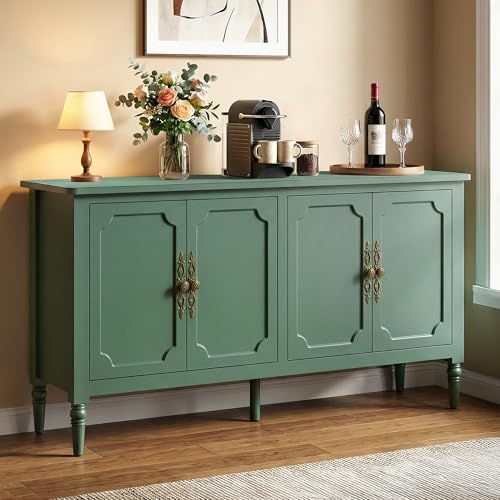
RoyalCraft Buffet Cabinet with Storage, 59" Painted Sideboard Coffee Bar | Vintage Kitchen Storage Cabinet with Adjustable Shelves, Mid Century Modern Credenza for Dining& Living Room, Entryway, Green
Check price on Amazon
63" Buffet Cabinet with Faux Marble Top, Curved Sides, 4 Doors, Walnut | Mid Century Modern Sideboard Cabinet, Adjustable Shelves, Large Storage Credenza for Dining Room, Living Room, Entryway
Check price on Amazon
ONBRILL Fluted Buffet Cabinet with Door Shelves & 3 Storage Drawers, Black | 55" Credenza Sideboard Cabinets Wood, Modern Kitchen Coffee Bar with Adjustable Shelves for Dining Living Room, Entryway
Check price on Amazon
MapleGrace 63" Fluted Buffet Cabinet, Oak Credenza with Adjustable Shelf | 4 Doors Wood Console Table with Storage, Large Modern Symmetrical Arched Sideboard for Dining Room, Kitchen, Living Room
Check price on Amazon
ONBRILL 63" Sideboard Buffet Cabinet, Large Credenza with Drawers Walnut | Kitchen Buffet Storage Cabinet, Coffee Bar Cabinet, Console Table, Wood, with 4 Doors, for Living Room Hallway
Check price on Amazon
ModernMate 63'' Sideboard Buffet Cabinet with 4 Sliding Doors, Wood Credenza Storage Cabinet with Pedestal Base, Large Side Board with Adjustable Shelf for Living Room, Kitchen, Hallway, Walnut
Check price on Amazon
IFGET 92.63" W Modern Arched Sideboard Buffet Cabinet with Storage, Natural | Fluted Arch Sideboard Cabinet w/Adjustable Shelves, Wooden Modular Kitchen Cabinet for Dining& Living Room, Entryway
Check price on AmazonHow to Style a Credenza Sideboard
A credenza is a natural display surface. Keep the arrangement balanced and avoid overcrowding. A common approach is to group items in threes: a lamp, a vase, and a small stack of books or a decorative bowl. Hang artwork or a mirror above the credenza to anchor the wall, keeping the bottom edge about 8–10 inches above the top surface. If you use the credenza for serving, leave one end clear for trays and platters during gatherings. For tabletop inspiration, see our guide to decorating the dining table and glass dining tables for pairing ideas.
Care and Maintenance
Dust regularly with a soft, dry cloth. For wood finishes, use a mild wood cleaner and avoid silicone-based polishes that can build up over time. Keep the credenza out of direct sunlight to prevent fading, and use coasters or felt pads under heavy items to protect the surface. If the credenza has glass doors, clean with a streak-free glass cleaner. Check hardware periodically and tighten screws as needed. In humid climates, consider a dehumidifier nearby to prevent warping in solid wood pieces.
Frequently Asked Questions
What is the difference between a credenza and a sideboard?
Historically, a sideboard was a large dining room storage piece, while a credenza was a similar but often more compact cabinet. Today, the terms are largely interchangeable. Both describe a low storage unit with a flat top, doors, and drawers, used in dining rooms and living spaces.
How tall should a credenza sideboard be?
Most credenzas stand between 30 and 36 inches tall, which is a comfortable height for serving and display. If you plan to use the top as a buffet surface, aim for 32–36 inches. For a wall-mounted or floating credenza, height can vary more freely as long as it suits the room's proportions.
Can a credenza sideboard be used in an open-concept space?
Yes. A credenza with a finished back can float in an open-plan room and act as a visual divider between the dining and living areas. Choose a model with consistent detailing on all sides if it will be visible from multiple angles.
What should I store in a credenza sideboard?
Use cabinets for dinnerware, serving pieces, and larger items. Drawers work well for flatware, napkins, and placemats. If you entertain often, dedicate one section to barware or a coffee station. Adjustable shelves make it easy to reconfigure storage as your needs change.
How do I choose the right size credenza for my dining room?
Measure the wall where the credenza will sit and aim for a piece that occupies roughly 50–75% of that length. Leave at least 36 inches of clearance for walkways. A credenza that is too small will look out of proportion; one that is too large will make the room feel cramped. Consider the depth as well — a shallow model is a good choice for narrow rooms.