
Dinette Chairs for Sale: The Complete Buyer's Guide to Small-Space Seating
Everything you need to know before choosing dinette chairs for your kitchen, breakfast nook, or apartment dining area — from seat height and materials to comfort features and layout planning.
Why Dinette Chairs Deserve Careful Consideration
A dinette chair is more than a place to sit — it is the piece of furniture your household uses most often. Dinette sets live in kitchens, breakfast corners, and compact apartments where floor space is limited and every inch matters. Unlike formal dining chairs, dinette chairs are designed to be lighter, more compact, and easier to move, which makes them ideal for households that reconfigure their space throughout the day.
If you are shopping for dinette chairs for sale, the challenge is not finding options — it is narrowing them down. The market offers wooden ladder-back chairs, upholstered Parsons-style seats, metal bistro chairs, and counter-height stools that double as dinette seating. Each category behaves differently in terms of durability, comfort, and how much room it demands. This guide walks through the decision points that matter most so you can choose with confidence.
Dinette chairs are also closely tied to the table they surround. If your table is a compact round or square model, the chair profile determines whether the set feels open or cramped. For a deeper look at table pairings, see our guide to kitchen and dining room tables and the practical layouts covered in dining sets for 4.
What Makes a Dinette Chair Different from a Dining Chair?
Dinette chairs are engineered around compact living. The differences are subtle but meaningful, and understanding them prevents costly mismatches.
Smaller Footprint
Dinette chairs typically measure 16 to 19 inches in seat width, compared with 19 to 22 inches for standard dining chairs. That difference of a few inches per chair can mean the difference between seating two or four people around a small table.
Lighter Weight
Because dinette chairs are frequently moved — pulled out for extra guests, tucked away when not in use, or shifted for cleaning — they are built with lighter frames. Entry-level wooden models may weigh under 12 pounds, while premium upholstered dinette chairs settle closer to 18 pounds for added stability.
Lower or Standard Seat Heights
Most dinette chairs use a standard 17 to 19 inch seat height that pairs with 28 to 30 inch tables. Counter-height dinette chairs sit at 24 to 26 inches and are designed for kitchen counters and tall tables. Mixing heights within one set is a common mistake — always confirm the seat height before ordering. Our guide to tall table and chairs explains how height pairing works in practice.
Backrest Profiles Designed for Tight Spaces
Low-back and open-back dinette chairs feel less visually heavy in a small kitchen. Ladder-back and slat-back designs also let light pass through, which makes a breakfast nook appear larger.
Quick rule: Allow at least 24 inches of table edge per dinette chair, and keep 12 to 18 inches of clearance behind the chair for pulling out. In tight kitchens, a backless or low-back chair buys you several inches of walking room.
Types of Dinette Chairs Available for Sale
The dinette chair category breaks down into several distinct styles. Each serves a different household need, and each has trade-offs worth understanding before you commit.
Wooden Ladder-Back and Slat-Back Chairs
The classic dinette chair. Solid wood construction, often in oak, rubberwood, or pine, with horizontal slats or vertical spindles forming the back. These chairs are durable, easy to wipe clean, and pair naturally with farmhouse and traditional kitchen tables. Entry-level models use simpler joinery, while premium versions feature reinforced corner blocks and mortise-and-tenon joints. If you own a wooden dinette table, this is the most cohesive pairing — see our wooden kitchen table and chairs guide for matching finishes.
Upholstered Dinette Chairs
Fabric or faux-leather upholstery over a wooden or metal frame. These are the most comfortable dinette chairs for long meals and homework sessions. Mid-range models use high-density foam padding, while premium versions add sinuous spring support and stain-resistant fabric. Faux leather is easier to clean than fabric and is a practical choice for households with children. For a closer look at leather-style options, see brown faux leather dining chairs set of 4.
Metal and Bistro-Style Chairs
Steel or aluminum frames with powder-coated finishes. Metal dinette chairs are lightweight, stackable, and resistant to moisture, which makes them suitable for kitchen corners near sinks and even covered patios. Bistro-style metal chairs bring a cafe feel to small breakfast areas. If you are considering an indoor-outdoor setup, pair them with bistro tables outdoor or the compact outdoor 3-piece bistro set.
Counter-Height Dinette Chairs
Taller chairs with a 24 to 26 inch seat height, designed for kitchen islands and counter-height dinette tables. These blur the line between dining chair and bar stool. They are ideal for open-plan kitchens where the dining surface doubles as a prep counter. Explore the related category in counter height counter stools and round dining table counter height.
Folding and Stackable Dinette Chairs
For apartments and multipurpose rooms, folding dinette chairs store flat against a wall or inside a closet. They are lighter and less padded than fixed chairs, so they suit occasional seating rather than everyday use. Pair them with a drop leaf folding dining table for a fully collapsible breakfast setup.
Wicker and Rattan Dinette Chairs
Woven seats and backs over a solid frame. These bring texture and warmth to coastal and casual kitchens. Wicker dinette chairs are typically mid-range in build quality and benefit from a seat cushion for longer sitting. Browse cushioned wicker chair options and rattan chair cushions for added comfort.
Dinette Chair Tiers: What Changes as You Move Up
Rather than shopping by numbers, it helps to understand how dinette chairs are positioned in the market. The table below uses universal tier descriptors so you can compare build quality and features without anchoring to any specific figure.
| Tier | Typical Construction | Best For | Comfort Level |
|---|---|---|---|
| Entry-level | Solid wood or basic metal frame, simple joinery, unpadded or thin seat | Occasional seating, rental kitchens, first apartments | Firm; benefits from a seat cushion |
| Mid-range | Reinforced wooden frames, high-density foam upholstery, smooth finish | Everyday family meals, breakfast nooks | Balanced; contoured seat and supportive back |
| Premium | Hardwood frames, mortise-and-tenon joinery, quality upholstery, spring support | Daily use in busy households, long-term setups | High; ergonomic back and generous padding |
| Luxury | Select hardwood, hand-finished details, performance fabrics, designer profiles | Design-forward kitchens, formal-casual hybrids | Exceptional; tailored ergonomics |
Mid-range dinette chairs usually offer the most sensible balance for households that eat at the table daily. Entry-level models are a solid choice for secondary seating or short-term needs, while premium and luxury tiers justify themselves through longevity and comfort over years of use.
Materials: Matching Dinette Chairs to Your Kitchen
Solid Wood
Rubberwood, oak, maple, and pine are common dinette chair materials. Solid wood is repairable, refinishable, and ages gracefully. It handles humidity swings better than particleboard but still benefits from stable indoor conditions. Rubberwood is a frequent choice in mid-range dinette chairs because it is dense and takes a finish well.
Metal
Powder-coated steel and aluminum frames are lightweight and resist moisture. Metal dinette chairs are a practical pick for kitchens with heavy traffic. Check for rust-proof finish on any model placed near a sink or in a humid climate.
Upholstery Fabrics
Performance fabrics, microfiber, and treated cotton resist staining. Faux leather is the easiest to wipe clean and is a smart choice for households with young children. Fabric seats offer more breathability in warm climates.
Wicker and Rattan
Natural rattan and synthetic wicker add texture but require gentle cleaning. They suit coastal and casual kitchen styles and pair well with light wood tables.
Durability note: Look for reinforced corner blocks, metal-to-metal fasteners, and a finish that covers all surfaces — including the underside of the seat. These details separate durable construction from a chair that loosens within a year.
Sizing and Fit: Getting Dinette Chairs Right the First Time
Most returns of dinette chairs happen because of fit issues, not quality. Measure before you order.
- Measure your table height. Standard tables are 28 to 30 inches; counter-height tables are 34 to 36 inches.
- Match the seat height. Standard dinette chairs sit 17 to 19 inches; counter-height chairs sit 24 to 26 inches.
- Measure the table edge per chair. Allow 24 inches of table edge per dinette chair for comfortable elbow room.
- Check clearance behind the chair. Keep 12 to 18 inches between the chair back and the nearest wall or cabinet.
- Account for table legs and aprons. A chair with arms may not slide under a table with a deep apron. Armless dinette chairs are safer for compact tables.
If your space is tight, a round table paired with two or four dinette chairs usually feels more open than a rectangular set. See 36 inch round dining table and 54 inch round dining table for size references that pair well with dinette seating.
Comfort Features That Matter for Daily Use
Dinette chairs are used several times a day, so small comfort details add up quickly.
- Contoured seat pan. A slight dish shape distributes weight better than a flat wooden seat.
- Seat depth. Aim for 15 to 17 inches of seat depth; deeper seats push shorter users forward.
- Backrest angle. A gentle 5 to 10 degree recline supports the lower back during longer meals.
- Upholstery thickness. At least 1.5 inches of high-density foam makes a noticeable difference.
- Armrests. Useful for older users, but they increase the chair footprint. For dinette sets, armless chairs are usually more practical.
- Floor protection. Felt glides on wooden floors prevent scratches; rubber caps on tile prevent sliding.
If you plan to reupholster later, choose chairs with removable seat cushions. Our guide to chair repair covers basic tightening and joint reinforcement for wooden dinette chairs.
Matching Dinette Chairs to Your Kitchen Style
Modern Minimalist
Clean lines, slim profiles, and a neutral palette. Metal dinette chairs or upholstered chairs with tapered legs work well. See modern minimalist for broader design direction.
Farmhouse and Rustic
Ladder-back wooden chairs, warm finishes, and visible grain. Pair with a solid wood table and a woven or metal accent. A rustic farmhouse dining table set for 6 illustrates how the style holds together in larger rooms.
Mid-Century Modern
Tapered legs, curved backrests, and mixed materials. Mid-century dinette chairs often combine wood and upholstery in a way that suits smaller kitchens. See mid-century modern for related seating ideas.
Coastal and Casual
Wicker, rattan, light woods, and airy silhouettes. These chairs keep a breakfast nook visually light.
Traditional
Turned legs, spindle backs, and richer wood tones. Traditional dinette chairs are heavier and more formal, but still fit compact tables.
Dinette Chair Buying Checklist
Use this checklist before completing any purchase of dinette chairs for sale.
- Seat height matches your table height (standard vs counter-height).
- Seat width and table edge allowance fit your space.
- Chair weight is manageable for the people who will move it.
- Frame material suits your humidity and cleaning routine.
- Upholstery is appropriate for children, pets, and daily use.
- Backrest supports the lower back during a 30-minute meal.
- Floor glides protect your flooring.
- Assembly requirements are within your comfort level.
- Return policy covers fit issues.
- Finish and color coordinate with your existing table.
If you are outfitting a complete set rather than chairs alone, browse dining sets for 4, 5 pieces dining table set for 4, and dining room table and chairs set for 4 to compare coordinated options.
Recommended Dinette Chairs for Sale
⚠️ AFFILIATE DISCLOSURE: This website contains affiliate links. As an affiliate Associate, we earn from qualifying purchases. If you make a purchase through these links, we may receive a small commission at no additional cost to you. Read our full affiliate policy.
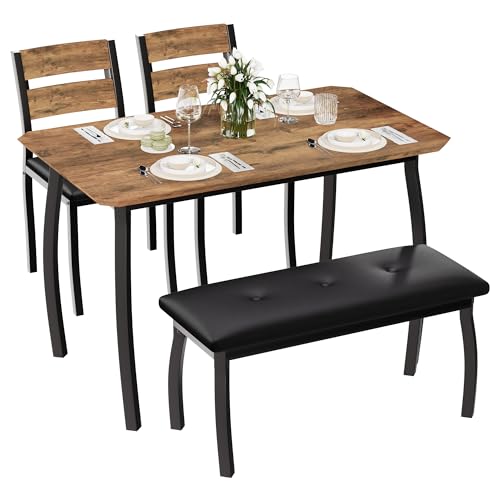
IDEALHOUSE 43'' Dining Table Set for 4, Wooden Kitchen Table with Upholstered Bench & 2 Cushion Chairs, Industrial Dinette Set for Studio, Kitchen, Dining Room, Apartment, Retro
Check price on Amazon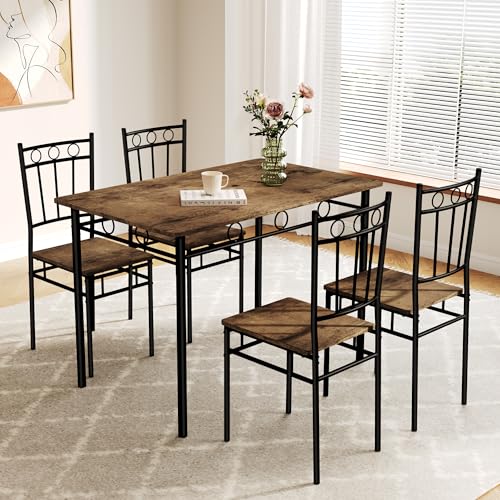
AMICLIBER Dining Table Set for 4, 5-Piece Kitchen Table and Chairs, Rectangular Dining Room Table Set with 4 Chairs, Space-Saving Kitchen Table Set for Small Space,Dinette,Apartment,Retro Brown
Check price on Amazon
TJYGO Kitchen Table and Chairs of 4, 5 Piece Dining Table Set, Sturdy Industrial Space Saving Dinette Set for Pub, Family Dinners, Apartment, Teak
Check price on Amazon
Giantex Wooden Dining Chairs Set of 2, Farmhouse Upholstered Kitchen chair | Dining Room Chairs w/ Rubber Wood Frame & Slatted Backrest, Mid-century Dinette Chairs for Restaurant, Living Room
Check price on Amazon
GIANTEX Wooden Dining Chairs Set of 4, Farmhouse Upholstered Kitchen Chair | Dining Room Chairs w/ Rubber Wood Frame & Slatted Backrest, Mid-century Dinette Chairs for Restaurant, Living Room
Check price on AmazonCaring for Dinette Chairs
Wooden Chairs
Dust weekly with a soft cloth and wipe spills promptly. Apply a wood conditioner every six to twelve months to prevent drying and cracking, especially in heated kitchens.
Upholstered Chairs
Vacuum fabric seats monthly. Blot spills immediately rather than rubbing. Faux leather can be wiped with a damp cloth and mild soap; avoid abrasive cleaners that dull the finish.
Metal Chairs
Wipe with a damp cloth and dry thoroughly. Inspect joints seasonally and tighten fasteners as needed. Touch up any chipped powder coating to prevent corrosion.
Wicker and Rattan
Dust with a soft brush. Keep away from direct heat sources and prolonged moisture, which can cause natural fibers to warp.
Frequently Asked Questions About Dinette Chairs
What is a dinette chair?
A dinette chair is a compact chair designed to pair with a small dinette table, typically found in kitchens, breakfast nooks, and apartments. Dinette chairs usually have a smaller footprint and lighter build than standard dining chairs.
How many dinette chairs fit around a small table?
A typical two-person dinette table seats two chairs, while a small square or round dinette table can seat two to four chairs. Always measure your table edge and allow at least 24 inches of width per chair.
What seat height should a dinette chair have?
Standard dinette chairs have a seat height of about 17 to 19 inches, matching a standard 28 to 30 inch table. Counter-height dinette chairs sit at 24 to 26 inches and pair with 36 inch counters.
Are dinette chairs comfortable for everyday use?
Yes. Mid-range and premium dinette chairs with contoured seats, upholstered cushions, and supportive backrests are comfortable for daily meals. Entry-level wooden seats benefit from a seat cushion.
Can dinette chairs be used outdoors?
Only if they are specifically rated for outdoor use. Metal bistro-style dinette chairs with weather-resistant coatings are the safest choice for covered patios. Wooden and upholstered dinette chairs should stay indoors.
Should I buy dinette chairs in sets or individually?
Buying in sets usually ensures a consistent finish and matched dimensions. Individual chairs make sense when you are adding to an existing set or mixing styles deliberately. Check that seat heights match if you mix.
Final Thoughts on Choosing Dinette Chairs
The right dinette chairs disappear into daily life — they are comfortable enough that nobody thinks about them, sturdy enough to survive years of family meals, and compact enough to keep a small kitchen feeling open. Start with measurements, then narrow by material and tier, and finally compare comfort features. That order prevents the two most common mistakes: buying chairs that do not fit the table, and buying chairs that look right but feel wrong after an hour.
If you are building a complete breakfast area, explore dining area furniture for broader coordination ideas, or compare compact layouts in kitchen island table with storage and seating. For households that occasionally need extra seating, folding chairs for sale offer a practical backup that stores away between uses.