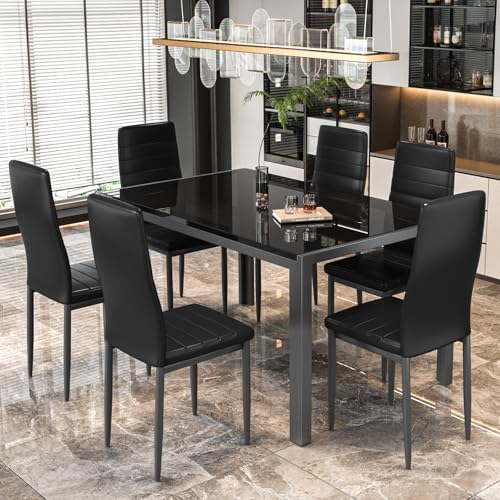
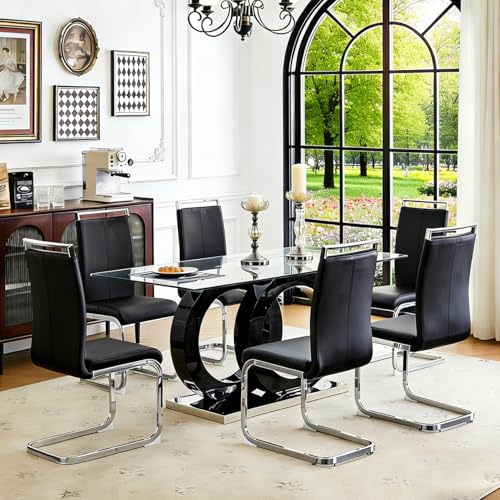
Why Choose a Wooden Dining Table with a Glass Top?
A wooden dining table set with a glass top offers a distinct advantage over fully solid-top designs: the wooden frame brings warmth, structural strength, and a classic natural grain, while the glass surface keeps the room visually open and reflects light. In smaller or darker dining spaces, this combination can make the room feel larger and brighter without sacrificing the solid feel of real wood.
Glass tops are also practical for daily life. They resist stains and odors far better than unfinished wood, wipe clean in seconds, and do not absorb spills from sauces, wine, or coffee. For households that host frequently, this is a meaningful advantage. If you are still weighing table shapes, our guide to the 6 person dining table set covers how seating capacity maps onto different footprints.
That said, glass is not automatically the right choice for every home. Understanding the trade-offs — weight, reflection, and frame quality — is essential before committing. The sections below break down each factor in order.
Understanding the Wooden Frame: Materials and Construction
The wooden frame is the structural backbone of the set. It determines how the table handles daily use, how stable it feels during meals, and how well it ages. Frame quality varies considerably across the market, so it helps to think in tiers.
Entry-Level Tier
Rubberwood and engineered wood frames with veneer finishes. Solid build for light daily use, best suited to smaller households or occasional dining.
Mid-Range Tier
Acacia, mango, and solid rubberwood with reinforced joinery. A balanced tier offering good durability and natural grain character for everyday family meals.
Premium Tier
Oak, walnut, and ash hardwood frames with mortise-and-tenon or dowel joinery. Heavy-duty construction designed for decades of daily use and frequent hosting.
Joinery and Stability
Look closely at how the frame is joined. Entry-level sets often rely on screws and brackets, which can loosen over time. Mid-range and premium sets typically use dowels, cam locks, or mortise-and-tenon joints that hold tension better. A sturdy apron and cross-bracing underneath the tabletop are signs of a well-engineered frame. Our measurement guide on measurement tips explains how to verify that a set fits your room before it arrives.
Finish and Moisture Protection
Wood expands and contracts with humidity. A quality finish — lacquer, polyurethane, or hard wax oil — seals the grain and reduces the risk of cracking. For homes in humid climates, sealed finishes are especially important. Pair this with humidity control strategies from our humidity control guide to extend the life of the wooden frame.
Glass Top Types: Tempered, Beveled, and Frosted
Not all glass tops are equal. The glass specification affects safety, clarity, and maintenance. Here is what to look for:
| Glass Type | Best For | Key Considerations |
|---|---|---|
| Tempered Glass | Family dining and daily use | Breaks into small granular pieces rather than sharp shards; the standard for safety in dining furniture |
| Beveled Edge Glass | Formal or transitional dining rooms | Adds a polished, premium look; edges catch light and create visual depth |
| Frosted or Satin Glass | Hiding scratches and smudges | Softer visual texture; less reflective than clear glass, better for bright rooms with glare |
| Clear Tempered Glass | Small or darker dining rooms | Maximizes light reflection and makes the room feel more open |
Thickness matters too. A 10mm to 12mm tempered glass top offers a solid, stable feel and resists flexing. Thinner glass in the 6mm to 8mm range is common on entry-level sets but can feel less substantial. Always confirm that the glass is tempered — it is the single most important safety specification for a dining table.
If you prefer a fully solid surface, our guide to the dining table 6 seater covers all-wood alternatives. And for round footprints that fit six diners, see the 42 round dining set.
Sizing: Will a 6 Seater Set Fit Your Room?
A standard rectangular six-seater measures roughly 72 inches long and 36 to 40 inches wide. Each diner needs about 24 inches of table edge, and chairs need clearance to pull out. The practical rule is to allow 36 inches of space between the table edge and the nearest wall or furniture.
For a 72-inch table, you will want a dining area that is at least 10 feet by 8 feet to seat six comfortably without feeling cramped. Rectangular shapes suit long rooms and open-concept spaces; oval and round shapes soften tight corners. If your room is narrow, our guide to 72 inch dining table options explains how length and width interact with chair placement.
Consider chair style as well. Armchairs take up more room than side chairs, so a six-seater with two armchairs and four side chairs is a common compromise. If you are matching chairs separately, the dining chairs set of 6 faux leather guide covers upholstery and frame pairing.
Style Matching: From Farmhouse to Modern
The wooden frame and glass top combination works across a surprisingly wide range of interiors. The style is set by the frame's finish, leg profile, and chair design.
- Modern minimalist: Slim tapered legs, a light oak or ash finish, and clear glass create an airy, contemporary look. Pair with upholstered chairs in neutral tones.
- Farmhouse and rustic: A distressed or reclaimed-look frame with a thicker apron and a glass top offers a practical twist on the classic farmhouse table. Our guide to modern farmhouse dining explores this pairing in depth.
- Mid-century modern: Splayed legs and a warm walnut frame with a glass top echo mid-century design cues. The Astrid mid-century round extendable dining table is a useful reference for this style family.
- Transitional and formal: A darker espresso or cherry frame with beveled glass suits formal dining rooms. Add a sideboard nearby — see our buffets and sideboards category for storage that matches.
Care and Maintenance for Wood and Glass
Care is straightforward when you know the basics, and a little routine goes a long way toward keeping the set looking new.
Daily Glass Care
Wipe the glass with a soft microfiber cloth and a mild glass cleaner. Avoid abrasive pads and ammonia-heavy products, which can cloud the surface over time. For fingerprints and smudges, a slightly damp cloth followed by a dry buff is usually enough. Place hot dishes on trivets rather than directly on the glass to avoid thermal stress.
Wooden Frame Care
Dust the frame weekly with a dry cloth. Every few months, apply a wood conditioner or polish suited to the finish to maintain moisture balance. Keep the table out of direct sunlight to prevent fading, and address spills promptly. For deeper maintenance guidance, our wood polish and conditioner article covers product types and application. If scratches appear, the scratch repair tips guide explains how to treat minor surface damage.
Protecting the Set Over Time
Felt pads under chair legs prevent scratches on hard floors. A table pad protects the glass when the table is not in use. And in homes with children, rounded corners and tempered glass are the two safety features worth prioritizing.
How to Evaluate Quality Before You Buy
When comparing six-seater wooden sets with glass tops, focus on these checkpoints rather than surface styling alone:
- Frame joinery: Look for dowels, cam locks, or mortise-and-tenon joints; avoid sets held together only by brackets.
- Glass certification: Confirm the glass is tempered and check the thickness specification.
- Weight and stability: A heavier frame generally signals a more solid build. Check whether the table includes a center support or cross-brace.
- Finish quality: Even coverage, smooth edges, and no visible overspray indicate careful manufacturing.
- Chair construction: Solid wood or high-grade steel legs with reinforced seat joints outlast particle-board frames.
- Warranty and returns: A clear warranty signals confidence in the build — see our warranty and returns guide for what to check.
Our broader buying guides section covers delivery, assembly, and brand comparison in more detail, which is useful once you have narrowed your shortlist.