
Extendable Dining Table Set for Small Spaces
Maximize every square foot with a table that adapts to your life. This guide breaks down sizing, leaf mechanisms, materials, and seating so you can choose an extendable dining set that fits your room today and your guests tomorrow.
Start the GuideWhy an Extendable Dining Set Works in Small Spaces
Small dining rooms ask for furniture that does two jobs: stay compact during daily life and expand when guests arrive. An extendable dining table set delivers exactly that balance. In its closed position, the table functions as a comfortable four-person breakfast spot; with one or two leaves engaged, it becomes a six- or eight-person gathering table without the permanent footprint of a large fixed table.
The appeal goes beyond space. Extendable sets reduce the need for a second table for holidays, keep walkways clear during the week, and let you adapt the dining area to work-from-home days or homework sessions. For apartments, condos, and open-plan layouts, this flexibility is often the difference between a cramped dining zone and a room that feels intentional.
How to Measure Your Dining Area Before You Shop
Measurements are the foundation of a good purchase. Start by mapping the room's usable dining zone, leaving at least 36 inches of clearance between the table edge and walls or other furniture so chairs can pull out comfortably. In tighter rooms, 30 inches is workable if chairs tuck fully under the table when not in use.
Key measurements to record
- Room dimensions: Length and width of the dining zone, including any alcoves or bay windows.
- Walkway width: The path between the dining area and kitchen or living room; keep at least 36 inches clear.
- Closed table footprint: The length and width of the table with leaves stored.
- Extended footprint: The length with all leaves engaged, plus the depth needed for chairs on both long sides.
- Ceiling height: Relevant if you plan a pendant light over the table.
Write these numbers down and bring them to the store or keep them beside you while shopping online. A table that fits the room but blocks a doorway is still the wrong table. For rooms with irregular layouts, consider a round or oval extendable model, which can ease traffic flow around corners.
Extension Mechanisms Compared
The mechanism determines how easy the table is to expand and where the leaves live when not in use. Three systems dominate the market for small-space dining sets.
Butterfly leaf (self-storing)
The leaf folds and stores inside the table body. You lift the tabletop halves and unfold the leaf in one motion. This is the most convenient option for small rooms because there is no separate leaf to store and no trip to the closet when guests arrive. Entry-level butterfly tables can feel stiff at first, while mid-range and premium models typically use smoother hinges and reinforced locking hardware.
Drop-leaf
One or both sides of the table fold down against the frame. A drop-leaf table can sit flush against a wall as a console and open up for meals. It is ideal for studio apartments and kitchen corners where the table doubles as a prep surface. The trade-off is that drop-leaf tables usually seat fewer people when fully open than a butterfly or refectory model.
Separate leaf (refectory style)
The leaf is a separate panel stored elsewhere and inserted between the table halves. These tables often feel the most solid and can extend the furthest, making them a good choice if you regularly host six to eight people. The downside for small spaces is storage: you need a closet or under-bed space for the leaf.
| Mechanism | Best For | Leaf Storage | Ease of Use |
|---|---|---|---|
| Butterfly leaf | Daily-use small dining rooms | Inside the table | Very easy |
| Drop-leaf | Studio apartments and kitchen corners | Folds against frame | Easy |
| Separate leaf | Frequent entertaining | Closet or under-bed | Moderate |
Table Shapes and Leaf Configurations
Shape affects both the feel of the room and how many people can sit comfortably. Rectangular tables are the most space-efficient against a wall and the easiest to pair with benches. Round tables soften tight corners and make conversation easier, while oval tables split the difference and are especially forgiving in narrow rooms.
Rectangular extendable tables
A rectangular table with a butterfly leaf is the classic small-space choice. It seats four comfortably in the closed position and six when extended. If you have a long, narrow room, look for a table that extends along its length rather than its width.
Round and oval extendable tables
Round tables work well in square rooms and near bay windows. When extended, many round models become oval, which preserves the softer silhouette while adding seating. These are a strong fit for open-plan kitchens where the dining table is visible from the living area.
Square tables with corner leaves
Some compact sets use a square top with corner leaves that flip up to create a larger surface. These are a niche option but can be useful in breakfast nooks where the table sits against two walls.
Seating Options That Tuck Away
The table is only half the equation. In a small dining room, seating determines how much floor space you actually recover between meals. Benches are the workhorse of small-space dining because they slide fully under the table and seat more people per linear foot than individual chairs.
A backless bench paired with two upholstered chairs gives you a mix of comfort and efficiency. If you prefer all chairs, look for models with a low back and a compact seat depth. Armless chairs tuck in further than armchairs and are easier to slide under a table with an apron.
- Benches: Best for the long side of a rectangular table; slide under for clearance.
- Armless chairs: Tuck in fully and work on both long sides.
- Folding chairs: Useful as overflow seating stored in a closet.
- Stools: A good match for counter-height extendable sets in kitchen-adjacent dining zones.
For a deeper look at seating pairings, see our guides on dining room chairs set of 4 with bench and dining table with benches that fit underneath.
Materials and Tier Guidance
Material choice affects durability, maintenance, and how the table ages in a small room. Solid wood remains the benchmark for longevity and refinishability. Engineered wood with a quality veneer offers a more stable surface in humid rooms. Glass tops visually lighten a small space but show smudges more readily, while marble and stone tops bring a premium feel at the high-end tier.
To keep comparisons consistent, this guide uses four relative tiers: entry-level, mid-range, premium, and luxury. These describe market positioning and construction quality, not any specific figure.
| Tier | Typical Construction | Best For |
|---|---|---|
| Entry-level | Engineered wood, basic hinges, simple finish | First apartments and low-traffic dining zones |
| Mid-range | Solid wood frame with veneer top, smoother leaf mechanism | Daily family use and occasional entertaining |
| Premium | Solid hardwood, reinforced locking hardware, durable finish | Frequent hosting and long-term ownership |
| Luxury | Hardwood or stone top, precision mechanism, hand-finished details | Design-led dining rooms and statement spaces |
Mid-range models usually offer a noticeably smoother extension action than entry-level tables, and premium tables tend to hold their alignment better over years of use. If you plan to extend the table weekly, invest in the higher tier for the mechanism alone. For material-specific guidance, see our articles on solid wood farmhouse dining table and chairs and marble and stone tops.
Top Extendable Dining Table Sets for Small Spaces
⚠️ AFFILIATE DISCLOSURE: This website contains affiliate links. As an affiliate Associate, we earn from qualifying purchases. If you make a purchase through these links, we may receive a small commission at no additional cost to you. Read our full affiliate policy.

Transformer Table Solid Wood Extendable Dining Table, Natural | Seats 2-12, Expandable Dining Room Table, Space-Saving Furniture, Kitchen and Dining Room Furniture, Table Only
Check price on Amazon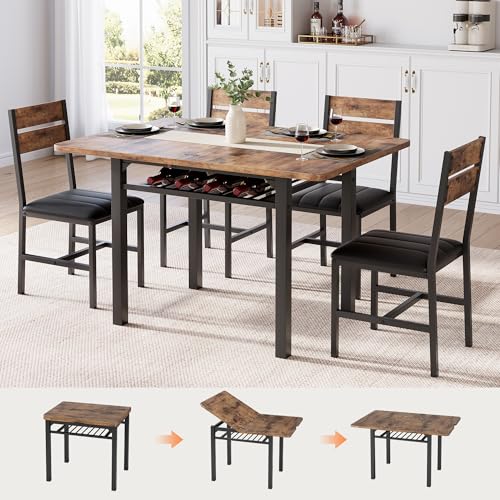
MapleGrace Extendable Dining Table Set for 4 with Built-in Shelf Rack Brown | Kitchen Table Set with 4 PU Leather Upholstered, Wood Dining Room Chairs for Dining & Small Spaces
Check price on Amazon
Extendable Dining Table, Round Kitchen Dining Room Dinner Table with for 4 6 8 People, Space Saving Modern Oval Expandale Furniture with Storage and Pedestal for Kitchen Living Room (Black)
Check price on Amazon
ONBRILL 42"-106" Extendable Dining Table for 2-10 with Storage Legs, Walnut | Mid-Century Modern Oval Extendable Dining Table with 4 Removable Leaves, Round Dinner Table for Dining Room, Kitchen
Check price on Amazon
Extendable Dining Table with Charging Station, Convertible Folding Console Table for 6-8 People, Space-Saving Dining Table with LED Lights, Wood Rectangle Kitchen Table for Homes, Walnut (No Chairs)
Check price on Amazon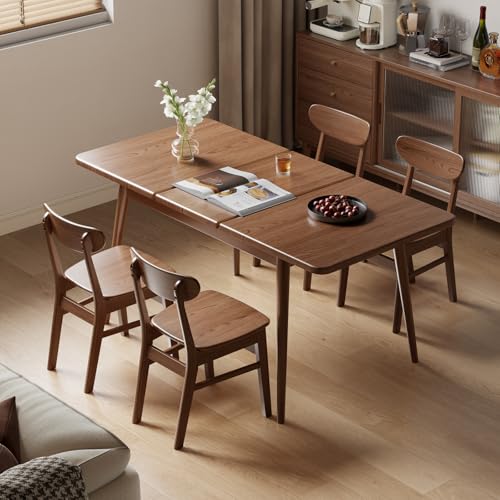
Muwuele 47"-63" Solid Wood Extendable Dining Tables for 4-8, Walnut | Compact Expandable Kitchen Table, Easy Assembly, Mid Century Modern, Dinner Table for Small Space, Dining Room, Apartment
Check price on Amazon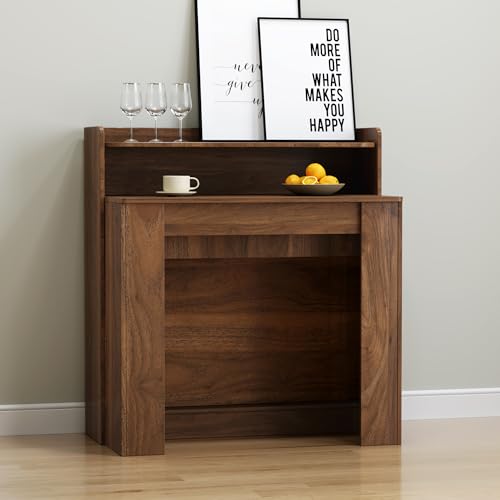
Varelynn 20"-98" Extendable Dining Table with Storage for 2-10, Walnut | Convertible Console Table with Storage, Extendable Design, Space Saving Solution, Ideal for Family Meals and Holiday Events
Check price on AmazonBuying Criteria and Final Checklist
Use this checklist to compare sets on equal footing. It is designed for shoppers who already know they want an extendable table and need a structured way to choose between models.
Before you buy
- Confirm the closed and extended footprints against your measured room dimensions.
- Check whether the leaf is self-storing or requires separate storage.
- Verify the seating count in both configurations.
- Read the assembly instructions or reviews for mechanism quality.
- Check the finish warranty and the return policy.
At delivery
- Inspect the leaf alignment before discarding packaging.
- Test the extension mechanism several times to confirm smooth operation.
- Check that benches or chairs tuck under the table as expected.
Frequently Asked Questions
What size extendable dining table fits a small space?
For small spaces, look for a table that seats four in its closed position, typically around 30 to 36 inches wide and 48 to 54 inches long. When extended, a leaf system can add 12 to 24 inches to accommodate six diners comfortably.
Which extension mechanism is best for small rooms?
Self-storing butterfly leaves are the most convenient for small rooms because the leaf stays inside the table and requires no separate storage. Drop-leaf mechanisms are ideal for apartments where the table doubles as a desk or prep surface.
How many people can an extendable dining table seat?
A compact extendable table typically seats four in the closed position and six when fully extended. Some larger models with double leaves can seat eight, but for small spaces the four-to-six range is the sweet spot.
Should I choose a bench or chairs for a small dining set?
A bench on one long side and two armless chairs on the other is the most space-efficient pairing. Benches slide fully under the table and seat more people per linear foot, while chairs provide back support for longer meals.
Ready to Choose Your Set?
Review the recommended extendable dining sets above, compare them against your measurements, and pick the configuration that matches how often you host. A well-chosen set will serve daily meals and holiday gatherings without crowding your room.
View Recommended Sets