
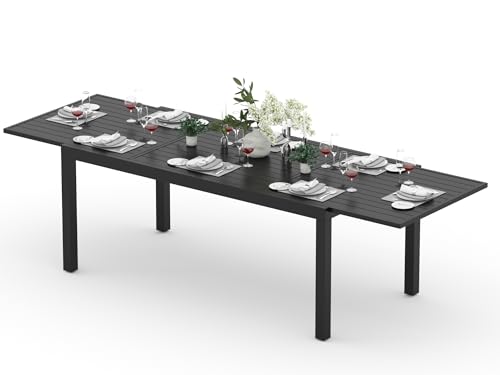


Why an Extendable Outdoor Dining Table Makes Sense
An extendable outdoor dining table solves a problem that almost every patio owner eventually faces: you want a table that feels comfortable for everyday use, but you also need room for guests when the occasion calls for it. A fixed table large enough for a dozen people can dominate a deck or garden for the other 350 days of the year. An extension table lets you keep the footprint compact most of the time and open it up only when you need the extra seating.
This flexibility matters even more outdoors than indoors, because outdoor space is often shared with grills, planters, loungers, and walkways. A table that grows when needed — and shrinks back down afterward — preserves flow and keeps your patio usable year-round. If you are still weighing fixed versus flexible designs, our broader guide to the dining table category covers foundational choices, while this article focuses specifically on outdoor-rated extendable models.
Another advantage is seasonal adaptability. During warm months, a fully extended table handles long lunches and evening dinners. In cooler seasons or when the table sits unused, collapsing it back to its smallest configuration reduces surface area exposed to rain, sun, and debris — which can meaningfully extend the life of the finish.
Quick tip: Measure your patio's usable length and width, then add at least 30 inches of clearance on all sides for chair pull-out. The extended length of the table, not the collapsed length, should be the figure you check against that clearance.
How Extension Mechanisms Work Outdoors
Outdoor extension tables use a handful of core mechanisms, and each behaves a little differently once exposed to the elements. Understanding these differences is the single most useful piece of research you can do before buying.
Butterfly Leaf (Self-Storing)
A butterfly leaf folds in half and tucks underneath the tabletop when not in use. Because the leaf stores inside the table, there is no separate panel to lug in and out of storage — a genuine convenience outdoors where you may not have a nearby closet. The trade-off is that the folding hardware sits close to the table's underside, so you should confirm the mechanism is sealed or rated for damp conditions. Tables with this design are closely related to the broader family of extendable tables with a self-storing leaf.
Separate Leaf Panels
Some models use one or two loose leaves that you insert into the table's center and lock in place. These tend to be simpler mechanically, which can mean fewer failure points over time. The downside is storage: loose leaves are heavy, and you will need a dry place to keep them. If your patio lacks covered storage, this style requires more planning. Our overview of dining tables with a leaf walks through the storage implications in more detail.
Sliding and Telescoping Frames
Sliding mechanisms extend the table frame itself along rails, with the tabletop panels fanning or sliding outward. These are common on aluminum and composite tables because metal frames handle sliding hardware well. Look for stainless or powder-coated steel rails rather than bare steel, which can rust and seize in humid climates.
Gate-Leg and Drop-Leaf Designs
Gate-leg tables swing a support leg outward and fold a leaf up, while drop-leaf designs hinge panels down at the sides. These are classic space-savers for small patios and balconies. Our guide to the drop-leaf dining room table explains the mechanics thoroughly, and the same principles apply when the table lives outdoors.
Whichever mechanism you choose, test it mentally against your climate. In coastal or rainy regions, the fewer exposed moving parts, the better. In dry, sunny climates, the priority shifts to UV-resistant finishes that will not become brittle around hinges and latches.
Weatherproof Materials Compared
The material of the tabletop and frame determines how the table ages outdoors. Below is a comparison of the most common constructions, organized by market position rather than by any specific figure — we deliberately avoid quoting numbers, since outdoor furniture availability and regional supply shift constantly.
| Material | Market Tier | Best For | Weather Notes |
|---|---|---|---|
| Powder-Coated Aluminum | Mid-Range | Humid and coastal climates | Rust-proof frame, lightweight, easy to move; confirm the coating is UV-stable. |
| Teak and Acacia Hardwood | Premium | Long-term investment, natural look | Naturally weather-resistant; benefits from periodic oiling to prevent silvering. |
| HDPE Composite | Mid-Range | Low-maintenance patios, family use | Will not rot or splinter; color runs through the material so scratches hide well. |
| Glass Top with Metal Frame | Mid-Range | Small patios, modern aesthetics | Tempered glass required outdoors; watch for wind exposure and thermal stress. |
| Powder-Coated Steel | Entry-Level | Covered porches, occasional use | Heavier and sturdy, but chips in the coating can lead to rust if left wet. |
| Marble or Stone-Top | Luxury | Formal outdoor entertaining | Extremely heavy; must be sealed, and some stones stain from oils and fruit acids. |
Two practical rules of thumb emerge from this comparison. First, aluminum frames paired with composite or hardwood tops tend to be the most balanced choice for wet climates. Second, if the table will be left fully exposed to sun, prioritize UV-stable finishes — faded powder coating is one of the most common complaints among outdoor furniture owners.
For those interested in the visual character of wood without the maintenance of solid timber, the material mix used in many modern farmhouse dining tables translates well to outdoor settings when the manufacturer specifies exterior-grade coatings.
Seating Capacity and Shape Considerations
An extendable outdoor table's seating capacity changes as it opens, and that range — not a single number — is the figure that matters. A compact round table that seats four in its closed position might comfortably seat six to eight when extended with two leaves. Rectangular tables typically gain two seats per leaf.
Round and Oval Tables
Round tables promote conversation and work well on square patios, while oval tables offer the same social feel with a longer reach. Our guide to the extendable round dining table with self-storing leaves explores how these shapes behave when opened, including the headroom you lose at the corners.
Rectangular Tables
Rectangles are the most space-efficient for narrow patios because they align neatly with walls and railings. If your goal is a single table that can host a large family reunion, models described in our look at the extendable dining table that seats twelve illustrate how much the largest configurations can grow.
Compact and Balcony-Friendly Tables
For balconies and small terraces, the guiding principle is that the closed footprint should leave a walkway. Tables designed with this constraint in mind are discussed in our guide to the extendable dining table for small spaces, and the same logic applies outdoors — sometimes even more strictly, since patio furniture must coexist with grills and planters.
Planning tip: Think about chair storage as well. If you extend the table for eight but only own four outdoor chairs, the extra surface becomes a serving area rather than seating. Many buyers intentionally pair an extendable table with stackable chairs so the seating can grow alongside the tabletop.
Pre-Purchase Checklist
Before committing to any outdoor extension table, work through the following list. Each item addresses a common source of buyer regret.
- Measure the extended length, not just the closed length. Confirm the fully opened table still leaves walking clearance on your patio.
- Check the mechanism's weather rating. Look for sealed hinges, stainless or powder-coated hardware, and manufacturer statements about outdoor use.
- Confirm the leaf storage method. Self-storing leaves are convenient outdoors; loose leaves need a dry storage spot.
- Verify UV stability of the finish. This is especially important for powder-coated metal and composite surfaces.
- Consider wind exposure. Lightweight aluminum tables need locking casters or weighted bases on open decks.
- Check umbrella compatibility. If you use a patio umbrella, confirm whether the table has a pre-drilled hole and whether it is centered in both closed and extended positions.
- Review assembly complexity. Extension hardware often arrives partly disassembled; check whether the mechanism is pre-installed.
- Plan for winter storage. Even weather-resistant tables last longer when covered or stored during the off-season.
If the table will sit near a fire feature, pay attention to heat clearance specifications as well. Heat exposure can warp composite tops and discolor finishes, so tables placed near fire pits should be chosen with that proximity in mind — a consideration we cover in our article on dining tables with fire pits.
Care and Maintenance for Outdoor Tables
Extendable tables need slightly more care than fixed ones because debris can accumulate in the leaf seams and sliding rails. A few simple habits keep the mechanism working smoothly for years.
- Clean the rails seasonally. Wipe out grit and pollen with a damp cloth, then apply a silicone-based lubricant rated for outdoor hardware.
- Dry the table before collapsing it. Trapped moisture in the leaf cavity is the leading cause of mold and finish damage on self-storing designs.
- Use a fitted cover. A breathable cover prevents standing water while letting condensation escape.
- Re-oil hardwood annually. Teak and acacia benefit from a fresh coat before the rainy season.
- Touch up coating chips promptly. Small chips on powder-coated frames are easy to seal; ignoring them invites rust.
For a deeper maintenance routine that also covers indoor pieces, our care guidance for the durable dining table shares techniques that transfer well to outdoor finishes, particularly when it comes to protecting surfaces from heat and moisture.
Frequently Asked Questions
Can an extendable outdoor dining table be left outside all year?
Most models rated for outdoor use can remain outside year-round, but longevity improves significantly with a breathable cover and seasonal maintenance of the extension mechanism. In regions with heavy snow or extreme temperature swings, storing the table in a covered area during the coldest months is recommended.
Are self-storing leaves suitable for outdoor tables?
Yes, provided the storage cavity is designed to drain or dry properly. Self-storing designs are convenient because there is no separate leaf to store indoors, but you should confirm the manufacturer rates the mechanism for outdoor conditions and clean the cavity regularly.
What is the best material for a humid climate?
Powder-coated aluminum frames paired with HDPE composite or teak tops generally perform best in humid and coastal climates. Aluminum will not rust, composite will not rot, and teak is naturally resistant to moisture when properly maintained.
How many people can an extended table seat?
It depends on the number of leaves and the table's shape. Rectangular tables typically gain two seats per leaf, while round tables may gain three to four when fully opened. Always check the manufacturer's stated seating range for both closed and extended configurations.
Do I need special chairs for an outdoor extension table?
No special chairs are required, but stackable or folding outdoor chairs make it easier to expand seating when the table grows. Just ensure the chair seat height matches the table's apron clearance, especially at the extended sections where support structures may differ.
Is glass a good tabletop choice for outdoor use?
Tempered glass is acceptable outdoors and is common on small patio tables, but it requires care. Avoid placing glass tables in windy, exposed locations, and use a cover to prevent thermal stress from sudden temperature changes. Glass also shows water spots and pollen more readily than composite or wood surfaces.