


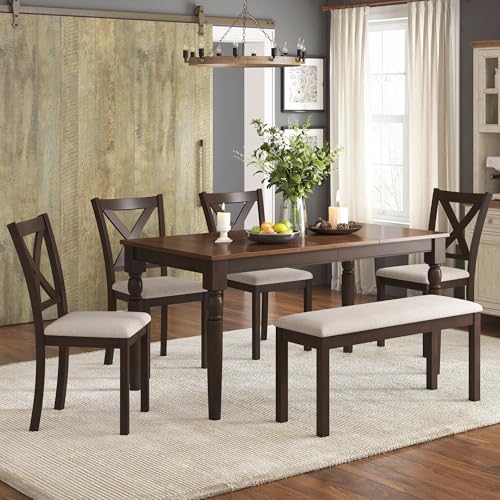
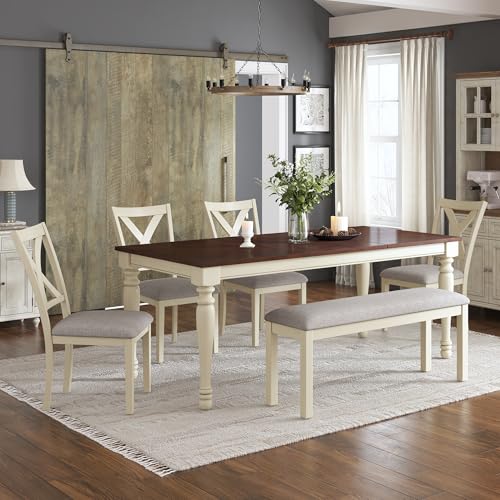


What Makes a Farmhouse Kitchen Table Different?
A farmhouse kitchen table is defined by its honest construction, generous proportions, and a relaxed, lived-in feel. Unlike formal dining tables that prioritize ornamentation, farmhouse designs prioritize usability. You will typically see thick tabletop edges, sturdy legs or trestle bases, and finishes that patina gracefully over time.
Pairing the table with a bench and chairs is a signature farmhouse move. The bench adds casual seating, encourages togetherness, and tucks neatly under the table to save floor space. Chairs on the opposite side provide back support for guests who prefer a more conventional seat. Together, they create a balanced, family-friendly layout.
If you are comparing broader styles, the farmhouse dining table set collection covers full configurations, while the farmhouse dining table and chairs with bench guide focuses on bench-inclusive layouts similar to this one.
Key Sizes and Seating Capacity
Getting the size right is the single most important decision. A table that is too large crowds the room; one that is too small leaves guests uncomfortable. Use the reference below as a starting point, then measure your space carefully.
| Table Length | Typical Seating | Best For |
|---|---|---|
| 48 inches | Bench + 2 chairs | Compact kitchens and breakfast nooks |
| 60 inches | Bench + 3 chairs | Families of four to five |
| 72 inches | Bench + 4 chairs | Larger families and open-plan dining |
| 84 inches and above | Two benches or bench + 5 chairs | Extended family and entertaining |
Allow at least 36 inches of clearance on all sides of the table so benches and chairs can slide out comfortably. In tighter spaces, a bench placed against a wall can reduce the required clearance on that side. For narrow rooms, the farmhouse dining table set for 4 offers a compact footprint, while the farmhouse dining table set for 6 with bench suits growing families.
Choosing the Right Wood and Finish
Farmhouse tables are commonly built from solid hardwood, and the species you choose affects both durability and visual character. Oak and mango are dense and handle daily use well. Acacia brings dramatic grain patterns. Pine is softer but takes painted finishes beautifully, which is ideal for the classic white or sage farmhouse look.
Finish matters as much as species. A sealed, lacquered, or oil-rubbed finish protects against spills and everyday wear. Distressed and whitewashed finishes add farmhouse charm but may show marks more readily. If you want a natural grain look, the mango hardwood dining table is a strong reference point, while the round oak dining table shows how oak performs in a softer silhouette.
Bench and Chair Pairing Options
The bench-and-chair combination is flexible. You can choose a backless bench for a clean, tuck-under profile, or a bench with a low back for added support. Chairs should complement the bench in height and style without matching too rigidly.
Popular pairings include a Windsor-style chair with a painted bench, a ladder-back chair with a natural wood bench, or upholstered chairs with a simple wooden bench. For comfort-focused setups, the farmhouse dining table with upholstered chairs guide explains how to balance soft seating with rustic tables. If you want a broader selection, the farmhouse dining table set collection includes multiple bench and chair combinations.
Seating Height and Clearance
Standard dining tables are around 30 inches high, and standard chairs have an 18-inch seat height. Benches should sit at the same seat height as your chairs for visual consistency. If you choose a counter-height table, typically 36 inches, both the bench and chairs must be counter-height too. Mixing heights creates an uneven and uncomfortable seating line.
Quality Tiers: What to Expect at Each Level
Farmhouse tables are available across a wide range of construction quality. Use the tier framework below to align your expectations with what each level delivers.
Entry-Level
Engineered wood or pine with a veneer finish. Suitable for light use, rental spaces, or temporary setups. Look for reinforced corner blocks and a sealed top.
Mid-Range
Solid wood tops with mixed hardwood frames. Better joinery, thicker tabletops, and more consistent finishes. A balanced choice for everyday family dining.
Premium / High-End
Solid oak, mango, or acacia with mortise-and-tenon joinery, hand-finished surfaces, and heavy-duty hardware. Built as a long-term investment for daily use.
Across all tiers, check for reinforced leg attachments, a tabletop thickness of at least one inch, and a finish that resists moisture. The mid-range tier often delivers the best balance of durability and design flexibility for a farmhouse kitchen table with bench and chairs.
Styling Your Farmhouse Table
Farmhouse style is relaxed, so avoid over-styling. A simple centerpiece such as a wooden bowl, a cluster of candles, or a pitcher of seasonal branches is enough. Textured linens, stoneware plates, and woven placemats reinforce the rustic aesthetic without clutter.
For tabletop ideas, the dinner set for 4 is a practical starting point, and linen napkins add a soft, natural layer. Keep seating comfortable with kitchen chair cushions with ties set of 4 if your chairs have hard seats.
Care and Maintenance Basics
Wipe spills promptly with a soft, damp cloth and avoid harsh abrasive cleaners on sealed wood. Use coasters and trivets to protect the finish from heat and moisture rings. Re-oil or re-seal the tabletop every six to twelve months depending on use, especially in kitchens with high humidity or frequent cooking.
For benches, tighten hardware periodically and check that legs remain level. If the bench is upholstered, vacuum the fabric regularly and spot-clean according to the manufacturer's instructions. For broader care routines, the care and maintenance section covers wood polish, scratch repair, and humidity control.