
Farmhouse Table with Benches: The Complete Buying Guide
A farmhouse table with benches brings warmth, character, and practical seating to any dining space. This guide walks you through everything you need to know before choosing one — from wood species and table proportions to bench styles, finish durability, and everyday styling — so you can pick a set that fits both your room and your lifestyle with confidence.
Why Farmhouse Tables with Benches Remain a Favorite
The farmhouse table with benches has never really left the design conversation, and for good reason. Bench seating is inherently social — it invites people to slide in close, removes the visual clutter of multiple chair backs, and lets you seat more people along the same table length than individual chairs typically allow. For families with children, benches are easy to slide under the table to clear floor space, and they tend to be forgiving of everyday bumps and scuffs.
Beyond practicality, the aesthetic is deeply appealing. A bench softens the formality of a dining room and pushes the whole setup toward a relaxed, gathered-around-the-table feeling. If you are exploring the broader category, the farmhouse dining table hub is a good starting point, and the farm table and bench overview covers the classic pairing in more depth.
Benches also adapt well to different room shapes. Along a wall or in a breakfast nook, a bench can double as built-in-style seating and free up circulation space. In an open-concept kitchen, a bench on one long side keeps sightlines low and airy. That flexibility is why so many buyers researching a farmhouse kitchen table end up choosing a bench configuration rather than an all-chair setup.
Anatomy of a Farmhouse Bench Set
Before comparing specific models, it helps to understand the components that define quality and comfort. A typical farmhouse table with benches includes four elements, and each one affects how the set performs day to day.
The Table Top
The top is usually built from solid wood planks, a butcher-block style panel, or a veneered surface. Thickness, plank width, and edge profile all influence both durability and the rustic character of the piece.
The Base and Legs
Trestle bases, turned legs, and X-frame supports are the most common farmhouse base styles. The base determines stability, knee clearance, and how easily the table seats people at the ends.
The Benches
Benches can be backless, backed, upholstered, or storage-ready. Seat depth and height relative to the table top are the two measurements that most affect comfort.
Joinery and Hardware
Look at how the top attaches to the base, whether corner blocks reinforce the frame, and whether hardware is included for assembly. Solid joinery is what keeps a bench set steady for years.
If you prefer a hybrid arrangement, many sets pair one bench with individual seating on the opposite side. A dedicated farmhouse dining table with bench configuration is worth comparing against a full bench set, especially if older guests or anyone with mobility concerns will be regular diners.
Sizing Your Table and Benches Correctly
Sizing is where most buying mistakes happen. A bench set that looks right in a showroom can feel cramped at home if the clearances are wrong. Use the following guidelines as a starting framework, then adjust for your room.
| Table Length | Typical Seating (benches on both sides) | Recommended Bench Length | Best For |
|---|---|---|---|
| 60–66 inches | 4 to 6 people | 48–54 inches | Small dining rooms, breakfast nooks |
| 72 inches | 6 to 8 people | 60–66 inches | Standard family dining rooms |
| 84–96 inches | 8 to 10 people | 72–80 inches | Open-concept spaces, larger families |
| 96 inches and above | 10 to 12 people | 80–90 inches | Formal dining rooms, entertaining homes |
Key measurements to check before buying
- Table height: Standard dining tables sit around 30 inches high. Counter-height farmhouse sets sit around 36 inches and require matching taller benches.
- Seat-to-table clearance: Aim for 10–12 inches of space between the bench seat surface and the underside of the table apron. Less than that and thighs will rub.
- Bench overhang: A bench should tuck slightly under the table but not so far that knees hit the base. Leave at least 12 inches of legroom per person along the bench.
- Walkway clearance: Keep at least 36 inches of open floor between the bench edge and any wall or cabinet when the bench is pulled out for seating.
- End seating: If you plan to seat people at the table ends, choose a base with open legroom rather than a solid panel.
Pro tip: Tape the table and bench footprint onto your floor with painter's tape before ordering. It is the fastest way to confirm that the set will not overwhelm the room or block a doorway. For tighter rooms, consider a drop-leaf dining room table or explore extendable dining table with bench and chairs options that flex with guest counts.
If you already own a table and only need seating, measure the table length first and pick benches about 8–12 inches shorter than the table on each side. That proportion keeps the benches visually balanced and gives knees somewhere to go. Readers comparing complete sets may also find the farmhouse dining table set for 8 with bench guide useful for larger households.
Choosing the Right Wood Species
The wood species is the single biggest driver of how a farmhouse bench set will look and age. Each species brings a different grain pattern, hardness, and response to wear. Here is how the most common options compare on character and durability rather than on any specific figure.
| Wood Species | Grain Character | Durability Tier | Best For |
|---|---|---|---|
| Pine | Knotty, soft, rustic | Entry-level | Casual family tables, painted finishes |
| Oak | Bold, open grain | Mid-range to premium | Heavy-use family dining, natural stain |
| Maple | Fine, subtle, even | Premium | Clean modern farmhouse looks |
| Walnut | Rich, swirling, dark | High-end tier | Statement dining rooms, luxury interiors |
| Acacia / Mango | Varied, exotic, textured | Mid-tier | Distressed rustic finishes, textured tops |
Hardness matters most on the table top, where plates, glasses, and hot dishes land. Softer woods like pine dent more easily but are also easier to sand and refinish, which is why many painted farmhouse tables hold up well over time. Harder woods like oak and maple resist everyday wear with less maintenance. For more on long-term resilience, the durable dining table guide covers construction details that matter beyond the wood species itself.
Solid wood versus veneered tops
Solid wood planks are the traditional farmhouse choice and can be refinished multiple times over the life of the table. A thick veneered top — usually a real wood layer over a stable engineered core — can look identical from above and resists seasonal movement better in humid climates. Both are legitimate choices at the mid-range and premium tiers. What matters is that the edge banding is clean, the top thickness is proportionate to the base, and the finish is applied evenly.
Consider climate: In humid or dry climates, solid wood planks will expand and contract across the seasons. Tables with breadboard ends, floating tops, or proper cross-bracing handle this movement gracefully. If you are unsure about your local climate, look for a set with a reinforced frame and avoid over-tightened top fasteners.
Bench Styles and Support Types
Not all benches are built the same. The style you pick affects comfort, storage, and how easy it is to clean underneath. These are the main categories you will encounter.
Backless Plank Bench
The traditional farmhouse bench: a simple plank seat on leg supports or a trestle frame. It tucks fully under the table, keeps sightlines open, and is the easiest style to move and store.
Upholstered Bench
An upholstered or cushioned bench adds softness and supports longer meals. Choose performance fabrics or easy-clean covers if the bench is used by children or in a kitchen-adjacent space.
Storage Bench
A storage bench with a lift-up seat or lower shelf hides napkins, table linens, or kids' supplies. It is a smart choice for open-plan homes where every piece needs to earn its footprint.
Backed Bench
A bench with a low back provides more support and a slightly more finished look. It typically stays in place rather than tucking under the table, so plan for extra clearance behind it.
Support styles to look for
- Trestle supports: Two A-frame trestles under the seat. Extremely stable and easy to slide.
- Turned or tapered legs: Four-leg benches that match the table's leg style. Classic farmhouse look, straightforward to assemble.
- X-frame benches: Cross-braced ends add visual interest and lateral stability, common in modern farmhouse sets.
- Wall-anchored benches: Fixed benches built for nooks. These are not movable but are very space-efficient.
If comfort is the priority for some household members, an excellent compromise is a bench on one side and ergonomic dining chairs on the other. That mix keeps the farmhouse feel while giving every diner a seat that suits them. For family setups, it is also worth reading the durable dining chairs guide before committing to the chair side of the pairing.
Finish and Durability Considerations
The finish protects the wood and defines the look. Farmhouse tables typically use one of four finish families, and each behaves differently under daily use.
| Finish Type | Look | Protection Tier | Maintenance Note |
|---|---|---|---|
| Lacquer / Polyurethane | Smooth, even sheen | High | Wipe clean; spot repairs are difficult |
| Hardwax Oil | Natural, matte, tactile | Mid-range | Re-oil occasionally; scratches blend in |
| Water-based Sealer | Clear, low sheen | Mid-tier | Easy to recoat; less heat resistance |
| Painted Finish | Opaque, vintage farmhouse | Varies by topcoat | Touch-ups are simple; dings show as chips |
If the table will host homework sessions, craft projects, and hot dishes, a high-protection topcoat is the safer bet. If you love the look of raw, tactile wood and do not mind occasional maintenance, a hardwax oil finish ages beautifully and is friendlier to repair. Painted finishes are popular on pine benches and are straightforward to touch up over the years.
Check the seat edges: Rounded or eased edges on the bench seat reduce pressure on the back of the thighs during long meals. Square, sharp edges look crisp but can be noticeably less comfortable in extended use.
For outdoor or covered patio versions of this setup, the farmhouse outdoor dining table with umbrella hole guide covers weather-resistant finishes and materials. Indoors, pair your set with a protective table pad if the top surface will see heavy daily use.
Matching the Set to Your Space
A farmhouse table with benches can work in almost any dining footprint, but the configuration should change with the room. Here is how to adapt the setup to common spaces.
Small dining rooms and nooks
Choose a 60–66 inch table with one bench placed against the wall or window side and chairs on the opposite side. The bench acts almost like built-in seating, freeing up circulation. For dedicated small-space layouts, the farmhouse dining table set for 8 with bench and the drop-leaf kitchen table resources are worth a look. If you are building the nook yourself, the DIY breakfast nook guide walks through the built-in bench approach.
Open-concept kitchens
Keep the bench on the side facing the living area so the low profile does not block sightlines. A trestle base with open ends reads lighter than a solid panel base. If the table sits near the kitchen island, leave a clear circulation path and consider a farmhouse kitchen island with seating and storage to unify the zone.
Large family dining rooms
Long 84–96 inch tables with benches on both sides seat eight to ten comfortably. If you entertain often, look at farmhouse dining room sets that include both benches and chairs, or consider an extendable dining table so the table can grow for holidays. Round farmhouse tables also work well in square rooms; the farmhouse style round dining table and chairs guide covers that alternative.
Modern farmhouse interiors
Modern farmhouse leans toward cleaner lines: straight-edge tops, tapered legs, and neutral finishes. The dining tables modern farmhouse guide explains how to keep the rustic warmth without the heavy distressed look. Pair the table with a farmhouse light for dining room to tie the room together.
Styling and Decorating Tips
A farmhouse bench set is a strong visual anchor, so styling should stay relatively restrained. A few well-chosen elements go further than a crowded tabletop.
- Keep the tabletop mostly clear: One centerpiece — a bowl, a pitcher of greenery, or a pair of candlesticks — is usually enough. Farmhouse style is about texture and warmth, not abundance.
- Mix tableware finishes: Stoneware, matte ceramics, and simple glassware complement wood tones without competing. Browse dinnerware sets for options that suit a relaxed farmhouse table.
- Layer textiles lightly: A runner or simple placemats add softness. Table linens in natural fibers — linen, cotton, jute — reinforce the farmhouse feel. The table linens collection covers the main categories.
- Use bench cushions sparingly: A long flat cushion or two small tie-on pads add comfort on a hard plank bench without changing its silhouette. Keep patterns simple and washable.
- Style the bench ends: A basket, a folded throw, or a small stack of books at the end of the bench makes the seating look intentional even when not in use.
- Change with the seasons: A fall dining table centerpiece or a simple spring arrangement is an easy way to refresh the set without adding clutter.
If the table sits near a window, a pair of simple curtains or a woven shade can soften the hard lines of the wood. For lighting, a linear pendant or a modest chandelier hung 30–36 inches above the tabletop works well with both bench and chair seating.
Care and Maintenance for Long-Term Durability
A solid farmhouse table with benches is a long-term investment in your dining room, and simple habits keep it looking good for decades.
- Wipe spills promptly: Even the best finish can be stained by standing liquid. Blot, do not rub, and dry the surface afterward.
- Use coasters and trivets: Heat and moisture are the two most common causes of finish damage. A trivet or coaster set protects the top while keeping the table easy to use.
- Dust with a soft cloth: Avoid abrasive cleaners. For wood finishes, a slightly damp microfiber cloth is usually sufficient.
- Check hardware periodically: Bolts and screws on bench supports and table legs can loosen with use. A quick tighten every few months prevents wobble.
- Control humidity: Solid wood prefers stable humidity. Avoid placing the table directly over a heating vent or against a radiator, and use a humidifier in very dry months if the wood shows signs of checking.
- Refinish when needed: If the finish starts looking tired, a light sanding and a fresh coat of oil or sealer can restore the surface. This is one of the main advantages of solid wood over veneer.
For a deeper dive into protecting wood furniture, the dining care section includes guides on polish, scratch repair, and humidity control. If the bench seat is upholstered, the upholstery cleaning guide covers fabric-specific care.
Top-Rated Farmhouse Tables with Benches to Consider
⚠️ AFFILIATE DISCLOSURE: This website contains affiliate links. As an affiliate Associate, we earn from qualifying purchases. If you make a purchase through these links, we may receive a small commission at no additional cost to you. Read our full affiliate policy.

HUAHUU 63" Farmhouse Dining Table Set for 4-6, Kitchen Table with 2 Benches, Space Saving 3-Piece Rectangle Wooden Dinette Table Set for Dining Room, Breakfast Nook, Small Space, Brown & White
Check price on Amazon
Tribesigns Farmhouse Kitchen Table Set for 4-6, 55-Inch Wooden Dining Table with 2 Benches, Space Saving 3 Pieces Heavy Duty Dinette for Dining Room, Kitchen, Small Space
Check price on Amazon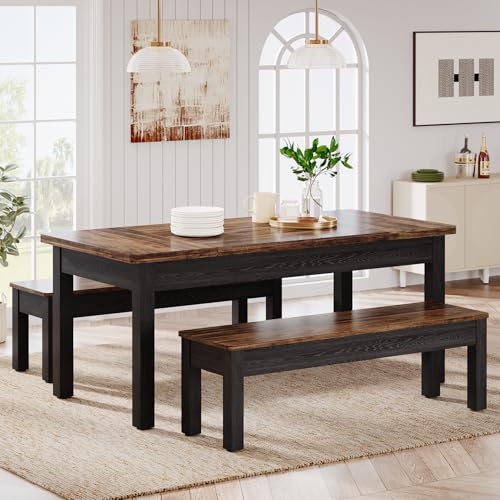
Tribesigns Farmhouse Kitchen Table Set for 4-6, 55-Inch Wooden Dining Table with 2 Benches, Space Saving 3 Pieces Heavy Duty Dinette for Dining Room, Kitchen, Small Space (Black-Brown)
Check price on Amazon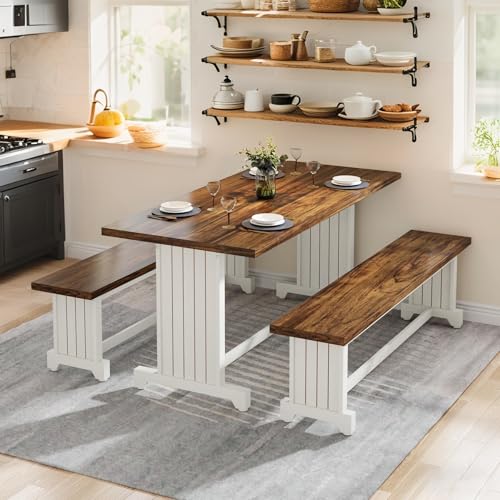
Tribesigns 47-Inch Small Dining Table Set for 2, 3-Piece Kitchen Table with 2 Benches, Farmhouse Wood Dinner Furniture for Narrow Space, Apartment, White & Rustic Brown
Check price on Amazon
STHOUYN 71" Dining Table Set with 2 Benches for 6, Farmhouse Kitchen Table | STHOUYN 3 Piece Rectangular Dining Room Table Set, Sturdy Frame, Easy Clean, Scratch Resistant, Family and Office Use, Brown
Check price on Amazon
70.8" Dining Table Set with 2 Benches, Farmhouse Kitchen Table Set for 4-6 | Heavy-Duty Metal Frame, Thick MDF Tabletop, Rectangle Space Saving Kitchen Table with Benches for Dining Room, Breakfast Nook
Check price on Amazon
SLEKVERSA Extendable Dining Table Set for 4-6, Farmhouse Kitchen Table with 2 Upholstered Benches, Drop Leaf Table and Benches Set for Dining Room, Kitchen, and Apartment, Retro Brown
Check price on Amazon
Tribesigns 55" Farmhouse Kitchen Table with 2 Dining Benches, Space Saving Dining Table Set for 4-6, 3 Pieces Wooden Dinette Set for Small Space, Restaurant, Breakfast Nook
Check price on AmazonFrequently Asked Questions
Is a farmhouse table with benches comfortable for everyday use?
Yes, for most families. Bench seating is comfortable for typical meal lengths, and cushions can be added for longer dinners. If someone in the household needs back support or has mobility concerns, a mixed setup with chairs on one side is the better choice.
How do I know what size bench to pair with my table?
Bench length should be roughly 8–12 inches shorter than the table on each side for a balanced look, and the seat should tuck slightly under the table edge. Leave at least 12 inches of linear seat space per person along the bench.
Can I use a farmhouse bench at a counter-height table?
Only if the bench is built for counter height. Standard dining benches are about 18 inches high and will be too low for a 36-inch counter-height table. Matching counter-height benches are typically around 24–26 inches high.
Is solid wood better than veneer for a farmhouse table?
They suit different priorities. Solid wood can be refinished multiple times and develops patina over the years. A high-quality veneer over an engineered core is more dimensionally stable and can look identical. At the mid-range and premium tiers, both are sound options if construction is solid.
How many people does a typical farmhouse table with benches seat?
A 72-inch table with benches on both sides typically seats six to eight people. Longer 84–96 inch tables seat eight to ten. Adding chairs at the ends increases capacity further when the base allows end seating.
How do I protect the table top from daily wear?
Use coasters and trivets for drinks and hot dishes, wipe spills promptly, and avoid dragging rough objects across the surface. A fitted table pad offers extra protection if the table sees heavy daily use, and a quality finish — polyurethane, hardwax oil, or a water-based sealer — does most of the work if maintained properly.
Ready to Choose Your Farmhouse Table and Bench Set?
You now have the sizing rules, wood comparisons, bench style options, and care guidance to choose with confidence. Browse the recommended sets above or explore related guides to compare configurations for your space.
Compare Farmhouse Bench Sets