


What Makes a Garden Table Suitable for Restaurant Use?
A garden table restaurant setting places unique demands on furniture that residential outdoor tables simply were not designed to meet. In a home garden, a table might be used a few times per week and moved occasionally. In a restaurant garden, the same table may be reset a dozen times per day, dragged across paving to reconfigure seating, exposed to cleaning chemicals, and left outside through every season.
Commercial-grade garden tables are engineered around three pillars: structural durability, weather resistance, and serviceability. Structural durability covers frame thickness, weld quality, and load ratings. Weather resistance covers coatings, UV-stable materials, and drainage. Serviceability covers how easily the table can be wiped down, repaired, or have individual components replaced without discarding the entire unit.
If you are also comparing how a garden table integrates with a broader outdoor cooking and gathering zone, our guide to a firepit dining table outdoor setup explains how heat sources and dining surfaces can be planned together. For smaller venues, the principles in our five piece outdoor dining set overview also apply to compact garden layouts.
Table Size and Guest Flow
Restaurant garden tables are typically specified in two-seat, four-seat, and six-seat configurations. Two-seat square tables are the most flexible for cafés because they can be paired into four-tops during busy periods. Four-seat rectangular tables suit fixed garden layouts with defined pathways. Six-seat round or oval tables work well for covered garden terraces where guests linger longer.
A practical rule is to allow at least 75–90 cm of clearance between the table edge and any wall, planter, or neighbouring table so that chairs can be pulled out and servers can pass comfortably. In garden settings, this clearance should be measured from the paving edge rather than the planter edge, because planters often overhang.
Top Materials and What They Mean for Daily Service
The tabletop is the most visible and most frequently cleaned component of any garden table restaurant setup. The four common commercial top materials are:
- High-pressure laminate (HPL) tops — a dense, resin-bonded surface that resists scratches, stains, and UV fading. HPL is widely used in commercial outdoor café tables because it is lightweight, easy to wipe, and available in many finishes.
- Solid teak or acacia tops — natural timber that ages gracefully but requires periodic oiling. Solid hardwood tops are a strong choice for premium garden restaurants where aesthetic warmth matters more than weight savings.
- Powder-coated aluminium tops — lightweight, rust-proof, and ideal for coastal gardens. Aluminium tops can feel warm in direct sun, so they pair best with shaded or covered zones.
- Compact laminate or stone-composite tops — the top-tier option for high-end garden restaurants. These tops are extremely durable, heat-resistant, and heavy, so they suit fixed layouts rather than repositionable seating.
Frame construction matters just as much as the top. Commercial garden tables usually use powder-coated steel, stainless steel, or cast aluminium frames. Powder-coated steel offers the best balance of rigidity and weather resistance for most restaurant gardens, while stainless steel is the professional-grade choice for coastal or high-humidity locations.
Durability Tiers for Commercial Garden Tables
Rather than thinking in terms of numbers, it helps to classify commercial garden tables by durability tier. The table below summarises how each tier performs in a restaurant garden environment. Use it to match the table specification to the intensity of your service.
| Tier | Typical Construction | Best For | Service Life in Restaurant Gardens |
|---|---|---|---|
| Starter tier | Powder-coated steel frame with HPL top | Seasonal cafés, pop-up garden dining, low-traffic terraces | Light daily service with seasonal storage |
| Mid-tier | Reinforced aluminium or heavier steel frame with HPL or solid acacia top | Year-round cafés and casual garden restaurants | Regular daily service in mixed weather |
| High-end tier | Powder-coated or stainless steel frame with solid teak or compact laminate top | Premium garden restaurants, hotel terraces, brunch venues | Heavy daily service with full weather exposure |
| Commercial-grade / flagship tier | Marine-grade stainless steel, cast aluminium, or heavy solid hardwood with reinforced joinery | Coastal venues, all-weather garden restaurants, high-turnover patios | Continuous multi-season commercial use |
In practice, most independent garden restaurants settle on the mid-tier or high-end tier for their main seating and reserve starter-tier tables for overflow or seasonal zones. The key is to match the tier to how often the table will be moved and how exposed it will be to salt, rain, and sun.
Choosing Garden Chairs and Benches to Pair With the Table
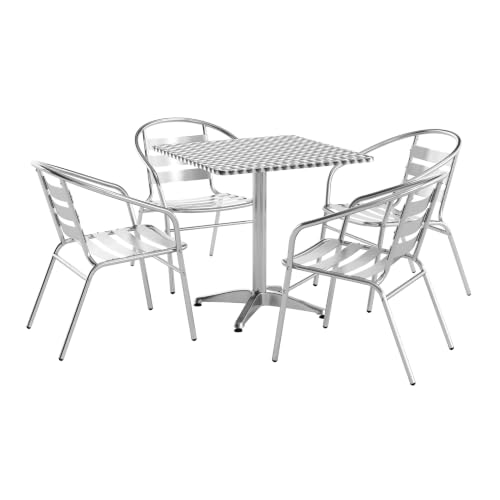
A garden table restaurant is only as comfortable as its seating. Stackable chairs are the standard for commercial gardens because they allow rapid reconfiguration and compact storage overnight. Look for chairs with reinforced joints, UV-stabilised resin or powder-coated aluminium frames, and replaceable seat pads.
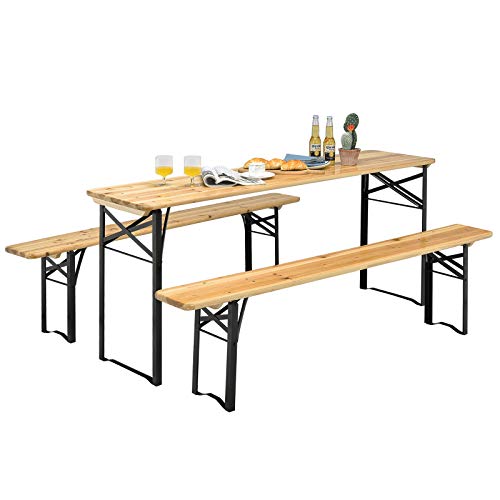
Benches are increasingly popular in garden restaurant layouts because they allow flexible seating density. A bench paired with a garden table can seat more guests along a wall or planter edge than individual chairs. If you are exploring bench-based layouts, our foldable benches overview explains how folding designs help with seasonal storage. For venues that need to pack down between services, the folding outdoor dining table guide covers the trade-offs between folding mechanisms and long-term rigidity.
If your garden restaurant uses a mix of fixed and flexible seating, it is worth reviewing our garden table and 6 chairs comparison to see how a complete set is specified end to end. For smaller garden footprints, the garden table overview provides a broader context on how garden tables are sized and finished.
Chair Weight and Repositioning
Commercial garden chairs should be light enough for a single server to move safely but heavy enough not to blow over in wind. A practical range is 3–6 kg per chair for aluminium or resin frames, and 5–8 kg for solid wood or heavier steel frames. Chairs that are too light require weighted bases or tie-downs in exposed gardens.
Weather Resistance: What Restaurant Garden Tables Need to Survive
Restaurant gardens experience weather differently from home gardens because furniture is rarely packed away and cleaning is more frequent. Three factors matter most:
- UV stability — HPL, powder-coated aluminium, and UV-stabilised resin are the most UV-stable materials. Untreated timber and low-grade plastics fade or chalk over time.
- Corrosion resistance — stainless steel and powder-coated aluminium resist corrosion best. In coastal gardens, specify marine-grade stainless steel hardware even if the frame is aluminium.
- Drainage and moisture management — slatted or perforated tops allow rainwater to drain away instead of pooling. Solid tops should have a slight crown or be paired with covers during heavy rain.
If your garden restaurant includes an outdoor fireplace or firepit zone, the same weather-resistance principles apply to adjacent furniture. Our firepit table and chairs guide covers heat-safe materials that pair well with garden dining layouts.
Planning tip: Specify a maintenance schedule at the same time you specify the furniture. A simple quarterly routine — washing frames, inspecting welds, tightening hardware, and oiling timber tops — extends the service life of high-end tier garden tables considerably and keeps the venue looking consistent for guests.
Layout and Zoning for a Garden Restaurant
A garden table restaurant works best when the outdoor area is zoned into distinct seating experiences rather than a single uniform grid of tables. Common zones include a covered terrace for all-weather dining, an open garden lawn zone for casual seating, and a bar or service edge with high stools.
When planning zones, keep these practical distances in mind:
- 1.2–1.5 m between table centres for two-seat tables, to allow chair pull-out and server passage.
- 0.9–1.0 m of clear walkway along the main service route.
- 0.6 m minimum between the back of a seated guest and the nearest planter or wall.
Zoning also affects the table tier you choose. Covered terrace tables can safely use timber tops with less weather exposure, while open-lawn tables should lean toward HPL or powder-coated aluminium tops. If your garden restaurant also serves as a multi-use event space, the flexibility principles in our fold away table and chairs for small spaces guide are worth reviewing.
Accessibility and Comfort
Commercial garden tables should include at least one accessible-height table (typically 72–75 cm) with clear knee clearance and a 1.2 m turning circle beside it. Chair seat height should sit around 44–46 cm for standard dining, with a small proportion of lounge-height options for garden bar areas.
Maintenance and Cleaning for Commercial Garden Tables
Daily cleaning is unavoidable in a restaurant garden, and the cleaning method should match the table material. HPL tops tolerate most commercial degreasers. Timber tops should be cleaned with a pH-neutral solution and re-oiled periodically. Powder-coated aluminium frames should be wiped with warm soapy water and inspected for chips, which should be touched up promptly to prevent corrosion under the coating.
For venues in coastal areas, a monthly freshwater rinse of all metal components helps remove salt deposits before they accelerate corrosion. Hardware such as bolts and brackets should be checked quarterly and replaced if they show surface rust.
How to Compare Garden Tables Before You Commit
When comparing garden table options for a restaurant, focus on the following checklist rather than headline features:
- Frame gauge and weld quality — thicker gauge is not automatically better, but visible, continuous welds and reinforced joints are a reliable durability signal.
- Top material and finish — check whether the finish is factory-applied and rated for outdoor commercial use.
- Replacement part availability — tables that allow individual tops, legs, or feet to be replaced have a longer effective service life.
- Stacking and storage behaviour — if the venue closes or storms are frequent, stacking or folding ability matters.
- Weight and stability in wind — heavier frames with adjustable feet resist wobble on uneven paving.
If your garden restaurant also includes a small retail or takeaway counter, the storage and flow ideas in our food storage guide can help keep service areas tidy alongside the garden seating.
Frequently Asked Questions
Can residential garden tables be used in a restaurant garden?
Residential tables can work in very light seasonal settings, but they are not built for daily restaurant service. Commercial garden tables use thicker frames, better coatings, and replaceable components that residential tables usually lack.
What is the best tabletop material for a garden restaurant?
HPL is the most practical all-round choice for most cafés and garden restaurants. Solid teak and compact laminate are better suited to premium venues where the aesthetic and durability justify the higher tier.
How many chairs fit around a garden restaurant table?
Two-seat square tables are the most flexible for cafés. Four-seat tables need roughly 1.2 m of table width for comfortable seating, and six-seat tables typically need 1.6–1.8 m depending on shape.
How often should commercial garden tables be maintained?
Daily cleaning is standard. A deeper inspection of frames, welds, and hardware should happen quarterly, with timber tops re-oiled every few months depending on exposure.
Do folding or stackable garden tables last as long as fixed tables?
High-end folding and stacking tables can last comparably to fixed tables, but mechanism quality varies widely. For permanent garden seating, fixed or bolt-down tables generally offer the most rigidity and longest service life.