
Kitchen Island with Stainless Steel Top and Seating: The Complete Guide
Discover how a stainless steel-topped island with built-in seating can transform your kitchen into a hardworking prep zone and a welcoming gathering spot. We break down material grades, seating layouts, storage options, and maintenance so you can choose with confidence.
Explore Recommended OptionsWhy stainless steel and seating belong together: A stainless steel top offers a hygienic, heat-tolerant, and easy-to-clean work surface, while integrated seating turns the island into a natural hub for casual meals, homework, and conversation. This guide walks you through the practical decisions — size, overhang, finish, storage, and durability — so you can match an island to your kitchen's workflow and your household's daily rhythm.
What Makes a Stainless Steel Island Different
Stainless steel is a workhorse material in professional kitchens, and that reputation has steadily moved into residential design. Unlike wood or stone, a stainless steel countertop is non-porous, which means it resists stains, odors, and bacterial buildup far better than most surfaces. It also tolerates hot pans and frequent wiping, making it a practical companion for families who cook daily and entertain often.
When you add seating, the island shifts from a pure prep surface into a multi-purpose zone. The top becomes a serving counter, a breakfast bar, and a landing spot for coffee and conversation. The key is planning the seating overhang carefully — typically at least 12 inches for backless stools and 15 inches for chairs with backs — so knees and elbows have room to move comfortably.
If you are still weighing broader layout options, our kitchen island with seating guide covers the fundamentals of spacing, traffic flow, and stool height, while this page focuses specifically on the stainless steel variant and how it interacts with seating.
Material Grades and Finish Options
Not all stainless steel tops are created equal. The grade and finish affect durability, appearance, and how well the surface hides everyday wear. Understanding these distinctions helps you pick an island that will look and perform well for years.
Common Grades
- Grade 304 (18/8): The standard for residential kitchen surfaces. It offers strong corrosion resistance and handles frequent contact with water, acidic foods, and cleaning agents. Most premium and mid-range stainless steel islands use 304.
- Grade 201: Often found in entry-level and mid-tier units. It is durable for light use but less resistant to corrosion over time, making it better suited to dry prep zones or secondary islands.
- Grade 316 (marine grade): A top-tier choice for coastal homes or kitchens with heavy humidity exposure. It resists salt and moisture exceptionally well, making it a long-term investment for demanding environments.
Finish Choices
- Brushed / satin: The most forgiving finish. It hides fingerprints, water spots, and fine scratches, and it pairs naturally with industrial and modern farmhouse styles.
- Polished / mirror: A striking luxury look that reflects light and makes small kitchens feel larger. It shows smudges and scratches more readily, so it suits households that enjoy routine polishing.
- Textured / embossed: An emerging option that adds grip and hides wear, often used on commercial-grade units. It is less common in residential seating islands but offers strong durability.
Tier Comparison at a Glance
| Tier | Typical Material & Build | Best For | Durability Notes |
|---|---|---|---|
| Entry-level | Grade 201 steel, thinner gauge, basic cabinet base | Light prep, occasional seating, starter kitchens | Solid for daily light use; may show corrosion near sinks over time |
| Mid-range | Grade 304 steel, brushed finish, reinforced base | Daily cooking families, casual dining, moderate storage needs | Good value for its tier; handles heat, moisture, and frequent wiping well |
| Premium | Grade 304 with thicker gauge, satin finish, soft-close hardware | Serious home cooks, entertaining-focused layouts | Heavy-duty feel; resists dents and scratches better than lighter builds |
| Luxury / commercial-grade | Grade 316 or heavy-gauge 304, custom fabrication, integrated storage | High-humidity homes, professional-style kitchens, long-term investment | Rust-proof finish and reinforced construction; built to last decades |
These tiers are relative, not absolute. A well-built mid-range island from a reputable maker can outperform a poorly assembled premium unit, so always check welds, gauge thickness, and base construction before committing.
Pros and Cons of a Stainless Steel Top
Advantages
- Non-porous and easy to sanitize
- Heat-resistant — hot pans can rest directly on the surface
- Resists stains, odors, and bacterial growth
- Lightweight relative to stone, simplifying installation
- Reflects light, helping smaller kitchens feel brighter
- Pairs well with industrial, modern, and transitional styles
Considerations
- Develops fine scratches over time (normal and often hidden by brushed finishes)
- Can show fingerprints, especially on polished surfaces
- Cold to the touch — less inviting for elbows resting on the counter
- May feel clinical unless softened with wood seating and warm textures
- Requires occasional polishing to maintain a uniform sheen
For households that prioritize hygiene and heavy daily use, the advantages usually outweigh the drawbacks. Designers often soften the industrial edge by pairing stainless steel with wooden stools, warm lighting, and textured textiles — an approach that fits naturally with the ideas in our kitchen island with seating and storage ideas collection.
Seating Layouts That Work
The seating arrangement determines how the island functions day to day. The right layout depends on your household size, the available floor space, and whether the island is the primary dining spot or a secondary perch.
Seating for Two
A two-seat configuration is ideal for couples, small apartments, and kitchens where the island doubles as a breakfast bar. A straight run of two stools along one side keeps the footprint compact and preserves walkway clearance. If you want more detail on compact arrangements, our kitchen island with seating for 2 and storage guide explores how to balance stools with cabinet depth.
Seating for Four
Four seats usually mean either a single long run of stools or an L-shaped arrangement that wraps around one corner. Four is a sweet spot for families with young children, offering enough room for casual meals without dominating the kitchen. For layout diagrams and overhang measurements, see our kitchen island with seating for four breakdown.
Seating for Six
Six seats typically require a longer island — often 8 feet or more — or a combination of a straight run plus a short return. This arrangement suits larger families and hosts who entertain frequently. A stainless steel top is especially practical here because it handles the wear of daily group meals and quick cleanups. Our kitchen island with seating for 6 and storage guide details the spacing math.
Stool Height and Clearance
- Standard counter height (36 inches): Pair with 24–26 inch stools.
- Bar height (42 inches): Pair with 28–30 inch stools.
- Overhang: At least 12 inches for backless stools, 15 inches for chairs with backs, and up to 18 inches for deep knee space.
- Walkway: Leave 36–48 inches between the island and surrounding counters or walls for comfortable movement.
If you are still deciding between backless and backed seating, our kitchen stools with backs page compares comfort and style trade-offs.
Storage and Functionality
Seating islands work best when storage is planned around the seating zone rather than squeezed into leftover space. Common configurations include drawers on the prep side, open shelving on the seating side for books and baskets, and a pull-out trash or recycling bin tucked beneath the counter.
For a deeper look at how storage and seating interact, our kitchen island with seating and storage hub collects layout ideas, drawer strategies, and real-world configurations. If your kitchen is tight, the kitchen island with seating and storage on wheels option offers flexibility — roll it into the prep zone during cooking and out to the dining area for meals.
Larger households often benefit from a full-scale storage island; our large kitchen island with storage and seating guide covers proportions and cabinet depth for bigger footprints.
Care and Maintenance
Stainless steel is low-maintenance, but a few habits keep it looking its best:
- Wipe daily with a soft cloth and mild dish soap. Avoid abrasive pads that can dull the finish.
- Use a stainless steel polish occasionally to restore sheen and reduce fingerprint visibility. Apply in the direction of the brushed grain.
- Rinse acidic foods promptly. Citrus, vinegar, and tomato sauces can leave marks if left sitting for long periods.
- Use cutting boards for heavy chopping. While stainless steel is durable, consistent direct cutting will scratch the surface.
- Avoid chlorine-based cleaners. They can pit the surface over time, especially on lower-grade steel.
For a broader overview of caring for metal surfaces, see our metal and hardware care guide.
Design Integration Tips
Stainless steel can feel cold or clinical if it dominates the room. A few design moves soften the look and help the island blend with the rest of the kitchen:
- Warm the seating side: Wooden stools, leather cushions, or woven baskets introduce texture and warmth.
- Layer lighting: Pendant lights above the seating zone draw attention to the gathering spot and balance the cool reflection of the steel.
- Mix materials: Pair the steel top with a wood or painted cabinet base to create contrast and visual interest.
- Add a runner or placemats: Textiles soften the surface and reduce noise during meals.
- Coordinate with appliances: If your kitchen already features stainless appliances, the island top creates a cohesive, professional look.
For style context, explore our industrial loft dining and modern minimalist dining pages — both aesthetics pair naturally with stainless steel surfaces.
Buying Checklist
Before you decide, confirm:
- Steel grade (304 or 316 for wet zones; 201 for dry prep)
- Finish (brushed for low maintenance; polished for a luxury look)
- Countertop overhang matches your seating type (12–18 inches)
- Stool height matches counter height (36 or 42 inches)
- Walkway clearance of at least 36 inches on all working sides
- Storage configuration suits your cooking and entertaining habits
- Base construction: reinforced frame, soft-close hardware, leveling feet
- Warranty covers the steel top and structural frame
If you are still comparing island types, our kitchen islands hub offers a broader comparison across materials, sizes, and configurations. And if your layout leans toward a dedicated eating area rather than island seating, the kitchen table and chairs collection provides an alternative path.
Frequently Asked Questions
Is a stainless steel top good for a kitchen island with seating?
Yes. Stainless steel tops are heat-resistant, easy to sanitize, and durable for daily food prep. They pair well with seating when the overhang is properly sized for legroom — typically 12 inches for stools and 15 inches for chairs with backs.
How much overhang do I need for island seating?
Aim for at least 12 inches of countertop overhang for stools and 15 inches for chairs with backs. Deeper overhangs improve comfort and prevent knee contact with the cabinet base.
Will a stainless steel top scratch easily?
Stainless steel develops fine surface scratches over time, which is normal. Choosing a brushed or satin finish hides marks better than a polished mirror finish, and using cutting boards protects the surface during heavy chopping.
Can I add seating to an existing stainless steel island?
If the island has a deep enough overhang and open space below, you can add stools. If the cabinet base extends flush to the edge, you may need a knee-wall modification or a new seating-side panel — consult a fabricator before committing.
Which stool height matches a standard kitchen island?
A standard 36-inch counter height pairs with 24–26 inch stools, while a 42-inch bar height pairs with 28–30 inch stools. Always measure from the floor to the underside of the countertop, not the top surface.
Recommended Kitchen Islands with Stainless Steel Top and Seating
⚠️ AFFILIATE DISCLOSURE: This website contains affiliate links. As an affiliate Associate, we earn from qualifying purchases. If you make a purchase through these links, we may receive a small commission at no additional cost to you. Read our full affiliate policy.

Dripex 41'' Kitchen Islands with Stainless Steel Top & Seating White | Stainless Steel Countertop, Drop Leaf, Bar Stool, Power Outlet, Adjustable Storage Shelves, Spice Rack
Check price on Amazon
Concho 71'' Rolling Kitchen Island with Seating and Stainless Steel Countertop, Mobile Kitchen Carts with Folding Drop Leaf, 2 Bar Stools, Power Outlet, Spice/Towel Rack, Zest Black
Check price on Amazon
DWVO Kitchen Island Stainless Steel Top Drop Leaf Bar Seating Power Outlet | 60" Large Rolling Mobile Center Islands w Folding Dropleaf Storage Drawer Cabinet Wheel Counter Height Metal Top, Black
Check price on Amazon
Concho 56'' Rolling Kitchen Island with Seating and Stainless Steel Countertop, Folding Drop Leaf, Bar Stool, Power Outlet, Spice/Towel Rack, Black
Check price on Amazon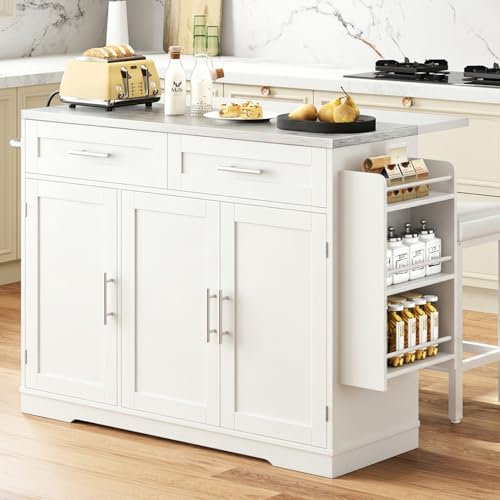
Concho 56'' Rolling Kitchen Island with Seating and Stainless Steel Countertop, Folding Drop Leaf, Bar Stool, Power Outlet, Spice/Towel Rack, White
Check price on Amazon
Concho 56" Kitchen Island with Stainless Steel Countertop and Seating White | Bar Stool Included, Stainless Steel Countertop, Folding Drop‑Leaf, Built‑In Power Outlet, Spice&Towel Rack, Rolling on Wheels
Check price on Amazon