
Kitchen Table Bench Seating: The Complete Buying Guide
Everything you need to know about choosing, placing, and styling bench seating for your kitchen table — from space-saving layouts to material durability and comfort tiers.
Why Choose Bench Seating for Your Kitchen Table?
Bench seating is far more than a stylistic choice — it is a practical solution for many common kitchen-dining challenges. Understanding the benefits helps you decide whether a bench fits your household's daily rhythm.
Space Efficiency
Benches slide completely under the table, reclaiming floor area that chairs would otherwise occupy. This is invaluable in compact kitchens and apartments.
Increased Seating
A single bench can comfortably seat three to four people — often more than the same linear space would allow with individual chairs.
Built-In Storage Potential
Many bench designs incorporate lift-up seats or drawers, turning dead space into practical storage for linens, board games, or small appliances.
Casual, Welcoming Aesthetic
Benches signal relaxed family dining and encourage conversation. They soften the formality of a traditional chair-only setup.
Kid-Friendly Height
Lower bench seats are easy for children to climb onto, making family meals more inclusive for younger diners.
Versatile Placement
Benches work against walls, in corners, under windows, and as room dividers — they adapt to the architecture of your kitchen.
Types of Kitchen Table Bench Seating
Bench seating comes in several configurations, each suited to different room shapes and usage patterns. Knowing the distinctions helps you narrow down the right option before you shop.
1. Freestanding Benches
These are standalone pieces that pair with any standard kitchen table. They can be moved, repositioned, or used elsewhere when needed. Freestanding benches are the most flexible choice for renters or households that rearrange furniture frequently. They range from simple wooden planks with legs to upholstered benches with storage compartments.
2. Built-In Banquette Seating
Built-in banquettes are fixed to the wall or floor and often form an L-shape or U-shape around the table. They maximize corner space and create a cozy, restaurant-style nook. Built-ins are ideal for dedicated breakfast corners but require permanent installation and careful measurement. Many homeowners pair a built-in banquette with a freestanding bench on the opposite side for flexibility.
3. Corner and L-Shaped Benches
An L-shaped bench hugs two walls, turning an awkward corner into prime seating. This configuration works beautifully in square kitchens or alcoves. If you are exploring corner layouts, the guide to an L-shaped breakfast nook bench covers dimensions and placement in detail. For a wider look at nook configurations, the kitchen nook bench overview is a useful starting point.
4. Storage Benches
Storage benches feature lift-up lids, pull-out drawers, or open cubbies beneath the seat. They are excellent for stowing away table linens, kids' craft supplies, or seasonal items. A storage bench effectively combines seating and a sideboard in one footprint. If storage is a priority, consider pairing a storage bench with a table that also offers shelving — the kitchen table with storage guide explains how to combine both.
5. Upholstered and Cushioned Benches
For longer meals and everyday comfort, upholstered benches with foam padding make a noticeable difference. Look for removable, washable covers if the bench will be used by children. Cushioned benches are especially valuable in banquette setups where the seat doubles as a lounging spot.
Materials and Durability: What to Look For
The material of your bench determines its longevity, maintenance requirements, and visual fit with your kitchen. Here is how the common options compare.
| Material | Best For | Durability Tier | Maintenance |
|---|---|---|---|
| Solid Wood (Oak, Pine, Birch) | Traditional and farmhouse kitchens; heavy daily use | High-end tier | Occasional polish; sand and refinish if scratched |
| Engineered Wood / MDF | Painted finishes; stable, uniform look | Mid-tier | Wipe clean; avoid prolonged moisture exposure |
| Metal Frame with Wood Seat | Industrial and modern kitchens; high-traffic homes | Commercial-grade | Minimal; check joint tightness periodically |
| Upholstered (Fabric or Leather) | Comfort-focused dining; banquette seating | Premium to luxury tier | Vacuum fabric; condition leather every few months |
| Rattan / Wicker | Coastal and breezy interiors; light use | Entry-level to mid-range | Dust regularly; keep away from direct moisture |
When comparing tiers, note that mid-range benches often use reinforced joinery that outperforms entry-level construction, while premium and luxury tiers typically add upholstery quality, precision hardware, and refined finishes. For a long-term investment, solid wood or metal-frame benches generally offer the best balance of durability and repairability.
Layout and Measurement Guide
Getting the dimensions right is the single most important step before purchasing bench seating. A bench that is too deep crowds the table; one that is too tall creates uncomfortable posture. Use these guidelines as your starting point.
Key Measurements to Record
- Table height: Standard dining tables are 28–30 inches tall. Bench seat height should be 16–18 inches for a comfortable 10–12 inch gap between seat and tabletop.
- Bench depth: Aim for 14–18 inches. Deeper benches (18–20 inches) suit lounging but may push diners too far from the table.
- Clearance per person: Allow 22–24 inches of bench length per adult diner for comfortable elbow room.
- Wall clearance: Leave at least 2 inches between the bench back and the wall to prevent scuffing and allow air circulation.
- Table overhang: Ensure the tabletop overhangs the bench by at least 2–3 inches so knees have room and spills land on the floor, not the bench.
- Walkway clearance: Keep 30–36 inches of open floor between the bench edge and any opposing counter or wall for safe movement.
For tight kitchens, a bench on one side and chairs on the other is a common compromise. The kitchen table with bench and chairs guide illustrates how to balance the two seating types without cramping the room. If your table sits against a wall, a bench is almost always the smarter choice — the kitchen table with bench seat page covers wall-adjacent configurations in more depth.
Styling Bench Seating Within Your Kitchen
Bench seating should feel intentional rather than improvised. A few design principles help it blend seamlessly with the rest of your kitchen.
Coordinate with Your Table
Match the bench's wood tone or finish to the table for a cohesive set, or deliberately contrast materials — for example, a dark metal bench with a light oak table — to create visual interest. The kitchen table with bench collection offers pairing inspiration across styles. If you prefer a unified look, explore complete kitchen table sets that include matching benches.
Add Cushions and Textiles
A bench without padding can feel austere during long meals. A fitted bench cushion or a few tied seat pads add comfort and introduce color. Choose performance fabrics in busy households, and consider a washable runner across the bench seat for easy cleanup.
Use the Space Beneath
If your bench does not have built-in storage, shallow baskets or rolling crates can slide underneath to hold napkins, small toys, or pet supplies. This keeps the surface clear and the floor purposeful.
Lighting and Ambiance
Bench seating often sits against a wall or under a window, so pay attention to lighting. A pendant or a pair of sconces above the bench keeps the area bright and welcoming. The kitchen table chandelier guide helps you choose a fixture that suits a nook-style layout.
Bench Seating Buying Checklist
Before you commit to a bench, run through these practical checks to avoid common pitfalls.
Pre-Purchase Checks
- Measure your table height and confirm the bench seat height falls within 16–18 inches.
- Verify the bench length allows 22–24 inches per diner.
- Check whether the bench fits under the table overhang without scraping.
- Confirm the bench's weight capacity meets your household's needs — especially for storage benches that may hold heavy items.
- If buying a storage bench, test the lid mechanism for smooth, safe operation (soft-close hinges are a plus in homes with children).
- For upholstered benches, confirm covers are removable and washable.
- Measure doorways and stairwells to ensure delivery access.
- Check assembly requirements — some benches ship flat-packed and require tools.
Bench Seating Quality Tiers Explained
Bench seating spans a wide range of construction quality. Rather than focusing on numbers, use these tier descriptors to compare options relative to one another.
| Tier | Typical Characteristics | Best For |
|---|---|---|
| Entry-Level | Basic engineered wood or lightweight frames; simple joinery; limited finish options | Occasional use, temporary setups, first apartments |
| Mid-Range | Solid wood or reinforced frames; better hardware; some storage options; wider finish selection | Everyday family dining, long-term household use |
| Premium | Hardwood construction; precision joinery; upholstered or cushioned seats; soft-close storage | High-frequency use, design-conscious kitchens |
| Luxury / Commercial-Grade | Hardwood or metal frames; contract-grade upholstery; custom sizing; exceptional durability | Heavy daily use, large families, open-plan entertaining |
As a rule, mid-range benches offer the most balanced combination of durability and design flexibility for typical households. Premium and luxury tiers make sense when the bench will be used multiple times daily or when it needs to match high-end cabinetry.
Common Mistakes to Avoid
- Ignoring seat height: A bench that is too tall forces diners to hunch; one that is too low makes them reach awkwardly. Always compare bench height to table height.
- Overlooking the table overhang: Without adequate overhang, knees collide with the table apron and the bench feels cramped.
- Choosing depth by appearance alone: A deep bench looks generous in a showroom but may push diners too far from the table in practice.
- Forgetting traffic flow: A bench placed in a walkway creates a trip hazard. Keep clear paths around the seating area.
- Skipping cushioning: Hard benches become uncomfortable during long meals. Plan for a cushion or seat pads from the start.
- Mismatching finishes: A bench that clashes with the table or cabinetry can make the whole kitchen feel disjointed. Bring samples or swatches when possible.
Frequently Asked Questions
What is the ideal height for a kitchen table bench?
How many people can sit on a kitchen bench?
Is bench seating comfortable for everyday meals?
Can I use a bench with any kitchen table?
How do I clean and maintain a bench with storage?
Are benches safe for young children?
Ready to Find Your Perfect Bench?
Browse our recommended bench seating and kitchen table combinations below, or explore the full kitchen table collection to compare styles, materials, and configurations side by side.
Recommended Kitchen Table Bench Seating Products
⚠️ AFFILIATE DISCLOSURE: This website contains affiliate links. As an affiliate Associate, we earn from qualifying purchases. If you make a purchase through these links, we may receive a small commission at no additional cost to you. Read our full affiliate policy.
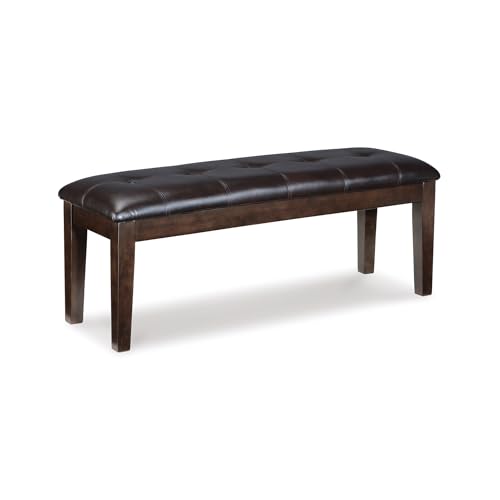
Signature Design by Ashley Haddigan 1-Piece Dining Bench, Faux Leather | Classic button tufted seat, Wood and engineered wood frame, 18.75 in seat height, 2-person capacity, Dark brown finish
Check price on Amazon
Signature Design by Ashley 1-Piece Wood Dining Bench, 48" 2-Tone Farmhouse | Sturdy solid wood frame with mango veneer and MDF substrate seat, Space-saving 48-inch profile, Wildenauer Series
Check price on Amazon
HOOBRO 39.3'' Bamboo Dining Bench, Farmhouse Kitchen Table Bench, Kitchen & Living Room Furniture, Easy to Assemble, Sturdy and Stable, Mocha MA03CD01G2
Check price on Amazon
HOOBRO 39.3'' Bamboo Dining Bench, Farmhouse Kitchen Table Bench, Kitchen & Living Room Furniture, Easy to Assemble, Sturdy and Stable, Black BK03CD01G2
Check price on Amazon
Roundhill Furniture Biony Fabric Dining Bench with Nailhead Trim, Tan
Check price on Amazon
Signature Design by Ashley Moriville Wood Upholstered Dining Bench, Beige | Cushioned 48-inch dining seat in textured beige polyester, Rustic distressed nutmeg wood frame with bronze nailhead trim
Check price on Amazon
VASAGLE Dining Bench Set of 2, 42.5'' Kitchen Bench | Industrial Style, Steel Metal Frame, for Kitchen, Dining Room, Living Room, Entryway, Rustic Brown and Black, UKTB33X
Check price on Amazon