
Kitchen Table Chairs: The Complete Buying Guide
Everything you need to choose chairs that fit your table height, seat your family comfortably, and stand up to daily kitchen life — from sizing rules to material choices and matching strategies.
Start With SizingKitchen table chairs are one of the most-used pieces of furniture in the home. They get pulled in and out several times a day, they host breakfasts, homework sessions, and late-night conversations, and they need to look good while doing all of it. This guide is written for shoppers who already know they need chairs and are now working through the details: which height fits which table, how many chairs will realistically fit, which materials survive a busy household, and how to build a set that feels intentional rather than pieced together.
We will walk through the practical measurements first, because getting the height and spacing right matters more than any style decision. From there we cover frame construction, seat comfort, upholstery choices, and the different market tiers so you can judge what each level of chair actually delivers. If you are still deciding on the table itself, our guide to kitchen tables pairs well with this article. If you prefer to buy everything together, the kitchen table and chairs overview covers coordinated sets.
Recommended Kitchen Table Chairs and Sets
⚠️ AFFILIATE DISCLOSURE: This website contains affiliate links. As an affiliate Associate, we earn from qualifying purchases. If you make a purchase through these links, we may receive a small commission at no additional cost to you. Read our full affiliate policy.

DUMOS Dining Chairs Set of 6, PU Leather Kitchen Chairs for Living Room | Upholstered, Wooden Legs, Padded Seat, High Back, Armless, Modern Accent, Dining Room, Restaurant, Brown
Check price on Amazon
Karl home Dining Chairs Set of 4, PU Leather & High Back, Black | Black Kitchen Chairs with Padded Seats & Foot Cap Protection for Dining Kitchen Living Room, 300Lbs Capacity, Space‑Saving
Check price on Amazon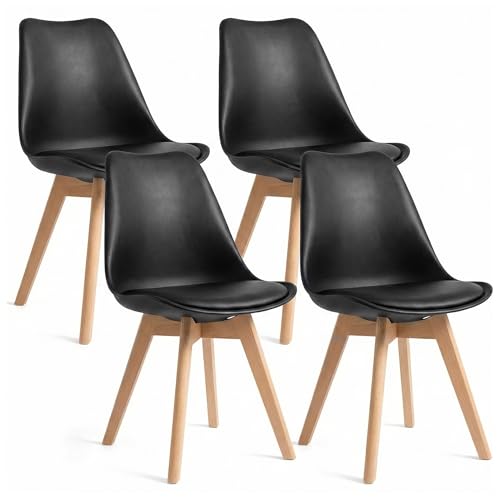
Dining Chairs Set of 4, Modern Upholstered Dining Room Chairs with PU Leather Padded Seat, Armless Kitchen Chairs with Curved Backrest and Solid Wood Legs for Dining Room, Kitchen, Apartment, Black
Check price on Amazon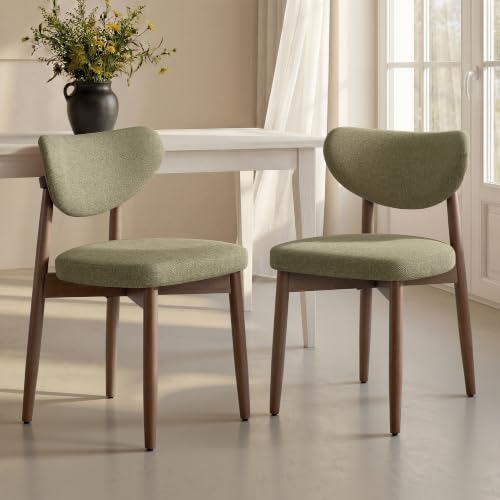
VASAGLE Wood Dining Chairs Set of 2, Linen-Look Upholstered Kitchen Chairs | Solid Wood Legs, Ergonomic Curved Backrest, Built-in Handle, Mid Century Modern, for Kitchen Dining Vanity, Sage Green
Check price on Amazon
FDW | Metal Dining Chairs | Set of 4, Black | 330lbs Load | Stackable Tolix Side Chairs with Backrest | Non-Slip Feet | Indoor/Outdoor Use | Ideal for Kitchen & Restaurants
Check price on Amazon
VASAGLE Wood Dining Chairs Set of 2, Linen-Look Upholstered Kitchen Chairs | Solid Wood Legs, Ergonomic Curved Backrest, Built-in Handle, Mid Century Modern, for Kitchen Dining Vanity, Cappuccino Beige
Check price on AmazonChair Height and Table Matching
The single most common mistake when buying kitchen chairs is a height mismatch. A chair that is too low leaves you reaching up to your plate; a chair that is too high traps your knees against the table apron. The fix is simple arithmetic. Measure your table height from floor to the top surface, then choose a chair seat height that leaves 10 to 12 inches of clearance between the seat and the underside of the table. That gap is what gives your legs room to move and keeps your forearms at a relaxed angle while eating.
| Table Type | Typical Table Height | Matching Seat Height | Best For |
|---|---|---|---|
| Standard dining / kitchen table | 28–30 inches | 17–19 inches | Everyday family meals, traditional kitchens |
| Counter-height table | 34–36 inches | 24–26 inches | Open-plan kitchens, casual dining zones |
| Bar-height table | 40–42 inches | 28–30 inches | Compact breakfast bars, entertainment areas |
Counter-height and bar-height seating is a different product category in practice, and mixing the two rarely works. If your kitchen has an island or peninsula, our guides to kitchen islands with stools and kitchen stools with backs explain how to coordinate stool height with the counter surface. For a standard table, stay with standard-height chairs and treat any stool purchase as a separate decision.
How Many Chairs Fit Your Table
Chair count comes down to table edge length. A practical rule is 24 inches of table edge per chair. That allowance covers the chair width plus the elbow room needed to eat without bumping neighbors. For round tables, measure the diameter; for rectangular tables, measure the long side and the short side separately, since the ends may only seat one chair each.
| Table Size | Comfortable Seating | Notes |
|---|---|---|
| 36-inch round | 2–3 chairs | Best for two-person kitchens; a third chair works occasionally |
| 48-inch round | 4 chairs | Good balance of footprint and family seating |
| 60-inch round | 6 chairs | Needs a generous kitchen or open dining zone |
| 48-inch rectangular | 4 chairs | Two per long side; ends stay clear |
| 60–72-inch rectangular | 6 chairs | Three per long side, or two per side plus end chairs |
| 84-inch rectangular or longer | 8+ chairs | Consider a bench on one side for flexible seating |
Benches are the most effective way to increase seating without crowding the room, because they slide fully under the table when not in use. If you are weighing a mixed arrangement, our guide to kitchen tables with bench and chairs breaks down the trade-offs. For larger households, a dedicated kitchen table and chairs for 6 setup is usually more stable than pushing two smaller sets together.
Frame Materials and Construction
Chairs take more abuse than any other dining furniture because they carry dynamic loads — people lean back, twist, and shift weight. Frame construction is therefore the best predictor of how long a chair will last. Look at the joinery first: mortise-and-tenon joints and corner blocks indicate a sturdy build, while staples and simple butt joints tend to loosen over time. Check the legs for wobble out of the box; a chair that rocks on a flat floor will only get worse.
- Solid hardwood frames The most durable option for daily use. Oak, maple, beech, and rubberwood resist loosening better than softer woods. Look for reinforced corner joints and a clear finish that can be touched up.
- Metal frames Steel and aluminum frames with powder-coated or rust-proof finishes suit modern and industrial kitchens. They handle humidity well and are often lighter to move. Check for floor glides and welded rather than bolted joints.
- Engineered wood and veneer Common in entry-level chairs. Fine for light use in a two-person household, but particle board and thin veneers are more vulnerable to moisture and loosening over years of daily pulling.
- Mixed material frames Wood legs with metal accents or upholstered backs combine visual warmth with structural rigidity. Inspect how the materials are joined — mechanical fasteners should be recessed and tight.
Weight capacity is worth checking explicitly. Standard kitchen chairs are generally rated for 250 to 300 pounds, while heavy-duty models reach 400 pounds or more. If the chair will be used by children who climb or by adults who lean back, choose a model with a wider leg stance and cross-bracing. The ladder back dining chairs style is a useful reference point here, since the rear stretchers add meaningful rigidity.
Seat Comfort and Back Support
Comfort in a kitchen chair is mostly about dimensions, not padding thickness. A seat depth of 16 to 18 inches suits most adults; deeper seats push shorter users forward until their back leaves the backrest. Seat width should be at least 17 inches to avoid hip pressure. The backrest should reach the lumbar curve — roughly 12 to 16 inches above the seat — and angle slightly backward rather than sitting perfectly vertical.
- Seat height: 17–19 inches for standard tables, measured from floor to the top of the seat cushion.
- Seat depth: 16–18 inches; shorter users benefit from the lower end of the range.
- Seat width: 17 inches minimum, 20 inches or more for larger frames.
- Foam density: High-density foam holds its shape far longer than soft, low-density fill that compresses within a year.
- Back support: A slight recline and a curved or contoured back reduces fatigue during long meals.
- Arms: Armless chairs slide under the table and suit tight spaces; armed chairs are more comfortable for lingering but need more clearance.
If the chairs will be used for hours at a time — homework, working from the kitchen, game nights — prioritize upholstered seats and a taller back. Our overview of kitchen table and chairs combinations shows how seat comfort and table proportions work together as a set.
Upholstery and Easy-Clean Options
Kitchen chairs face spills, crumbs, and sticky hands. The upholstery choice should follow the household, not the other way around. Performance fabrics and tightly woven synthetic blends wipe clean and resist staining. Faux leather and polyurethane surfaces are the easiest to maintain and hold up well against daily wiping. Sealed wood and painted finishes are the most forgiving of all, though they offer less cushioning.
- Performance fabric Treated woven fabrics resist spills and clean up with a damp cloth. Mid-range and premium chairs commonly use these; check that the fabric is rated for residential upholstery use.
- Faux leather and polyurethane Wipe-clean and durable, with a uniform look that suits modern kitchens. Look for reinforced stitching at stress points and a breathable backing if comfort matters.
- Solid wood or sealed seats The simplest maintenance profile. A sealed finish handles crumbs and spills with a quick wipe; re-oiling or re-sealing once a year keeps the surface protected.
- Removable and washable covers Practical for households with young children. Confirm that replacement covers are available, since zipper and velcro designs vary between manufacturers.
Market Tiers Explained
Kitchen chairs fall into recognizable tiers based on construction, materials, and finish quality. Understanding the tiers helps you judge what you are actually getting, especially when comparing similar-looking chairs from different sellers. We use a single classification system throughout this guide.
- Entry-level tier Engineered wood or thin metal frames, basic foam, and simple finishes. Suitable for light use, guest rooms, or short-term setups. Expect to inspect joints on arrival and tighten fasteners periodically.
- Mid-range tier Solid wood or heavier metal frames with reinforced joinery, higher-density foam, and performance upholstery options. This is the sweet spot for most family kitchens and where the best balance of durability and comfort sits.
- Premium tier Hardwood frames with mortise-and-tenon joinery, tailored upholstery, and detailed finishing. Built for years of daily use and often available with replacement parts or recoverable seats.
- Luxury tier Hand-finished frames, full-grain leather or high-end textiles, and artisan joinery. These chairs are long-term investments intended to be maintained and repaired rather than replaced.
In practice, the biggest quality jump is between entry-level and mid-range: joinery improves, foam density rises, and upholstery becomes genuinely cleanable. Moving from mid-range to premium adds refinement and longevity rather than a dramatic change in daily function. For most households, a well-specified mid-range chair is the sensible target.
Styles and Matching Strategies
There are two valid approaches to building a chair set: buy a coordinated group, or mix deliberately. A matched set is the simplest route to a unified kitchen, and it removes the risk of proportions clashing. Mixing works when you keep seat height, scale, and finish family consistent — for example, a wood table with chairs in a lighter or darker stain, or upholstered chairs paired with a solid wood table for contrast.
Popular styles map cleanly onto kitchen types. Slatted and ladder-back chairs suit farmhouse and traditional kitchens and are naturally sturdy. Upholstered parsons chairs read more formal and work well in open-plan spaces where the dining area is visible from the living room. Metal and mixed-material chairs fit industrial and modern kitchens. Round pedestal tables look best with three or four chairs of similar visual weight, while rectangular tables can handle end chairs with arms alongside armless side chairs.
If you are still settling the overall look, the modern kitchen table guide and the kitchen table set collection both illustrate how chair style changes the character of the room. For a compact footprint, the kitchen table and chair set format keeps proportions consistent from the start.
Chairs for Small Kitchens
In a small kitchen, chair choice determines whether the table works or becomes an obstacle. The priorities are armless frames that tuck fully under the table, a footprint no wider than the table edge, and lightweight construction that is easy to move aside. Round tables with three or four chairs generally feel less crowded than rectangular tables of the same seating capacity, because there are no sharp corners to navigate around.
Benches deserve serious consideration in tight rooms. A bench against a wall seats two or three people in the depth of a single chair and slides completely under the table when not in use. The kitchen nook bench guide covers built-in and freestanding options. For apartment kitchens, the kitchen table and chairs for a small apartment overview pairs compact tables with appropriately scaled chairs. If you are working with a genuinely narrow space, start with the kitchen table for small spaces recommendations and match chair width to the table's short side.
Final Buying Checklist
Before you commit, run through the practical checks below. They catch the issues that product photos and listings rarely show.
- Measure your table height and confirm the seat height leaves 10–12 inches of clearance.
- Count table edge length and allow 24 inches per chair; verify the number against your household size.
- Check seat depth (16–18 inches) and seat width (17 inches minimum) against the people who will use the chairs most.
- Inspect the joinery: look for corner blocks, stretchers, and reinforced joints rather than staples.
- Confirm the chair slides fully under the table if floor space is tight.
- Choose upholstery you are willing to clean weekly.
- Check weight capacity and leg stability, especially if children or heavier users will sit in the chairs.
- Verify floor protection — felt glides or rubber feet — to avoid scratching hard floors.
- Confirm assembly requirements and whether touch-up materials are included.
- Review the return policy for seating, since comfort is hard to judge before sitting.
Ready to Furnish Your Kitchen?
Explore coordinated sets, compact options, and individual chairs that match the sizing rules in this guide. Every recommendation links to a full product listing so you can compare construction details before deciding.
Browse Recommended ChairsContinue Exploring
Frequently Asked Questions
How do I know which chair height matches my kitchen table?
Standard dining tables are around 30 inches tall and pair with chairs that have a seat height of 17 to 19 inches. Counter-height tables sit near 36 inches and require stools with a seat height of about 24 to 26 inches. Bar-height tables near 42 inches need stools with a seat height of 28 to 30 inches. Always leave 10 to 12 inches of clearance between the seat and the table apron for comfortable legroom.
How many chairs fit around a kitchen table?
Allow roughly 24 inches of table edge per chair. A 36-inch round table comfortably seats two to three, a 48-inch round table seats four, and a 60-inch round table seats six. Rectangular tables 48 inches long seat four, 60 to 72 inches seat six, and 84 inches or longer seat eight or more. Consider a bench on one side to seat more people in a tighter footprint.
Which chair materials are best for a busy family kitchen?
Solid wood frames with reinforced joinery are the most durable choice for everyday use. For seats, wipe-clean materials such as performance fabric, faux leather, or sealed wood handle spills best. Metal frames with a powder-coated or rust-proof finish work well in humid kitchens and hold up to daily wear. Entry-level chairs often use particle board or thin veneers, while mid-range and premium tiers typically use solid hardwood and higher-density foam.
Should kitchen table chairs match the table exactly?
Exact matching is optional. Many designers mix a wood table with chairs in a contrasting finish, or pair upholstered chairs with a solid wood table for visual interest. The key is to keep proportions consistent: chair seat height, overall scale, and the visual weight of the frame should balance the table. A coordinated set remains the simplest choice for a unified look, especially in small kitchens.
What features should I look for in comfortable kitchen chairs?
Look for a seat depth of 16 to 18 inches, a seat width of at least 17 inches, and a backrest that supports the lumbar area. Padded seats with high-density foam hold their shape longer than low-density fill. Armless chairs slide under the table more easily in tight spaces, while arms add comfort for lingering meals. Test the chair's weight capacity, leg stability, and floor protection before committing.