
Live Edge Walnut Dining Table: The Complete Buyer's Guide
Everything you need to choose, evaluate, and style a live edge walnut dining table — from slab grades and natural contours to base styles, sizing rules, and long-term care. Research with confidence before you commit.
Explore Recommended PicksWhy this guide matters: A live edge walnut dining table is a long-term investment in both material and craftsmanship. Because every slab is unique, the buying process is different from shopping for a machined table. This guide walks you through the variables that actually affect quality, durability, and day-to-day livability — so you can compare options on equal footing.
If you are still weighing broader design directions, our dining furniture buying guides and dining room style references are useful companions to this page.
What Is a Live Edge Walnut Dining Table?
A live edge walnut dining table is built from a solid slab of walnut that keeps the natural outer contour of the tree along one or both long edges. Instead of a straight, machined border, the tabletop follows the original shape of the log — including its gentle sweeps, subtle dips, and occasional bark-free natural curves. The result is a dining surface with a sculptural silhouette that no factory can exactly reproduce.
Walnut is prized for this application because of its distinctive character: a warm, chocolate-toned heartwood that contrasts with a lighter sapwood band along the live edge. Combined with the natural contour, that contrast is what gives these tables their signature visual identity. The wood is also valued for its dimensional stability and fine, straight grain, which holds up well under careful finishing.
Because each slab is different, no two live edge walnut tables are identical. That uniqueness is the appeal — and also the reason a buyer needs to understand how slabs are graded, stabilized, and finished before making a final choice.
Why Walnut Is the Preferred Wood for Live Edge Tables
Walnut has a combination of qualities that few other hardwoods match for this specific use case:
- Rich, deep tone: Walnut's heartwood ranges from a warm medium brown to a deep chocolate, giving live edge slabs an immediately premium appearance.
- Natural sapwood contrast: The lighter outer band along the live edge creates a ready-made visual highlight — no stain or artificial treatment required.
- Fine, workable grain: Walnut machines and finishes cleanly, which allows craftspeople to preserve natural contours without excessive tear-out or splintering.
- Dimensional stability: When properly kiln-dried and finished, walnut is relatively stable, which reduces the risk of dramatic movement in a climate-controlled dining room.
- Ages gracefully: Walnut deepens and warms over time, developing a patina that many owners consider more attractive than the freshly finished look.
If you are comparing wood species, the mango hardwood dining table and round oak dining table guides offer useful contrasts in tone, hardness, and grain pattern.
Slab Anatomy: What to Look at Before You Commit
Two slabs of similar size can differ dramatically in quality. Knowing what to inspect separates a confident decision from a gamble.
Live Edge Contour
Examine the natural edge for stability. A well-prepared slab has a clean, bark-free edge that has been sanded and sealed. Gentle, flowing curves are ideal; abrupt, fragile protrusions are more vulnerable to chipping over time. Many makers reinforce irregular edges with butterfly keys (bowtie inlays) — these are a sign of deliberate craftsmanship, not a defect.
Heartwood vs. Sapwood
The dark heartwood and lighter sapwood band are both part of the charm. Inspect the transition: a clean, natural boundary reads as intentional design. An overly wide or blotchy sapwood band can be visually distracting depending on your room's palette, so judge it against your overall decor rather than in isolation.
Grain and Figure
Walnut grain can run from subtle and straight to boldly figured with crotch or curl patterns. Highly figured slabs are more dramatic but can also be more prone to movement. Straight-grained slabs are generally more stable and easier to pair with a wide range of interiors.
Checking and Cracks
Natural drying can produce small checks and hairline cracks. Well-made tables stabilize these with filled epoxy or butterfly keys so they remain structurally sound and visually intentional. Small, filled checks are normal; large open voids that compromise structural integrity are not.
Moisture Content
A properly kiln-dried slab should be in a stable moisture range for interior furniture. Ask about drying method — air-dried slabs are often considered to have richer color, but kiln-dried slabs are more predictable in service. Either is workable when the maker accounts for it in construction.
Understanding Quality Tiers Without Getting Lost
Live edge walnut tables span a wide range of craftsmanship and material quality. The tier framework below helps you compare products on meaningful criteria rather than guesswork. Use it as a consistent reference throughout this guide.
| Tier | Slab & Material Characteristics | Construction & Finish | Best For |
|---|---|---|---|
| Entry-Level | Thinner slabs or edge-glued panels styled to mimic live edge; modest figure; more uniform coloring | Standard sanding, basic oil or lacquer finish; simpler base designs | First live edge purchase, lighter use, casual dining spaces |
| Mid-Range | Solid single-slab or well-matched two-slab top; clear live edge contour; moderate figure | Careful hand sanding, quality oil-wax or conversion varnish; stabilized checks and keys | Everyday family dining, design-conscious open-plan rooms |
| Premium | Thicker solid slab; pronounced grain figure; strong sapwood contrast; fewer natural flaws | Multi-stage hand finishing, premium hard-wax oil or catalyzed lacquer; reinforced base joinery | Formal dining rooms, statement interiors, long-term ownership |
| Luxury | Book-matched or oversized single slab; exceptional figure and symmetry; carefully selected sapwood band | Custom-crafted base, artisanal finishing, structural butterfly keys throughout | Collector-grade furniture, architect-designed spaces, heirloom use |
Buying tip: A mid-range table with excellent slab stabilization and a clean, well-executed finish will almost always outlast and out-perform an entry-level table with a showier grain pattern. Prioritize construction quality and edge preparation over visual drama.
Sizing a Live Edge Walnut Dining Table Correctly
Because live edge slabs are often irregular, sizing requires a little more planning than with a rectangular factory table. Use these practical rules:
Seating Capacity
- Two to four seats: plan for roughly 48 to 60 inches in length and 30 to 36 inches in width.
- Six seats: aim for roughly 72 to 84 inches in length and 36 to 40 inches in width.
- Eight seats: look toward 96 inches or more in length and at least 40 inches in width.
Allow about 24 inches of linear edge per place setting for comfortable elbow room. For oval and rounded alternatives, our guides on the extendable oval dining table and round dining table for six with lazy susan offer useful comparison points.
Clearance Around the Table
Plan for roughly 36 inches of open space between the table edge and surrounding walls or furniture. This allows chairs to pull out and guests to move comfortably. In tighter rooms, a pedestal or slim metal base frees up legroom underneath and makes the footprint feel smaller than the slab dimensions suggest.
Base Style and Footprint
The base choice strongly affects both style and usable seating. Common options include:
- Trestle bases: architectural and spacious, but reduce usable seating at the ends.
- Pedestal bases: maximize legroom and work well with oval or rounded slabs in compact rooms.
- U-shaped metal bases: a modern, industrial-leaning look that suits minimalist interiors.
- X-shaped steel bases: strong visual statement; check that the crossbar height clears knees comfortably.
Finish Options and Their Trade-Offs
The finish on a live edge walnut table is not just cosmetic — it determines how the table ages, how it resists everyday spills, and how much maintenance it requires. Here is how the main options compare:
Hard-Wax Oil
Penetrates the wood and enhances natural grain depth. Softer sheen, more tactile feel, and easier spot repair. Requires periodic reapplication, but keeps the slab looking natural.
Oil-Wax Blend
Balances the warmth of oil with a bit more surface protection. A solid choice for family dining rooms where the table sees regular use but owners still want a natural look.
Conversion Varnish
Harder, more chemical-resistant film. Better for households with frequent spills and heavy daily use, though it can feel less tactile and is harder to spot-repair.
Catalyzed Lacquer
Durable, smooth, and available in matte to satin sheens. A strong all-around performer for both residential and commercial-grade tables when applied properly.
Whatever the finish, ensure the maker also seals the underside and live edge itself — not just the top surface. An unsealed underside absorbs moisture unevenly and can accelerate seasonal movement.
Styling a Live Edge Walnut Table in Your Dining Room
A live edge walnut table is a strong visual anchor. Styling works best when the rest of the room supports rather than competes with it.
Seating Choices
Mixed seating is a common and effective approach: a bench on the live edge side to echo the organic contour, and upholstered chairs on the opposite side for comfort. Our linen upholstered rolling dining armchair and leather wood dining chair references show how different materials pair with walnut tones.
Lighting
A linear pendant or a low-hanging fixture that mirrors the table's length highlights the grain and the natural edge. Keep the fixture roughly 30 to 34 inches above the tabletop for comfortable sightlines.
Table Decor
Keep it restrained. A ceramic vase, a shallow bowl, and simple linen are usually enough. Our linen napkins and dinner set for four guides offer concrete pairings that suit walnut's warm palette.
Room Palette
Walnut reads beautifully against warm neutrals, soft whites, and muted greens. Avoid overly cool grays and stark whites that can make the wood feel heavy by contrast. Mixed material accents — leather, linen, brushed metal — help balance the visual weight of a solid slab.
Care and Maintenance for Long-Term Ownership
A live edge walnut table can last decades with modest, consistent care. The core routine is straightforward:
- Daily: dust with a soft, dry microfiber cloth. Wipe spills promptly with a slightly damp cloth and dry immediately.
- Weekly: a light wipe-down with a mild, pH-neutral cleaner suited to the finish — never harsh solvents or abrasive pads.
- Seasonally: reapply the appropriate wax or conditioner for oil-based finishes. Conversion varnish and lacquer usually need only cleaning.
- Always: use coasters and trivets for hot or wet items, and avoid prolonged direct sunlight and close proximity to radiators or fireplaces.
- Humidity: keep indoor humidity in a moderate, stable range. Large seasonal swings accelerate slab movement.
For a broader framework, our dining care and maintenance hub covers wood, upholstery, and hardware care in detail.
Pro tip: Ask the maker for the specific finish product used. Matching the original finish during maintenance preserves the look and prevents patchy sheen differences over time.
Live Edge Walnut vs. Other Dining Table Styles
If you are still deciding between styles, this comparison puts live edge walnut in context:
| Style | Visual Character | Durability Notes | Best Fit |
|---|---|---|---|
| Live Edge Walnut | Organic contour, warm chocolate tone, one-of-a-kind slab | Solid hardwood; finish-dependent; requires humidity awareness | Statement rooms, natural-modern and rustic interiors |
| Marble Top | Cool, elegant, reflective surface | Hard surface, but can chip at edges; needs sealing | Formal dining, bright and airy rooms |
| Glass Top | Light, airy, visually open | Scratch and smudge prone; base quality is critical | Small rooms, modern apartments |
| Farmhouse Wood | Painted or distressed finish, straight edges | Depends on species and build; often very durable | Casual family kitchens, cottage interiors |
For side-by-side style references, see our marble top dining table set, glass and metal dining sets, and farmhouse dining table set guides.
Common Buying Mistakes to Avoid
- Ignoring the base height: Verify that chair seat height and table apron clearance work together. A beautiful slab on the wrong base is an uncomfortable table.
- Underestimating the footprint: Live edge slabs can be wider than expected at their widest point. Measure the room, not just the average width.
- Skipping the finish conversation: Households with young children or frequent entertaining often do better with a harder film finish than with a natural oil.
- Overlooking humidity: A solid slab needs a stable environment. Plan for humidity management if your climate swings widely.
- Buying on grain alone: Stabilization, edge preparation, and base joinery matter more than dramatic figure over the long term.
Recommended Live Edge Walnut Dining Tables & Matching Pieces
⚠️ AFFILIATE DISCLOSURE: This website contains affiliate links. As an affiliate Associate, we earn from qualifying purchases. If you make a purchase through these links, we may receive a small commission at no additional cost to you. Read our full affiliate policy.

TRIBEWOOD 63" Solid Wood Dining Table for 4–6 with Live-Edge Top, Walnut | Rectangular Shape, Metal Legs, Stable Structure, Industrial Style, Spacious Legroom
Check price on Amazon
Furniture of America Nazaen III Modern Dining Table, Walnut | 82.5-inch Solid Wood Live Edge Table with X-Frame Base, Steel Support, Seats up to 8 for Dining Room
Check price on Amazon
Commercial Dining Tables, 63" Solid Wood Tables for 4–6 Walnut (2pcs) | Rectangular Shape, Live-Edge Inspired Top, Heavy-Duty Metal Frame, Generous Legroom, Industrial Style
Check price on Amazon
Tribesigns 63-Inch Live Edge Wood Dining Table, Modern Farmhouse Kitchen Table with Curved Sculpted Legs, Rustic Rectangular Dining Room Table for 4-6 People, Natural Wood Finish
Check price on Amazon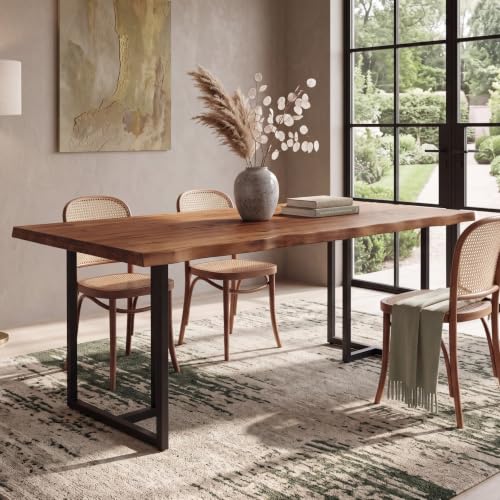
TRIBEWOOD 63" Solid Wood Dining Table for 4–6 with Live-Edge Top, Walnut | Rectangular Shape, Heavy-Duty Metal Frame, Stable Structure, Industrial Style, Spacious Legroom
Check price on Amazon
TRIBEWOOD 63" Live Edge Solid Wood Dining Table, Modern Rustic Kitchen Table with Sculptural Legs, 6-Person Rectangular Dinner Table for Dining Room, Kitchen,Natural Dark Brown Finish
Check price on Amazon
Live Edge Dining Table, Industrial Solid Wood Dining Table | Rectangular Farmhouse Kitchen Table with 2” Thick Wood Top Sturdy Metal Base for 4-8 People
Check price on AmazonFrequently Asked Questions
What makes a live edge walnut dining table different from a regular walnut table?
A live edge walnut dining table preserves the natural outer contour of the tree slab along one or both edges, while a regular walnut table has straight, machined edges. This natural contour gives each live edge table a one-of-a-kind silhouette that no two pieces share.
How thick should a live edge walnut slab be for a dining table?
For everyday dining use, a finished slab thickness of roughly 1.5 to 2 inches is a solid baseline. Thicker slabs in the 2 to 3 inch range deliver a more sculptural, high-end tier presence, while thinner slabs can work for lighter aesthetics when properly reinforced with a base or butterfly keys.
Does walnut wood darken over time?
Yes. Walnut naturally lightens and warms slightly in the weeks after milling, then gradually deepens toward a rich chocolate tone with exposure to light over months and years. A quality finish slows but does not stop this natural patina, which many owners consider part of the charm.
How do I care for a live edge walnut dining table?
Dust with a soft dry cloth, wipe spills promptly, and avoid harsh solvents or abrasive pads. Use coasters and trivets for hot or wet items, keep the table away from direct heat sources and prolonged harsh sunlight, and reapply a furniture wax or conditioner suited to the original finish every few months depending on use.
Can a live edge walnut table fit in a small dining room?
Yes. Oval and rounded live edge slabs in compact lengths work well in smaller spaces, especially when paired with a pedestal or slim metal base that keeps the footprint open. Leaving roughly 36 inches of clearance around the table for chair pull-out is the key planning rule.
Ready to Compare Live Edge Walnut Tables?
Browse hand-picked options above, then use this guide's tier framework, sizing rules, and finish comparisons to evaluate each listing with confidence.
View Recommended Picks