
Market Tables: The Complete Buying Guide for Everyday Dining
Learn how to choose a market table that fits your space, suits your lifestyle, and delivers lasting quality for family meals and casual entertaining.
Styles · Materials · Sizing · Care
Why market tables deserve your attention: A market table combines the honest, hardworking character of a traditional farmhouse work surface with the warmth of a communal gathering place. If you are researching dining tables before a purchase, this guide gives you the full picture — from construction and materials to realistic sizing and long-term care — so you can choose with confidence.
What Is a Market Table?
A market table is a robust dining surface inspired by the plank-topped stalls found in traditional produce markets and farmhouse kitchens. The defining traits are a wide, solid top — often built from joined planks — and a supportive base, usually a trestle, pedestal, or X-frame design. Unlike delicate formal dining tables, market tables are engineered for daily wear, generous platters, homework sessions, and spontaneous gatherings.
Their aesthetic leans toward honest materials and visible joinery. Many designs leave the wood grain or subtle imperfections on display, which gives each piece a distinct character. This makes them a natural fit for farmhouse, rustic, industrial, and even relaxed modern interiors.
Solid Plank Top
Wide joined planks create a generous, uninterrupted surface that handles large serving dishes and shared meals with ease.
Sturdy Base
Trestle, pedestal, and X-frame bases prioritize stability, so the table stays steady during daily use and gatherings.
Honest Materials
Wood grain, metal accents, and visible joinery give market tables a grounded, character-rich look.
Everyday Durability
Built to withstand meals, crafts, and homework, making them a practical centerpiece for busy homes.
Popular Market Table Styles
Market tables come in several recognizable silhouettes. Knowing the differences helps you match the table to your room and the way you live.
Trestle Market Tables
The trestle style uses two A-frame or H-frame supports connected by a stretcher beam. It delivers excellent stability, generous legroom at the ends, and a strong architectural presence. Trestle designs are ideal for long, narrow dining rooms and open-plan spaces where the table is visible from multiple angles. If you like the look of a long dining table, a trestle market table is a natural candidate.
Pedestal Market Tables
A pedestal base centralizes support beneath the table, freeing up the corners and edges for seating. This layout is especially useful in smaller rooms because it lets you tuck chairs in more tightly. Pedestal market tables with a single wide column or a quartet of angled legs offer a cleaner footprint and easier cleaning underneath.
X-Frame Market Tables
The X-frame brings a slightly more decorative, sometimes industrial edge. It pairs well with metal-and-wood combinations and looks at home in loft-style or modern farmhouse interiors. The cross-bracing adds rigidity, so these tables handle regular repositioning well.
Extendable Market Tables
If your guest list fluctuates, an extendable market table adds flexibility without changing the everyday footprint. Look for leaf mechanisms that store inside the table or a butterfly extension that folds away neatly. Extension hardware quality varies significantly between tiers, so inspect the joinery and locking mechanism closely.
Materials: What to Look For
The material of your market table determines its appearance, weight, maintenance needs, and longevity. Here is how the most common options compare.
| Material | Tier Positioning | Best For | Care Notes |
|---|---|---|---|
| Solid Oak | Premium to luxury | Long-term family use, high-traffic dining rooms | Occasional wax or oil; resists dents well |
| Pine | Entry-level to mid-range | Casual farmhouse looks, lighter rooms | Softer surface; use coasters and trivets |
| Mango Wood | Mid-range | Warm, character-rich grain in relaxed interiors | Dust regularly; keep away from excess moisture |
| Reclaimed Hardwood | Mid-range to premium | Rustic and industrial styles with unique patina | Seal or wax as recommended by the maker |
| Marble or Stone Top | High-end tier | Statement centerpieces with a polished finish | Wipe spills promptly; avoid acidic cleaners |
| Metal & Wood Combination | Mid-range to premium | Industrial and modern farmhouse spaces | Check finish durability on metal frames |
When comparing options, pay attention to construction details rather than surface appearance alone. A well-specified table in a mid-range tier — with kiln-dried wood, reinforced aprons, and quality hardware — often outperforms a decorative piece with a thinner top. If you are weighing wood species, the mango wood dining table guide explains how density and grain affect everyday performance.
Sizing a Market Table for Your Space
Correct sizing is the single most important factor in dining comfort. A table that is too large crowds circulation; one that is too small feels cramped at mealtime. Use the following guidelines as a starting point, then tape out the footprint on your floor before committing.
If your dining area is tight, a small dining room layout guide can help you plan around doors, windows, and walkways. For narrow rooms, consider a table with a lighter visual footprint, such as a pedestal or a design with tapered legs.
Pros and Cons of Market Tables
Advantages
- Durable construction suited to daily family use
- Generous surface area for serving and shared activities
- Timeless styling that suits many interior schemes
- Often repairable and refinishable over time
- Strong anchors for a room's visual composition
Considerations
- Solid wood versions can be heavy to move
- Trestle bases may limit seating at the very ends
- Softer woods are more prone to dents and scratches
- Large footprints demand generous clearance
- Some finishes require periodic maintenance
Care and Maintenance
A market table is built to be used, but a little routine care keeps it looking its best for years. Follow these practical habits:
- Dust the surface weekly with a soft, dry cloth to prevent grit from dulling the finish.
- Wipe spills promptly, especially with marble or stone tops, to avoid staining.
- Use coasters, trivets, and placemats to reduce heat and moisture exposure.
- Reapply furniture wax or wood conditioner every few months on oiled or waxed finishes.
- Keep the table away from direct sunlight and dramatic humidity swings.
- Tighten base hardware periodically to maintain stability.
- Avoid harsh chemical cleaners; use products formulated for the specific finish.
If you are planning to refresh an older piece rather than buy new, the refinishing dining tables guide walks through sanding, staining, and sealing steps. For a broader maintenance routine, see the care and maintenance section.
Matching a Market Table to Your Dining Room
Because market tables carry visual weight, the surrounding choices matter. Balance the table's rustic or industrial character with complementary seating, lighting, and storage.
Seating
Slatted or ladder-back chairs suit farmhouse settings, while upholstered chairs soften the look for a more contemporary feel. Benches along one side are a classic market-table pairing and make efficient use of space. Consider the seat height relative to the table's apron — standard dining chairs work best with tables around 30 inches high.
Lighting
A linear pendant or a pair of smaller pendants over a long market table creates even illumination for meals. If you are exploring options, the guide to light fixtures for dining room covers sizing and placement. For a more specific arrangement, see lighting above a dining table.
Storage and Surroundings
A sideboard or buffet nearby keeps serving dishes and linens within reach. The long buffet cabinet guide helps you size storage for a long table. Rugs, artwork, and a consistent palette round out the room and keep the table as the focal point.
Recommended Market Tables & Dining Furniture
⚠️ AFFILIATE DISCLOSURE: This website contains affiliate links. As an affiliate Associate, we earn from qualifying purchases. If you make a purchase through these links, we may receive a small commission at no additional cost to you. Read our full affiliate policy.

6 Feet Foldable Table with Built in Handle & Steel Legs | 6FT Heavy Duty Folding Portable | Perfect for Party, Dining, Wedding, Events, Picnic Indoor, Outdoor, Camping, Utility, Folding - 6 Foot
Check price on Amazon
FDW | 6FT Folding Table | White | Portable Plastic Table | with Carry Handle | Waterproof & Foldable Table Design | Steel Frame with Lock | for Events, Camping, Indoor & Outdoor Use
Check price on Amazon
VEVOR Folding Portable Bar Table 38.39x15.16x34.25in Tradeshow Podium Table | For Indoor, Outdoor, Party, Picnic, Exhibition, with Carrying Case, Storage Shelf and Black Skirt, Lightweight and Portable
Check price on Amazon
Amazon Basics Portable 4 Foot Rectangular Folding Dining Table, 4 Adjustable Height Settings, Carrying Handle, Indoor & Outdoor, Sturdy for Events, White, 47.8 x 23.9 x 33.9 in
Check price on Amazon
PayLessHere | 6FT Folding Table | White | Portable Plastic Table | with Carry Handle | Waterproof & Foldable Table Design | Steel Frame with Lock | for Events, Camping, Indoor & Outdoor Use
Check price on Amazon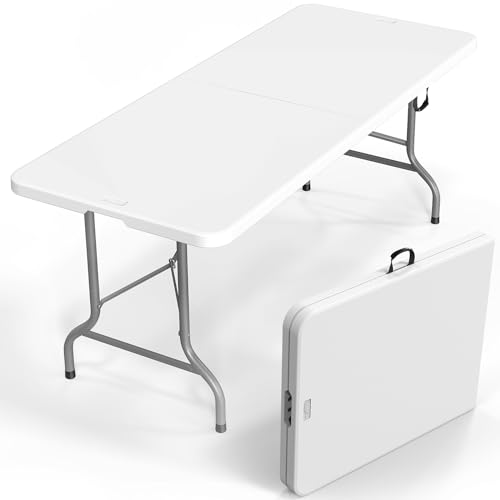
VINGLI 6 Foot Plastic Folding Table Portable Long Table for Indoor Outdoor Use Rectangular with Carrying Handle, Smooth HDPE Tabletop, White
Check price on Amazon
BestOffice | 6FT Folding Table | White | Portable Plastic Table | with Carry Handle | Waterproof & Foldable Table Design | Steel Frame with Lock | for Events, Camping, Indoor & Outdoor Use
Check price on AmazonFinal Buying Checklist
Before you commit, run through these practical checks to avoid surprises after delivery:
- Measure the room and tape out the table footprint, including 36 inches of clearance.
- Confirm the table height matches your existing or planned chair seat height.
- Check the base design for knee clearance and end seating.
- Verify the construction: kiln-dried wood, reinforced aprons, quality hardware.
- Ask about assembly requirements and whether tools are included.
- Review the finish and care instructions for your chosen material.
- Plan delivery access — doorways, stairs, and corners — especially for heavy solid wood.
- Consider future flexibility, such as extension leaves or reconfigurable seating.
Ready to Find Your Market Table?
Explore our curated selection of market tables and dining furniture, chosen for solid construction and practical everyday appeal.
Explore OptionsFrequently Asked Questions
What is a market table?
A market table is a sturdy, often rustic-style dining table inspired by traditional market stalls and farmhouse work tables. It typically features a solid plank top and a trestle or pedestal base, designed for heavy daily use and communal gathering.
What size market table fits my dining room?
Allow at least 36 inches of clearance around the table for chair pull-out and walking space. For a family of four, a table around 60 to 72 inches long works well; for six to eight, aim for 84 to 96 inches. Always measure your room and tape out the footprint before purchasing.
Which wood is best for a market table?
Oak, pine, mango, and reclaimed hardwood are popular choices. Oak offers a premium, dense surface for long-term use. Pine and mango suit entry-level to mid-range tables. Reclaimed wood delivers a distinctive character-rich look ideal for rustic interiors.
How do I care for a market table?
Dust regularly with a soft cloth, wipe spills promptly, and reapply a wood conditioner or furniture wax every few months. Use coasters and trivets, avoid harsh chemical cleaners, and keep the table away from direct sunlight and excessive humidity.
Are market tables suitable for small dining rooms?
Yes, provided you choose the right proportions. Pedestal bases and narrow trestle designs work well in compact rooms because they free up corner space and allow chairs to tuck in more tightly. A round or square market table can also suit small footprints better than a long rectangle.