
Matching Kitchen and Dining Room Light Fixtures
Create a seamless, cohesive look across your open kitchen and dining area. Learn the sizing rules, finish pairings, and layering strategies that professional designers use to coordinate fixtures with confidence.
Lighting is one of the few design elements that connects every part of an open kitchen and dining area. When the fixtures above the island, sink, and dining table feel related rather than disconnected, the whole room reads as one considered space instead of two separate zones stitched together. Yet many homeowners get stuck at the same question: should the fixtures match exactly, or is a looser visual relationship better?
The short answer is that coordination matters more than duplication. Matching kitchen and dining room light fixtures does not require identical designs. It requires a shared visual thread, such as a repeated finish, a recurring shape, or a consistent design language. This guide walks you through the sizing rules, finish pairings, style families, and layering strategies that turn lighting from an afterthought into the element that ties the room together.
The core principle: Aim for a family resemblance, not a carbon copy. Fixtures should look like they belong to the same household, even when they serve different functions in different zones.
Why Coordinated Lighting Matters in an Open Layout
Open-concept kitchens and dining rooms share sightlines. Standing at the sink, you see the dining table. Sitting at the table, you see the island pendants. Because both zones are visible at the same time, any mismatch in style, scale, or finish becomes immediately noticeable. Coordinated fixtures create three benefits that go beyond aesthetics:
- Visual continuity: A repeated finish or shape draws the eye smoothly from the kitchen zone into the dining zone, making the combined footprint feel larger and more intentional.
- Clear hierarchy: When fixtures share a design language, differences in size and format communicate function. A linear pendant over the island and a round chandelier over the table signal different zones without visual noise.
- Fewer decisions: Choosing from one coherent lighting family simplifies the entire selection process and reduces the risk of an expensive misstep.
Coordination also supports the way people actually use these spaces. Kitchen lighting prioritizes task visibility over the counter and island, while dining lighting prioritizes atmosphere and conversation. Matching the fixtures too closely can actually work against you if it produces glare at the table or leaves the prep area underlit. The goal is a shared aesthetic with zone-appropriate performance.
Understand the Two Zones Before You Choose
Every lighting decision should start with how each zone is used. The kitchen and the dining room have different lighting jobs, and the fixtures you select should reflect that difference even while they coordinate.
Kitchen zone: task-driven and layered
Kitchen lighting is primarily functional. Pendants over an island or peninsula illuminate food preparation and cleaning, while under-cabinet strips light the counter and recessed lights handle general ambient brightness. The decorative fixtures here, usually pendants or a linear pendant, are the most visible elements and the ones that must coordinate with the dining room.
Dining zone: atmosphere-driven and focused
Dining lighting is primarily social. The fixture over the table should direct light downward onto the tabletop, create a warm pool of illumination, and allow faces across the table to be seen without glare. A light fixture above the dining table is usually a chandelier, a pendant cluster, or a large single pendant, and it becomes the visual anchor of the room.
Once you understand these different jobs, matching becomes a matter of choosing a shared design thread while letting each zone perform its own function. For a deeper dive into dining-specific selection, see our guide to light fixtures for the dining room.
Four Proven Strategies for Matching Fixtures
Designers use four main approaches to coordinate lighting across adjacent zones. Each produces a different overall effect, and each works best in different styles of home.
1. Same family, different format
Choose pendants and a chandelier from the same manufacturer's collection, then vary the format to suit each zone. A linear pendant might hang over the island while a round or rectangular chandelier from the same collection anchors the table. The shared metalwork, shade shape, and finish create an unmistakable relationship without repetition. This is the most reliable strategy for a polished, cohesive result.
2. Shared finish, different design
If a single collection does not offer the right sizes, keep the finish identical and choose different silhouettes. Matte black pendants over the island with a matte black cage chandelier over the table read as a set because the finish repeats, even though the shapes differ. This strategy offers more flexibility and works especially well in transitional and modern farmhouse interiors.
3. Repeated shape or material
Repeat a single design element rather than the entire fixture. Glass globe pendants over the island can pair with a glass-and-brass chandelier over the table because the glass repeats. Rattan pendants can pair with a rattan-wrapped chandelier because the natural texture repeats. This approach is subtle and works beautifully in coastal, boho, and organic-modern spaces.
4. Intentional contrast with a unifying anchor
Advanced designers sometimes pair deliberately different fixtures and unify them with a shared ceiling color, a repeated trim, or a common metal accent elsewhere in the room. This is the riskiest strategy and works best when the rest of the room is calm and restrained. For most homeowners, one of the first three strategies will deliver a more predictable and satisfying result.
Sizing Rules That Keep Fixtures in Proportion
Even fixtures from the same collection can look wrong if the sizes are off. Use these guidelines to get the proportions right in both zones.
Sizing the dining fixture
- Diameter guideline: Add the room's length and width in feet, then use that number in inches as the maximum diameter of the chandelier. A 12 by 14 foot dining room, for example, suggests a fixture up to 26 inches in diameter.
- Table-width guideline: The fixture should span roughly one-half to two-thirds of the table's width. A 40-inch-wide table suits a fixture between about 20 and 27 inches wide.
- Hanging height: Hang the bottom of the fixture 30 to 36 inches above the tabletop for an eight-foot ceiling. Raise it slightly for taller ceilings so it stays proportionate.
Sizing the kitchen pendants
- Number of pendants: Use one pendant for every 24 to 30 inches of island length. A six-foot island typically suits two to three pendants.
- Spacing: Leave roughly 24 to 30 inches between pendant centers, and keep at least 12 inches of clear space at each end of the island.
- Hanging height: Hang the bottom of the pendants 30 to 36 inches above the countertop, or about 72 to 78 inches from the floor.
When in doubt, measure the room, measure the table and island, and mark the proposed fixture widths on paper before ordering. Proportion errors are the most common reason coordinated fixtures still look off.
Finish Pairings That Work in Open Layouts
The finish is often the strongest visual thread between two fixtures. Use this table as a starting point, and remember that the dominant finish should appear at least twice so the pairing reads as intentional rather than accidental.
| Dominant Finish | Accent Finish | Best For |
|---|---|---|
| Matte black | Brushed brass or warm wood | Modern farmhouse, industrial, transitional |
| Brushed nickel | Matte white or clear glass | Contemporary, coastal, minimalist |
| Aged brass or bronze | Matte black or dark wood | Traditional, luxury, transitional |
| Polished chrome | Clear glass or acrylic | Modern, glam, small spaces |
| Natural rattan or wood | Matte black or white | Boho, coastal, organic modern |
If the kitchen already has a dominant metal in the cabinet hardware or faucet, treat that metal as the anchor and choose the dining fixture to repeat or complement it. A matte black faucet, for example, pairs naturally with matte black island pendants and a chandelier that includes black accents.
Style Families That Coordinate Naturally
Certain style families have built-in visual coherence, which makes coordinating fixtures easier. Consider these pairings as you shop:
Mid-century modern
Globe pendants, sputnik chandeliers, and conical shades with brass or walnut accents share a recognizable design vocabulary. A mid-century modern dining room pairs beautifully with globe pendants over the island and a sputnik-style chandelier over the table.
Modern farmhouse
Cage pendants, barn-style fixtures, and wood-and-metal combinations define this family. Matte black or aged bronze finishes keep the look consistent, while seeded glass or exposed bulbs add warmth. A wood-top dining table, such as a light wood dining table, reinforces the natural palette.
Industrial
Exposed bulbs, metal shades, and pulley mechanisms are the hallmarks of industrial lighting. Repeat the finish across zones and vary the format from linear pendants to a cage chandelier. Pairing the lighting with a metal dining table base strengthens the overall language.
Coastal and organic modern
Rattan, jute, linen shades, and white or brass accents create a light, airy feel. A rattan pendant over the island and a linen drum chandelier over the table share a natural texture that reads as coordinated. A marble dining table adds a crisp counterpoint to the warm natural fibers.
Layer Ambient, Task, and Accent Light
Coordinating fixtures is only part of the job. A well-lit open kitchen and dining area layers three types of light, and the decorative fixtures you choose are usually the accent and task layers.
- Ambient light: Recessed downlights or flush ceiling fixtures provide general illumination. Keep these neutral and unobtrusive so the decorative fixtures stand out.
- Task light: Under-cabinet strips and island pendants illuminate work surfaces. Aim for bright, even light over the counter and sink.
- Accent light: The dining chandelier, wall sconces, and a dimmable bar or buffet lamp create atmosphere. Dimmers are essential here so the same fixture can shift from bright homework lighting to a warm dinner glow.
Use dimmers on every decorative fixture, and choose bulbs with a warm color temperature for the dining zone. A light over the dining room table that dims smoothly will do more for the room's atmosphere than almost any other single choice.
Common Mistakes to Avoid
- Matching too literally: Identical fixtures in both zones can flatten the room's hierarchy and make the space feel repetitive.
- Ignoring scale: A chandelier that is too small over a large table, or pendants that are too large for a narrow island, will always look off no matter how well the finishes coordinate.
- Forgetting the hardware: Cabinet pulls, faucets, and appliance finishes are part of the metal story. Choose lighting that acknowledges them.
- Skipping the dimmer: A coordinated fixture without a dimmer cannot deliver the atmosphere the dining zone needs.
- Overlooking ceiling height: Tall ceilings require larger fixtures and slightly higher hanging heights; low ceilings call for flush or semi-flush designs.
Pre-Purchase Checklist
Run through this checklist before you order to confirm that your chosen fixtures will work together and fit the room.
- Measure the dining room, table width, island length, and ceiling height.
- Confirm the dining fixture diameter against the room and table guidelines.
- Confirm the number and spacing of island pendants.
- Choose one dominant finish and one accent finish, and repeat each at least twice.
- Verify hanging heights for both fixtures.
- Check that the fixtures share a design thread, such as a collection, finish, shape, or material.
- Confirm dimmer compatibility and bulb type for both fixtures.
- Review the return policy in case the scale looks different in person.
Recommended Lighting Fixtures for Kitchen and Dining Rooms
⚠️ AFFILIATE DISCLOSURE: This website contains affiliate links. As an affiliate Associate, we earn from qualifying purchases. If you make a purchase through these links, we may receive a small commission at no additional cost to you. Read our full affiliate policy.

Boncoo 6 Light Black Chandeliers for Dining Room, Adjustable Height Linear Chandelier Kitchen Light Fixture, Modern Farmhouse Chandelier Rectangle Island Light for Kitchen Hanging Light Fixtures
Check price on Amazon
RUIYEY Modern Chandelier Ceiling Light Fixture - 33.4" 12-Light Gold and Black Sputnik Chandeliers, Height Adjustable Industrial Farmhouse Pendant Lighting for Dining Room, Living Room, Kitchen Island
Check price on Amazon
Modern Black Chandelier for Dining Room, 6-Light Dining Room Light Fixture | No Assembly Required, Height Adjustable, Fits Flat/Slop Ceiling, Industrial Metal Pendant Lights Fixture for Kitchen Island
Check price on Amazon
4-Light Black Farmhouse Chandelier, Adjustable Height Pendant Lighting | Industrial Hanging Ceiling Light with Clear Glass Shade for Kitchen Island Dining Room Entryway Foyer Bedroom, Modern Rustic
Check price on Amazon
40" 6-Light Dining Room Light Fixtures over Table, Kitchen Island Lighting | Seamless Design, Antique Wood and Clear Glass, 43" Adjustable Farmhouse Linear Chandelier, Rustic Kitchen Island Light, E26
Check price on Amazon
Mikniri 3-Light Semi Flush Mount Ceiling Light, Kitchen Lighting Fixtures Ceiling, Black Dining Room Light Fixtures, Farmhouse Close to Ceiling Lights with Hexagon Cage for Bedroom Hallway Foyer
Check price on Amazon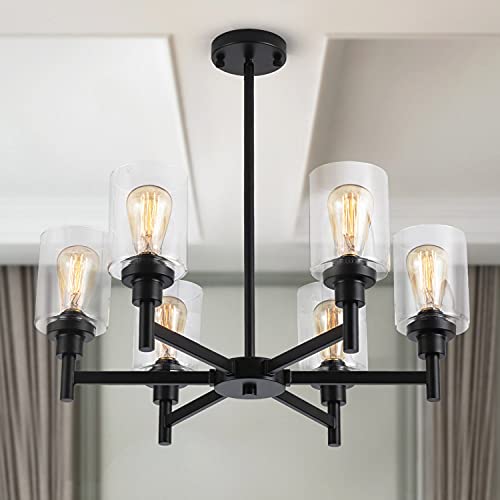
Black Farmhouse Chandeliers for Dining Room Light Fixtures Over Table | Industrial Hanging Lighting with Clear Glass Shade for Living Room Kitchen Island Entryway Brathroom Bedroom Foyer Restaurant
Check price on Amazon
Black Chandelier, 6-Light Farmhouse Chandelier for Dining Room Lighting Fixtures Hanging,UL Listed Industrial Modern Chandelier for Bedroom, Kitchen, Living Room, Entryway (No Assembly Required)
Check price on AmazonReady to Coordinate Your Lighting?
Explore our complete dining room lighting guide for more sizing charts, style pairings, and installation tips before you finalize your choices.
Explore Dining Lighting GuideFrequently Asked Questions
Do kitchen and dining room light fixtures need to match exactly?
No, they do not need to match exactly. Coordinating through a shared finish, a repeated material, or a consistent design language creates a cohesive look while allowing each fixture to suit its own zone. Many designers deliberately use fixtures from the same family in different formats, such as pendants over an island and a chandelier over the table.
What size chandelier should hang over a dining table?
A common guideline is to add the room's length and width in feet, then treat that number in inches as the maximum diameter. The fixture should also be roughly one-half to two-thirds the width of the table and hang about 30 to 36 inches above the tabletop for standard ceilings.
Can I mix metal finishes in an open kitchen and dining space?
Yes, mixing finishes is a well-established design technique. Keep one finish dominant, introduce a second as an accent, and repeat each finish at least twice so the mix reads as intentional. Warm metals pair naturally with wood tones, while matte black anchors both modern and farmhouse schemes.
How high should pendants hang above a kitchen island?
Pendants over an island typically hang 30 to 36 inches above the countertop, or about 72 to 78 inches from the floor. If the pendants are the primary task lighting, position them slightly lower; if they sit in front of a window or sightline, raise them for an unobstructed view.
Final Thoughts
Matching kitchen and dining room light fixtures is less about finding identical designs and more about choosing a shared design thread that carries from one zone to the next. Start with the function of each zone, apply the sizing rules, anchor the room with one dominant finish, and repeat a shape or material to tie everything together. When the lighting feels intentional, the entire open layout feels larger, calmer, and more welcoming.