
Modern Table Runners: The Complete Buying & Styling Guide
Everything you need to choose, style, and care for modern table runners that transform your dining table into a design statement.
START EXPLORINGWhy modern table runners matter: A table runner is one of the most efficient ways to shift the entire mood of a dining room. Unlike a full tablecloth, a modern table runner leaves the beauty of your tabletop visible while adding color, texture, and visual rhythm. Whether you are refreshing a modern dining room table or softening a modern farmhouse dining table, the right runner anchors your tableware, protects the surface, and gives every meal a finished, intentional look.
This guide walks you through everything a research-stage shopper needs: runner types, materials, sizing rules, color and pattern strategy, layering techniques, and care requirements. By the end, you will know exactly which modern table runner fits your table, your tableware, and your lifestyle — so you can move forward with confidence.
What Makes a Table Runner "Modern"?
A modern table runner is defined less by a single trend and more by design principles. Contemporary runners typically share a few traits: clean lines, restrained color stories, and materials that feel intentional rather than fussy. Where traditional runners may lean on heavy embroidery or ornate fringe, modern versions favor geometry, tone-on-tone texture, and quiet contrast.
- Minimal pattern language: thin stripes, subtle herringbone, tonal weave, or solid color with texture rather than dense florals.
- Neutral-forward palettes: warm whites, oatmeal, sand, charcoal, olive, and terracotta that sit comfortably with mixed material dining furniture.
- Deliberate proportions: runners that follow the table's length with a clean, even drop instead of heavy overhang.
- Functional materials: washable linen blends, cotton canvas, performance fabrics, and easy-care synthetics designed for daily use.
These principles make modern runners remarkably versatile. They work on a modern glass dining table, a modern wood dining table, and even a modern mid-century table without clashing with the furniture's own character.
Types of Modern Table Runners
Before comparing materials, it helps to understand the main runner formats. Each serves a slightly different styling purpose and works best on different table shapes.
1. Classic Long Runner
The most common format: a long rectangular strip that runs the length of the table, usually centered. It works on rectangular and oval tables and is the easiest format for layering with placemats, chargers, and a centerpiece. On a modern dining table for 6, a long runner visually connects both ends of the table and keeps the centerpiece from feeling isolated.
2. Short Center Runner
A shorter runner that sits only in the middle of the table, leaving both ends bare. This format is ideal for round tables, small dining areas, and tables where you want the wood grain or stone surface to remain the star. It pairs beautifully with a modern dining table centerpiece and keeps the setting uncluttered.
3. Table Runner with Placemat Set
Some modern collections pair a narrow center runner with matching placemats. This creates a cohesive, gallery-like setting that reads as one intentional design rather than separate accessories. It is a strong choice for open-concept dining spaces where the table is visible from the kitchen or living room.
4. Reversible and Double-Sided Runners
Reversible runners offer two colorways or two textures in one piece — for example, a solid side and a subtle stripe side. They are practical for seasonal rotation and for households that like to change table styling without buying new accessories each time.
5. Runner Rugs and Textured Weaves
Heavier woven runners with a rug-like hand add warmth and acoustic softness to a dining room. These suit cooler climates and rooms with hard flooring, and they pair especially well with modern farmhouse dining rooms and rustic-modern interiors.
Modern Table Runner Materials Compared
Material determines how a runner drapes, how it wears, and how much maintenance it demands. The table below compares the most common modern options using a tier-based classification rather than any numeric figures.
| Material | Tier | Best For | Key Traits |
|---|---|---|---|
| Cotton canvas | Essential tier | Everyday family dining | Durable construction, machine washable, relaxed drape, softens with washing |
| Linen & linen blends | Balanced tier | Casual entertaining, warm neutral styling | Natural texture, breathable, elegant rumple, improves with age |
| Performance fabric | Balanced tier | Homes with children or pets | Stain-resistant coating, easy wipe-clean, colorfast, low maintenance |
| Woven jute or seagrass | Balanced tier | Farmhouse and coastal modern interiors | Textural contrast, heavy drape, adds warmth to hard surfaces |
| Velvet or brushed cotton | Premium tier | Holiday and evening settings | Rich hand-feel, light-catching sheen, formal but modern when kept in solids |
| Handwoven artisan textiles | Luxury tier | Statement dining rooms | Unique weave, heirloom quality, subtle irregularities that read as craftsmanship |
In practice, most modern homes benefit from owning two runners: one performance or cotton runner for daily meals, and one premium or luxury runner for holidays and dinner parties. That combination covers nearly every occasion without overbuying.
Material Tip
A mid-tier linen blend typically offers a more refined drape than an entry-level canvas, while a performance fabric usually outperforms both for stain resistance. If your priority is longevity with minimal care, performance fabric sits in a strong position within its class.
How to Choose the Right Runner Size
Runner sizing is where most shoppers make avoidable mistakes. A runner that is too short looks stranded; one that is too long puddles awkwardly or slides. Use these rules as your starting point.
Length Rules
- Standard drop: leave roughly 6 to 12 inches of bare table at each end so the runner reads as a deliberate band, not a tablecloth.
- Full-length styling: for a more dramatic look, allow the runner to drape slightly over the ends — best on rectangular tables in formal or transitional settings.
- Short center runner: aim for roughly one-third of the table length, positioned under the centerpiece.
Width Rules
- Narrow (roughly 12–14 inches): best for slim centerpieces, candle arrangements, and tables where place settings need breathing room.
- Standard (roughly 14–16 inches): the most flexible width; works with most centerpieces and layered place settings.
- Wide (roughly 16–18 inches): suits larger centerpieces and wide tables; can visually compete with placemats if both are busy, so keep one element simple.
For a modern dining table set for 6, a standard-width long runner is almost always the safest choice. For a narrow kitchen table or a modern dinette set, a short center runner keeps the setting from feeling crowded.
Measure Before You Buy
Measure your table length, then subtract the drop you want at each end. That figure is your target runner length. Also measure the width of your centerpiece or charger arrangement — your runner should be at least a few inches wider so accessories sit fully on the textile.
Color & Pattern Strategy for Modern Runners
Modern styling rewards restraint. A runner is a supporting element, not the headliner, and the most successful modern tables use it to reinforce an existing palette rather than introduce a new one.
Solid Runners
Solid colors are the most versatile and the easiest to layer. Warm neutrals — oatmeal, sand, mushroom, warm white — work across nearly every modern style, from modern minimalist to modern farmhouse dining rooms. Deeper solids like olive, charcoal, or terracotta add depth and photograph well in evening light.
Textured Solids
If you love solid color but want more visual interest, choose a runner with texture instead of pattern: a slub weave, a subtle herringbone, or a washed finish. These read as solid from a distance but reward closer inspection, which is exactly the kind of quiet detail modern interiors favor.
Subtle Pattern
When you do choose pattern, keep it disciplined. Thin stripes, tonal checks, or small-scale geometric motifs work well. Avoid large, high-contrast prints unless the rest of the table is intentionally minimal — a busy runner plus busy dinnerware creates visual noise that makes a dining room feel smaller.
Matching the Dining Furniture
Let your furniture set the tone. A modern dining room table and chairs in warm wood pairs naturally with linen and earth tones. A modern glass dining table benefits from a woven or textured runner that adds weight and warmth to the reflective surface. A modern dining chairs set in leather or upholstery can be echoed in a runner with a similarly grounded tone.
Layering a Modern Table Runner
Layering is where a runner earns its keep. The goal is a table that looks styled but remains easy to use — guests should be able to reach their plates and glasses without rearranging the decor.
The Three-Zone Approach
- Base zone: the runner itself, centered on the table.
- Anchor zone: a centerpiece — a low bowl, a pair of vases, a row of candles, or a sculptural object.
- Placement zone: placemats or chargers at each seat, kept visually lighter than the centerpiece.
What to Layer With
- Placemats: woven or leather placemats in a matching or lighter tone than the runner. Avoid matching the runner exactly — a slight tonal step reads more intentional.
- Chargers: a metallic or matte charger adds a clean edge to each setting.
- Napkins: cloth napkins in a complementary tone; see our cloth napkins guide for fabric choices.
- Centerpieces: keep height low — roughly eye level when seated — so conversation flows. A modern dining table centerpiece guide can help you choose scale.
- Candles and vases: a pair of slim candlesticks or a single sculptural vase keeps the anchor zone calm.
Keep the center low
Centerpiece height should stay below eye level so guests can see across the table.
Use odd numbers
Three or five objects in the anchor zone usually look more balanced than two or four.
Leave bare table visible
Bare tabletop at the edges makes the runner read as a deliberate band.
Repeat a material
Echo the runner texture once elsewhere — a woven placemat or a linen napkin — for cohesion.
Styling Modern Runners by Dining Room Style
Modern Minimalist
Choose a single solid runner in warm white, oatmeal, or pale grey. Skip patterns and keep the anchor zone to one object — a low bowl or a single vase. The point is to let negative space do the work. Pair with minimalist dining chairs for a fully resolved look.
Modern Farmhouse
Reach for linen, cotton canvas, or woven jute in earth tones. A runner with subtle texture — slub weave, washed finish, or a thin stripe — suits the style without tipping into rustic cliché. Layer with wooden or ceramic centerpieces and simple glassware. This approach works especially well in a modern farmhouse dining room.
Mid-Century Modern
Mid-century spaces reward warm, saturated tones and clean geometry. A solid runner in mustard, rust, or olive adds a period-appropriate accent to a mid-century modern table. Keep the pattern minimal and let the furniture's silhouette lead.
Modern Glam and Luxury
Premium velvet or brushed cotton runners in deep jewel tones or rich neutrals add depth and light play. Keep the centerpiece sculptural and the place settings minimal so the textile remains the star. This is a setting where a luxury-tier handwoven runner can justify itself as a long-term investment.
Care & Maintenance for Modern Table Runners
Care requirements vary by material, but a few principles apply across the board.
- Wash according to the care label. Cotton canvas and most performance fabrics are machine washable; linen blends often prefer cold water and line drying.
- Treat stains promptly. Blot — do not rub — and use a mild detergent. Performance fabrics usually wipe clean with a damp cloth.
- Rotate runners regularly. Alternating between two runners reduces wear and fading on any single piece.
- Store flat or rolled. Folding along the same crease for long periods can set a permanent line; rolling is gentler on textured weaves.
- Protect from direct sun. Prolonged sunlight fades natural dyes; rotate or store when not in use if the table sits near a window.
For a broader approach to protecting dining surfaces, see our guide on table pads and protectors.
Common Mistakes to Avoid
- Buying too short. A runner that stops well before the table ends looks accidental. Measure the drop first.
- Overmatching. A runner that exactly matches the placemats and napkins can look flat. A slight tonal step reads more designed.
- Too much pattern. One patterned element per table is usually enough. If the runner is patterned, keep dinnerware and centerpieces solid.
- Ignoring the centerpiece scale. A wide, tall centerpiece on a narrow runner will overhang and slide. Match width to width.
- Choosing material before lifestyle. A delicate luxury textile in a household with young children will not stay pristine. Match material to daily reality first, then refine the styling.
Quick Reference: Choosing Your Modern Runner
| If You Need… | Choose | Why It Works |
|---|---|---|
| Daily family meals | Essential tier cotton canvas | Durable construction and machine washability suit heavy rotation |
| Casual entertaining | Balanced tier linen blend | Refined drape and natural texture without fussy care |
| Homes with kids or pets | Balanced tier performance fabric | Stain-resistant coating and easy wipe-clean surface |
| Holiday and evening settings | Premium tier velvet or brushed cotton | Rich hand-feel and light-catching depth for formal occasions |
| A statement dining room | Luxury tier handwoven textile | Heirloom quality and unique weave as a long-term investment |
Ready to Style Your Table?
Explore our curated selection of modern table runners and dining accessories below, then compare features and check availability.
View Recommended ProductsRecommended Modern Table Runners
⚠️ AFFILIATE DISCLOSURE: This website contains affiliate links. As an affiliate Associate, we earn from qualifying purchases. If you make a purchase through these links, we may receive a small commission at no additional cost to you. Read our full affiliate policy.

FEXIA Boho Table Runner for Fall Home Decor 12x72" Rustic with Tassels | 72 Inches Long Farmhouse Kitchen Dining Room Macrame Burlap Coffee Table Decoration Dresser Runner Pottery Barn Furniture
Check price on Amazon
ZeeMart Linen Checked Farmhouse Table Runner, 13x72 Inches Neutral Beige | Raised Grid Design, Rich Woven Texture, Linen Blend Table Runners 72 Inches Long, Machine Washable, Boho Home Kitchen Decor
Check price on Amazon
Fall Table Runner Thanksgiving Decorations 13 x 72 Inch Maples Leaves Lace | Fall Thanksgiving Table Decor Orange Runner Thanksgiving Table Runner Harvest Fall Decorations for Home Kitchen Dining Party
Check price on Amazon
Artoid Mode Dark Grey Farmhouse Rustic Table Runner 12x72 Inch | Seasonal Holiday Hollow Kitchen Dining Dresser Table Decoration for Home Party Decor, Macrame Cotton Blend 12x72 Inch
Check price on Amazon
Neutral Abstract Table Runner, Modern Boho Brown Grey Line Shape Decorative | Minimalist Long Table Centerpiece for Farmhouse Living Room Kitchen Dining Tables Home Holiday Party Decor 13x72 Inch
Check price on Amazon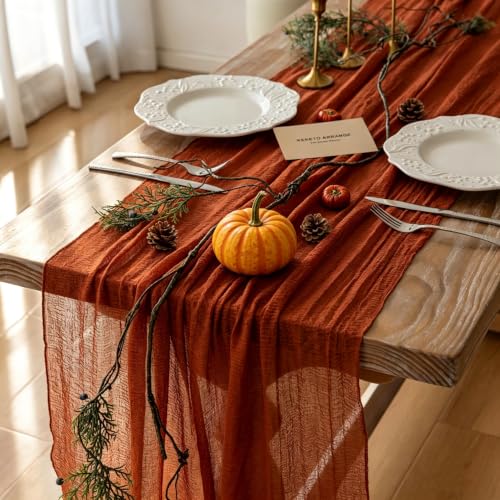
Fall Thanksgiving Decorations Terracotta Cheesecloth Table Runner 120 Inch | For Autumn Thanksgiving Friendsgiving Wedding Bridal Shower Baby Shower Engagement Farmhouse Rustic Sheer Boho Decor
Check price on Amazon
Rhyslinm 100% Natural Cotton Linen Table Runner, 14x90in Natural Linen | Pre-Washed Medium Weight Linen, Organic Slubby Texture, Mitered Corner, Soft Breathable, Modern Farmhouse Kitchen Table Decor
Check price on Amazon
Macrame Table Runner Cream Beige Boho Table Runners with Tassels 12x71in | Alynsehom Hand Woven Cotton Table Runner Rustic Farmhouse Table Runners for Bohemian Kitchen Dining Table
Check price on AmazonFrequently Asked Questions
How long should a modern table runner be?
A common approach is to leave roughly 6 to 12 inches of bare table at each end. Measure your table length and subtract the drop you want at both ends to find your target runner length. For a more dramatic look, a runner can drape slightly over the table ends.
Can I use a table runner without a tablecloth?
Yes — and modern styling often favors this. Using a runner directly on the tabletop lets the material and finish of your table remain visible, which suits modern dining room tables in wood, glass, and stone. A runner on bare tabletop also keeps the setting lighter and more contemporary.
What width runner works best with placemats?
A standard-width runner (roughly 14 to 16 inches) is the most flexible when layering with placemats. Keep the placemats a tonal step lighter or darker than the runner, and avoid matching patterns exactly — a slight contrast reads more intentional.
How do I keep a runner from sliding?
Textured weaves and heavier fabrics grip better than smooth synthetics. If sliding is a persistent issue, a thin non-slip liner placed underneath the runner solves it without changing the look. Ensure your centerpiece sits fully on the runner so it anchors the textile.
What is the best runner material for everyday use?
Cotton canvas and performance fabric are the most practical for daily meals because they are machine washable or wipe-clean and hold up to frequent use. Linen blends are a strong middle option for households that want natural texture with moderate care requirements.
Can a modern runner work on a round table?
Yes — a short center runner is the best format for round tables. It sits in the middle of the table under the centerpiece and leaves the rest of the surface bare, which keeps a round table from feeling crowded.