

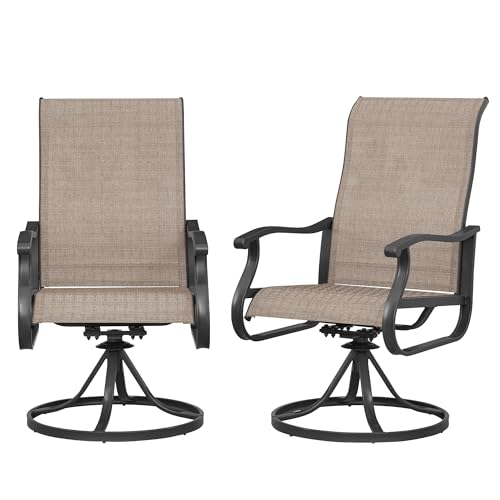


What Makes a Great Outdoor Swivel Chair?
An outdoor dining swivel chair has to do more than rotate. It must survive rain, sun, and temperature swings while keeping guests comfortable through long meals. The best models balance four things: a stable swivel mechanism, weather-resistant materials, supportive cushioning, and dimensions that fit your table.
Unlike indoor swivel chairs, patio versions are exposed to moisture and UV radiation. That means the swivel base needs sealed bearings or a protective housing, the frame needs a rust-proof finish, and the cushion fabric needs solution-dyed acrylic or a comparable UV-stable textile. Skipping any of these shortens the chair's usable life significantly.
Swivel Mechanism: The Heart of the Chair
The swivel mechanism determines how smoothly the chair turns and how long it lasts. There are two common designs:
- Ball-bearing swivel: Smooth, silent rotation with minimal wobble. Common in premium and mid-range models. Bearings are usually sealed, which protects them from grit and water.
- Nylon or composite ring swivel: Simpler construction with fewer moving parts. Found in entry-level and essential-tier chairs. Rotation may feel slightly stiffer, and the ring can wear over time.
Look for a mechanism rated for outdoor use and, ideally, one with a 360-degree turn and a slight tilt-release or return feature. A chair that returns to center is a small convenience that makes dining feel more natural.
Practical tip: Test the swivel in person if possible. A good mechanism turns with one hand's light pressure and stops without wobble. If shopping online, read reviews that mention smoothness and long-term durability.
Materials That Survive the Outdoors
Frame material is the single biggest factor in longevity. Here is how the common options compare:
| Frame Material | Durability | Best For |
|---|---|---|
| Powder-coated aluminum | Excellent rust resistance, lightweight | Balanced tier patios, coastal areas |
| High-grade stainless steel | Heavy-duty, corrosion-resistant | Premium and commercial-grade setups |
| Treated hardwood (teak, acacia) | Durable with seasonal oiling | Warm, natural aesthetic |
| Resin / high-density polyethylene | Weatherproof, low maintenance | Entry-level and casual use |
| Wrought iron | Very sturdy, needs rust protection | Traditional and formal styles |
For cushioning, solution-dyed acrylic is the gold standard because the color is baked into the fiber rather than applied as a surface dye. It resists fading and mildew. Quick-dry foam cores prevent water from pooling inside the cushion after rain.
Sizing and Clearance: Making Swivel Work
Swivel chairs need more breathing room than fixed chairs. A chair that rotates freely needs roughly 24 to 30 inches of space per seat around the table edge. Keep the chair back at least 12 inches from walls, railings, or planters so it can complete a full turn.
Table shape matters too. Round and oval tables suit swivel chairs especially well because the curved edge increases the effective clearance. If you are pairing chairs with a rectangular table, choose a model with a compact footprint and a swivel base that sits close to the seat center. You can explore outdoor round dining tables and oval outdoor dining tables that naturally accommodate swivel seating.
Matching Chairs to Your Dining Set
Swivel chairs pair with nearly every patio dining configuration, but some combinations work better than others:
- 4-seat sets: A square or round table with four swivel chairs keeps the footprint compact and lets everyone rotate toward the center. See outdoor dining sets for 4 with swivel chairs.
- 6-seat sets: Rectangular and oval tables benefit from swivel chairs at the ends, where rotation clearance is greatest. Compare outdoor dining sets for 6 with swivel chairs.
- 8-seat sets: Larger gatherings need chairs with a slightly narrower profile so rotation does not crowd neighbors. Browse outdoor dining furniture for 8.
- Bar-height setups: Swivel bar stools serve the same rotating function at counter height. See outdoor swivel bar stools if your dining surface is taller.
If you are still deciding between chair styles, the broader outdoor dining chairs collection and the dedicated outdoor swivel dining chairs category offer a good starting point for comparison.
Comfort Features Worth Prioritizing
Long outdoor meals demand real comfort. Look for these details:
- Seat height: Standard dining chairs sit around 17 to 19 inches from the floor to the seat top. Counter-height swivel chairs sit around 24 to 26 inches, and bar-height chairs around 28 to 30 inches. Match the chair height to your table for proper legroom.
- Armrests: Armrests help guests rise from the chair and add support during long conversations. Just confirm the arms clear the table apron when the chair turns.
- Cushion thickness: A 2 to 3 inch quick-dry cushion balances comfort and drainage. Thicker cushions can trap water if the foam is not designed for outdoor use.
- Weight capacity: Commercial-grade frames typically support more weight than entry-level models. Check the manufacturer's rating if the chair will serve guests of varied sizes.
Quality Tiers: A Practical Framework
Rather than anchoring your decision to fluctuating figures, think in tiers. Each tier describes the chair's position in the market and the trade-offs it makes:
Entry-Level Tier
Simple composite swivel rings, resin or lightweight steel frames, and basic polyester cushions. Suitable for casual patios and seasonal use. Expect to re-tighten or replace components sooner than higher tiers.
Mid-Range Tier
Sealed ball-bearing swivels, powder-coated aluminum frames, and solution-dyed acrylic cushions. The sweet spot for most homeowners: smooth rotation, solid weather resistance, and years of dependable use.
Premium Tier
Heavy-duty stainless steel or premium hardwood frames, precision swivel mechanisms, and high-density quick-dry foam. Built for daily use and long-term outdoor exposure.
Commercial-Grade
Reinforced welds, replaceable swivel cartridges, and fabrics rated for high-traffic hospitality use. The choice for restaurants, resorts, and homeowners who want maximum service life.
In general, mid-range models offer the best balance of smooth swivel action and weather durability. Entry-level chairs are fine for occasional use, while premium and commercial tiers justify themselves through longevity and consistent comfort.
Placement Ideas for Swivel Chairs
Swivel chairs shine in layouts where guests want to shift attention between the table and the surroundings:
- Poolside dining: Guests can turn to watch the water without leaving the table. Pair chairs with a patio dining umbrella for shade coverage.
- Deck with a view: Position one or two swivel chairs at the table ends so guests can rotate toward the scenery. An outdoor dining table with a pedestal base keeps legroom open.
- Fire pit dining: Combine swivel chairs with a fire-pit table so the seating ring can rotate toward the flame. See outdoor dining tables with a fire pit.
- Small balconies: A bistro table plus two compact swivel chairs creates a flexible breakfast spot. Explore bistro table and chair sets.
Care and Maintenance for Longevity
Swivel chairs reward a little routine care:
- Rinse frames with clean water and dry with a soft cloth after heavy rain or pollen season.
- Lubricate the swivel mechanism once or twice per season with a silicone-based spray suitable for outdoor hardware.
- Store cushions indoors or in a dry box during extended rain and off-season months.
- Use breathable outdoor furniture covers rather than plastic sheeting, which traps condensation.
- Tighten bolts and check the swivel base quarterly, especially on chairs exposed to wind.
For a broader routine, the outdoor furniture maintenance guide covers cleaning schedules and seasonal checklists that apply to swivel chairs as well.
Common Mistakes to Avoid
- Ignoring clearance: Buying swivel chairs for a table that is too close to a wall defeats the purpose. Measure rotation space before ordering.
- Choosing indoor cushions: Standard indoor foam holds water and mildews quickly. Always use quick-dry outdoor cushions.
- Skipping the swivel base check: A wobbly base ruins the experience. Confirm the mechanism is sealed and rated for outdoor use.
- Overlooking wind: Lightweight chairs can tip or blow over on exposed decks. Choose chairs with a weighted base or consider stacking them during storms.
- Mismatching heights: Swivel bar stools do not belong at a standard-height dining table. Match seat height to table height.
Frequently Asked Questions
Are outdoor dining swivel chairs weather-resistant?
Most are built with weather-resistant frames and fabrics. Powder-coated aluminum, high-grade steel, and treated hardwood offer durability, while solution-dyed acrylic cushions resist fading and moisture. Always check that the swivel mechanism is sealed against water and debris.
What size outdoor dining table works with swivel chairs?
Swivel chairs need clearance to rotate freely. Allow at least 24 to 30 inches of space per chair around the table edge, and keep the chair back at least 12 inches from walls or railings. A round or oval table often suits swivel chairs better than a narrow rectangular table because the curved edge improves rotation clearance.
Do outdoor swivel chairs need special maintenance?
Yes. Rinse frames periodically and dry them thoroughly, lubricate the swivel mechanism once or twice per season, and store cushions during heavy rain or off-season. Cover chairs with breathable furniture covers to prevent moisture buildup.
Can swivel chairs be used on a patio with uneven surfaces?
Swivel chairs work best on level surfaces. On slightly uneven patios, choose models with adjustable leveling glides. For very uneven ground, consider a stable chair with fixed legs instead of a swivel base.
Final Buying Checklist
Before you commit, run through this quick checklist:
- Confirm the swivel mechanism is sealed and rated for outdoor use.
- Match seat height to your table height (standard, counter, or bar).
- Measure rotation clearance around the table — at least 24 inches per seat.
- Choose a frame material suited to your climate and exposure level.
- Select quick-dry, solution-dyed cushions for comfort and mildew resistance.
- Check the weight capacity if the chair will serve varied guests.
- Plan a simple maintenance routine for the swivel base and cushions.
With the right chairs, your patio becomes a place where meals linger and conversation flows freely. Take your time comparing options, and you will end up with seating that serves your household for many seasons.