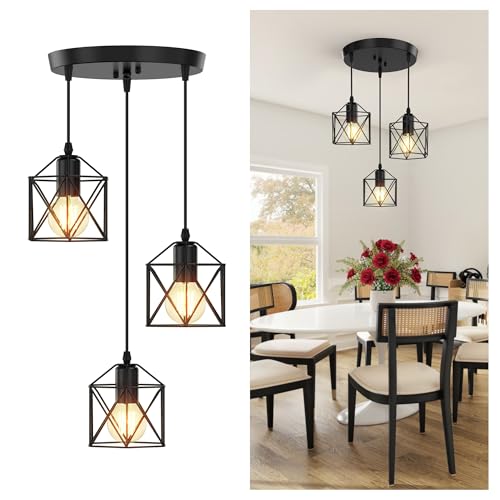
What Pendant Lighting Does in a Kitchen and Dining Space
Pendant lights are suspended fixtures that hang from the ceiling by a cord, chain, or rod. Unlike recessed or flush-mount lighting, they concentrate light downward, making them ideal for task areas like a kitchen island or prep counter. Above a dining table, they create a warm pool of light that flatters food, faces, and table settings — the classic "dinner party glow."
In open-concept homes, pendants also act as visual room dividers. A row of three pendants over an island quietly signals "kitchen ends here, living space begins there" without a single wall. That dual role — task lighting plus spatial definition — is why pendant placement deserves careful planning rather than an afterthought.
Kitchen Island Pendants: Sizing, Spacing, and Height
The kitchen island is the workhorse of the home, and its pendants need to illuminate chopping, plating, and homework without blocking sightlines across the room. Here are the numbers that matter:
How high should island pendants hang?
Hang pendants 30 to 36 inches above the countertop. This range keeps the fixture out of your eyeline when standing at the island while still delivering bright, direct task light. If your household includes taller cooks, lean toward 36 inches; in a room with a very high ceiling, you can go slightly higher, but avoid exceeding 40 inches or the light starts to feel disconnected from the work surface.
How many pendants over a kitchen island?
A reliable rule is one pendant per 24 to 30 inches of island length. Use an odd number — three or five — whenever the island allows, because the eye naturally finds the center pendant as an anchor. For a short island (under six feet), two larger pendants can look balanced and generous.
- 4-foot island: two medium pendants or one large statement pendant.
- 6-foot island: two large pendants or three medium pendants.
- 8-foot island: three pendants, spaced evenly.
- 10-foot island or longer: three to five pendants, keeping roughly 24–30 inches between centers.
How wide should each pendant be?
A quick sizing formula: add the island's width and length in feet, then convert that total to inches to get a suggested fixture diameter. A 3-by-6-foot island suggests roughly a 9-inch pendant diameter. For multiple pendants, subtract a little from each so the row doesn't feel crowded — usually 8 to 14 inches per fixture works well over standard islands.
Dining Table Pendants: Getting the Proportion Right
Above a dining table, pendants set the mood rather than light a work surface. The goal is warm, glare-free light that illuminates faces and food without shining into seated guests' eyes.
How high above a dining table?
Hang dining pendants 30 to 34 inches above the tabletop. If your table is round or oval, you can drop a touch lower — closer to 30 inches — to reinforce the intimate feel. Keep the bottom of the fixture above seated eye level (around 60 inches from the floor for an average-height table) so no one stares into a bulb.
One pendant, a cluster, or a linear fixture?
The answer depends on table shape and size:
- Round or square tables: a single large pendant or a tight cluster of three small ones, centered above the table.
- Rectangular tables: a linear pendant running the table's length, or two to three evenly spaced pendants. Keep the total fixture width to roughly two-thirds of the table length so it doesn't overshoot the ends.
- Long farmhouse tables: two to three medium pendants in a row, spaced 24 to 30 inches apart, centered on the table's midline.
Pendant sizing for a single dining fixture
A solo pendant should be about one-third to one-half the width of the table. On a 40-inch-wide round table, that means a 14- to 20-inch fixture. Oversized pendants can overwhelm an intimate table; undersized ones look lost and under-light the setting.
A Quick Reference Table for Pendant Placement
| Location | Hanging Height (above surface) | Spacing Between Pendants | Common Configuration |
|---|---|---|---|
| Kitchen island | 30–36 inches above countertop | 24–30 inches between centers | 2–3 pendants, or 3–5 on long islands |
| Dining table — single pendant | 30–34 inches above tabletop | N/A (centered) | One large fixture sized 1/3–1/2 table width |
| Dining table — linear fixture | 30–34 inches above tabletop | N/A (linear) | Total width about 2/3 of table length |
| Dining table — row of pendants | 30–34 inches above tabletop | 24–30 inches between centers | 2–3 pendants centered on the table |
Choosing Pendant Styles for Kitchen vs. Dining Spaces
Function should lead style. Over a kitchen island, pendants need to hold their own against steam, splashes, and daily wiping. Over a dining table, atmosphere matters more than durability — though durability never hurts.
Best pendant styles for kitchen islands
- Dome and cone metal pendants: direct light downward efficiently, easy to wipe clean, and suit industrial, modern, and farmhouse kitchens alike.
- Glass globe pendants: airy and unobtrusive, keeping sightlines open in small kitchens. Choose clear or seeded glass for a warm, slightly vintage effect.
- Schoolhouse pendants: a classic choice that delivers broad, even task light — a favorite over islands in transitional homes.
- Rattan and woven pendants: add texture and warmth to coastal and bohemian kitchens. Keep them over areas away from heavy splatter since woven materials need gentle care.
Best pendant styles for dining tables
- Linear pendants: ideal above rectangular tables, especially in open plans where they visually "underline" the dining zone.
- Cluster pendants: three or five small fixtures at staggered heights create a sculptural centerpiece for round tables.
- Fabric drum pendants: diffuse light beautifully for a soft, flattering glow — perfect for formal or transitional dining rooms.
- Lantern pendants: bring a hint of classic character, especially in farmhouse and coastal dining rooms.
Materials and Finish Considerations
Finishes anchor pendants to the rest of the room. A few practical guidelines:
- Match or intentionally contrast metal finishes. If your kitchen hardware is brushed nickel, matching nickel pendants create cohesion; black or brass pendants create deliberate contrast. Either works — mixing three or more metals rarely does.
- Consider the room's warmth. Warm metals (brass, copper, bronze) harmonize with wood tones and warm paint palettes; cool metals (chrome, nickel) suit cool greys, blues, and modern minimalism.
- Think about maintenance. Matte black and brushed finishes hide fingerprints and splashes better than polished chrome or gloss white in kitchens.
Quality Tiers: What to Expect at Each Level
Pendant lights span a wide range of build quality. Rather than focusing on numbers, it helps to understand what each tier typically delivers so you can match the fixture to its role in your home.
Entry-Level
Simple stamped-metal or basic glass construction. Fine for accent use, rental kitchens, or short-term styling. Expect straightforward sockets and standard cords — adequate for light-duty settings.
Mid-Range
Solid build quality with better materials — thicker glass, powder-coated finishes, and more refined hardware. A strong choice for everyday kitchen islands where reliability and easy cleaning matter.
Premium
High-grade metals, artisan glass, and precise manufacturing tolerances. These fixtures are meant to be long-term investments, with finishes that resist tarnishing and components that feel substantial in hand.
Lighting Temperature and Bulb Choices
The fixture is only half the equation — the bulb determines how your kitchen and dining room feel.
- Kitchen islands: aim for 3000K–3500K (warm white to neutral) and a high color-rendering index (CRI 90+) so food looks appetizing and prep work stays clear. Dimmable bulbs let you drop to a softer glow for evening entertaining.
- Dining tables: go warmer — 2700K–3000K — for a flattering, intimate ambiance. Dimmability is essential here; nothing ruins a dinner party faster than a single harsh overhead bulb.
- Layered light: pair pendants with under-cabinet lighting in the kitchen and a floor lamp or wall sconce in the dining room. Pendants alone can create contrast-heavy shadows.
Common Pendant Placement Mistakes to Avoid
- Hanging too high: fixtures that float far above the island or table feel disconnected and deliver weak task light.
- Hanging too low: anything below 28 inches over a counter or table becomes a head-bumping hazard and blocks conversation.
- Crowding the row: pendants spaced less than 20 inches apart over an island look cluttered rather than rhythmic.
- Ignoring the view beyond: a pendant row can visually cut the kitchen off from the living room. Choose open or clear-glass designs in open plans.
- Forgetting dimmers: the single biggest upgrade to pendant lighting isn't the fixture — it's a dimmer switch that lets one row of lights shift from task mode to dinner-party mode.
Matching Pendants to Your Dining Furniture
Pendant style should echo the character of the table beneath it. A pedestal table with a sculptural base pairs beautifully with a single oversized globe pendant or a cluster of small spheres. Rectangular tables call for linear fixtures that follow the grain of the wood. If you're still deciding on the table itself, our guides to pedestal tables and rectangle dining tables walk through the shapes that most often shape pendant choice.
For a classic look, a oval wooden dining table pairs naturally with a single wide pendant or a gentle trio of small ones. Over a long rectangular farmhouse table, a linear pendant or three evenly spaced metal pendants keeps the arrangement grounded.
Seating choice matters too: Parson dining chairs and padded dining chairs tend to suit softer, fabric-shade pendants, while rattan dining chairs invite woven or natural-texture pendants that echo their material.
Frequently Asked Questions
How high should pendant lights hang above a kitchen island?
Pendant lights over a kitchen island typically hang 30 to 36 inches above the countertop surface. If your ceiling is higher than standard, raise them slightly, and if you have tall household members, consider the upper end of that range for comfortable sightlines.
How many pendants should I use over a kitchen island?
A common approach is one pendant per 24 to 30 inches of island length, using an odd number (three or five) whenever possible for visual balance. For shorter islands, two larger pendants can work well.
What size pendant should hang over a dining table?
A single pendant should be about one-third to one-half the width of the dining table. For a cluster or linear arrangement, keep the total width within about two-thirds of the table length so the fixture feels proportionate.
Can pendant lights be used over a dining table instead of a chandelier?
Yes. Pendants are a versatile alternative to chandeliers, especially in modern, farmhouse, and transitional dining rooms. A linear pendant or a row of two to three smaller pendants can anchor the table without the visual weight of a traditional chandelier.
Should kitchen island and dining table pendants match?
They don't have to, but they should relate. In open-concept rooms, choose pendants that share a finish, material, or silhouette so the two zones feel intentional rather than accidental. Matching finishes with different shapes is a safe, sophisticated approach.