
Ribbed Sideboard Buying Guide: Style, Storage & Selection Tips
Learn how to choose a ribbed sideboard that combines sculptural texture with practical dining room storage. Explore materials, sizing, layout, and styling advice before you buy.
Explore Top PicksWhy a ribbed sideboard? The ribbed sideboard—also called a fluted or textured sideboard—has become one of the most requested pieces in modern dining rooms. Its vertical or horizontal grooves create a dynamic play of light and shadow, turning a functional storage cabinet into a design focal point. This guide walks you through everything you need to know, from understanding construction quality to fitting one into your space.
What Is a Ribbed Sideboard?
A ribbed sideboard is a dining room storage unit whose door and drawer fronts feature raised, repeating grooves—either vertical (fluted) or horizontal (slatted). These ridges are typically carved, routed, or molded into solid wood, veneer, or lacquered MDF. The result is a piece that feels architectural and tactile, catching light in a way that flat-front cabinets cannot.
While the ribbed detail is the defining feature, these sideboards come in a range of formats: two-door cabinets, three-door buffets, drawer-heavy credenzas, and even wall-mounted floating versions. They serve the same core functions as any buffet or sideboard—storing dinnerware, linens, and serving pieces—but with a stronger decorative presence.
Why Choose a Ribbed Sideboard for Your Dining Room?
Sculptural Visual Interest
The ribbed texture adds depth without the need for bold color or busy patterns. In a neutral dining room, a ribbed sideboard becomes the quiet statement piece—interesting from every angle, especially when natural light rakes across the surface.
Practical Storage Meets Design
Behind those textured doors, you still get adjustable shelving, drawers for cutlery and linens, and often cable management or ventilation for media use. A ribbed sideboard earns its place by being as useful as it is attractive.
Versatile Style Fit
Ribbed detailing works across interior styles: mid-century modern, contemporary, Japandi, and even soft industrial. The finish determines the mood—natural oak feels warm and organic, while a matte black or deep walnut ribbed sideboard reads more dramatic and tailored.
Key Factors to Consider Before Buying
1. Dimensions and Proportions
Measure your wall space and the clearance in front of the sideboard. As a rule of thumb, the unit should occupy about 60–80% of the wall width it sits against, leaving breathing room on both sides. You also need at least 36 inches of open floor space in front so doors and drawers can operate comfortably.
- Compact (under 50 inches wide): Suited to small dining rooms, breakfast nooks, or apartment layouts.
- Standard (50–68 inches wide): The most common size for a typical dining room wall.
- Large (over 68 inches wide): Best for open-concept spaces and formal dining rooms with generous wall length.
Height matters too: a sideboard around 30–36 inches tall aligns well with most dining tables and gives you a comfortable serving surface. If you plan to use it as a buffet station, confirm the top depth is at least 16 inches.
2. Materials and Construction Quality
The ribbed detail puts extra demands on construction. Grooves must be cleanly routed and consistently spaced. Look for:
- Solid wood (oak, walnut, mango, acacia): Durable and repairable; ribs are usually carved or applied. Heavier, with natural grain variation.
- Wood veneer over engineered core: More stable in humidity changes; quality veneers can look indistinguishable from solid wood.
- Lacquered MDF: Allows crisp, uniform ribs and bold colors; check for a smooth, chip-resistant finish.
Inspect door alignment, hinge quality (soft-close is a plus), and whether the back panel is finished or structural. A well-built ribbed sideboard should feel solid when you press on the doors—no flex or rattle.
3. Door and Drawer Configuration
Think about what you store. If you have a large dinnerware collection, wide adjustable shelves behind doors are ideal. If you need cutlery, candles, and small serveware organized, a mix of drawers and cabinets works better. Some ribbed sideboards feature push-to-open mechanisms; others use slim handles or integrated finger pulls. Consider which suits your household and keeps the ribbed front visually clean.
4. Finish and Color
Light finishes (white oak, pale ash, soft white lacquer) keep small dining rooms feeling open. Dark finishes (walnut, charcoal, deep green) add drama and suit larger, well-lit spaces. Matte finishes emphasize the rib texture; high-gloss finishes reflect more light but show fingerprints more readily.
Ribbed Sideboard Quality Tiers
To help you compare options without focusing on transient market fluctuations, here is a tier-based framework for understanding what different ribbed sideboards typically offer:
Entry-Level Tier
Engineered wood with decorative veneer, basic hinges, and standard shelving. Good for light use and first apartments. Ribs are usually molded rather than carved.
Mid-Range Tier
Better veneer quality or solid wood in key areas, soft-close hinges, adjustable shelves, and more refined rib spacing. A solid choice for most family dining rooms.
Premium Tier
Solid hardwood construction, precision-routed ribs, dovetail drawer joints, and durable conversion varnish finishes. Built for long-term daily use.
Luxury / Professional-Grade
Hand-finished surfaces, book-matched veneers, custom hardware, and furniture-grade joinery. Often made by specialist workshops or high-end brands.
Across all tiers, the best ribbed sideboards share one trait: consistent, clean groove work. Uneven ribs are the most common visual flaw in lower-quality pieces.
Ribbed Sideboard vs. Flat-Front Sideboard
| Feature | Ribbed Sideboard | Flat-Front Sideboard |
|---|---|---|
| Visual impact | High—texture adds depth and shadow | Lower—relies on color, hardware, or legs |
| Cleaning | Requires dusting into grooves | Straightforward wipe-down |
| Style fit | Contemporary, mid-century, Japandi | Universal—works in any style |
| Best for | A focal point in a designed dining room | Blending into a minimal or traditional space |
How to Style a Ribbed Sideboard
The ribbed front is already a strong textural element, so styling should be restrained:
- Keep the top light: A single vase with branches, a bowl, or a pair of candlesticks is often enough. Avoid clustering too many small objects that compete with the ribs.
- Use contrast wisely: Smooth ceramic or glass objects contrast nicely with the ribbed texture. Textured linens can echo it without overwhelming.
- Light it deliberately: A picture light or slim wall sconce above the sideboard accentuates the ribs and adds warm ambiance to evening dining. Browse dining lighting ideas for placement guidance.
- Anchor with art or a mirror: Hang a piece at eye level, leaving 6–10 inches between the bottom of the frame and the sideboard top.
Placement Ideas by Room Layout
Against a Dining Room Wall
The classic placement: centered or slightly offset on the longest available wall, opposite the table or adjacent to it. Leave at least 3 feet between the sideboard front and the nearest chair back for traffic flow.
In an Open-Concept Space
A ribbed sideboard can act as a soft divider between the dining and living zones without blocking sightlines. Choose a model with a finished back if it will be visible from both sides.
In a Small Dining Room
Consider a floating or wall-mounted ribbed sideboard to free up floor space. A narrow depth (14–16 inches) keeps the room feeling open. For more layout strategies, see our small dining room guide.
As a Buffet Station
Place it near the kitchen entry or opposite the table for easy serving. Confirm the top height is between 30 and 36 inches and that the surface is sealed against moisture from serving dishes.
Care and Maintenance for Ribbed Surfaces
Ribbed fronts collect dust in the grooves, so a little routine care keeps them looking crisp:
- Dust weekly with a microfiber cloth or a soft brush vacuum attachment.
- For deeper cleaning, wipe along the direction of the ribs with a slightly damp cloth and mild soap, then dry immediately.
- Avoid silicone-based polishes on lacquered or veneered surfaces; they can leave residue in the grooves.
- Use coasters and trivets on the top surface to protect the finish. Our coasters and trivets guide covers options.
- Keep the sideboard out of direct, intense sunlight to prevent uneven fading, especially on solid wood.
For broader furniture care advice, explore our care and maintenance section.
Common Mistakes to Avoid
- Buying before measuring: Always confirm width, depth, height, and door swing clearance.
- Ignoring the rib depth: Deep grooves show more shadow but collect more dust; shallow grooves are subtler and easier to clean.
- Overlooking hinge quality: Soft-close hinges matter on a piece you will open daily.
- Skipping the sample: If buying online, check return policies and look for detailed finish photos or material samples.
- Over-styling: The texture is the statement—let it breathe.
Complementary Pieces to Consider
A ribbed sideboard often pairs well with other textured or warm-toned dining furniture. If you are furnishing a full room, you may also want to explore:
If you are considering a round dining table to pair with your sideboard, our guides on round dining tables and round tables for six can help you plan the layout.
Recommended Ribbed Sideboard Products
⚠️ AFFILIATE DISCLOSURE: This website contains affiliate links. As an affiliate Associate, we earn from qualifying purchases. If you make a purchase through these links, we may receive a small commission at no additional cost to you. Read our full affiliate policy.
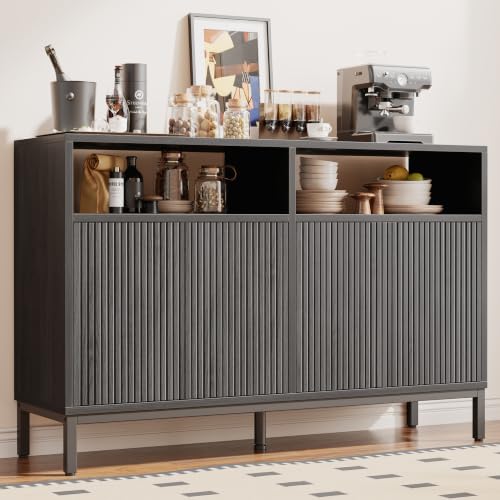
Mericonia Sideboard Buffet Cabinet Storage, Modern Console Fluted Credenza | 46'' black Living Room 4 door wood decorative coffee station adjustable shelves entryway
Check price on Amazon
ComfyCorner 55" Fluted Buffet Sideboard Cabinet with Sliding Door, Walnut | Modern Storage Cabinet with Storage & Adjustable Shelf, Accent Coffee Bar Console Table for Kitchen and Dining Room
Check price on Amazon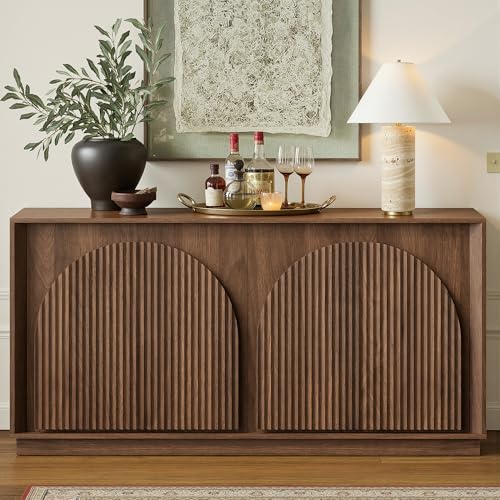
win2win 65" Sideboard Buffet Cabinet with Storage, Modular Credenza, Walnut | Modern Accent Cabinet for Living Dining Room Entryway, Media Console TV Stand, Fluted Double-Layered Arched Doors, Wood Grain
Check price on Amazon
TRUNBACK 6 Drawer Dresser, 48" W Modern Chest of Drawers, Black | Diagonal Ribbed Sideboard & TV Stand, Gold Handles, Smooth-Glide Storage, Versatile Buffet for Living Room, Entryway, Hallway
Check price on Amazon
3 Drawer Dresser, 30" W Modern Chest of Drawers for Bedroom, Black | Diagonal Ribbed Sideboard Buffet Storage Cabinet, Gold Handles & Smooth Slide, TV Stand for Living Room, Entryway & Hallway
Check price on Amazon
Henn&Hart 68" Fluted Modern Sideboard Buffet Cabinet, Rich Brown | Elegant ribbed doors, adjustable shelves, and cable cut-outs create stylish, clutter-free storage for any room
Check price on Amazon
Panana 2-Door 2-Drawer Storage Cabinet, Farmhouse Ribbed Style Sideboard for Kitchen, Living Room, Entryway (White)
Check price on AmazonFrequently Asked Questions
A ribbed sideboard is a dining room storage cabinet featuring vertical or horizontal raised grooves, ridges, or slats across its door and drawer fronts. This textured surface creates visual depth and catches light in dynamic ways, making it a popular statement piece in contemporary and mid-century modern interiors.
Measure your available wall space and leave at least 36 inches of clearance in front for opening doors and drawers. A sideboard should typically span 60 to 80 percent of the wall width it sits against. For small dining rooms, consider narrower models around 48 inches wide; larger rooms can accommodate units 72 inches or wider.
Not at all. The key is to dust regularly using a microfiber cloth or a soft brush attachment on your vacuum to reach into the grooves. For deeper cleaning, use a slightly damp cloth with mild soap, then dry immediately. Avoid abrasive cleaners that can dull the finish.
Ribbed sideboards are commonly crafted from solid wood (oak, walnut, mango), engineered wood with wood veneer, or lacquered MDF. Each material offers different characteristics in terms of durability, texture, and visual warmth. Solid wood and quality veneers are generally preferred for longevity and natural beauty.
Yes. Choose a lighter finish or a white ribbed sideboard to keep the space feeling open, and opt for a compact width. Wall-mounted or floating ribbed sideboards can also save floor space and create an airy feel in smaller dining areas.
Final Thoughts
A ribbed sideboard is more than storage—it is a design decision that brings texture, depth, and a sense of craft into your dining room. Focus on proportion, construction quality, and how the finish will work with your existing pieces. Whether you choose an entry-level fluted cabinet for a first apartment or a premium solid-wood piece for a forever home, the right ribbed sideboard will serve your dining room for years.
Ready to explore options? Check out our recommended picks above, and if you are still planning the rest of the room, browse our dining furniture guides and table setting tips to complete the look.