
Round Bar Tables: The Complete Buying Guide
Everything you need to choose a round bar table that fits your space, your seating needs, and your style — with clear comparisons of heights, materials, and setups.
EXPLORE RECOMMENDED TABLESWhy round bar tables deserve your attention: A round bar table brings people together without the sharp corners and rigid seating lines of a rectangular high-top. Whether you are outfitting a compact breakfast nook, a home pub corner, a café patio, or a commercial taproom, understanding the relationship between table height, stool height, diameter, and material is the key to a setup that actually works day after day.
What Exactly Is a Round Bar Table?
A round bar table is a high-top table with a circular top and a raised surface designed for standing-height or stool-height seating. The defining characteristic is not just the shape — it is the elevation. True bar-height tables typically position the surface around 40 to 42 inches above the floor, which pairs with bar stools that have a seat height of roughly 28 to 30 inches. A closely related category is the counter-height table, usually around 34 to 36 inches, matched with counter stools in the 24 to 26 inch seat-height range.
The round shape is a practical advantage, not merely an aesthetic one. There is no "head of the table," conversation flows naturally, and the absence of corners makes circulation easier in tight rooms. A round bar table also fits more gracefully into awkward footprints — alcoves, bay windows, and corners where a rectangular table would leave dead space. If you are weighing shape options across the broader category, our guide to the round dining table covers how circular tops change room flow at standard dining height, while our overview of round table tops explains how top size and edge profile affect comfort at any elevation.
Round bar tables also appear under several names in retail listings: pub tables, high-top tables, bistro tables, and cocktail tables. They are not always identical. A cocktail table is usually smaller and intended for drinks only, while a bar table is sized for plates and full meals. Knowing which you need before you shop will save you from a table that looks right but functions poorly.
Recommended Round Bar Tables & High-Top Sets
⚠️ AFFILIATE DISCLOSURE: This website contains affiliate links. As an affiliate Associate, we earn from qualifying purchases. If you make a purchase through these links, we may receive a small commission at no additional cost to you. Read our full affiliate policy.

Pearington Round Bar Height Pub Table, Black, 4pk
Check price on Amazon
Furmax Bistro Pub Table Round Bar Height Cocktail Table for Home Bar, Round Bar Tables for Party, Dining Room, Living Room and Wedding, Metal Base MDF Top, 40.6 Inch Height (1, Dark Black-1)
Check price on Amazon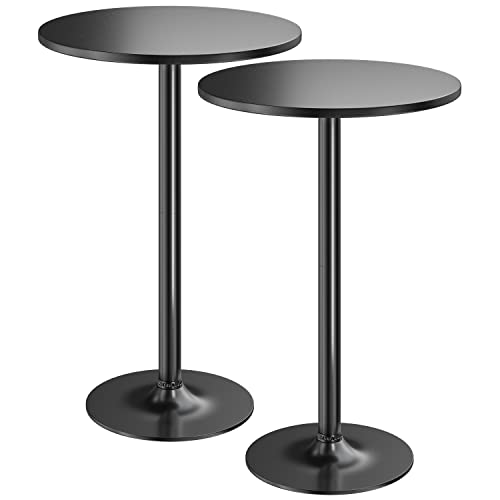
Furmax Bistro Pub Table 2 Pack Round Bar Height Cocktail Table Metal Base MDF Top Obsidian with Black Leg 23.8-Inch Top, 39.5-Inch Height (Black)
Check price on Amazon
YATINEY Bar Table, Round Bar Table Set of 2, Counter Height Table, Pub Cocktail Table, Metal Frame, for Bistro, Dining Room, Living Room, Terrace, Black BT05L2BB
Check price on Amazon
Pearington Santina 2 Pack Round Bar and Pub Table, Black
Check price on Amazon
FDW | Bar Table | 40 Inch | Black | Fixed Height Round Table | Wooden Top, Metal Base & Non-Slip Floor Protection | Easy Assembly | for Indoor/Outdoor Bar, Cafe, Bistro, Dining | Pack of 1
Check price on Amazon
VINGLI 32" Plastic Folding Round Table Bar Height, HDPE Matrial with Gray Metal Finish, High Top Table for Outdoor Party, Cafes, Restaurants, Backyard, Dining Room, Wedding Event,1 Pack, White
Check price on Amazon
CHOEZON Round Bar Table, Pub Table with Windmill Base | 21.6" Round Table Bar, Bistro Table, Cocktail Table for Kitchen, Cafe, Bistro, Dining Room, Rustic Brown and Black TBT04BFC1
Check price on AmazonBar Height vs. Counter Height: Getting the Numbers Right
The single most common mistake buyers make with round bar tables is mismatching table height and stool height. A stool that is two inches too low makes the table feel awkward; a stool that is too tall makes it hard to get your legs underneath. The table below gives the working ranges that professional furniture buyers use.
| Table Type | Typical Table Height | Matching Stool Seat Height | Best For |
|---|---|---|---|
| Standard dining | 28–30 in | 17–19 in | Long meals, family dining, children and older adults |
| Counter height | 34–36 in | 24–26 in | Kitchen islands, breakfast nooks, casual everyday meals |
| Bar height | 40–42 in | 28–30 in | Home pubs, entertaining, cafés, standing socializing |
| Extra-tall / pub | 42–44 in | 30–32 in | Commercial taprooms, cocktail-height socializing |
Two practical rules help beyond the raw numbers. First, allow roughly 10 to 12 inches of clearance between the seat of the stool and the underside of the table — enough to cross your legs without hitting the apron. Second, check the table's apron or bracing. Some round bar tables have a deep apron that limits knee room even when the height numbers look correct. If you are choosing stools separately, our guide to bar and counter stools covers seat height, footrests, and back options in more detail. For rooms where you want the same look at standard height, the round pedestal dining table is the natural companion piece.
Choosing the Right Diameter and Seating Count
Round bar tables are sold in a small number of standard diameters, and each one supports a predictable number of seats. Use this as a starting framework, then adjust for how you actually entertain.
- 24 to 30 inch diameter: A two-person drink table. Ideal for a balcony, a tight corner, or a standing cocktail setup. Not suitable for full meals with plates.
- 32 to 36 inch diameter: Comfortable for two diners, or three people for drinks. This is the sweet spot for apartment breakfast bars and small patios.
- 40 to 42 inch diameter: Seats three to four people for casual meals. A very common size for home bar areas and café seating.
- 48 inch diameter and above: Seats four comfortably, five to six for drinks. Suited to larger entertaining spaces and commercial settings.
Allow about 24 inches of table edge per seated diner for a full place setting, and 18 to 20 inches for drinks and snacks. Also account for the table base. A wide pedestal base needs more floor clearance than the top suggests, while a four-leg base can interfere with stool legs if the spread is narrow. If your room is genuinely tight, compare these figures against our space-planning notes in small dining room solutions before you commit to a diameter.
Table Base Types: The Hidden Decision
With round tables, the base does as much work as the top. Four base styles dominate the market, and each has a distinct trade-off.
Pedestal bases
A single central column with a weighted foot. This is the most popular base for round bar tables because it leaves the entire perimeter free for stools — no legs to straddle. The trade-off is stability: a narrow pedestal can wobble at bar height if the foot is small or the top is large. Look for a pedestal foot that is at least two-thirds the diameter of the table top, and check whether the column includes a stabilizing plate. Our round table pedestal base guide breaks down foot sizes and weight ratings.
X-bases and cross bases
Four legs joined in an X or cross pattern. These are more stable than a slim pedestal and are common on folding and space-saving designs. The legs sit at the corners, so stools need to be positioned between them rather than all the way around.
Trestle and A-frame bases
Two upright supports connected by a stretcher. These are sturdy and often used on larger round bar tables in commercial settings. They restrict seating on two sides, so they work best when the table is pushed against a wall or used in a booth-style arrangement.
Tripod bases
Three legs radiating from a center hub. These offer a good balance of stability and open legroom, and they handle uneven patio surfaces better than four-leg designs. They are a frequent choice for outdoor round bar tables.
Whichever base you choose, test the table's wobble resistance at its full height. A table that is stable at dining height can feel unsteady when raised, because the same lateral force now acts on a taller lever. If you plan to move the table frequently — between indoors and a patio, for example — a lighter folding or flip-top model may serve you better than a fixed pedestal, and our notes on rental and temporary furniture options explain what to look for in portable designs.
Materials, Finishes, and Market Tiers
The material of the top and frame determines how the table ages, how much maintenance it needs, and where it can safely live. Rather than thinking in numbers, think in tiers. The three-tier framework below is consistent across our buying guides and describes relative market position, not a specific figure.
Everyday Practical
Laminate tops, powder-coated steel frames, and MDF cores. Solid choice for a first apartment, a casual breakfast spot, or a covered patio. Look for reinforced leg brackets and a rust-proof finish if the table will see any humidity.
Balanced Durability
Solid wood or wood-veneer tops, thicker steel or cast-iron pedestals, and better edge sealing. These tables typically offer smoother height hardware and more consistent finishes than entry-level models, and they hold up well to daily family use.
Long-Term Investment
Hardwood tops, stone or marble surfaces, and heavy-duty commercial-grade bases. Built for high-traffic entertaining and designed to be refinished or reupholstered rather than replaced. The worthwhile investment if the table is a permanent fixture in your home.
Wood
Solid wood tops — oak, acacia, rubberwood, mango — are warm, repairable, and age gracefully. They need coasters and periodic oiling or waxing. A wood round bar table works in farmhouse, rustic, and transitional interiors. If you like the wood look but want a lower-maintenance surface, our guide to the resin wood table explains how composite options compare.
Stone and marble
Stone tops resist heat and scratches and bring a premium feel. They are heavy, so the base must be rated for the weight, and they can chip at the edge if struck hard. A marble round bar table suits formal and luxury spaces; see our round marble dining table guide for sealing and care notes that apply equally at bar height.
Glass
Tempered glass tops keep a small room feeling open. They are easy to wipe clean but show fingerprints and smudges, and they need a stable base because glass offers no flex. Look for a minimum half-inch tempered top with a safety edge. Our round glass dining table for four breakdown covers thickness and edge treatments.
Metal
Steel, aluminum, and cast iron frames are the backbone of bar-height furniture. Powder coating protects against rust; on outdoor models, insist on a galvanized or rust-proof finish and stainless hardware. A commercial-grade metal frame is the standard for pub and taproom use.
Outdoor considerations
For patios and decks, choose materials rated for the weather. Resin and polypropylene tops handle rain and sun without swelling or peeling, and aluminum frames resist corrosion. If you are furnishing a covered outdoor bar area, our round outdoor dining table guide and the round garden table for six comparison will help you match table size to your patio footprint.
Style, Placement, and Room Integration
A round bar table is a focal point by nature, because it usually sits in a visible spot — a kitchen corner, a window alcove, a home bar zone. A few placement rules keep it looking intentional rather than squeezed in.
- Allow 30 to 36 inches of clearance on all sides where people will walk. For a stool that is pulled out, add another 12 inches.
- Match the style of the nearest permanent furniture. A round bar table next to a farmhouse kitchen reads best in wood and black metal. In a modern apartment, a glass or stone top with a slim pedestal fits more naturally.
- Consider the sightline. At bar height, the table surface is near eye level when you are seated at a sofa or in an adjacent room. Choose a top material you are happy to look at, not just eat on.
- Pair with lighting hung high. A pendant over a bar table should clear the table by at least 30 inches so people can see across it.
For rooms where the round bar table is part of a larger dining zone, our round dining room sets overview and the round table set for six guide show how circular tables layer with sideboards and lighting. If you are building a dedicated entertaining corner, the notes on romantic dining setups apply nicely to a two-person round bar table by a window.
Round Bar Table Buying Checklist
- Measure the table height and the stool seat height together — not separately.
- Confirm the diameter against how many people will actually sit down to eat.
- Check the base foot width relative to the top; a wider foot means more stability.
- Verify the weight rating of the base if you choose a stone or glass top.
- For outdoor use, confirm the finish is rated rust-proof and weather-resistant.
- Check knee clearance under the apron before you commit.
- Measure walkway clearance with a stool pulled out, not just pushed in.
- Decide whether you need a fixed table or a folding/portable model.
Frequently Asked Questions
What is the difference between a round bar table and a round counter-height table?
The difference is elevation. Bar-height tables sit around 40 to 42 inches high and pair with stools whose seats are about 28 to 30 inches from the floor. Counter-height tables sit around 34 to 36 inches and pair with 24 to 26 inch stools. Counter height is generally easier for everyday family meals and for older adults; bar height is better for standing socializing and entertaining. The shape itself is identical, so the choice comes down to how you will use the table most often.
How many people fit around a 36-inch round bar table?
Two people sit comfortably for a full meal, and three can share it for drinks or snacks. A 36-inch top is the most common size for apartment breakfast bars and small patios because it fits through doorways and does not dominate a small room. If you regularly serve four at bar height, move up to a 42-inch diameter or larger.
Is a pedestal base or a four-leg base better for a round bar table?
For bar height, a properly weighted pedestal is usually the better choice because it leaves the full perimeter free for stools and eliminates legs to straddle. The caveat is stability: check that the pedestal foot is wide enough relative to the top and that the column includes a stabilizing plate. Four-leg and X-base designs are more forgiving on uneven surfaces and are common on portable and folding models.
Can a round bar table be used outdoors?
Only if it is built for it. Solid wood and MDF will swell and crack with rain and humidity; steel frames will rust without a proper coating. Choose resin, polypropylene, aluminum, or specifically weather-rated wood for uncovered outdoor use, and verify the finish is described as rust-proof. Covered porches are more forgiving, but humidity still matters. Our guide to the round outdoor dining table covers the material ratings in more detail.
How much clearance do I need around a round bar table?
Allow 30 to 36 inches of walkway clearance on all sides. Where a stool will be pulled out, add roughly 12 more inches so the person can slide in and out comfortably. In a tight corner, you can reduce the clearance on one side if that side is against a wall, but keep the working sides generous.
Should the table and stools be bought as a set or separately?
Sets are convenient because the heights are already matched and the finishes coordinate. Buying separately gives you more control over seat comfort, back height, and material — which matters if the table will be used for long meals. If you buy separately, match the stool seat height to the table height using the ranges in our height guide above, and check that the stool footprint fits under the table's base style.