
Round Wooden Kitchen Table: The Complete Buying Guide
Everything you need to choose, style, and care for a round wooden kitchen table — from ideal sizes and wood species to seating layouts, design styles, and long-term maintenance.
Why a round wooden kitchen table? A round wooden kitchen table is one of the most versatile pieces you can place in a home. Its circular shape encourages conversation, eliminates sharp corners in busy family kitchens, and fits naturally into compact breakfast nooks and open-plan spaces alike. This guide walks you through the decision points that matter most — so you can buy with confidence and enjoy your table for years.
Why Choose a Round Wooden Kitchen Table?
A round wooden kitchen table brings together two highly practical qualities: the warm, natural character of solid timber and the social, space-friendly geometry of a circular top. Unlike rectangular tables, a round table has no head or foot — every seat feels equally valued, which makes it ideal for family meals, casual breakfasts, and small gatherings.
From a layout perspective, round tables are remarkably efficient. Because there are no corners, you can walk around the table more easily, and the shape tends to soften traffic flow in kitchens where space is shared with walkways or island counters. If your kitchen leans toward a compact footprint, a round kitchen table for 4 is a classic solution that seats a family without dominating the room.
Wood adds another layer of appeal. Timber ages gracefully, develops character over time, and pairs well with nearly every kitchen style — from farmhouse and rustic to modern minimalist and mid-century. A well-built wooden table is also a long-term investment rather than a disposable purchase, especially when you choose a durable species and a reputable finish.
Choosing the Right Size for Your Kitchen
Size is the single most important decision when buying a round wooden kitchen table. Too small and the table feels lost or fails to seat your household; too large and it crowds walkways and makes chairs difficult to pull out. Use the guide below as a starting point, then confirm measurements in your actual space.
| Diameter | Typical Seating | Best For |
|---|---|---|
| 30–36 inches | 2–3 people | Compact breakfast corners, apartments, and small kitchens |
| 42–48 inches | 4 people | Standard family kitchens and everyday dining |
| 54–60 inches | 4–6 people | Larger kitchens, open-plan spaces, and entertaining |
| 60+ inches | 6+ people | Formal or spacious kitchens with generous clearance |
As a rule of thumb, allow at least 30 inches of clearance around the table for chair pull-out, and 36 inches or more along main walkways. If your kitchen is tight, consider a small round drop-leaf table with 2 chairs, which can be expanded only when guests arrive. For households that regularly seat four, a round kitchen table set bundles the table and matching chairs in a coordinated design.
Measurement tip: Tape the table's footprint onto your floor before buying. Then place chairs around it and practice walking past. This simple step prevents the most common post-purchase regret — a table that fits the room but not the daily routine.
Wood Types: Which Timber Is Right for You?
The wood species determines hardness, grain character, color, and how much maintenance the table needs. Below is a practical comparison of common options for a round wooden kitchen table.
| Wood Type | Market Tier | Best For |
|---|---|---|
| Pine & Rubberwood | Entry-Level | Lightweight tables for casual kitchens and starter homes |
| Oak & Maple | Mid-Range | Everyday family use with strong hardness and tight grain |
| Walnut & Teak | Premium | |
| Mahogany & Exotic Hardwood | Luxury | Formal kitchens and heirloom-quality statements |
Oak is a perennial favorite for kitchen tables because of its hardness and prominent grain — it stands up well to daily use and looks at home in rustic and farmhouse settings. Maple offers a smoother, tighter grain and a lighter tone, making it a natural fit for modern and Scandinavian-inspired kitchens. Walnut delivers a rich, dark hue and premium feel, while teak is prized for its natural oils and weather resistance, though it is typically reserved for higher-end pieces.
If you prefer a traditional, richly colored table, a mahogany dining table offers a classic look with deep tones. For a reclaimed, character-rich alternative, explore reclaimed wood tables, which bring unique grain patterns and an eco-conscious story to the kitchen.
Pedestal Base vs. Four Legs
The base style affects both comfort and floor space. A pedestal base — one central column with spreading feet — maximizes legroom because there are no corner legs to bump into. This is especially valuable in smaller kitchens where every inch counts, and it makes a small pedestal dining table a smart choice for tight breakfast areas.
Four-leg designs, by contrast, provide a stable, traditional look and often pair well with matching chair styles. They can be easier to move and are common in farmhouse and cottage kitchens. The trade-off is slightly less legroom at the corners. Whichever you choose, check that the base feels solid and does not wobble — stability is a hallmark of quality construction.
Design Styles for Round Wooden Kitchen Tables
Round wooden tables adapt to a wide range of interiors. Here are the most popular directions and what each one emphasizes.
Modern & Minimalist
Clean lines, slim profiles, and light or medium wood tones. Often paired with simple molded or upholstered chairs. Look for a modern mid-century kitchen table for a sleek silhouette.
Farmhouse & Rustic
Chunky legs, visible grain, and warm finishes. Works beautifully with a solid wood farmhouse dining table aesthetic and mixed seating like benches.
Mid-Century Modern
Tapered legs, warm walnut or teak tones, and organic curves. A round top is a signature mid-century shape that pairs naturally with this style.
Traditional & Classic
Turned pedestals, rich finishes, and formal detailing. A round dining table with chairs in a classic style anchors formal or transitional kitchens.
Seating and Chair Pairing
Round tables offer flexible seating. For a 42–48 inch table, four chairs is the sweet spot; for larger tables, six chairs work well with even spacing. Chairs without arms slide under the table more easily and are preferable in compact kitchens. Armchairs add comfort but require more clearance.
Consider mixing chair styles for a collected look — for example, two leather dining chairs across from two wooden ones, or a bench on one side for a family-friendly arrangement. If you prefer a fully coordinated set, a round dining table set for 4 or a round dining table set for 6 counter height keeps the proportions consistent.
- Check that chair seat height matches table height for comfortable dining.
- Allow roughly 24 inches of table edge per person for elbow room.
- Choose chairs that fit entirely under the table if floor space is limited.
- Match wood tones or intentionally contrast them for a designed look.
- Test chair comfort — kitchen tables are used daily, not just on holidays.
Placement and Room Layout
Round tables are forgiving in layout because their footprint is easier to navigate. Still, placement matters. Center the table in the available dining zone, and keep the longest walkway clear. Avoid placing the table directly against a wall unless the shape allows for comfortable seating on the exposed sides.
In open-plan kitchens, a round table can define the dining zone without the hard edges of a rectangular piece. Pair it with a round wicker chair for a relaxed, textured look, or use a round black table as a striking contrast in a light kitchen. For a more traditional feel, a pub round table style adds a casual, pub-like charm.
Care and Maintenance
A wooden kitchen table is exposed to heat, moisture, and daily wear — so a little preventive care goes a long way. Follow these practices to keep the finish looking its best.
- Wipe spills promptly. Standing water can penetrate seams and dull the finish.
- Use coasters and trivets. Protect the surface from hot dishes and condensation.
- Dust regularly. A soft, dry cloth prevents grit from scratching the surface.
- Condition the wood. Apply a suitable wood polish or conditioner periodically to maintain moisture balance.
- Control humidity. Avoid placing the table near radiators or in very dry rooms to reduce cracking risk.
- Rotate placement if possible. Even sun exposure prevents uneven fading over time.
For a deeper dive, read our guide on how to clean a solid wood dining table. If you prefer a solid timber top, a solid wood dining table with self-storing leaves offers flexibility for hosting while maintaining the warmth of real wood.
Final Buying Checklist
Before you commit, run through this checklist to confirm the table fits your home, household, and habits.
- Measure the room and confirm clearance for chairs and walkways.
- Choose a diameter that matches your typical household size.
- Select a wood species aligned with your maintenance preferences.
- Decide between pedestal and four-leg base.
- Confirm the table height works with your chosen chairs.
- Check the finish — sealed, oiled, or lacquered — and its care requirements.
- Review warranty and return terms before purchase.
- Consider delivery and assembly requirements for larger tables.
Frequently Asked Questions
What size round wooden kitchen table fits a small kitchen?
For small kitchens, a round wooden table with a 30-inch to 36-inch diameter comfortably seats two to three people. A 42-inch to 48-inch table seats four and remains a practical choice for compact breakfast areas when paired with space-saving chairs.
Which wood type is best for a round kitchen table?
Oak and maple are excellent for daily use because of their hardness and tight grain. Walnut and teak offer premium durability and rich color, while pine and rubberwood serve as entry-level options. Consider your kitchen's humidity and how much maintenance you are comfortable with.
How many people can sit at a 48-inch round table?
A 48-inch round table typically seats four comfortably and up to five with a squeeze. For six diners, aim for a 54-inch to 60-inch diameter to preserve elbow room and easy serving access.
How do I care for a solid wood round kitchen table?
Dust regularly with a soft cloth, wipe spills immediately, and use coasters and trivets to protect the finish. Apply a wood conditioner or polish every few months, keep the table away from direct heat, and maintain indoor humidity to prevent cracking.
Recommended Round Wooden Kitchen Tables & Matching Chairs
⚠️ AFFILIATE DISCLOSURE: This website contains affiliate links. As an affiliate Associate, we earn from qualifying purchases. If you make a purchase through these links, we may receive a small commission at no additional cost to you. Read our full affiliate policy.

Jocoevol Round Dining Table for 4,Kitchen Dining Room Circle Dinner Pedestal Table,Space Saving Wood Kitchen & Dining Room Furniture (Vintage, 46In)
Check price on Amazon
LITTLE TREE Round Dining Table for 4-6 People, 47 Inches Dining Room Table with Wooden Pedestal Base, Brown Dinner Tables, Circle Kitchen Tables for Kitchen, Living Room(Table Only)
Check price on Amazon
LITTLE TREE 31.5" Round Dining Table for 4, Wood Kitchen Table with Wooden Tabletop and Octagonal Base for Dining Room, Apartments, Office & Restaurants, Deep Brown
Check price on Amazon
LITTLE TREE Round Dining Table for 4-6 People, 47 Inches Dining Room Table with Wooden Pedestal Base, Circle Kitchen Tables for Dining Room, Kitchen, Living Room, Oak
Check price on Amazon
VASAGLE 47-Inch Round Dining Table for 4-6 People, Pedestal Kitchen Table | Contemporary, with Wooden Pedestal Base and 3-Height Adjustable Storage Shelf, Thickened Tabletop, Oak Beige
Check price on Amazon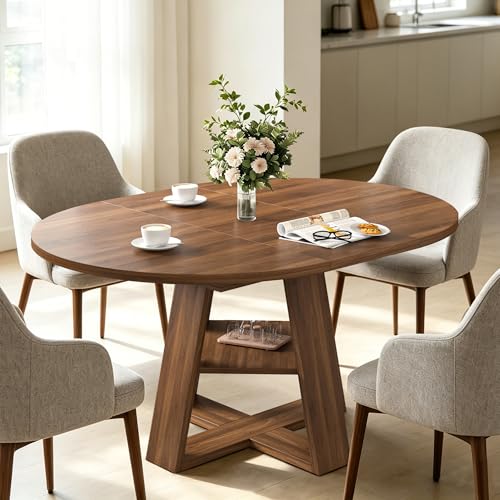
43.3"-59" Extendable Round Oval Dining Table for 4-8 with Storage Shelf | Modern Kitchen Oval Dining Table with Removable Leaves,Space Saving Extendable Table Wood Base for Kitchen Living Room Walnut
Check price on Amazon