




Why a Small Picnic Table Deserves a Place in Your Outdoor Setup
Full-size picnic tables are wonderful for parks and large yards, but they are often too deep, too heavy, or too wide for patios, balconies, and compact decks. A small picnic table solves that problem. These compact models are designed to deliver the same casual, communal feel in a footprint that fits tighter spaces, and many of them fold, stack, or roll away when the season changes.
Beyond the patio, small picnic tables are a practical choice for families with young children. A kids' picnic table gives little ones their own dedicated spot for snacks, crafts, and outdoor play while keeping the main dining table free. Some compact models even double as indoor activity tables during colder months, making them a worthwhile long-term addition to the home.
If your outdoor area is limited, a small picnic table can also complement other compact seating. Many homeowners pair one with a small patio dining set or a small patio table and chairs to create flexible zones for eating, lounging, and entertaining. The key is understanding the dimensions, materials, and features that matter most for your specific space.
Standard Dimensions and Seating Capacity
Small picnic tables come in a range of sizes, but most compact models fall within a predictable set of dimensions. Understanding these measurements before you shop helps you avoid a table that is either too cramped or too large for your space.
| Category | Typical Length | Typical Width | Best For |
|---|---|---|---|
| Two-seat compact | 28–36 inches | 20–26 inches | Balconies, kids, small patios |
| Four-seat rectangular | 40–48 inches | 24–30 inches | Compact patios and decks |
| Round or hexagonal | 36–44 inches (diameter) | 36–44 inches (diameter) | Corners, tight outdoor nooks |
| Folding / portable | 30–48 inches (folded smaller) | 24–30 inches | Camping, tailgating, storage |
As a general rule, allow at least 24 to 30 inches of clearance on all sides of the table so people can sit down, stand up, and move around comfortably. On a narrow balcony, a two-seat model or a compact round table is usually the safest fit. For a deck with a bit more room, a four-seat rectangular model offers a better balance of seating and surface area.
Materials: What Holds Up Outdoors
The material of your small picnic table determines how long it lasts, how often it needs maintenance, and how well it handles rain, sun, and temperature changes. Here is how the most common options compare.
High-Density Polyethylene (HDPE)
HDPE is a popular choice for compact outdoor tables because it resists moisture, rot, and insects, and it does not splinter. It is easy to wipe clean and holds color well when UV-stabilized. HDPE tables are generally mid-range in the market and are a strong option for rainy or humid climates.
Powder-Coated Steel and Aluminum
Metal frames with a powder-coated finish offer excellent structural strength and a rust-proof exterior. Aluminum keeps the weight down, which matters for portable and folding models, while steel provides a more solid, heavy-duty feel. Look for reinforced joints and stainless or coated hardware on mid-range and premium folding tables.
Solid Wood
Solid wood remains the classic picnic table material. Treated pine is common in entry-level and mid-range models, while cedar and teak sit in the premium tier thanks to their natural rot resistance. Wood requires periodic sealing or re-oiling, but it offers a warm, traditional look that many homeowners prefer. If wood care is important to you, our care and maintenance guides cover sealing and refinishing in detail.
Composite and Recycled Materials
Composite tables blend wood fibers with plastic resins to mimic the look of wood while reducing maintenance. They are heavier than HDPE but offer a more natural appearance and strong weather resistance. These models generally fall in the mid-tier to high-end tier depending on the frame construction.
Portability and Storage Features
One of the biggest advantages of a small picnic table is that it can be moved, folded, or stored with relative ease. If you plan to keep the table on a balcony or bring it out only for gatherings, portability features should be high on your checklist.
Folding Design
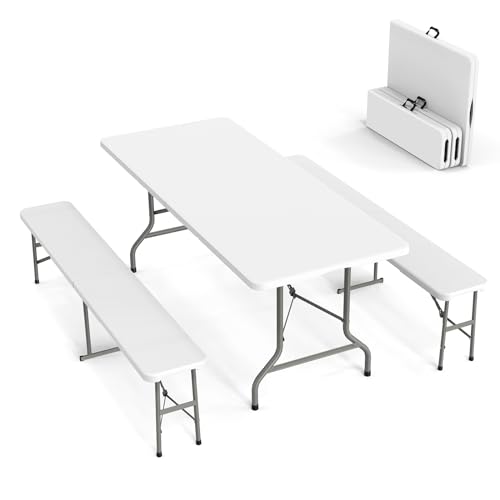
Folding picnic tables collapse into a flatter profile for storage in a closet, garage, or shed. Look for locking hinges and a carrying handle on portable models.
Attached vs. Separate Benches
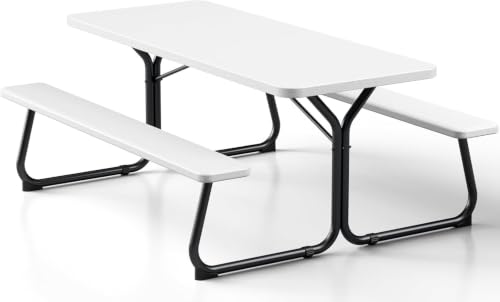
Attached benches fold with the table for one-piece transport. Separate benches are easier to rearrange but require more handling.
Weight and Handles
Aluminum and HDPE models are the easiest to carry. Check the product weight and whether a built-in handle is included.
Non-Marking Feet
If the table will be used indoors or on a finished deck, rubber or plastic feet protect the surface from scratches.
For homes with very limited storage, a folding model that tucks behind a door or hangs on a wall is often the most practical choice. If the table will stay outside year-round, prioritize weather resistance over foldability.
Design and Style Considerations
Small picnic tables are no longer limited to the classic A-frame silhouette. Today you can find compact models that match modern, farmhouse, coastal, and industrial outdoor settings. Consider these design points before you commit:
- Shape: Rectangular tables maximize seating along a wall or railing, while round and hexagonal tables fit corners and encourage conversation.
- Finish: Natural wood tones blend with garden surroundings, while painted or powder-coated finishes in neutral shades suit modern patios.
- Umbrella compatibility: If you need shade, look for a model with a pre-drilled umbrella hole. Our guide to a small outdoor dining table with an umbrella hole explains what to check.
- Integrated storage: Some compact picnic tables include a lower shelf or bench storage for utensils, toys, or garden tools.
- Kid-friendly edges: Rounded corners and smooth finishes are safer for families with young children.
If your outdoor area is part of a larger design plan, browse our small patio design ideas for layout inspiration that pairs a compact picnic table with planters, lighting, and lounge seating.
Placement Tips for Patios, Decks, and Balconies
Where you place your small picnic table matters as much as the table itself. A few practical guidelines can make the difference between a cramped corner and a comfortable outdoor dining spot.
- Measure twice: Confirm the table dimensions and add clearance on every side before ordering. Doorways, railings, and grill zones all affect usable space.
- Mind the sun: Place the table where it gets shade during the hottest part of the day, or choose an umbrella-ready model.
- Keep traffic paths clear: Avoid blocking the route between the house and the yard. A compact table set against a railing preserves walkway space.
- Protect the surface: On wooden decks, use a mat or non-marking feet to prevent scratches and moisture buildup.
- Think about wind: On exposed balconies, a heavier model or one with weighted feet is less likely to shift in strong gusts.
For balconies and very tight patios, a small patio furniture set that includes a compact table may be a smarter all-in-one solution than buying pieces separately. If you already own patio chairs, a standalone small picnic table can serve as a casual second dining zone.
Indoor and Multi-Use Scenarios
While picnic tables are most often associated with the outdoors, small models are increasingly used indoors. A compact kids' picnic table works well in a playroom, a finished basement, or a kitchen corner where children can eat and craft. Adults sometimes use a small picnic table as a casual breakfast nook or a laptop-friendly workspace near a window.
When bringing a picnic table indoors, choose a model with a sealed or painted finish, non-marking feet, and dimensions that leave room to walk around. If your indoor space is tight, a small space kitchen table or a space-saving dining table may be a more appropriate choice than a picnic-style design, depending on how you plan to use the table.
For families that like to eat outside often, pairing a small picnic table with a small outdoor table and chairs gives you flexibility: the chairs can be used at the picnic table or moved to a lounge area, while the picnic table stays dedicated to messy meals and kids' activities.
Safety and Maintenance Checklist
A small picnic table is a long-term outdoor investment, and a little routine care goes a long way. Use this checklist to keep your table safe and looking its best.
Check Hardware Seasonally
Tighten bolts and hinges at the start and end of each outdoor season. Loose fasteners are a common cause of wobbling.
Clean and Seal Wood
Wash wooden tables with mild soap and water, then re-seal annually or when water no longer beads on the surface.
Inspect for Rust
Touch up any chips in powder-coated frames promptly to prevent corrosion from spreading.
Store in Extreme Weather
Bring folding and lightweight models indoors during storms, heavy snow, or freezing temperatures.
For a deeper look at protecting outdoor furniture, our dining care and maintenance section covers wood polish, metal care, and humidity control in detail. If you plan to leave the table outside year-round, a weather-resistant cover is a worthwhile addition.
How to Choose: A Quick Decision Framework
With so many options available, it helps to narrow your choice using a simple framework. Ask yourself these four questions before you buy:
- Who will use it? Adults need sturdier frames and more legroom; kids' tables can be lighter and lower to the ground.
- Where will it live? A covered patio allows more material options than an exposed balcony or a windy deck.
- Will it stay put or move? Choose folding or lightweight models if you need to store the table between uses.
- How much maintenance do you want? HDPE and powder-coated metal require less upkeep than natural wood.
If you are still comparing compact outdoor furniture, our guides to small outdoor table and chairs with an umbrella and small patio dining sets provide additional comparisons that pair well with a picnic-style table.
Frequently Asked Questions
What size small picnic table fits a compact patio?
For a compact patio, look for a small picnic table measuring roughly 36 to 48 inches long and 24 to 30 inches wide. Rectangular models with attached benches of 40 to 48 inches are a practical choice, while round or hexagonal compact models suit tighter corners. Always leave about 24 to 30 inches of clearance around the table for seating and movement.
Are folding picnic tables durable enough for year-round outdoor use?
Folding picnic tables can be durable outdoors when they use weather-resistant materials such as powder-coated high-grade steel frames, UV-stabilized high-density polyethylene, or sealed solid wood. Entry-level folding models with thin frames are best stored away between uses, while mid-range and premium folding tables with reinforced hardware and rust-proof finishes can stay outside for extended periods.
How many people can a small picnic table seat?
Most small picnic tables seat two to four adults comfortably. A 40 to 48 inch rectangular model with attached benches typically seats four, while compact round or two-seat models suit two adults or several children. Check the seating capacity and weight rating in the product specifications before choosing.
What material is best for a small picnic table in a rainy climate?
For rainy climates, high-density polyethylene (HDPE) and powder-coated aluminum or steel are excellent choices because they resist moisture, rot, and rust. Treated or sealed solid wood is a classic option but requires regular re-sealing. Avoid untreated softwood and bare metal frames that can corrode quickly.
Can a small picnic table be used indoors?
Yes. Many compact and kids' picnic tables work well indoors for playrooms, kitchens, and casual dining nooks. Choose models with sealed finishes and non-marking feet to protect interior floors, and confirm that the table dimensions fit your indoor space before moving it inside.
Related Guides You May Find Helpful
Ready to plan your full outdoor setup? These related guides cover complementary furniture and space-planning topics: