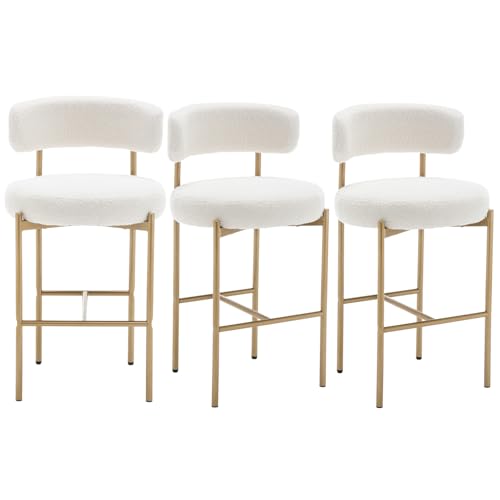
White and Gold Bar Stools Set of 3: The Complete Buying Guide
Everything you need to know before choosing a set of three white and gold bar stools — from seat height and frame materials to comfort features, styling, and placement in kitchens and dining spaces.
Why a White and Gold Bar Stool Set of 3 Works
A set of three white and gold bar stools is one of the most versatile seating arrangements for modern homes. Three stools suit the typical kitchen island or peninsula that seats a small household, while the white-and-gold palette bridges two very different design moods: the freshness and lightness of white, and the warmth and glamour of gold.
White keeps small spaces feeling open and airy, which matters in apartments and open-plan kitchens where the island is visible from the living room. Gold adds a reflective, warm accent that connects the stools to cabinet hardware, pendant lights, or metallic table decor. Together, the pairing reads as intentional and polished without being heavy.
A three-stool set is also a practical middle ground. It offers more seating than a pair without the footprint of four stools, making it a natural fit for a movable kitchen island with seating or a compact peninsula. If your island is wider or your household larger, a four-stool arrangement may suit better; explore our guide to kitchen bar stools with backs for larger layouts.
Quick fit check: Before ordering, measure the counter overhang, the distance from the counter edge to the nearest wall, and the clear width of your walkway. A set of 3 typically needs at least 6 to 7 feet of counter width to sit comfortably without crowding.
Seat Height and Sizing: Getting the Fit Right
The most common mistake with bar stool purchases is choosing the wrong seat height. A stool that is too tall leaves knees pressed against the counter; one that is too short leaves diners reaching awkwardly for their plates. The standard guideline is a 9 to 12 inch gap between the top of the seat and the underside of the counter or table surface.
Counter-Height vs. Bar-Height
Counter-height stools are the most common choice for residential kitchens, pairing with counters around 36 inches high. Bar-height stools are taller and suit raised bars or pub-style surfaces around 42 inches. Some households also use adjustable or swivel designs, which offer flexibility when seating is shared between two surfaces.
If your seating area doubles as a dining surface, you may prefer stools with backs for support during longer meals. Our guide to counter-height stools with backs and arms covers that configuration in more detail, while swivel counter-height stools is a useful reference if you want easier entry and exit.
| Stool Type | Typical Surface Pairing | Best For |
|---|---|---|
| Counter-height | Standard kitchen islands and peninsulas | Everyday meals, breakfast bars, family kitchens |
| Bar-height | Raised bar counters and pub tables | Entertaining areas, home bars, open-plan lofts |
| Adjustable / swivel | Flexible surfaces of varying heights | Multi-use spaces, rental homes, shared seating |
| Backless | Compact counters with limited clearance | Tucking under the counter, visual openness |
| With backrest | Any counter used for longer sitting | Dining, working, and socializing at the island |
Width, Depth, and Spacing
Allow roughly 24 to 30 inches of counter width per stool for comfortable elbow room. For a set of three, that means a counter run of about 6 to 7 feet at minimum. Also check the stool's footprint: a wider base or splayed legs need more floor space and can block walkways in narrow kitchens.
Frame and Seat Materials Compared
White and gold bar stools are typically built around a metal or wood frame with a contrasting seat. Understanding how each material behaves helps you choose a set that fits your household and maintenance preferences.
Powder-Coated Steel & Iron
Durable construction and a clean, modern profile. Powder-coated white finishes resist chipping better than painted alternatives, and gold-toned accents can be plated or coated for a consistent sheen.
Solid Wood & Engineered Wood
Warm and traditional, often paired with painted white legs and gold-capped feet. Solid wood frames tend to be heavier and more stable, while engineered wood options are lighter and easier to move.
Faux Leather & Fabric
Faux leather wipes clean easily and suits busy households; woven fabrics feel softer but need more care. High-density foam padding makes a noticeable difference for longer sitting sessions.
Molded & Padded Seats
Molded plastic or composite seats are lightweight and wipe-clean, while padded seats add comfort. A contoured seat shape distributes weight better than a flat one, especially during meals.
If you are comparing metal and wood constructions more broadly, our guide to wood and metal swivel bar stools with backs explores how the two materials combine in practical designs. For a purely outdoor setting, materials need to be weather-resistant rather than decorative, so the advice in our outdoor bar swivel stools article is a better starting point.
Comfort, Backrests, and Footrests
Bar stools are often judged on appearance, but comfort determines whether they actually get used. Three features deserve close attention when choosing a white and gold set.
Backrest Height and Shape
Low backrests offer support without blocking sightlines, which matters in open-plan kitchens where you want to see over the island. Mid-height backrests provide more lumbar support for longer meals. Fully backless stools are the most space-efficient and visually lightest option, but they suit short visits more than lingering dinners.
Seat Padding and Contour
A padded seat with a slight contour holds the body more comfortably than a flat surface. High-density foam retains its shape better than soft fill over time. If the stools will be used daily, prioritize seat padding and a supportive backrest over purely decorative detailing.
Footrests and Stability
A built-in footrest takes pressure off the legs and helps shorter diners sit comfortably at a tall counter. Look for footrests that are integrated into the frame rather than attached as an afterthought, and check that the stool does not wobble when weight shifts.
Comfort checklist: supportive backrest height, contoured padded seat, integrated footrest, non-marking glides, and a stable base. If a set of three ticks all five, it is well-specified for everyday use.
Quality Tiers: What to Expect at Each Level
White and gold bar stools span a wide range of construction quality. Rather than focusing on numbers, it helps to understand what each tier typically delivers so you can match the set to how often it will be used.
Starter Tier
Simple metal frames with painted or lightly coated finishes. Suitable for occasional seating, guest kitchens, or staging. Expect lighter weight and simpler joinery.
Balanced Tier
Powder-coated frames, denser seat padding, and more consistent gold finishes. A solid choice for daily family use where comfort and durability both matter.
High-End Tier
Heavier frames, refined upholstery, and reinforced joints. Better weight distribution and smoother finishes make these comfortable for long meals and entertaining.
Flagship Tier
Designer detailing, premium materials, and precise craftsmanship. Chosen when the stools are a focal design element in a carefully styled kitchen or dining space.
As a general rule, mid-range models usually offer the best balance of comfort and durability for everyday households, while entry-level sets suit lighter use. Higher tiers are worthwhile when the stools are part of a long-term design plan or will be used by many people daily.
Placement and Styling Ideas
Where and how you place a set of three white and gold bar stools shapes how the whole room feels. A few placement principles make the difference between a cluttered island and a polished seating area.
Kitchen Islands and Peninsulas
A set of three works best along a straight island run with a comfortable overhang of at least 12 inches. Leaving the walkway clear behind the stools keeps traffic flowing during cooking. If your island is movable, consider how the stools follow it when it is repositioned for entertaining, as discussed in our movable kitchen island with seating guide.
Open-Plan Dining Spaces
In open-plan layouts, white and gold stools can echo the dining area without competing with it. Repeating the gold accent in a light fixture or cabinet pull creates visual continuity between the kitchen and the dining table. If your dining zone has a larger seating arrangement, our rectangle dining set guide can help coordinate proportions and finishes.
Small Apartments and Breakfast Bars
Backless white and gold stools visually open up compact spaces and tuck neatly under narrow counters. A set of three can also double as casual seating for a breakfast bar in a studio apartment, where floor space is limited and every piece needs to work harder.
Coordinating With the Rest of the Room
Keep the surrounding palette relatively calm so the gold reads as an accent rather than a clash. Warm neutrals, soft whites, and natural wood tones all sit comfortably alongside white-and-gold stools. If you want a more eclectic look, mix in one contrasting material such as rattan or a darker wood finish.
Care and Maintenance
White and gold finishes are easy to keep looking good with a simple routine.
- Wipe weekly: use a soft, damp cloth on white frames and seats to remove everyday marks before they set.
- Protect the gold finish: avoid abrasive cleaners and scrubbing pads on metal accents; a dry microfiber cloth is usually enough.
- Check glides: replace worn floor glides to protect both flooring and the stool base from scratching.
- Tighten hardware: check assembly bolts every few months, especially on stools used daily.
- Keep away from direct heat: prolonged exposure to strong sunlight or close heat sources can affect some finishes over time.
For broader upkeep advice across dining furniture, see our care and maintenance section. If the stools sit near a patio door or outdoor-facing bar, a weather-resistant approach is worth considering; the guidance in our extra tall outdoor bar stools article covers outdoor-grade materials.
Ready to Choose Your Set of 3?
Compare styles, finishes, and comfort features in one place. Our curated selection of white and gold bar stools makes it easier to find the right fit for your kitchen island or breakfast bar.
Explore the SelectionFrequently Asked Questions
What seat height should I choose for a white and gold bar stool set of 3?
Match the seat height to your counter or island. Counter-height stools typically suit surfaces around 36 inches, while bar-height stools pair with surfaces around 42 inches. Always leave about 9 to 12 inches of clearance between the seat and the underside of the counter for comfortable legroom.
Will gold-finished bar stools tarnish or fade over time?
Quality gold finishes on metal frames are typically powder-coated or plated and resist fading with normal indoor use. Entry-level finishes may show wear sooner in high-traffic areas. Wiping frames with a soft, dry cloth and avoiding abrasive cleaners helps preserve the finish for years.
Are white bar stools practical for everyday family use?
White seats and frames show marks more readily than darker tones, but many modern white stools use wipe-clean finishes such as painted wood, faux leather, or powder-coated metal. A quick wipe after meals keeps them looking fresh, making them a solid choice for households that value a bright, airy look.
How much space do I need for a set of 3 bar stools?
Plan roughly 24 to 30 inches of counter width per stool when the stools are tucked in, and a little more when they are pulled out for seating. A set of 3 generally works well along islands or counters that are at least 6 to 7 feet wide.
Should a set of 3 bar stools match my dining furniture?
Matching is optional. White and gold stools can act as a deliberate accent that ties into cabinet hardware, lighting, or table decor. Many designers prefer a coordinated but not identical look, letting the stools add a touch of warmth and contrast to the surrounding dining or kitchen furniture.