
Small Wood Table: The Complete Compact Dining Guide
Everything you need to choose, place, and care for a compact wood table that fits tight spaces without sacrificing style, comfort, or durability.
START THE GUIDEWhy a small wood table deserves careful research: A compact wood table is often the hardest-working piece in a home. It may serve as a dining table, a workspace, a kitchen prep surface, and a gathering spot — all within a footprint of just a few square feet. Because space is limited, every inch, every material choice, and every design decision matters more than it does with a full-size dining set. This guide walks you through sizing, wood types, shapes, styles, and long-term care so you can buy with confidence.
What Counts as a Small Wood Table?
In practical terms, a small wood table is any wooden table designed for one to four diners within a footprint of roughly 30 to 48 inches in its longest dimension. That range covers a wide spectrum, from a two-person bistro table tucked into a corner to a four-person rectangular table that anchors a compact apartment dining zone. The category overlaps with several others, which is why it helps to think in terms of use rather than strict measurements.
Two-Person Compact Tables
Typically round or square, measuring about 30 to 36 inches across. Ideal for breakfast nooks, apartment kitchens, and small dining rooms where only two people sit down regularly. These tables pair naturally with small dining room layout strategies and slim seating.
Four-Person Space-Saving Tables
Usually rectangular or square, around 30 to 36 inches wide and 42 to 48 inches long. This is the sweet spot for couples who occasionally host, or for families in apartment dining setups who need four seats without a full-size table.
Multi-Purpose Wood Tables
Many small wood tables double as desks, kitchen prep surfaces, or craft tables. If versatility matters, look for sturdy tops and heights that suit both sitting and standing tasks. The kitchen islands and carts category often overlaps with this use case.
Extendable and Drop-Leaf Designs
These start compact and expand when guests arrive. They are especially useful in open-plan homes where the dining zone must stay flexible. Pair them with folding or stacking chairs to keep the footprint manageable.
Sizing and Space Planning
Getting the size right is the single most important decision when buying a small wood table. A table that is slightly too large will make a room feel cramped and make chairs difficult to use. A table that is too small will feel inadequate for daily meals. The key is to plan around clearance, not just the tabletop dimensions.
Clearance You Need Around the Table
- 36 inches between the table edge and a wall or large furniture piece is the comfortable standard for pulling chairs out and walking behind seated diners.
- 30 inches is workable in tight rooms if chairs tuck fully under the table when not in use.
- 24 inches per person is the minimum comfortable place-setting width along a table edge; 28 to 30 inches is more comfortable.
- 12 to 15 inches of legroom depth per seat helps prevent knees from hitting aprons or stretchers.
Standard Small Wood Table Dimensions
| Table Type | Typical Dimensions | Seats | Best For |
|---|---|---|---|
| Small round wood table | 30–36 in diameter | 2–3 | Breakfast nooks, corner dining, two-person apartments |
| Small square wood table | 30–36 in square | 2–4 | Compact kitchens, small dining rooms, multi-use spaces |
| Small rectangular wood table | 30–36 in wide × 42–48 in long | 4 | Couples who host occasionally, narrow dining zones |
| Drop-leaf wood table | 24–30 in wide (closed) × 30–48 in long (open) | 2–4 | Apartments, studios, homes with flexible dining needs |
| Counter-height small wood table | 32–36 in wide × 36–48 in long, 34–36 in high | 2–4 | Kitchen adjacency, casual dining, bar-style seating |
Before you shop, measure the room and mark the table footprint on the floor with painter’s tape. Then add the clearance zone around it. This simple exercise reveals whether a table that looks compact online will actually work in your space. For a deeper walkthrough, see our measurement guide.
Choosing the Right Shape
Shape affects flow, seating capacity, and visual weight more than most buyers expect. In small rooms, the right shape can make a table feel lighter and keep traffic paths open.
Round Small Wood Tables
Round tables soften tight spaces and have no corners to bump into. They work well in corners and breakfast nooks, and they encourage conversation. A 36-inch round table comfortably seats three, or four in a pinch. Pair with dining chairs that have a slim profile.
Square Small Wood Tables
Square tables maximize seating per square foot and fit neatly into corners. A 36-inch square table can seat four, one per side, making it one of the most space-efficient choices for compact dining rooms and kitchens.
Rectangular Small Wood Tables
Rectangular tables work best along a wall or in narrow spaces. They offer a natural place-setting layout and can feel more formal than round or square options. Choose a width of 30 to 36 inches to keep the footprint manageable.
Drop-Leaf and Folding Tables
These shapes shift with your needs. Closed, they behave like a narrow console or two-person table; open, they expand to seat four. They are excellent for studios and open-concept spaces where flexibility matters.
Wood Types and Finishes
The wood species and finish determine how your table looks, how it ages, and how much maintenance it needs. For a small table that sees daily use, durability and repairability are worth prioritizing.
Common Wood Species for Small Tables
- Oak: Hard, durable, and widely available. Its prominent grain suits rustic, farmhouse, and traditional styles. Oak is a strong long-term investment for daily-use tables.
- Walnut: Dense, stable, and rich in color. Walnut is a premium choice with a refined look that suits mid-century modern and contemporary interiors.
- Maple: Hard and fine-grained, with a clean, uniform appearance. Maple works well in bright, minimalist rooms and takes stains and paints evenly.
- Pine: Softer and more prone to dents, but characterful and often used in farmhouse and cottage styles. Best for low-traffic tables or entry-level choices.
- Rubberwood and acacia: Commonly used in mid-range and entry-level tables. Acacia offers good hardness and striking grain; rubberwood is stable and takes finish well.
- Engineered wood with veneer: A practical mid-range option that resists warping and offers a consistent look. Quality veneers can look convincing and hold up well with care.
Finish Options
- Oil finish: Penetrates the wood, feels natural, and can be spot-repaired. Requires periodic re-oiling.
- Lacquer or polyurethane: Forms a protective film that resists spills and stains. Durable but harder to repair if scratched.
- Paint or distressed finish: Popular in farmhouse and cottage styles. Hides wear but can chip over time.
- Matte vs. satin vs. gloss: Matte hides scratches and fingerprints; satin is the balanced everyday choice; gloss shows dust and wear more readily.
For a deeper look at material categories across styles, explore our guides on solid wood dining and mixed material designs.
Styles That Suit Compact Spaces
Style is personal, but in small rooms, visual weight matters. Light-toned woods, slim legs, and open bases make a table feel less imposing. Heavier silhouettes can still work, but they demand more breathing room.
Modern Minimalist
Clean lines, slim tapered legs, and neutral finishes. These tables keep compact rooms feeling open and uncluttered. See modern dining for layout inspiration.
Farmhouse and Rustic
Distressed finishes, turned legs, and warm wood tones. A small farmhouse table can anchor a cozy breakfast nook without overwhelming the room. Explore modern farmhouse ideas.
Mid-Century Modern
Angled legs, organic shapes, and walnut or teak tones. Mid-century small tables feel airy and pair well with compact seating. Browse mid-century modern collections.
Industrial
Wood tops paired with metal legs and frames. Industrial tables bring character to loft apartments and open-plan spaces. See industrial loft styling.
Smart Features and Mechanisms
Small wood tables often incorporate clever design features that make them more versatile. These features are worth evaluating carefully, because a poorly executed mechanism can undermine an otherwise excellent table.
- Drop-leaf mechanisms: Hinged leaves fold down to shrink the footprint. Check the hinge quality and whether the leaves lock securely in both positions.
- Butterfly leaf extensions: A central leaf folds out from inside the table. These are convenient but can add weight and complexity.
- Pedestal bases: A central pedestal frees up legroom and makes seating more flexible. Look for stable, wide bases that resist wobbling.
- Trestle and X-frame bases: Sturdy and characterful, but check that the stretchers leave enough knee clearance.
- Adjustable feet: Helpful on uneven floors and in older homes.
- Self-storing leaves: Leaves that store inside the table are ideal for apartments where storage space is limited.
Buying Checklist
Use this checklist to evaluate any small wood table before you commit. It covers the factors that matter most for long-term satisfaction in a compact space.
Measure and Fit
- Measure the room and mark the table footprint plus clearance zones.
- Confirm the table height matches your chairs (standard dining height is around 30 inches).
- Check doorways and stairwells to ensure the table can be delivered and assembled.
- Verify that chairs tuck fully under the table when not in use.
Construction and Quality
- Inspect joinery: mortise-and-tenon and dowel joints are stronger than staples and screws alone.
- Check for corner blocks, aprons, and stretchers that add stability.
- Look for a solid or well-veneered top with a consistent finish.
- Test the table for wobble; adjustable feet or a sturdy base help.
- Confirm the finish is appropriate for your use (e.g., a protective film for kitchen-adjacent tables).
Use and Versatility
- Decide whether you need extendability for occasional guests.
- Consider whether the table will double as a desk or prep surface.
- Match the style to the room’s overall design direction.
- Plan seating: two to four chairs, stacking or folding if space is tight.
For broader purchasing guidance across dining furniture, see our buying guides hub and the dining room essentials checklist.
Recommended Small Wood Tables and Compact Dining Products
⚠️ AFFILIATE DISCLOSURE: This website contains affiliate links. As an affiliate Associate, we earn from qualifying purchases. If you make a purchase through these links, we may receive a small commission at no additional cost to you. Read our full affiliate policy.

SLEEPING LAMB Side Table for Living Room, 3-Tier End Table for Small Space with Wide Storage Tabletop, Rustic Brown Narrow Nightstand for Bedroom, Sofa Couch
Check price on Amazon
VASAGLE Side Table, Small End Table, Tall Nightstand, Steel Frame | For Living Room, Bedroom, Office, Bathroom, Rustic Brown and Ink Black ULET273B01
Check price on Amazon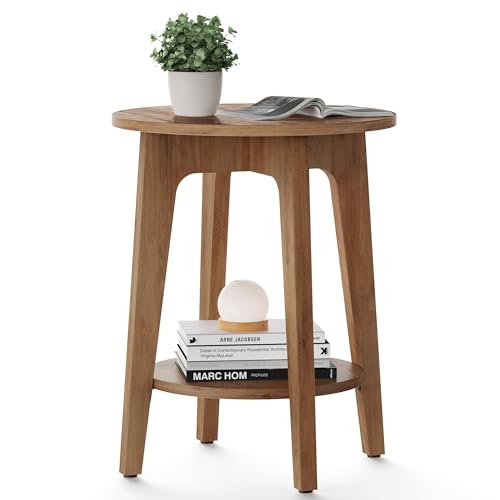
VASAGLE Round Side Table with Lower Shelf, End Table for Small Spaces | Nightstand with Tapered Legs, Curved Transitions, for Living Room, Bedroom, Honey Brown, MAEZO Collection ULET283T41
Check price on Amazon
MaxSmeo Side Table, 3-Tier Small End Table, Modern Oval Night Stand Accent Table for Living Room, Bedroom, Rustic Brown
Check price on Amazon
Simple Trending Side Table, End Table Night Stand, 3 Tiers Shelf for Living Room, Rustic Brown
Check price on Amazon
HOOBRO End Table, Small Side Table, Nightstand with 2-Layer Storage Shelves, Sofa Table for Small Spaces, Living Room, Bedroom, Stable Frame, Easy Assembly, Rustic Brown BF09BZ01
Check price on Amazon
HuiDao 100% Solid Wood Round Side Table, Small Drink Table for Small Spaces, Modern End Table Accent Nightstand for Bedroom, Living Room, Corners and Office, Brown
Check price on Amazon
AWASEN Side Table, Small Wood End Table Living Room, Mini Bed Side Table | Modern Accent Table with Solid Wood for Bedroom, Office, Small Spaces, Short Side Table, Easy Assembly, Rustic Brown
Check price on AmazonCare and Maintenance
A small wood table that sees daily use will show wear over time. The right care routine keeps it looking good and extends its useful life, which matters even more when the table is a central piece in a compact room.
Daily Habits
- Wipe spills promptly with a soft, slightly damp cloth, then dry immediately.
- Use coasters and trivets for hot dishes and drinks.
- Avoid placing the table in direct sunlight for long periods; see our guide on preventing sun damage.
- Keep humidity stable; extreme swings can cause cracking or warping. Learn more about humidity control.
Periodic Maintenance
- Dust regularly with a microfiber cloth to prevent grit from scratching the finish.
- Re-oil oiled finishes periodically according to the manufacturer’s guidance; see wood polish and conditioner.
- Address scratches early with touch-up products or refinishing; our scratch repair tips cover common fixes.
- Use a table pad for craft projects, homework, or heavy use.
- For deeper restoration, explore refinishing dining tables.
For a complete care routine across materials, visit our care and maintenance section.
Frequently Asked Questions
What size small wood table fits a two-person dining space?
A round or square small wood table measuring roughly 30 to 36 inches across comfortably seats two people, while a rectangular table about 30 inches wide and 48 inches long offers a little extra room for place settings and serving dishes.
Is solid wood better than engineered wood for a small table?
Solid wood offers the most durability, refinishability, and long-term investment value. Engineered wood with a real wood veneer is a practical mid-range option that looks convincing and resists warping, while particleboard cores are best treated as entry-level choices for low-traffic spaces.
How much clearance do I need around a small wood table?
Plan for about 36 inches of clearance between the table edge and nearby walls or furniture so chairs can pull out and people can walk behind seated diners. In very tight rooms, 30 inches is workable if chairs tuck fully under the table.
Can a small wood table be used as a desk or kitchen prep table?
Yes. Many small wood tables are versatile enough to serve as a compact desk, a kitchen prep surface, or a breakfast nook table. Choose a sturdy top and a height that matches your primary use, and consider a finish that withstands daily wear.
What is the best wood for a small table in a kitchen?
Hardwoods such as oak, maple, and walnut offer the best durability for kitchen-adjacent use. Acacia is a strong mid-range option. If the table will see heavy daily use, choose a finish that resists moisture and stains, and pair it with trivets and coasters.