
Wooden Small Table: The Complete Buying Guide for Compact Spaces
Discover how to choose the perfect wooden small table for your dining nook, kitchen, or apartment. Expert tips on materials, sizes, styles, and space-saving layouts.
START EXPLORINGWhy a wooden small table? A wooden small table is one of the most versatile pieces of furniture you can own. It fits into tight dining nooks, serves as a compact kitchen table, works as a stylish side table in a living room, and brings natural warmth to any space. Whether you are furnishing a first apartment, creating a breakfast corner, or maximizing a small dining room, a compact wood table delivers function and character without overwhelming the room. This guide walks you through everything you need to know before you buy.
In This Guide
What Makes a Great Wooden Small Table
A wooden small table is more than just a scaled-down version of a full-size dining table. The best compact wood tables are engineered for efficiency: they use space wisely, often incorporate clever storage or folding mechanisms, and are built with materials that can withstand daily use in high-traffic areas. When you are researching options, focus on four core factors: build quality, material selection, dimensional fit, and finish durability.
Build Quality and Joinery
The joinery of a wooden small table tells you a lot about its longevity. Look for mortise-and-tenon joints, dowel construction, or dovetail drawers if the table includes storage. Entry-level tables often rely on cam locks and screws, which are acceptable for light use but may loosen over time. Mid-range models typically feature reinforced corner blocks and glued dowel joints, while premium and luxury tiers use traditional hardwood joinery that can last for decades. A solid build is especially important for small tables because they are frequently moved, bumped, and used as multi-purpose surfaces.
Material Selection
Solid wood is the gold standard for a wooden small table. It can be sanded and refinished, develops character over time, and holds up better to moisture than veneered particleboard. However, high-quality veneers over plywood can also perform well and are common in mid-tier products. Avoid tables made from low-grade MDF with thin paper veneers if you plan to use the table daily, as these tend to chip and swell around the edges.
Dimensional Fit
Measure your space carefully before choosing a wooden small table. Account for chair pull-out space, walkway clearance, and door swing. A common mistake is buying a table that fits the room on paper but leaves no room to move around it. We cover exact size guidelines in the size and shape section below.
Finish Durability
The finish protects the wood from spills, heat, and scratches. Look for catalyzed lacquer, polyurethane, or hardwax oil finishes on a wooden small table. These provide better resistance than basic wax or unstained wood. If the table is for a kitchen or dining nook where meals and drinks are common, a sealed finish is essential.
Quick tip: Sit at the table before you buy if possible. A small wooden table should have at least 24 inches of legroom height and a comfortable apron clearance so your knees do not hit the frame.
Wood Types and Quality Tiers
The wood species used in a small wood table directly affects durability, appearance, and how well the piece ages. Below is a breakdown of common wood types and how they map to quality tiers.
Essential Tier
Rubberwood, pine, and engineered wood with veneer. These tables offer a solid build for light use and work well in starter apartments or as occasional side tables. They are typically finished with a basic lacquer and may show wear sooner under heavy daily use.
Balanced Tier
Oak, maple, and beech. Mid-range wooden small tables in these species balance durability and appearance. They hold up well to everyday dining, accept refinishing, and are widely available in both round and rectangular shapes.
Top-Tier
Walnut, teak, and cherry. Premium and luxury wooden small tables use these dense hardwoods for their rich grain and long-term durability. They are often finished with hardwax oil or catalyzed lacquer and are built with traditional joinery.
Solid Wood vs. Veneer
A solid wood table is cut from a single piece or laminated boards of the same species. It is heavy, durable, and can be sanded and refinished multiple times. A veneered table uses a thin layer of real wood over a plywood or MDF core. High-quality veneer over a stable plywood core can be very durable and is common in balanced-tier products. The key difference is repairability: solid wood can be refinished, while veneer cannot be sanded deeply without risking the core.
What About Engineered Wood?
Engineered wood tables, including those made from MDF with wood veneer, are common in entry-level compact tables. They are lightweight and consistent, but they are less resistant to moisture and are difficult to repair if damaged. For a wooden small table that will see daily meals, solid wood or high-quality veneer over plywood is a better long-term investment.
If you are exploring wood finishes and want to compare natural oak looks, see our guide to the white oak table for a closer look at how pale wood tones work in compact settings. For warm-toned wood that pairs well with traditional decor, the wood table overview covers grain patterns and finish options.
Choosing the Right Size and Shape
The right dimensions for a wooden small table depend on how you plan to use it and how much floor space you have. Here are practical guidelines for the most common compact sizes.
Round vs. Rectangular
Round small wood tables are excellent for tight spaces because they have no corners to bump into and allow easy circulation around the table. A 30-inch round table can seat two to three people comfortably and works well in breakfast nooks. Rectangular tables fit efficiently against walls and in narrow spaces, and a 36-inch by 24-inch table can seat two people with room for serving dishes.
Square Tables
A square wooden small table, typically 30 to 36 inches per side, is a great compromise between round and rectangular. It fits neatly into corners and can be pushed against a wall when not in use. Square tables are especially popular for kitchen dining areas and small apartment dining rooms.
Height Considerations
Standard dining height is 28 to 30 inches, which pairs with chairs that have an 18-inch seat height. Counter-height tables are 34 to 36 inches tall and pair with counter stools. Bar-height tables are 40 to 42 inches and pair with bar stools. For a small wooden table used as a side table, 20 to 26 inches is typical. Make sure the chair or stool height matches the table height; mismatched heights are uncomfortable and can strain posture.
| Shape | Best For | Seating Capacity | Space Efficiency |
|---|---|---|---|
| Round (24–36 in.) | Breakfast nooks, tight corners, apartments | 2–3 people | High — easy circulation |
| Square (30–36 in.) | Kitchen corners, small dining rooms | 2–4 people | High — fits against walls |
| Rectangular (36–48 in.) | Narrow spaces, wall placement | 2–4 people | Medium — good against walls |
| Oval (48–60 in.) | Softening rectangular rooms | 3–4 people | Medium — needs more clearance |
For a deeper look at compact dining layouts, our guide to white small table options explores how light finishes can make small spaces feel larger. If you are considering a round silhouette, the white round table article covers proportions and placement for circular tables.
Popular Styles for Compact Spaces
A wooden small table can fit a wide range of interior styles. The right choice depends on the surrounding decor and the mood you want to create.
Modern Minimalist
Clean lines, thin legs, and a natural or whitewashed finish define the modern minimalist look. These tables work well in apartments and open-plan spaces where visual clutter is kept to a minimum. A simple rectangular or round table in a pale wood tone is a classic choice.
Farmhouse and Rustic
Farmhouse-style small wood tables feature thicker tops, turned legs, and distressed or warm-toned finishes. They pair beautifully with bench seating and add a cozy, lived-in feel to kitchens and breakfast nooks. If you like the farmhouse look, consider a table that pairs with a wood table with bench for a cohesive set.
Mid-Century Modern
Tapered legs, warm walnut or teak tones, and geometric shapes characterize mid-century modern tables. These compact tables are often round or oval and work well in small dining areas where a retro touch is desired.
Industrial
Industrial small wood tables combine wood tops with metal frames or legs. They are sturdy, practical, and fit well in loft apartments and modern kitchens. A wood-and-metal table often doubles as a kitchen prep surface or a compact workspace.
Advantages of a Wooden Small Table
- Natural warmth and character that fits many decor styles
- Solid wood can be refinished and repaired
- Compact footprint suits apartments and nooks
- Often multi-purpose: dining, work, and side table use
- Durable construction that ages gracefully
Points to Consider
- Solid wood can be heavy and harder to move alone
- Needs periodic conditioning to prevent drying
- Susceptible to water rings and heat without protection
- Limited seating capacity compared to full-size tables
- Wood expands and contracts with humidity changes
Placement Ideas for Small Rooms
Where you place a wooden small table matters as much as the table itself. Here are practical placement strategies for common compact spaces.
Kitchen Breakfast Nook
A small wood table tucked into a corner or bay window creates a cozy breakfast spot. Pair it with a bench against the wall and two chairs on the open side to save floor space. A round or square table works best in nooks because it allows easy movement.
Apartment Dining Area
In studio or one-bedroom apartments, a wooden small table can serve as both a dining table and a workspace. Choose a table with a narrow profile that can be pushed against the wall when not in use. Drop-leaf and gateleg designs are especially space-efficient, though fixed-top compact tables are more common and often more stable.
Open-Plan Living and Dining
In open-plan layouts, a small wood table can define the dining zone without blocking sightlines. Choose a table with a visual weight that balances the living area — lighter wood tones for airy spaces, darker tones for grounding the room. A round table is particularly effective for softening the transition between zones.
Entryway or Side Table Use
A wooden small table is not limited to dining. A compact side table in the entryway holds keys and mail, while a small table beside a sofa or armchair adds a surface for drinks and books. Choose a sturdy build and a finish that matches the surrounding furniture.
If you are planning a full dining room refresh, explore our guides on wooden dining table options and wood dining table styles to see how small tables fit into a larger furniture plan. For a compact table that pairs with casual seating, the wooden table small overview covers proportions and materials in more detail.
Comparison Table: Tier by Category
Use this table to compare wooden small table options by tier and category. It is designed to help you match a table to your space, usage, and style preferences without focusing on numeric specifications.
| Category | Tier | Best For | Key Traits |
|---|---|---|---|
| Breakfast nook table | Essential tier | Casual daily meals, starter apartments | Rubberwood or pine, basic lacquer finish, compact round or square shape |
| Kitchen dining table | Balanced tier | Everyday family use | Oak or maple, reinforced joinery, sealed finish, 30–36 inch size |
| Apartment multi-purpose table | Mid-range | Dining and workspace combo | Narrow rectangular profile, durable finish, stable base |
| Premium dining nook table | High-end tier | Design-focused small dining rooms | Walnut or cherry, traditional joinery, hardwax oil finish |
| Side or accent table | Starter tier to mid-tier | Entryways, living rooms, reading corners | Compact footprint, solid build, versatile finish |
| Outdoor compact table | Professional-grade | Patios and balconies | Weather-resistant coating, rust-proof hardware, teak or acacia |
How to read the tiers: "Essential tier" and "starter tier" describe entry-level products with a solid build for light use. "Balanced tier" and "mid-range" describe products that balance durability and features for everyday use. "High-end tier," "premium," and "luxury" describe products with premium materials and traditional construction. "Professional-grade" and "commercial-grade" describe products engineered for heavy or outdoor use.
Care and Maintenance Tips
A wooden small table will last for years with proper care. Follow these practical steps to protect the finish and keep the wood looking its best.
Daily Care
- Dust with a soft, dry cloth to prevent grit from scratching the surface.
- Wipe spills immediately with a slightly damp cloth, then dry thoroughly.
- Use coasters and trivets to protect against water rings and heat marks.
- Avoid placing hot pans or dishes directly on the wood.
Periodic Maintenance
- Apply a wood conditioner or furniture wax every few months to nourish the finish.
- Check screws and bolts periodically and tighten as needed to keep the table stable.
- Keep the table away from direct sunlight and heating vents to prevent drying and cracking.
- Use felt pads under decorative items to prevent scratches.
Long-Term Protection
For solid wood tables, a table pad provides extra protection during meals and craft projects. If the finish becomes dull or scratched, a light sanding and refinishing can restore the surface. Veneered tables require more caution: avoid sanding through the veneer and use only gentle cleaners. For a deeper dive into wood care, see our dining care and maintenance section.
Frequently Asked Questions
What is the best wood type for a small table?
Solid hardwood such as oak, maple, or walnut offers the best durability for a small wooden table. Oak and maple are excellent for everyday use, while walnut provides a premium look with rich grain. For entry-level options, rubberwood and pine are common choices that offer a solid build for their tier.
How big should a small wooden table be?
A small wooden table typically ranges from 24 to 36 inches in diameter for round models, or about 30 to 48 inches wide for rectangular versions. The right size depends on your available floor space and how many people need to sit at the table. A good rule is to leave at least 30 inches of clearance around the table for chair movement.
Can a wooden small table be used outdoors?
Only if the table is specifically designed for outdoor use with weather-resistant coating and rust-proof hardware. Most indoor wooden small tables should stay inside to prevent warping, cracking, or finish damage from moisture and sun exposure.
How do I protect a wooden small table from scratches?
Use coasters, trivets, and a table pad to protect the surface from heat and moisture. Felt pads under decorative items help prevent scratches. For everyday care, dust with a soft cloth and apply a wood conditioner periodically to maintain the finish.
Is a round or rectangular small wooden table better for tight spaces?
Round tables generally work better in tight spaces because they have no sharp corners and allow easier movement around them. Rectangular tables can fit more efficiently against walls and in narrow nooks, but they may require more careful placement to avoid blocking walkways.
Recommended Wooden Small Tables for Compact Spaces
⚠️ AFFILIATE DISCLOSURE: This website contains affiliate links. As an affiliate Associate, we earn from qualifying purchases. If you make a purchase through these links, we may receive a small commission at no additional cost to you. Read our full affiliate policy.

AWASEN Side Table, Small Wood End Table Living Room, Mini Bed Side Table | Modern Accent Table with Solid Wood for Bedroom, Office, Small Spaces, Short Side Table, Easy Assembly, Rustic Brown
Check price on Amazon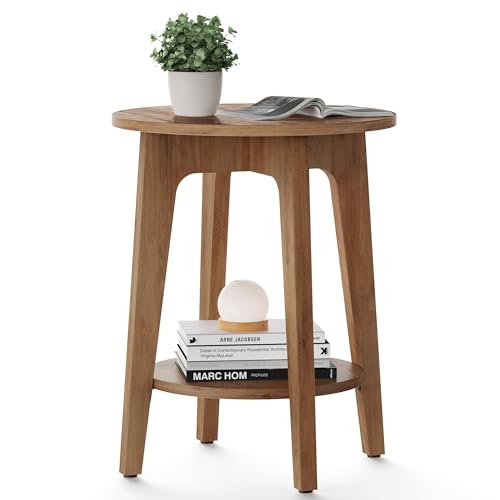
VASAGLE Round Side Table with Lower Shelf, End Table for Small Spaces | Nightstand with Tapered Legs, Curved Transitions, for Living Room, Bedroom, Honey Brown, MAEZO Collection ULET283T41
Check price on Amazon
Simple Trending Side Table, End Table Night Stand, 3 Tiers Shelf for Living Room, Rustic Brown
Check price on Amazon
MaxSmeo Side Table, 3-Tier Small End Table, Modern Oval Night Stand Accent Table for Living Room, Bedroom, Rustic Brown
Check price on Amazon
Furinno JUST Toolless 3-Tier Side Table, Open Shelf, Columbia Walnut | Soft-Corner, End Table, Night Stand, Bedside Table, for Living Room, Bedroom, Bathroom
Check price on Amazon
YAUKTAK Small Couch Side Table, Drink Table, Mini Round End Table, Coffee Table, Snack Table for Small Spaces, Living Room, Bedroom, Sofa LET520DR
Check price on Amazon
Acacia Wood Adirondack Side Table, 2-Tier Outdoor End Table - Honey Oak | Waterproof Small Table, Storage Shelf, Chairside End Table for Balcony, Poolside, Garden, Backyard, Patio, Porch, Courtyard
Check price on AmazonFind the Right Wooden Small Table for Your Space
Whether you need a breakfast nook table, a compact kitchen table, or a versatile side table, the options above cover the most practical and well-built choices for small spaces. Explore availability and compare features to make a confident decision.
Explore Options