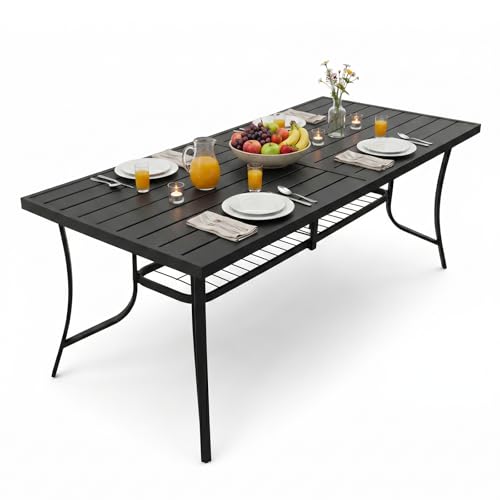
Why a 6-Person Outdoor Dining Table with Umbrella Hole Makes Sense
If you regularly host family dinners, weekend barbecues, or casual gatherings on your patio, a six-person outdoor dining table with a built-in umbrella hole strikes an ideal balance between capacity and footprint. It offers enough room for adults and children to dine together without overwhelming a standard deck or patio area.
The umbrella hole is a practical feature that transforms the table into a shaded retreat during hot afternoons. Instead of relying on a separate freestanding umbrella that can tip or obstruct walkways, the integrated hole keeps the umbrella centered over the table, providing even shade for everyone seated.
For buyers who already know they want a six-seat configuration, you may also want to explore a dedicated 6 person outdoor dining set with umbrella hole that bundles matching chairs and table for a coordinated look.
Dimensions & Seating Space
Seating six adults comfortably requires careful attention to both table dimensions and chair clearance. As a general rule, each diner needs about 24 inches of table edge width and at least 12 inches of depth for place settings and elbows.
| Table Shape | Recommended Size for 6 | Notes |
|---|---|---|
| Rectangular | 60–72 in long × 36–40 in wide | Most space-efficient; easy to place against a wall when not in use. |
| Round | 54–60 in diameter | Encourages conversation; requires more floor space for chairs. |
| Oval | 60–72 in long × 36–42 in wide | Soft edges with generous seating; good for narrow patios. |
Also consider chair pull-out space: leave at least 24 to 30 inches between the table edge and any wall or railing so guests can slide chairs in and out without squeezing. For smaller patios, a 54 inch round table can work well if chair backs are compact.
Umbrella Hole & Shade Compatibility
The umbrella hole is the defining feature of this table category, so it deserves extra attention before you buy. Here is what to verify:
- Hole diameter: Most outdoor umbrellas use a pole diameter between 1.5 and 2 inches. Confirm the table's hole size matches your umbrella; adapters are available for slight mismatches.
- Hole position: Center holes are standard, but some oval or rectangular tables place the hole off-center to maximize shade coverage on one side.
- Base stability: A weighted umbrella base is essential even with a hole. Wind can tip an unsecured umbrella and damage both the table and the umbrella.
- Table thickness: Thicker tabletops may require a longer umbrella pole or a spacer ring to keep the umbrella upright.
Material Comparison for Outdoor Tables
Outdoor furniture must withstand sun, rain, humidity, and temperature swings. The material you choose affects durability, maintenance, and comfort.
| Material | Market Tier | Best For | Maintenance |
|---|---|---|---|
| Powder-coated aluminum | Mid-range | Lightweight, rust-resistant patios | Wipe clean; occasional touch-up |
| Powder-coated steel | Entry-level | Sturdy feel at a lower tier | Check for rust; touch up chips |
| Teak | Luxury | Long-term investment; natural look | Oil annually; clean seasonally |
| Acacia | Premium | Warm wood grain; durable | Seal or oil yearly |
| HDPE / composite | Mid-range | Low-maintenance, all-weather | Soap and water; no sealing |
| Glass top with metal frame | Mid-range | Modern look, easy cleaning | Clean glass; protect from impact |
Aluminum is the most popular choice for a aluminum outdoor dining set because it resists rust and stays relatively light for rearranging. Wood tables, especially teak and acacia, offer a warmer aesthetic and can last decades with proper care.
Shape Options: Rectangular, Round, and Oval
Rectangular Tables
Rectangular tables make the most efficient use of patio space and allow chairs to be pushed in neatly. A 60-inch rectangular table is the smallest practical size for six diners, while 72 inches offers more elbow room and room for serving platters.
Round Tables
Round tables encourage conversation and have no sharp corners, which is safer for families with young children. A 54-inch round table seats six comfortably; a 60-inch version feels more generous. For a similar footprint indoors, see our guide to the 42 round dining set to compare proportions.
Oval Tables
Oval tables blend the seating efficiency of rectangular tables with the soft edges of round tables. They work well on narrow patios and can accommodate six with less corner crowding.
Key Features to Look For
- Weather-resistant coating: Powder-coated finishes resist chipping and fading better than painted finishes.
- Adjustable feet or levelers: Helpful on uneven patio surfaces.
- Foldable or stackable chairs: Makes seasonal storage easier if you pair the table with a set.
- Umbrella hole cover: Some tables include a cap to seal the hole when the umbrella is not in use.
- Weight and portability: Lighter aluminum tables are easier to move; heavier wood or steel tables stay put in wind.
- Edge profile: Rounded or bullnose edges are more comfortable for arms resting on the table.
If you are also outfitting bar seating nearby, consider pairing your patio table with counter height bar stools with back for a cohesive outdoor entertaining zone.
Care & Maintenance Tips
Proper care extends the life of any outdoor table. Follow these practices:
- Clean weekly during use: Wipe down with mild soap and water; avoid harsh abrasives on powder-coated surfaces.
- Protect wood: Re-oil teak or acacia annually, or when water stops beading on the surface.
- Cover during off-season: Use a breathable, waterproof cover to prevent mold and UV damage.
- Check hardware: Tighten bolts and screws periodically, especially before the first use of the season.
- Store cushions indoors: Cushions trap moisture and should be brought inside when not in use.
- Address rust early: Touch up any chips or scratches on metal frames with matching touch-up paint.
For tables with glass tops, avoid placing hot items directly on the surface and use a protective pad under heavy centerpieces.