
Antique Sideboard Buffet: The Complete Buying & Styling Guide
Learn how to identify quality antique sideboards, understand wood types and eras, verify authenticity, and style a timeless buffet that anchors your dining room for generations.
What Is an Antique Sideboard Buffet?
An antique sideboard buffet is a freestanding dining room storage piece, typically built from solid wood, that combines serving surface, drawer storage, and cabinet space. Historically, a sideboard was a low, wide piece positioned against the dining room wall to hold serving dishes, linens, and tableware during meals. A buffet often referred to a taller variant with a raised back or hutch. Today, the two terms are used almost interchangeably, and the strongest antique pieces blend both functions: a generous top surface for serving, drawers for flatware, and cupboards for larger platters.
Genuine antiques are generally defined as pieces at least one hundred years old, though the term is often applied more loosely to well-crafted vintage furniture from the early twentieth century. An antique sideboard buffet remains one of the most practical investments in a dining room because it is both a workhorse and a focal point. If you are still mapping out your dining room layout, our broader dining furniture guide pairs well with this article. For pieces that specifically emphasize serving and display, an antique buffet guide explores taller silhouettes, while a dedicated antique sideboard reference covers lower, wider proportions.
Why Choose an Antique Over a New Sideboard?
Modern sideboards are plentiful, but antiques offer qualities that new production rarely matches. The wood has already completed its seasoning process, meaning it has stabilized and is far less likely to warp or split with seasonal humidity changes. Original joinery, including hand-cut dovetails and mortise-and-tenon frames, often outlasts contemporary dowel-and-screw construction. Beyond durability, an antique sideboard buffet carries a visual depth that factory finishes struggle to replicate: the patina, the softened edges, and the accumulated character of decades of use.
Antiques also support more sustainable interior design. Reusing a piece that already exists avoids the resource footprint of new manufacturing and shortens the supply chain. When you buy a well-chosen antique, you are acquiring furniture that can be repaired, refinished, and passed on, which is the definition of a long-term investment. The key is knowing how to separate genuine quality from decorative reproductions, which is exactly what the next sections cover.
Key Eras & Styles to Know
Understanding the era of a sideboard helps you match it to your dining room architecture and evaluate whether the construction techniques are consistent with the claimed age. The most common antique sideboard buffets on the market fall into a handful of recognizable styles.
Victorian (circa 1837–1901)
Victorian sideboards are typically the most ornate: heavy proportions, carved crests, turned legs, and elaborate hardware. Mahogany and walnut dominate. These pieces suit rooms with generous ceiling height and traditional millwork. Because they are substantial, verify floor clearance and door widths before committing.
Edwardian (circa 1901–1910)
Edwardian pieces retain Victorian craftsmanship but lighten the visual weight. Expect cleaner lines, satinwood inlays, and slightly more restrained ornamentation. They transition comfortably between traditional and transitional dining rooms.
Art Deco (circa 1920s–1930s)
Geometric lines, stepped profiles, and contrasting wood veneers define Art Deco buffets. They are shorter and more architectural than Victorian pieces, often with chrome or brass hardware. Pair well with a modern dining table if you want an eclectic contrast.
Mid-Century Modern (circa 1945–1969)
Clean lines, tapered legs, and warm teak or walnut veneers. These buffets are compact and often feature sliding doors and open shelving. They are the most versatile for contemporary interiors and work especially well in open-concept spaces.
Farmhouse & Country (various periods)
Pine and oak construction, painted finishes, and practical proportions. Many of these pieces were built by local craftsmen and show irregular but sturdy joinery. They suit rustic and modern farmhouse dining rooms and are excellent candidates for sympathetic restoration.
Wood Types & Construction
The species of wood and the joinery method tell you more about a sideboard's quality than its surface finish. Use this overview to evaluate any antique sideboard buffet you are considering.
| Wood Type | Characteristics | Best For |
|---|---|---|
| Mahogany | Fine, dense grain; deep reddish-brown color; excellent carving response | Formal dining rooms, Victorian and Edwardian pieces |
| Walnut | Rich chocolate tones; strong figure; resists warping well | Mid-century and Art Deco buffets |
| Oak | Heavy, hard-wearing, prominent ray fleck grain | Country and farmhouse sideboards |
| Cherry | Warm tone that deepens with age; smooth, tight grain | Colonial revival and traditional buffets |
| Pine | Lighter weight; takes paint well; shows wear quickly | Painted farmhouse pieces, rustic settings |
| Satinwood | Pale golden tone; often used for inlays and veneers | Edwardian and high-end decorative pieces |
Joinery to Inspect
- Hand-cut dovetails: Irregular spacing and slight variations indicate hand work; perfectly uniform tails often signal machine production or reproductions.
- Mortise-and-tenon frames: The strongest traditional frame joint; check that pegs or wedges are still tight.
- Drawer bottoms: Look for solid wood with visible saw marks; plywood indicates a later piece or a repair.
- Back panels: Original backs are usually wide boards; narrow tongue-and-groove slats may indicate repair or a later date.
Authenticity Checklist: Spotting a Genuine Antique
Reproductions can be convincing, but age leaves traces that are difficult to fake consistently. Run through this checklist before you commit to any antique sideboard buffet.
Patina & Wear
Genuine wear is uneven and follows use: drawer edges, handles, and the top front rail. Uniform distressing is a red flag.
Hardware
Original brass often shows verdigris in recesses. Check screw holes for fresh chips that reveal replaced hardware.
Saw Marks
Hand-sawn boards show irregular markings. Perfectly uniform circular saw marks suggest modern milling.
Smell & Finish
Old wood has a dry, neutral scent. A strong solvent smell suggests recent refinishing that may conceal repairs.
Wood Shrinkage
Antique boards often shrink slightly, leaving small gaps at seams. Perfectly tight seams can indicate modern stock.
Structural Symmetry
True antiques often show slight hand-made asymmetry. Machine-perfect symmetry points toward reproduction.
Pro tip: Always inspect the piece in person if possible. If you buy online, request close-up photos of drawer joints, the back panel, hardware, and any repaired areas. A reputable seller will provide them without hesitation.
Market Tiers: What Different Quality Levels Signal
Because antique furniture spans a wide spectrum of craftsmanship and condition, it helps to think in terms of tiers rather than any specific figure. The tiers below describe relative market position, not absolute amounts, and remain useful regardless of when you read this guide.
| Tier | Typical Characteristics | Best For |
|---|---|---|
| Entry-Level | Later vintage or reproduction; minor repairs; simplified joinery; may need refinishing | First-time antique buyers; casual dining rooms; rental spaces |
| Mid-Range | Genuine antique with original finish; solid construction; some cosmetic wear; hardware largely intact | Most family dining rooms; buyers who want authentic character without extensive restoration |
| Premium | Documented era; excellent original patina; hand-cut joinery; matching period hardware; minor or no restoration | Collectors; formal dining rooms; period-matched interiors |
| Luxury | Museum-quality; signed or attributed maker; exceptional wood figure; documented provenance; conservation-grade condition | Serious collectors; heritage homes; investment-grade acquisitions |
Use these tiers as a framework for conversations with dealers. A mid-range piece with a stable frame and original finish is often a better long-term choice than a higher-tier piece with hidden structural repairs. The most important question is not which tier a piece occupies, but whether its condition matches its tier claim. If you are also considering a matching dining table, the antique dining table guide follows the same evaluation logic.
Sizing & Placement Guide
An antique sideboard buffet must fit both the room and the way you use the dining space. Measure twice before you buy, especially with heavy pieces that are difficult to move later.
Typical Dimensions
- Length: 48–72 inches (122–183 cm) for most dining rooms; larger formal pieces can exceed 84 inches.
- Depth: 18–22 inches (46–56 cm) is standard; deeper pieces eat into circulation space.
- Height: 32–38 inches (81–97 cm) for low sideboards; buffets with a raised back or hutch can reach 60–84 inches.
Circulation & Clearance
- Leave at least 36 inches (91 cm) of clear floor between the sideboard front and the dining table edge for comfortable serving and chair pull-out.
- Allow 18–24 inches (46–61 cm) of clearance in front of drawers and doors so they open fully.
- Confirm the piece fits through doorways and around stair turns; remove drawers and doors if needed to reduce weight and width.
Placement Priorities
- Against a solid wall: The classic position, ideal for serving and display.
- Floating as a room divider: Works in open-concept spaces if the back panel is finished; otherwise, add a finished back panel or position against a low sofa.
- Beneath artwork or a mirror: Anchors the composition; keep the top surface relatively uncluttered.
If your room is compact, review our small dining room strategies before choosing a piece. For rooms where the dining table is the centerpiece, matching the sideboard scale to the table length (roughly two-thirds of the table length) keeps the visual balance intact. Tables in the 60-inch dining table range pair naturally with sideboards in the 48–60 inch range.
Restoration vs Preservation: What to Do First
The instinct to refinish an old piece is understandable, but aggressive restoration can strip away both character and long-term value. Approach every antique sideboard buffet with a preservation-first mindset.
Start with Cleaning
Dust with a soft cloth and use a mild, pH-neutral wood cleaner. Avoid silicone polishes, which can leave a residue that complicates future repairs. For deeper grime, a slightly damp cloth followed by immediate drying is usually sufficient.
When to Preserve
- The finish is intact or only lightly worn.
- You want to retain patina and historical character.
- The piece is premium or luxury tier and documentation matters.
- You plan to resell or pass the piece on.
When Restoration Is Appropriate
- The finish is flaking, cracking, or hiding structural damage.
- Previous poor repairs need to be reversed.
- The piece is entry-level or mid-range and will be used heavily.
- You intend to paint a previously painted piece and want a clean surface.
Important: For premium and luxury tier pieces, consult a professional conservator before sanding, stripping, or replacing hardware. Original finish and hardware are significant value drivers, and improper restoration can permanently reduce both character and market position.
Routine Care
- Keep the piece out of direct sunlight to prevent uneven fading.
- Maintain indoor humidity between 40–60 percent to reduce seasonal movement.
- Use coasters and felt pads under decorative objects to protect the top.
- Check hardware screws periodically and tighten gently; avoid over-tightening old brass.
For deeper care routines, explore our dining care and maintenance guides, including wood polish guidance and scratch repair tips.
Styling Your Antique Sideboard Buffet
An antique sideboard buffet is a natural display surface, but restraint keeps the wood the star. Aim for a curated composition rather than a crowded shelf.
The Three-Object Rule
Group items in odd numbers, vary heights, and leave breathing room. A tall vase, a low bowl, and a small framed piece form a balanced triangle. Avoid covering the entire top surface; the wood patina is part of the appeal.
Lighting
A table lamp with a warm shade adds ambiance and highlights the wood grain. If you prefer overhead lighting, a chandelier or pendant centered over the dining table, detailed in our dining lighting guide, complements the sideboard without washing it out.
Artwork Above
Hang artwork or a mirror so its bottom edge sits roughly 8–10 inches above the sideboard top. Center the composition on the sideboard length, not on the room wall.
Seasonal Rotation
Swap in seasonal accents such as ceramic pumpkins, evergreen branches, or spring blooms. A low bowl of fruit or a tray of glassware is enough to signal the change of season. For centerpiece inspiration, browse our vases and bowls and candles and holders collections.
Balancing Antique and Modern
- Pair the antique sideboard with a modern dining table and chairs for contrast.
- Use a neutral tablecloth or runner to soften the transition between eras.
- Add one contemporary accent, such as a sculptural lamp, to keep the room from feeling museum-like.
- Mix metals carefully: warm brass hardware pairs with warm wood; cool chrome works better with darker woods.
If you are planning a full room refresh, our guides on modern dining and farmhouse and rustic dining show how antiques fit into different design aesthetics.
Where to Buy & What to Ask
Antique sideboard buffets are sold through estate sales, antique dealers, auction houses, consignment shops, and online marketplaces. Each channel has a different balance of risk and opportunity.
Estate Sales & Auctions
Estate sales often offer the best chance to inspect pieces in original settings. Auctions move quickly, so set your maximum tier and walk away if condition concerns emerge. Always read the auctioneer's condition notes and preview in person if possible.
Antique Dealers
Dealers generally provide provenance, condition reports, and after-sales support. They are the best source for premium and luxury tier pieces. Ask about the dealer's return policy and whether restoration records are available.
Online Marketplaces
Online listings can surface rare pieces but require extra diligence. Request high-resolution photos of joints, hardware, back panels, and any repairs. Avoid listings with only distant or heavily filtered images. If the seller cannot provide detail shots, consider it a warning sign.
What to Ask Every Seller
- Do you have provenance or documentation of the piece's origin and era?
- Has it been repaired, refinished, or reupholstered? If so, what was done and when?
- Are the hardware, drawers, and doors original?
- What are the exact dimensions, and can you confirm the back panel is finished?
- Is there any evidence of woodworm, active rot, or structural movement?
- What is your return policy if the piece differs from the description?
Delivery & Assembly
Antique sideboards are heavy and often require two people to move. Confirm delivery access, doorway width, and stair clearance before purchase. For extremely large pieces, a professional furniture mover is a worthwhile investment. Our delivery and assembly guide covers access checks and moving logistics in more detail.
Recommended Antique Style Sideboards & Buffets
⚠️ AFFILIATE DISCLOSURE: This website contains affiliate links. As an affiliate Associate, we earn from qualifying purchases. If you make a purchase through these links, we may receive a small commission at no additional cost to you. Read our full affiliate policy.

FUSUNBAO 57" Fluted Sideboard Buffet,Retro Storage Cabinet, Walnut | 3 Drawers and 4 Doors, Vintage Fluted with Scalloped Base, Organic Modern Accent Cabinet, For Dining Room
Check price on Amazon
SILKYDRY Buffet Cabinet, 47" Vintage Sideboard w/ Adjustable Shelves(Green) | Mid Century Credenza w/ 3 Drawers,2 Doors,Anti-tip Kits; Accent Storage Cabinet for Dining&Living Room,Entryway & Coffee Bar
Check price on Amazon
ARTPOWER 61.8" Hollow Carved Accent Cabinet with 4 Doors for Living Room | Vintage Sideboard Buffet with Adjustable Shelves, Credenza with Storage for Dining Room, Kitchen, Entryway, Hallway
Check price on Amazon
SILKYDRY Buffet Cabinet, 47" Vintage Sideboard w/ Adjustable Shelves(White) | Mid Century Credenza w/ 3 Drawers,2 Doors,Anti-tip Kits; Accent Storage Cabinet for Dining&Living Room,Entryway & Coffee Bar
Check price on Amazon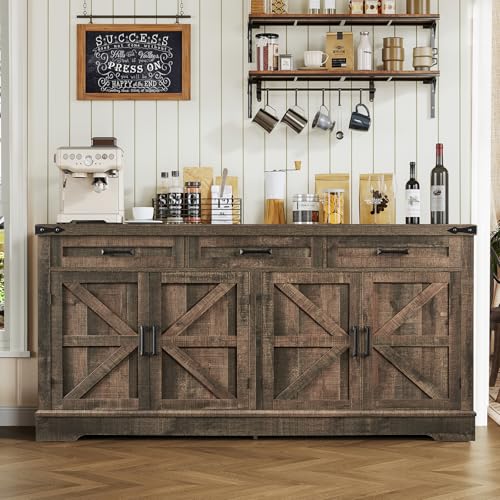
usikey Buffet Cabinet, 61” Large Sideboard Buffet Storage Cabinet with 3 Drawers, Farmhouse Coffee Bar with 4 Doors, Buffet Table for Kitchen, Living Room, Antique Oak
Check price on Amazon
3More Vintage Carved Decorative 4 Door 60″ Sideboard Buffet Cabinet, Brown | Large Accent Storage Cabinet for Home Kitchen Dining Room , 3-Level Adjustable Shelves, Solid Pine Legs
Check price on Amazon
The support you need Antique Solid Wood Sideboard with Adjustable Feet, 2 Shelves Storage Accent Cabinet with 2 Doors, Farmhouse Vintage Buffet Credenza for Kitchen, Easy Assembly, Walnut
Check price on Amazon
HULALA HOME Wood Sideboard Cabinet, 58" Storage Sideboard with 2 Adjustable Shelves, 2 Fluted Drawers & 4 Doors, Credenza Console, Transitional Buffet with Wood Legs, Auburn
Check price on AmazonFrequently Asked Questions
How can I tell if a sideboard buffet is genuinely antique?
Check for hand-cut dovetail joints, hand-forged hardware, patina on the wood, and uneven wear patterns. Look underneath for saw marks and inspect the back panels. Genuine antiques typically show consistent aging across all surfaces rather than uniform factory finishes.
What is the difference between a sideboard and a buffet?
The terms are often used interchangeably today. Historically, a sideboard was a lower storage piece used in the dining room for serving and holding dishes, while a buffet was taller with a raised back or hutch. Modern antique pieces blur the distinction, so focus on dimensions and function rather than the label.
Which wood types are best for an antique sideboard?
Mahogany, walnut, oak, and cherry are the most common and durable antique woods. Mahogany and walnut are prized for fine grain and deep color, while oak offers exceptional strength. Cherry develops a rich patina over time. Inspect for splits, warping, and woodworm holes before buying.
Should I restore or preserve an antique sideboard's original finish?
Preserving the original finish generally protects long-term value and character. Restoration is appropriate when the finish is flaking or the piece is structurally unstable. For high-end tier pieces, consult a professional conservator before sanding or refinishing. Clean gently with a soft cloth and avoid harsh chemical strippers.
How do I style an antique sideboard buffet in a modern dining room?
Balance the antique piece with a few modern accents: a large ceramic vase, contemporary artwork above, or a simple table lamp. Keep the surface uncluttered and let the wood patina stand out. Group items in odd numbers and vary heights for a curated, collected look.