
Backless Counter Height Bar Stools: The Complete Buying Guide
Everything you need to know before choosing backless counter height bar stools for your kitchen island, breakfast bar, or counter. Compare styles, materials, comfort features, and safety considerations in one clear guide.
Explore Recommended StoolsWhy backless counter height bar stools? They slide neatly under the counter, keep sightlines open, and suit both compact apartments and busy family kitchens. This guide walks you through the details that matter most so you can pick with confidence.
What Are Backless Counter Height Bar Stools?
Backless counter height bar stools are stools without a backrest, designed to pair with counter-height surfaces typically around 34 to 36 inches tall. Because they have no back, they tuck completely under the counter when not in use, which makes them a practical choice for open-plan kitchens, breakfast bars, and islands where floor space is limited.
Unlike bar height stools, which are taller and built for standard bar counters, counter height stools sit lower and align with the more common kitchen island height. If you are still comparing seating types, our guide to backless stools covers the broader category and helps you narrow down the right format.
Backless vs. Stools With Backs: Which Should You Choose?
The decision usually comes down to space, comfort expectations, and visual style. Backless models are streamlined and easy to store, while backed models offer more support for longer sitting sessions. If you want to compare both formats directly, see our overview of bar height stools with backs to understand the trade-offs.
- Backless advantages: tuck under counters, open sightlines, easier to move, better for tight spaces.
- Backless considerations: less lumbar support, better suited to shorter meals and casual seating.
- Backed advantages: more support for extended use, better for elderly users or long gatherings.
- Backed considerations: take up more visual and physical space; may not fit under shallow overhangs.
Getting the Height Right: Counter vs. Bar Height
The single most important measurement is the relationship between your counter surface and the stool seat. A common rule is to leave about 9 to 12 inches of clearance between the seat and the underside of the counter. Counter height stools generally pair with surfaces around 34 to 36 inches tall, while bar height stools pair with surfaces around 40 to 42 inches.
If you are unsure which surface you have, our explainer on how tall a counter height table is gives you a practical reference. For kitchen island seating specifically, the guide on bar stools for kitchen island setups walks through overhang depth and clearance in detail.
| Counter Surface Height | Recommended Seat Height | Typical Use |
|---|---|---|
| 34–36 inches | 24–26 inches | Kitchen islands, counter height tables |
| 40–42 inches | 28–30 inches | Bar counters, raised ledges |
| 36–39 inches | 26–28 inches | Transitional or custom counter builds |
Materials and Construction: What to Look For
Backless counter height bar stools come in wood, metal, upholstered, and mixed-material builds. Each has strengths depending on how much traffic the seating area sees.
Solid Wood
Solid wood stools offer warmth and blend naturally with farmhouse and traditional kitchens. Look for reinforced joinery at the leg-to-seat connection, since that is the stress point on backless designs. Our related article on the wooden kitchen stool covers care and construction details that apply to most wood counter stools.
Metal and Steel
Metal frames are durable and easy to wipe down, which suits busy households. High-grade steel with a rust-proof finish holds up well in humid climates. Industrial-style metal stools pair naturally with exposed shelving and concrete counters, and our guide to industrial dining shows how to bring that look together.
Upholstered Seats
Padded seats improve comfort for longer sitting sessions. Removable or easy-to-clean upholstery is a practical choice for families. If you plan to coordinate with dining chairs, our article on upholstery fabric for dining chairs offers fabric comparisons that apply to stool seats as well.
Mixed Materials
Wood seats on metal frames, or woven seats on solid wood legs, combine the best of both categories. These builds often land in the mid-tier to high-end tier of the market and offer a distinctive look without sacrificing durability.
Seat Shape and Comfort Features
Backless stools rely on seat design to deliver comfort. Key features to check:
- Contoured or saddle seats: subtle curves reduce pressure points during longer meals.
- Seat diameter or width: wider seats (typically 14 to 17 inches) suit larger users better.
- Footrest height: a well-placed footrest improves posture and reduces leg fatigue.
- Swivel function: useful for island seating where people turn to converse; adds a mechanism to maintain over time.
- Cushioning: a thin pad improves comfort without adding bulk under the counter.
For households with children or older adults, a stable base and a solid footrest matter more than swivel features. If comfort for long dinners is a priority, consider whether a backed model might serve better; our overview of dining area chairs covers support-focused seating in more depth.
Stability, Safety, and Floor Protection
Backless stools have a higher center of gravity than dining chairs, so base design matters. Four-legged designs with slightly splayed legs tend to be the most stable. Look for:
- Non-marking glides or felt pads to protect hard floors.
- Reinforced leg-to-seat brackets, especially on metal frames.
- Weight ratings appropriate for your household; commercial-grade models are built for heavier use.
- Anti-tip features or a lower footrest ring on taller models.
If your kitchen includes a freestanding island, our guide to a freestanding kitchen island with storage and seating shows how stool choice interacts with island footprint and overhang depth.
Style Pairings for Your Kitchen
Backless stools are visually light, which makes them versatile across styles:
- Modern minimalist: slim metal frames with matte finishes and simple round seats.
- Farmhouse and rustic: solid wood seats with turned or tapered legs. See our solid wood farmhouse dining table and chairs guide for a cohesive look.
- Industrial loft: steel frames, distressed wood seats, and exposed rivet details.
- Contemporary glam: metallic accents and upholstered seats; our article on a black and gold bar stool shows how accent finishes can tie a kitchen together.
If your kitchen has a distinct color story, matching stool finishes to the island base or surrounding cabinetry keeps the space cohesive. Our guide to dining room chairs and bar stools to match covers coordination strategies across open-plan layouts.
How Many Stools Do You Need?
A practical starting point is 24 inches of counter width per stool. That allows elbow room without crowding. For a typical island that seats three, plan for roughly 72 inches of usable overhang. Remember that backless stools need enough overhang depth (generally 12 to 15 inches) so knees clear the island face.
If you are still deciding on island size and seating count, the article on a kitchen island with seating for 6 and storage illustrates how seating capacity scales with island dimensions.
Budget Tiers Explained
Instead of focusing on figures, it helps to understand market tiers. Backless counter height bar stools generally fall into three broad groups:
- Entry-level tier: basic construction, often flat-packed, suitable for light use and occasional seating.
- Mid-range tier: sturdier joinery, better seat contours, and more finish options; a solid choice for daily family use.
- Premium and high-end tier: heavier frames, refined upholstery, and precise finishing; built for long-term daily use and heavier traffic.
Within each tier, compare construction details rather than surface styling. A mid-range stool with reinforced brackets often outlasts an entry-level model with decorative detailing.
Care and Maintenance Tips
- Wipe metal frames with a damp cloth and dry immediately to prevent water spots.
- Treat wood seats with a suitable conditioner every few months.
- Check and tighten leg bolts seasonally, especially on swivel models.
- Use felt pads under legs to protect tile and hardwood floors.
- For upholstered seats, vacuum regularly and spot-clean according to the fabric code.
For broader furniture care guidance, our dining area storage article includes upkeep tips for the surrounding cabinetry and surfaces.
Ready to Choose Your Backless Counter Height Bar Stools?
Browse our recommended picks below, filtered for counter height and backless designs that suit everyday kitchen use.
View Recommended ProductsFrequently Asked Questions
What is the ideal seat height for backless counter height bar stools?
For a counter surface 34 to 36 inches tall, a seat height of 24 to 26 inches is generally ideal. This leaves roughly 9 to 12 inches of clearance between the seat and the counter underside, which is comfortable for most adults.
Do backless counter height bar stools fit under a standard island overhang?
Yes, provided the overhang is deep enough. A 12 to 15 inch overhang allows backless stools to tuck in fully. Shallower overhangs may only allow partial tucking, so measure before buying.
Are backless stools comfortable for long meals?
They are best suited to shorter meals and casual seating. If your household regularly sits for long dinners at the island, consider a backed model or a stool with a contoured seat and a well-placed footrest to improve support.
How many backless stools fit at a kitchen island?
Allow about 24 inches of counter width per stool. A typical three-seat island needs roughly 72 inches of usable overhang. Always account for the island's leg or cabinet footprint when measuring.
Wood, metal, or upholstered: which is best for a busy kitchen?
Metal frames with a rust-proof finish are easiest to clean and very durable. Solid wood suits warmer, traditional styles but needs periodic conditioning. Upholstered seats add comfort, so choose easy-clean fabrics for high-traffic households.
Should backless counter stools have a footrest?
A footrest is strongly recommended. It improves posture, reduces leg fatigue, and adds stability when getting on and off the stool. For taller users, check that the footrest height is comfortable rather than too low.
Recommended Backless Counter Height Bar Stools
⚠️ AFFILIATE DISCLOSURE: This website contains affiliate links. As an affiliate Associate, we earn from qualifying purchases. If you make a purchase through these links, we may receive a small commission at no additional cost to you. Read our full affiliate policy.

DUMOS 24 Inch Counter Height Bar Stools Set of 4, Kitchen Island, Brown | Backless Saddle Seat, PU Leather, Metal Base Footrest for Dining Room, Kitchen
Check price on Amazon
Signature Design by Ashley Valebeck Swivel Counter Height Bar Stool, 24 in | Backless cushioned seat, 360-degree swivel, Dark brown wood & black metal base, Kitchen island seating, Rustic style
Check price on Amazon
PrimeZone 26 Inch Counter Height Saddle Bar Stools Set of 2, Beige | Backless Barstools with Padded Linen Seat, Solid Wood Frame, Footrest & Nailhead Trim, Modern Farmhouse for Kitchen Island
Check price on Amazon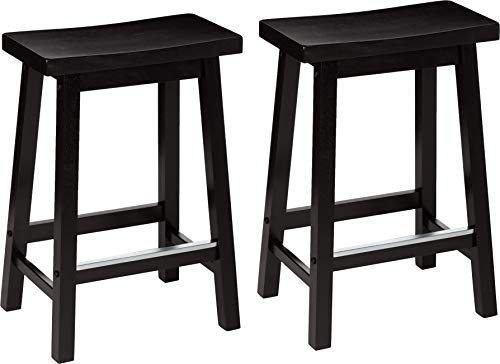
Amazon Basics Solid Wood Saddle-Seat Counter Height Bar Stools for Kitchen Island with Footrest, 24-Inch Height, Black, Set of 2
Check price on Amazon
HOOBRO Bar Stools, Set of 2 Bar Chairs, 23.6 Inch Saddle Stools, Kitchen Counter Seat with Footrests, Industrial Barstools for Dining Room, Kitchen, Counter, Rustic Brown and Black BF02MD01
Check price on Amazon