
Bar Height Patio Dining Table: The Complete Buying & Design Guide
Everything you need to know about choosing an elevated outdoor dining table — heights, materials, seating pairings, and layout tips for a patio that entertains beautifully.
Recommended Bar Height Patio Dining Tables & Outdoor Bar Sets
⚠️ AFFILIATE DISCLOSURE: This website contains affiliate links. As an affiliate Associate, we earn from qualifying purchases. If you make a purchase through these links, we may receive a small commission at no additional cost to you. Read our full affiliate policy.

Sophia & William Bar Height Outdoor Table, 36.3”H Tall | Rectangular, Imitation Wood Grain Coating, Adjustable Table Feet, for Patio Garden Backyard
Check price on Amazon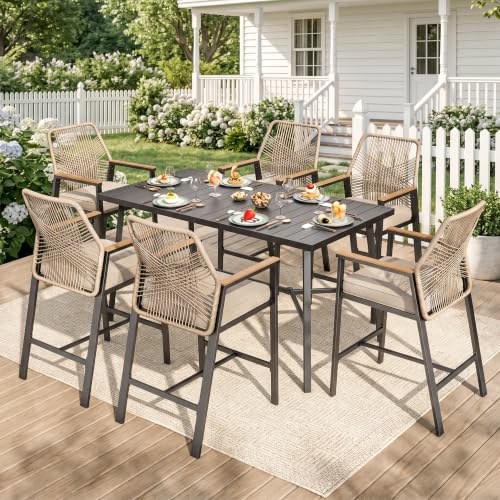
PHI VILLA Bar Height Patio Table & Chairs , Outdoor Furniture Dining Set | for 6, High Top Patio 7 Piece Bar sets, All Weather Rattan Stools with Cushion & 40”High Top rectangle Metal Table
Check price on Amazon
Yaheetech 7 Piece Patio Dining Set Outdoor Acacia Wood Bar Table and Chairs | with Removable Cushions, Wicker Furniture Set for Deck, Backyard, Garden, Black/Beige
Check price on Amazon
PHI VILLA 7 Piece Bar Height Patio Dining Set High Top | Outdoor Table and Chairs Patio Furniture Set with 6 Patio Swivel Bar Stools Brown & 40" H Table for Garden Yard Terrace
Check price on Amazon
PIZZELLO 7 Pieces Patio Furniture Set w/ 60" Gas Firepit and HDPE Chairs | Outdoor Conversation Set with 50,000 BTU Aluminum Propane Fire Pit and Patio Dining Chairs Set of 7 for Backyard
Check price on Amazon
RELAX4LIFE 7-Piece Outdoor Bar Set - Wicker Rattan Bar Height Dining Table w/Acacia Wood Top & 6 Bar Stools Chairs w/Seat Cushions, Backrest, Footrest, Outside Patio Bistro Set for Backyard (73'')
Check price on Amazon
Christopher Knight Home Barron 5-Piece Acacia Wood Patio Bar Set, Patio Bar Table and Stools Set, Soft Seat Cushions, Rattan/Wicker Dining Set for Garden, Backyard, Poolside, Balcony, Teak + Beige
Check price on Amazon
Tangkula 5 Piece Patio Wicker Bar Set, Patiojoy Outdoor Acacia Wood Bar Height Table & 4 Rattan Bar Stool Chairs with Backrest and Footrest, Outdoor Dining Bistro Set
Check price on AmazonWhat Is a Bar Height Patio Dining Table?
A bar height patio dining table is an outdoor table built to the same elevation as a traditional pub or bar counter — typically standing 40 to 42 inches tall, compared with 28 to 30 inches for a standard dining table. It is designed to be paired with bar stools or high chairs whose seats sit roughly 28 to 30 inches from the ground, leaving around 10 to 12 inches of clearance between seat and tabletop for comfortable legroom and easy reach.
These tables have become a staple of modern outdoor living for a simple reason: they change the character of a patio. Instead of sitting low and lounging, guests perch at eye level with the standing host, which makes conversation flow more naturally at casual gatherings. For homeowners who treat their patio as a second dining room or an entertainment hub, a bar height table is often the anchor piece that ties the whole space together.
Unlike indoor bar tables, outdoor versions must survive sun, rain, humidity, and temperature swings. That means the frame material, finish, and joinery all matter far more than they would indoors. A well-built outdoor bar height table should be engineered with drainage in mind, use rust-resistant hardware, and carry a finish that resists fading and chalking under UV exposure.
Quick definition: Bar height = 40–42 inch tabletop with 28–30 inch seat height. Counter height = 34–36 inch tabletop with 24–26 inch seat height. Standard dining height = 28–30 inch tabletop with 17–19 inch seat height. Always match the table to the seating, not the other way around.
Why Choose Bar Height for Outdoor Dining?
Before committing to a bar height configuration, it helps to understand the practical trade-offs. Bar height is not automatically better than standard height — it is a different experience with distinct advantages and a few constraints.
The Advantages
- Better sightlines and conversation flow. Guests sit closer to standing eye level, which makes it easier to mingle during cocktail hours and casual drop-in visits. Hosts can chat with seated guests without bending down.
- Visual separation of zones. On an open patio or deck, a taller table creates a subtle boundary between the dining area and lounging or grilling zones without the need for walls or planters.
- More usable space underneath. Taller tables leave room for storing stools tucked underneath, and the open space below the tabletop keeps the patio feeling less cluttered.
- Great for small footprints. Bar height tables often have a smaller top surface relative to their seating capacity, so they can fit onto compact patios, balconies, and narrow decks.
- Casual, social atmosphere. There is a reason pubs use high tables: they encourage standing, grazing, and movement rather than long seated dinners. For entertaining, that energy is often exactly what you want.
The Trade-Offs to Consider
- Not ideal for young children or guests with mobility limitations. Climbing onto a 28-inch stool is harder for toddlers and older adults. If your patio regularly hosts either group, consider a mix of heights.
- Less comfortable for long meals. Most people find bar stools less supportive than a full dining chair over a two-hour dinner. Bar height works best for meals under 90 minutes or for grazing-style entertaining.
- Wind exposure. Taller tables and stools catch more wind on an exposed patio. Heavier bases and stackable or weighted stools help.
- Stool matching is essential. A 40-inch table paired with 24-inch counter stools is unusable. Buying the table and stools as a set, or verifying seat height carefully, avoids this common mistake.
Height and Sizing Guide
Getting the height relationship right is the single most important decision in this category. The table height determines which stools will work, and the stool seat height determines comfort. Use the table below as your reference.
| Configuration | Tabletop Height | Seat Height | Best For |
|---|---|---|---|
| Standard dining height | 28–30 in | 17–19 in | Long family meals, young children, accessibility |
| Counter height | 34–36 in | 24–26 in | Transitional patios, mixed-age households |
| Bar height | 40–42 in | 28–30 in | Cocktail entertaining, small patios, adult-focused spaces |
| Extra-tall bar height | 44–46 in | 30–32 in | Commercial-style outdoor bars, standing-height counters |
Beyond height, consider the footprint. A two-person bar height table is often 24 to 30 inches square or round, while four-person versions typically measure 36 to 42 inches across. For six seats, expect a top of at least 60 inches in length or a 54-inch round. The general rule is to allow 24 inches of table edge per seated guest and at least 30 inches of clearance behind each stool for pushing back and walking past.
If your patio is on the tighter side, a compact square or round bar table paired with backless stools is the most space-efficient approach. Homeowners planning a full outdoor dining zone may prefer a rectangular bar table that mirrors the proportions of an indoor dining setup — a similar approach to choosing a bar height patio dining table that anchors a defined outdoor room.
Material Comparison for Outdoor Use
Outdoor furniture lives a harder life than indoor furniture. Rain, UV radiation, humidity, salt air, and temperature cycling all attack the frame and finish. The material you choose determines how the table ages and how much maintenance it demands.
| Material | Durability | Maintenance | Best For |
|---|---|---|---|
| Powder-coated aluminum | High — rust-proof, lightweight | Low — wipe clean | Coastal patios, windy decks, frequent rearranging |
| Stainless steel | Very high — marine-grade resists corrosion | Low to moderate | Salt-air environments, commercial-grade setups |
| Teak | Very high — natural oils resist moisture | Moderate — occasional oiling | Premium patios, timeless natural look |
| Acacia | High — dense hardwood | Moderate — seal annually | Mid-range patios seeking a wood aesthetic |
| HDPE (poly lumber) | Very high — impervious to moisture and UV | Very low — soap and water | Family patios, low-maintenance households |
| Wrought iron | High — heavy and stable | Moderate — touch up finish | Windy locations, traditional styling |
For most homeowners, powder-coated aluminum and HDPE offer the best balance of durability and low upkeep. Aluminum is light enough to move for seasonal storage and will not rust, while HDPE is essentially maintenance-free and holds color well over time. Teak and acacia bring warmth and a natural grain that suits farmhouse and coastal styles, but they require periodic sealing to prevent graying and water staining.
Pay attention to the tabletop material separately from the frame. Slatted tops shed rainwater and dry quickly, making them the most practical choice for uncovered patios. Solid surfaces such as composite or stone look sleeker but can pool water and become slippery. Glass tops are elegant but heavy and prone to chipping — best reserved for covered patios. If you are comparing outdoor table styles more broadly, our guide to the round outdoor dining table with umbrella hole covers how top shapes interact with shade and weather.
Hardware matters too. Stainless steel bolts and zinc-plated fittings resist corrosion far better than untreated steel. On coastal patios, specify marine-grade stainless hardware wherever possible — it is the difference between a table that lasts a decade and one that shows rust streaks within two seasons.
Pairing the Right Bar Stools and Chairs
The table is only half the equation. Bar height seating comes in several forms, and the right choice depends on how you plan to use the patio.
Backless Bar Stools
Backless stools are the most space-efficient option. They tuck completely under the table when not in use, which keeps the patio visually open and makes sweeping or hosing down the area easier. They are also the most affordable entry point into bar height seating. The trade-off is comfort — without a back, guests cannot lean, so backless stools work best for short gatherings and grazing.
Bar Stools With Backs
Stools with backs add lumbar support and make bar height dining viable for longer meals. They take up more visual space and may not tuck fully under the table, so measure the clearance carefully. Low-profile backrests balance comfort with a clean look. For a cohesive outdoor set, consider pairing the table with bar stools with backs set of 2 that match the frame finish.
Swivel and Upholstered Options
Swivel stools make it easy to turn toward conversation without scraping legs on the patio surface, which is a real benefit on stone or composite decking. Upholstered seats add comfort but require outdoor-rated foam and fabric — standard upholstery will mildew quickly outdoors. If you want the comfort of upholstery, look for solution-dyed acrylic or marine-grade vinyl covers.
Matching Height to Stool
The most common mistake is buying a 40-inch table and 24-inch counter stools. Always verify that your stool seat height is roughly 10 to 12 inches below the tabletop. For a 41-inch table, a 29-inch stool is the correct pairing. For a 36-inch counter height table, a 25-inch stool is right. Buying table and stools as a matched set eliminates the risk entirely.
If you are building the seating around an existing table, our guides to adjustable bar chairs and swivel bar stool with backrest explain the adjustment ranges and swivel mechanisms that give the most flexibility across table heights.
Table Shapes and Seating Capacity
The shape of the tabletop affects both how many people can sit comfortably and how the table fits the patio.
- Square bar tables (30–42 inches): Ideal for two to four guests on a compact patio or balcony. Square tops maximize usable surface per inch of footprint and fit neatly into corners.
- Round bar tables (36–54 inches): Best for conversation because everyone faces the center. A 42-inch round seats four comfortably; a 54-inch round seats six. Round tables also soften the angular lines of rectangular patios and decks.
- Rectangular bar tables (48–72 inches): The most efficient shape for seating six to eight. A 60-inch rectangular bar table is the sweet spot for a typical family patio, seating six with elbow room to spare.
- Oval bar tables: A good compromise for narrow patios — the rounded ends improve flow around the table while the length accommodates more guests.
Seating capacity follows a simple rule: allow 24 inches of table edge per person. A 42-inch square table seats four (one per side), a 60-inch rectangular table seats six, and a 72-inch rectangular table seats eight. Round tables seat slightly fewer per inch of diameter because of the curve, but the experience is more sociable.
For patios with a dedicated shade structure, a table with an umbrella hole is worth prioritizing. Our coverage of the teak outdoor dining table with umbrella hole and the acacia wood outdoor dining table with umbrella hole explains how the hole placement and base design affect stability on windy days.
Patio Layout and Space Planning
A bar height table can transform a patio, but only if it is placed with enough breathing room. Plan for the following clearances:
- 30 inches behind each stool for pushing back and walking past. On tight patios, 24 inches is the absolute minimum.
- 36 inches between the table edge and any wall or railing to avoid a cramped feel.
- A clear path of at least 36 inches from the patio door or grill to the table, so serving food and drinks stays easy.
- Umbrella clearance: if using an umbrella, account for the canopy diameter, which is usually 2 to 3 feet wider than the tabletop on each side.
On open-concept patios, use the table to define the dining zone and leave the lounging zone separate. A bar height table naturally reads as a social hub, so placing it near the grill or outdoor kitchen makes serving convenient. Avoid placing it directly in the path of prevailing wind — tall tables and stools catch gusts, and lightweight stools can tip in strong weather.
For very small spaces, a wall-mounted or collapsible option can work as a secondary bar surface. Our guide to the wall-mounted collapsible table covers how these space-saving designs integrate with bar height seating.
Layout tip: Mask out your patio with painter's tape before buying. Mark the table footprint plus 30 inches on all sides. If the taped area feels cramped, size down to a smaller top or switch to backless stools that tuck under.
Styling and Accessorizing Ideas
Bar height patio tables are visually prominent, so styling should enhance rather than compete. Keep the tabletop relatively clear so the height and silhouette read cleanly against the background.
- Layer with outdoor-safe textiles. A runner in solution-dyed acrylic adds color without the mildew risk of cotton. Choose lighter tones on sunny patios to reduce heat absorption.
- Use a low centerpiece. At bar height, a tall centerpiece blocks sightlines across the table. A shallow bowl of citrus, a trio of small candles, or a compact planter works better than a tall vase.
- Add shade thoughtfully. A cantilever umbrella or a market umbrella through a table hole keeps the table usable in midday sun. Choose a canopy fabric rated for UV fading.
- Warm the lighting. String lights overhead or battery-powered table lanterns create a pub-like glow after sunset. Keep cords away from walkways.
- Anchor with an outdoor rug. A weather-resistant rug under the table defines the dining zone and softens the hardscape. Choose a low-pile polypropylene rug that drains and dries quickly.
- Coordinate the stools. Matching stools to the table frame creates a cohesive set, while contrasting finishes add a design-forward edge. Either way, keep the seat height consistent across all stools.
For a broader look at how outdoor dining sets come together, our roundup of the 9-piece outdoor dining set and the 7-piece outdoor dining set with swivel rockers shows how bar height pieces fit into complete patio arrangements.
Care and Weather Protection
Outdoor furniture care is mostly about prevention. A few habits extend the life of a bar height patio table significantly:
- Clean weekly during the season. Wipe down the tabletop and stool seats with mild soap and water. Rinse thoroughly — leftover soap attracts dirt and can dull finishes.
- Address spills promptly. Acidic drinks, oils, and sauces can stain wood and etch metal finishes if left overnight.
- Use a fitted cover. A breathable, waterproof cover protects against rain, pollen, and bird droppings. Avoid non-breathable plastic, which traps moisture and encourages mold.
- Store cushions and textiles indoors. Even outdoor-rated fabrics last longer when brought in during off-season or heavy rain.
- Inspect hardware seasonally. Tighten bolts and check for rust or wobble at the start and end of the outdoor season.
- Re-oil wood annually. Teak and acacia benefit from a coat of outdoor furniture oil once a year to maintain color and water resistance.
- Touch up metal finishes. Small chips in powder coating or paint should be treated with touch-up paint to prevent corrosion spreading.
If your patio is uncovered and exposed to year-round weather, prioritize aluminum, HDPE, or stainless steel over wood. Wood tables can be protected with covers, but they will still weather more quickly in exposed locations. For homeowners in windy regions, consider adding weights to the table base or choosing a heavier wrought iron design.
Buying Checklist
Use this checklist before finalizing your purchase. It covers the decisions that most often cause buyer's remorse.
- Confirm the tabletop height (40–42 inches for bar height) and match stool seat height to 28–30 inches.
- Measure your patio and verify at least 30 inches of clearance behind each stool.
- Choose a weather-appropriate material: aluminum or HDPE for exposed patios, teak or acacia for covered areas.
- Check that the hardware is stainless steel or corrosion-resistant.
- Decide between slatted and solid tops based on rain exposure and cleaning preference.
- Verify seating capacity against your typical guest count (24 inches of edge per person).
- Consider an umbrella hole if the patio lacks shade.
- Confirm the table is stable on windy days — check base weight and leg design.
- Plan storage for cushions and textiles during off-season.
- Read the warranty terms for outdoor use and finish coverage.
Frequently Asked Questions
What is the standard height of a bar height patio dining table?
Bar height patio dining tables typically stand between 40 and 42 inches tall, paired with stools or chairs that have a seat height of 28 to 30 inches. This creates roughly 10 to 12 inches of clearance between the seat and the tabletop, which is the comfortable range for legroom and reach.
What is the difference between counter height and bar height patio tables?
Counter height tables are usually 34 to 36 inches tall with seats around 24 to 26 inches, while bar height tables are 40 to 42 inches tall with seats around 28 to 30 inches. Bar height offers a more elevated, pub-style experience and better sightlines for standing conversation; counter height is easier for children and older guests to access.
What materials work best for bar height patio dining tables?
Aluminum, powder-coated steel, teak, acacia, and high-density polyethylene are the most durable choices for outdoor bar height tables. Aluminum and HDPE resist moisture and rust with minimal upkeep, while teak and acacia offer a natural wood look but require periodic oiling or sealing to stay weather-resistant.
Can I use indoor bar stools on an outdoor bar height table?
Only if they are rated for outdoor use. Indoor stools often use finishes and upholstery that degrade quickly under UV exposure and moisture. If you pair indoor stools with an outdoor table, expect fading, rust, and mildew over time. Always verify the stool is specified for outdoor use.
How many people can sit at a bar height patio table?
Allow 24 inches of table edge per person. A 30-inch square bar table seats two, a 42-inch square seats four, a 60-inch rectangular table seats six, and a 72-inch rectangular table seats eight. Round tables seat slightly fewer per inch of diameter but offer a more sociable arrangement.
Is a bar height patio table good for small spaces?
Yes — bar height tables are often an excellent choice for compact patios and balconies because the tabletop footprint is smaller relative to seating capacity, and backless stools can tuck fully underneath. Just make sure you still have 24 to 30 inches of clearance behind the stools for comfortable use.