
Breakfast Nook Cushion Buying Guide: Comfort, Fit & Style
Learn how to choose a banquette cushion that fits your bench, supports everyday meals, and holds up to daily family life — from fill type and thickness to fabric care.
VIEW CUSHION OPTIONSWhy the cushion matters more than the bench. A breakfast nook is where quick weekday breakfasts and long weekend brunches happen, and the cushion is the part of the bench you actually feel. The right cushion turns a hard wooden banquette into a seat people want to linger in; the wrong one slides forward, flattens within a month, or makes the table feel too high.
This guide walks through the decisions that matter: measuring a bench correctly, choosing cushion thickness and fill, selecting upholstery that survives crumbs and spills, and keeping a breakfast nook seat looking good over years of use. If you are still assembling the whole seating area, pair this with our guide to breakfast bench nooks and nook benches with storage.
Why a Purpose-Built Cushion Beats a Generic Seat Pad
Most people start by dropping a chair pad onto a nook bench. It works for a week. Then the pad creeps forward, bunches at the knees, and leaves a bare strip of wood behind the back. A cushion made for bench seating solves those problems structurally rather than cosmetically.
A properly specified breakfast nook cushion is built around four needs that a chair pad ignores:
- Continuous support. Bench seating spreads body weight across the seat and back, so the cushion needs consistent density along its full length, not a soft center with hard ends.
- Stability. Nook benches are usually fixed against walls and corners. A cushion with a grip base or ties stays put when people slide in and out several times a day.
- Seat height balance. Cushion thickness directly changes how high you sit relative to the tabletop. Getting this right is the difference between comfortable and cramped.
- Cleanability. Crumbs, juice, and coffee land on the cushion first. Removable covers or wipe-clean fabrics make the difference between a five-minute refresh and a replacement.
Corner configurations deserve special attention. A dedicated breakfast corner nook often needs two separate cushion sections that meet cleanly at the inside corner, rather than one long rectangle that bunches in the angle.
How to Measure a Breakfast Nook Bench for a Cushion
Measurement errors are the most common reason a nook cushion looks wrong. Take these four readings for each bench section, and write them down rather than trusting memory.
1. Length
Measure the full usable bench length from end to end. If the bench butts into a wall on one side, measure to the wall face. For L-shaped and U-shaped nooks, measure each run separately — a small-space nook set with two short runs may need two shorter cushions rather than one long one.
2. Depth
Measure from the backrest face to the front edge of the seat. Most nook benches fall between 18 and 22 inches of depth. A cushion should match the seat depth or sit a half inch short; an overhang past the front edge looks untidy and wears unevenly.
3. Height and existing seat level
Measure the bare bench height from floor to seat surface. Then compare it with your table height. Standard dining tables sit around 30 inches high. The cushion adds its full thickness to your sitting height, so a 3-inch cushion on a 17-inch bench puts you at 20 inches — a good match for a standard table.
4. Backrest angle and obstructions
Check whether the backrest is vertical or reclined, and note any supports, trim, or storage lids that affect the cushion footprint. If your bench has a lift-up lid, the cushion needs to be removable or split so the lid still opens. That is a common issue with breakfast nooks with storage.
Measuring tip: Add roughly one inch of ease to the depth if the backrest leans back, so the cushion can tuck into the angle without lifting off the seat. Never add ease to the length — a long cushion that bows up at the ends is worse than one that stops slightly short.
Choosing Cushion Thickness
Thickness is a functional decision first and a comfort decision second. Aim for a final seat height of roughly 18 to 20 inches from floor to the top of the cushion for adults at a standard table.
| Cushion Thickness | Best For | Trade-offs |
|---|---|---|
| 1 to 1.5 inches | Benches that already sit high, or where the table clearance is tight | Minimal padding; best for occasional or short sitting |
| 2 to 3 inches | Most standard nook benches and everyday family dining | The balanced default for comfort, height and fit |
| 4 inches and above | Low benches, deep window seats, or lounging-style nooks | Raises seat height noticeably; may reduce knee clearance under the table |
If your bench is unusually low, a thicker cushion can rescue the seating height. If the bench is already tall, a thin pad keeps thighs from hitting the table apron. Before committing, sit on the bare bench with a folded blanket of the intended thickness and check knee clearance — it takes two minutes and prevents a return.
Cushion Fill Types Compared
Fill determines how the cushion feels on day one and how it looks after a year. The table below compares the main options on durability, feel, and upkeep.
| Fill Type | Tier | Feel & Best For | Maintenance Notes |
|---|---|---|---|
| High-density foam | Essential tier | Firm, supportive, holds shape well; ideal for daily family meals | Wipe clean; foam core should not be machine washed |
| Foam with fiber wrap | Balanced tier | Supportive core with a softer surface; a versatile all-rounder | Fluff occasionally; removable cover recommended |
| Down or down-alternative wrapped | Premium tier | Plush, sink-in comfort; suited to lounging nooks and window seats | Needs regular fluffing; less structured over long sessions |
| Memory foam | Mid-tier | Contours to the body; comfortable for long sitting | Firmer in cool rooms; slower rebound between users |
| Latex | High-end tier | Resilient and springy; retains shape with heavy use | Heavier; less common in standard cushion sizes |
A practical approach for most households is a mid-range or balanced-tier cushion with a high-density foam core and a thin fiber wrap. It offers a comfortable surface without the sagging that plagues soft-only fills. Down-wrapped cushions are lovely in a breakfast room used for relaxed mornings, but they demand more fluffing and are less forgiving with children climbing in and out.
Upholstery and Fabric Choices for Daily Use
Fabric is where a nook cushion lives or dies. Breakfast nooks see juice, cereal milk, coffee, and craft projects. The goal is a fabric that resists staining without feeling plasticky.
Performance and solution-dyed fabrics
Performance fabrics are engineered for stain resistance and colorfastness. They are the most practical choice for busy family nooks, often cleaning with a damp cloth alone. They tend to feel slightly firmer than natural fibers but wear exceptionally well.
Cotton and cotton blends
Breathable and comfortable, with a natural hand feel. Standard cotton stains easily; look for treated cotton blends or pair with a removable cover. A cotton slipcover that can be laundered is a sensible compromise for a bench with storage where the cushion is handled often.
Linen and linen blends
Relaxed and textured, well suited to farmhouse and coastal nooks. Pure linen wrinkles and can be harder to clean; blends with synthetic fibers improve durability. Use linen where the cushion is decorative more than workhorse.
Leather and faux leather
Wipe-clean and resilient, excellent for households with young children or pets. Leather softens with use; faux leather is easier to maintain but can crack over time in low-quality versions. Both suit a tailored, modern bench.
Outdoor-grade fabric indoors
An underrated option for breakfast nooks. Outdoor fabrics resist mildew and clean easily, and modern versions no longer feel stiff. They work especially well in humid climates or on enclosed porches off the kitchen.
Fabric checklist: Confirm whether the cover is removable and machine washable, whether zippers are hidden, and whether the fabric carries a stain-resistance treatment. For high-traffic nooks, a removable cover is the single most useful feature to look for.
Ties, Grip Bases, and Staying Put
A cushion that migrates forward is a daily annoyance. Three features prevent it:
- Tie-backs. Fabric ties loop around the bench frame or backrest supports. They are the most reliable anti-slide feature and also look intentional in a traditional or farmhouse nook.
- Non-slip grip base. A textured or rubberized underside grips the bench surface. Effective on smooth finishes, less so on slatted seats.
- Snug dimensional fit. A cushion sized precisely to the bench, tucked slightly into the backrest, shifts far less than an oversized one.
If your bench has an angled back, a cushion with a rear tuck panel or a wedge profile holds its position better than a plain rectangle. For benches that convert between seating and storage, split cushions with ties are easier to lift than a single long section.
Care and Maintenance for a Long-Lasting Nook Cushion
With modest routine care, a good nook cushion lasts many years. The essentials:
For deeper cleaning, check our broader resources on dining furniture care, and if your nook includes chairs rather than bench seating, the same principles apply to dining chair upholstery.
Common Mistakes to Avoid
- Buying by bench length alone. Depth and seat height matter just as much and are the usual source of fit problems.
- Choosing a cushion that is too soft. Plush fills feel wonderful on day one and flatten quickly in a seat used daily.
- Skipping the seat-height check. A thick cushion on an already-tall bench leaves knees pressed against the table.
- Ignoring the corner. L-shaped and U-shaped nooks need cushions designed for the inside angle, not a single rectangle forced around it.
- Overlooking storage access. If the bench has a lift-up lid, confirm the cushion can be removed or split before buying.
- Picking a fabric that cannot be cleaned. A beautiful fabric that cannot survive a spilled drink is a short-lived choice in a breakfast nook.
Recommended Breakfast Nook Cushions
⚠️ AFFILIATE DISCLOSURE: This website contains affiliate links. As an affiliate Associate, we earn from qualifying purchases. If you make a purchase through these links, we may receive a small commission at no additional cost to you. Read our full affiliate policy.

CTLAMK Breakfast Nook Cushions Set of 4, Waterproof Oxford Fabric Kitchen Nooks Cushions, Soft Polyester Filling Cozy Supportive Nooks Cushion, Breakfast Nook Cushion Cozy Dining Area Seating,Red
Check price on Amazon
CTLAMK Breakfast Nook Cushions Set of 4, Waterproof Oxford Fabric Kitchen Nooks Cushions, Soft Polyester Filling Cozy Supportive Nooks Cushion, Breakfast Nook Cushion Cozy Dining Area Seating,Khaki
Check price on Amazon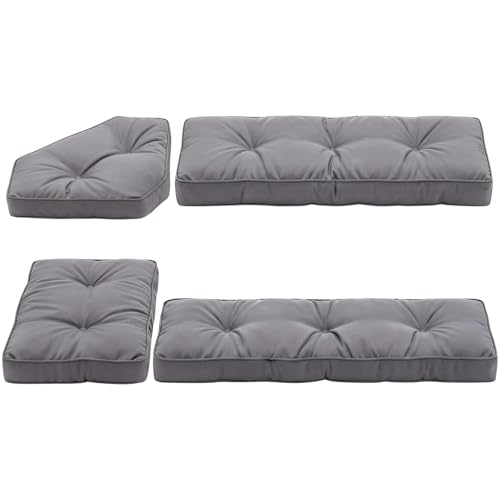
CTLAMK Breakfast Nook Cushions Set of 4, Waterproof Oxford Fabric Kitchen Nooks Cushions, Soft Polyester Filling Cozy Supportive Nooks Cushion, Breakfast Nook Cushion Cozy Dining Area Seating,Grey
Check price on Amazon
CTLAMK Breakfast Nook Cushions Set of 4, Waterproof Oxford Fabric Kitchen Nooks Cushions, Soft Polyester Filling Cozy Supportive Nooks Cushion, Breakfast Nook Cushion Cozy Dining Area Seating,Blue
Check price on Amazon
Greendale Home Fashions Hyatt Microfiber Kitchen Nook Cushion Set, 4 Piece Assortment, Mocha
Check price on AmazonFrequently Asked Questions
How thick should a breakfast nook cushion be?
For standard bench seating used at a dining table, a 2 to 3 inch cushion is the most practical choice. It gives comfortable support while keeping seat height within a usable range. Thicker 4 inch cushions suit benches built lower than normal, while 1 to 1.5 inch pads work well where seat height is already high.
How do I measure a breakfast nook bench for a cushion?
Measure the full bench length, the seat depth from the backrest to the front edge, and the bench height. For corner nooks, measure each bench section separately and note the inside corner junction. Add one inch of ease to depth if the bench sits against a wall, and allow clearance for the front skirt or ties.
What fill is best for a banquette cushion?
High-density foam with a wrapped fiber or down-alternative layer is the most balanced option for everyday dining. Foam-only cushions hold their shape and are easy to wipe clean, while down-wrapped versions feel softer but need regular fluffing. Memory foam works well for longer sitting periods but can feel firmer in cool rooms.
How do I keep a breakfast nook cushion from sliding?
Look for cushions with a non-slip grip base, or add a separate rug-grip pad under the cushion. Ties attached to the bench or backrest also help. A snug fit with a slight rear tuck reduces shifting more effectively than an oversized cushion on a smooth bench.
Are breakfast nook cushions washable?
Many indoor cushions use removable, machine-washable covers with hidden zippers. Performance fabrics are often spot-clean only but resist spills better. Check the care label before buying, especially for families with young children or pets, and consider a washable slipcover for the most exposed cushion.
Can I use an outdoor cushion inside a breakfast nook?
Yes, and it can be a smart choice for busy households. Outdoor-grade fabrics are usually mildew-resistant and easy to wipe down, though they may feel stiffer than indoor upholstery. Pair a weather-resistant cover with an indoor-grade foam core for the best of both.
Putting It Together: A Cushion That Fits the Bench and the Household
Start with measurements, not inspiration photos. Record the length, depth, and bare bench height for each section of your nook, then use those numbers to choose a thickness that lands you at a comfortable seat height. For most homes, a 2 to 3 inch cushion with a high-density foam core and a removable, washable cover is the balanced choice that survives daily use.
Then decide the details: ties or a grip base if the cushion shifts, a corner-friendly split layout if the bench is L-shaped, and a fill that matches how long people actually sit. A breakfast nook dining table paired with a well-specified cushion turns a corner of the kitchen into the most-used seat in the house.
Once the seating is settled, complete the space with our guides to breakfast nook sets, round breakfast nook tables, and built-in breakfast nooks. For a broader overview of bench seating options, the main breakfast nook guide is the best next step.