
Built-In Breakfast Nook: The Complete Buying & Design Guide
Everything you need to plan a cozy, space-smart breakfast nook — from bench layouts and storage ideas to table shapes, cushion materials, and lighting. Designed for homeowners who want to buy with confidence.
Explore Recommended Nook ProductsWhy a built-in breakfast nook? A built-in breakfast nook turns an awkward kitchen corner or a blank wall into the most-used seat in the house. Unlike freestanding dinette sets, a built-in bench anchors to the wall, saves floor space, and — when properly specified — adds hidden storage. This guide is written for the research stage: you already know you want a nook, and you need clear, trustworthy specifications before you commit to a purchase.
1. What a Built-In Breakfast Nook Actually Is
A built-in breakfast nook is a permanent seating and dining zone integrated into the architecture of a kitchen, breakfast room, or open-plan space. The defining feature is the bench: it is fixed to the wall or cabinetry rather than freestanding, and it is usually paired with a table sized to the bench run. Because the bench is anchored, the nook can be shallower than a full dinette set, which is why it works so well in compact kitchens.
Buyers often confuse three related concepts. A breakfast nook is the general room or zone. A breakfast bench nook emphasizes the bench-first layout. And a breakfast corner nook specifically uses a corner, typically with an L-shaped bench. Understanding which one you have — or want to build — determines the table shape, bench dimensions, and storage strategy you should shop for.
Compared with a freestanding booth dining table setup, a built-in nook offers three practical advantages: it reclaims floor space, it creates a defined zone in an open kitchen, and it can incorporate storage that a standard table cannot. The trade-off is permanence — built-ins are not easily rearranged — so the specification stage matters more than with freestanding furniture.
2. Bench Layouts: L-Shaped, U-Shaped, and Single-Wall
The bench layout is the single biggest decision in a built-in nook because it fixes the table shape, the seating count, and the traffic flow. There are three dominant configurations, and each suits a different room geometry.
L-Shaped Corner Bench
The most popular layout for a breakfast corner nook. Two bench runs meet at a right angle, usually along two walls or one wall plus a half-wall. It seats four to six people and pairs naturally with a round or square table. The corner is the most space-efficient area in a room, so an L-shaped bench makes productive use of otherwise dead square footage. If your corner is tight, a breakfast nook round table keeps the walkway clear.
U-Shaped Bench
Three bench runs enclose the table on three sides, typically used in a dedicated breakfast room or a wide bay window. U-shaped nooks seat five to eight people and feel the most enclosed and cozy. They require a wider footprint — plan for at least 10 feet across the open side — and work best with a rectangular or oval table. A U-shaped layout is the strongest choice if the nook is the primary family eating area.
Single-Wall Bench
One long bench runs along a single wall, with freestanding chairs on the opposite side. This is the most flexible layout and the easiest to retrofit, since it does not require a corner. A single-wall bench pairs well with a rectangular table and works in narrow galley kitchens. It also allows one side of the nook to double as a bench for a breakfast bar with bar stools if the counter is adjacent.
Layout rule of thumb: Match the bench to the corner, not the corner to the bench. If you have a true 90-degree corner with at least 5 feet on each leg, an L-shaped bench will outperform a single-wall bench on both seating count and floor-space efficiency.
3. Choosing the Right Table Shape and Size
The table must fit the bench, not the other way around. A table that is too large blocks entry to the bench; a table that is too small leaves diners reaching. Use these benchmarks as a starting point, then adjust for your bench depth.
Round Tables
Round tables are the default for corner and L-shaped nooks. They improve traffic flow, give every diner equal access, and have no sharp corners to navigate in a tight space. A round breakfast nook table with a 36–42 inch diameter seats two to four comfortably. Round tables pair especially well with a single corner bench and two freestanding chairs.
Square Tables
A square table maximizes seating in a compact footprint and suits both L-shaped and U-shaped nooks. A 36-inch square seats four; a 42-inch square seats four to six. Square tables look more formal than round tables and work well in a breakfast nook dining table arrangement with a bench on two sides.
Rectangular Tables
Rectangular tables are the natural fit for single-wall benches and long U-shaped nooks. A 48-inch-long table seats two per side; a 60-inch table seats three per side. Keep the table length within 6 inches of the bench run so diners are not stranded past the bench edge. For a complete set, a breakfast nook dining set for small spaces usually bundles a compact rectangular table with a matching bench.
Table-to-Bench Clearance
Leave 12 to 15 inches of knee room between the bench seat surface and the underside of the tabletop. Allow at least 24 to 30 inches of table overhang beyond the bench edge so diners can slide in. If the table is against a wall on one side, keep 36 inches of walkway on the open side. These figures prevent the two most common nook complaints: bruised knees and blocked entry.
4. Storage Options Built Into the Bench
Storage is the reason many homeowners choose a built-in nook over a freestanding table. A breakfast nook bench with storage converts the volume under the seat into usable space — often 6 to 10 cubic feet per bench run, depending on depth and height. There are four common storage mechanisms, each with trade-offs.
- Lift-up seat (hinged top): The entire seat cushion and lid lift to reveal a deep bin. The most storage volume per bench foot, but you must remove cushions to access it. Best for seasonal or infrequent items.
- Pull-out drawers: Drawers face the table side and slide out for everyday access. Excellent for linens, cutlery, and board games. Drawers reduce the usable depth by 2–3 inches versus a lift-up bin.
- Toe-kick drawers: Shallow drawers tucked into the kick space below the bench. Ideal for flat items such as placemats and table runners. They preserve the seat's interior volume.
- Open cubbies: Open shelving under a bench that sits on legs rather than a solid base. The easiest to retrofit and the most child-friendly, but they collect dust and offer less concealed storage.
For a full storage-first layout, see breakfast nooks with storage, which covers bench depth requirements and how to coordinate storage with the table base. If the nook shares a wall with the kitchen, consider a buffet cabinet sideboard nearby to move serving items out of the bench and into a dedicated surface.
5. Cushions, Upholstery, and Comfort
A built-in bench is only as comfortable as its cushions. Bare wood benches are fine for a few minutes, but for daily family meals you need a properly specified breakfast nook cushion. The three variables that matter most are foam density, cushion thickness, and upholstery performance.
Foam Density and Thickness
Use high-density foam at a minimum of 3 inches thick for the seat. Low-density foam compresses within months and leaves a hard bench underneath. For the backrest, a slightly softer foam at 2 to 3 inches is comfortable without pushing the diner forward. If the bench doubles as a reading seat, a 4-inch seat cushion is a worthwhile upgrade.
Upholstery Performance
Performance fabrics — solution-dyed acrylics, polyurethane-coated weaves, and tightly woven olefin blends — resist stains and fading. This matters if the nook receives direct sunlight or if children use it daily. Removable, machine-washable covers are the most practical choice for family homes. Leather and faux leather wipe clean easily but can feel sticky in warm climates.
Custom-Fit vs. Loose Cushions
Custom-fit cushions are cut to the exact bench dimensions and stay in place, giving a cleaner built-in look. Loose cushions are easier to replace and rearrange but shift during use. For a permanent built-in, custom-fit is almost always the better choice.
6. Lighting and Ambiance for a Nook
A built-in nook is a small, defined zone, and lighting determines whether it feels cozy or cramped. The best setups layer three sources: a pendant or chandelier directly above the table, task lighting from the kitchen, and ambient light from a window or wall sconce.
Hang the pendant so its bottom edge sits 30 to 36 inches above the tabletop. For a round table, a single pendant centered over the table works well; for a rectangular table, a linear fixture or two pendants spaced evenly look balanced. If the nook is in a dark corner, a wall sconce or a slim floor lamp can lift the shadows without consuming table space.
For a broader overview of fixture styles and hanging heights, see the dining room lighting guide. If the nook is part of a larger dining room, a black dining room chandelier can tie the nook to the main dining zone.
7. Materials, Durability, and Quality Tiers
Built-in nooks are permanent, so material quality matters more than with freestanding furniture. The bench frame, the table base, and the tabletop each have different durability requirements. The table below uses universal quality tiers rather than any numeric figures, so it stays valid regardless of market conditions.
| Component | Tier | Best For | What to Look For |
|---|---|---|---|
| Bench frame | Essential tier | Low-traffic nooks, rental-friendly builds | Plywood or MDF carcass with a solid front rail; reinforced corner blocks |
| Bench frame | Mid-tier | Everyday family use | Solid wood face frame, plywood carcass, doweled or screwed joinery |
| Bench frame | Top-tier | High-traffic kitchens, long-term homes | Solid hardwood frame, mortise-and-tenon or dowel joinery, adjustable feet |
| Table top | Essential tier | Light use, small households | Engineered wood with a durable laminate or veneer; sealed edges |
| Table top | Mid-range | Daily family meals | Solid wood or stone-composite top; heat- and scratch-resistant finish |
| Table top | Premium | Design-forward nooks, entertaining | Solid hardwood, marble, or quartz; hand-finished edges; repairable surface |
| Cushions | Starter tier | Occasional seating | 2-inch medium-density foam; removable cover |
| Cushions | Balanced tier | Daily use | 3-inch high-density foam; performance fabric; custom fit |
| Cushions | Luxury | Primary seating, long sessions | 4-inch high-density foam with memory-foam topper; tailored upholstery |
A solid wood frame is the single best investment in a built-in nook because it is the hardest component to replace later. If you must balance the budget, save on the tabletop and cushions — both are replaceable — before compromising on the bench frame. For finish and care guidance, see the broader care and maintenance resources.
8. Measurement Checklist Before You Buy
Bring these measurements to any showroom or online listing. They will tell you immediately whether a bench, table, or cushion set will fit.
- Wall run lengths: Measure each wall the bench will touch, corner to corner. For an L-shaped nook, measure both legs.
- Corner angle: Confirm the corner is a true 90 degrees. Older homes often have slightly off-square corners that require a scribed bench end panel.
- Bench depth: Standard seat depth is 18 to 22 inches for adults. Deeper benches need a backrest angle to stay comfortable.
- Seat height: Standard seat height is 17 to 19 inches. If you want a counter-height nook, plan for 24 to 26 inches and pair it with countertop stools on the open side.
- Table clearance: Confirm 12 to 15 inches of knee room and 24 to 30 inches of overhang beyond the bench edge.
- Walkway width: Leave at least 36 inches on the open side of the table for traffic.
- Window and outlet positions: A bench should not block a window sill below 30 inches, and outlets behind the bench must remain accessible or be relocated.
- Ceiling height: Confirm room for a pendant 30 to 36 inches above the tabletop with 78 inches of head clearance below the fixture.
For a full room-level planning framework, see the measurement guide, which also covers dining table sizing for freestanding setups.
Recommended Breakfast Nook Benches, Tables, and Cushions
⚠️ AFFILIATE DISCLOSURE: This website contains affiliate links. As an affiliate Associate, we earn from qualifying purchases. If you make a purchase through these links, we may receive a small commission at no additional cost to you. Read our full affiliate policy.

Modern Banquette Bench with Hidden Storage Breakfast Nook Restaurant
Check price on Amazon
LUXOAK 3-Piece Wood Corner Dining Table Set for 4, Black & Walnut | Breakfast Nook, L-Shaped Corner Bench, Hidden Storage, Space-Saving Design for Small Spaces, Farmhouse Kitchen & Dining
Check price on Amazon
Karl home Corner Dining Table Set with Storage Bench, PU Cushions, Black | Breakfast Nook Table Set , Built-In Power Outlet, L-Shaped Layout with Hidden Storage, Space-Saving, Breakfast Nook
Check price on Amazon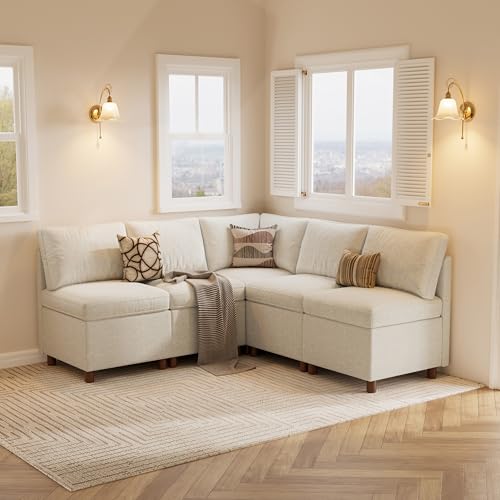
SITJOY Breakfast Nook Bench with Storage, Beige, 5 Seat (1 Corner) | Removable Washable Covers, Modular Corner Kitchen Banquette Seating, Dining Settee Couch, Upholstered Dining Bench with Back
Check price on Amazon
LUXOAK 3-Piece Wood Corner Dining Table Set for 4, White & Barnwood | Breakfast Nook, L-Shaped Corner Bench, Hidden Storage, Space-Saving Design for Small Spaces, Farmhouse Kitchen & Dining
Check price on Amazon
Yechen Breakfast Nook Table Set with Storage, Seats 4-6, Natural Wood | 43" Breakfast Nook Set, Hidden Storage, L-Shaped Corner Design, Seats 4-6, Natural Wood Finish
Check price on Amazon
Sunny Designs Solid Wood Breakfast Nook Set (Tobacco Leaf)
Check price on Amazon
KYLE & KAY 3-Piece Breakfast Nook, Kitchen Nook Corner Table Set with USB & Hidden Storage, Corner Dining Set for 4-6 (Black and Dark Natural)
Check price on AmazonRelated Reading for Your Nook Project
If your nook is part of a larger kitchen or dining refresh, these guides will help you connect the decisions:
- Breakfast nook dining set for small spaces — how to bundle a table and bench that fit a compact nook.
- Breakfast nook table set — matching table height, bench height, and chair options.
- Breakfast table and chairs — freestanding alternatives if you prefer a movable setup.
- Booth for kitchen — when a booth-style bench suits your layout better than an L-shaped nook.
- Buffet sideboards — moving serving storage out of the nook footprint.
- Dining lighting guide — pendant height and layering for a cozy nook.
Frequently Asked Questions
What is a built-in breakfast nook?
A built-in breakfast nook is a permanent seating and dining area integrated into the architecture of a kitchen or breakfast room. It typically features an L-shaped or U-shaped bench anchored to the walls, paired with a table, and often includes storage underneath the seats.
How much clearance is needed for a breakfast nook table?
Allow at least 24 to 30 inches of table overhang from the bench edge so diners can slide in comfortably. For walkways beside a freestanding side, leave 36 inches of clearance. For the table-to-bench gap, 12 to 15 inches of knee room below the tabletop is ideal.
Are built-in breakfast nooks comfortable for everyday use?
Yes, when specified correctly. Use high-density foam cushions at least 3 inches thick, choose breathable upholstery, and angle the backrest slightly. Bench depth should be 18 to 22 inches for adults. With proper cushions, a built-in nook is comfortable for daily family meals.
What is the best table shape for a corner breakfast nook?
A round or square table works best for corner and L-shaped nooks because it improves traffic flow and gives each diner equal access. Rectangular tables suit long single-bench nooks along one wall. Round breakfast nook tables are especially popular in tight corners.
Can a built-in breakfast nook include storage?
Absolutely. Storage is one of the biggest advantages of built-in nooks. Lift-up bench seats, pull-out drawers, and toe-kick drawers can hold linens, board games, small appliances, and seasonal items. Many homeowners choose a breakfast nook bench with storage to maximize a small footprint.
How do I choose cushions for a breakfast nook bench?
Select high-density foam (at least 3 inches thick) for the seat and a slightly softer foam for the backrest. Choose performance fabrics that resist stains and fading if the nook receives direct sunlight. Custom-fit breakfast nook cushions look cleaner than loose cushions and stay in place better.
Ready to specify your nook? Start with the bench layout and wall run measurements, then choose a table shape that matches the bench, and finish with custom-fit cushions in a performance fabric. For ready-made combinations, explore the recommended products above or read the breakfast nooks with storage guide for storage-first layouts.