
Counter Height Stools for Kitchen Island: The Complete Buying Guide
Everything you need to choose comfortable, stylish, and properly sized counter stools for your kitchen island — from seat height and footrest design to upholstery, back styles, and everyday durability.
Why this guide matters: A kitchen island is the hardest-working surface in most homes — a prep zone, a breakfast counter, a homework station, and a gathering spot. The stools you pair with it determine whether that space feels comfortable or cramped. Getting the seat height, depth, and back support right transforms an island from a place to stand into a place to stay.
This guide walks you through the measurements, materials, and design decisions that matter most, so you can shop with confidence and pick stools that fit your island, your family, and your daily routine.
Why Counter Height Is the Right Choice for Most Islands
Kitchen islands are typically built at one of two heights: standard counter height (around 36 inches) or bar height (around 42 inches). Most residential islands use standard counter height, which means they pair with counter height stools — seats roughly 24 to 26 inches from the floor.
Counter height stools are the sweet spot for everyday use because they let you sit close to the work surface without the awkward climb of a bar stool. They work for quick breakfasts, casual dinners, and laptop sessions alike. If your island has a raised bar ledge, you may need bar height instead — but for the majority of kitchens, counter height is the correct match.
If you are still confirming which category your island falls into, our guide to counter height stools explains the difference between counter and bar seating in detail. You can also review counter size bar stools if your island has a mixed-height design with both a work surface and a raised eating ledge.
Sizing Your Stools: The Measurements That Matter
Correct sizing is the single most important factor in stool comfort. A stool that is too tall forces you to hunch; one that is too short leaves your legs dangling. Use the following guidelines as your starting point.
| Island / Counter Height | Recommended Seat Height | Typical Clearance | Best For |
|---|---|---|---|
| Standard counter (about 36 in) | 24–26 in | 9–12 in between seat and countertop | Everyday dining, prep seating, family kitchens |
| Bar height (about 42 in) | 28–30 in | 10–12 in between seat and countertop | Raised bar ledges, entertaining zones |
| Counter with raised bar ledge | Two stool heights (mixed) | Match each stool to its own surface | Dual-purpose islands |
Seat depth and width matter just as much as height. A seat depth of 15 to 18 inches supports the thighs without cutting into the back of the knees. Width varies by style: round seats of 13 to 16 inches suit compact islands, while square or saddle seats of 17 to 20 inches feel more generous for long meals.
Footrest height is often overlooked. A footrest positioned roughly 7 to 9 inches below the seat lets you rest your feet naturally instead of letting them dangle. If you are shopping for taller seating, our breakdown of counter height bar stools with backs and arms explains how footrest placement changes the feel of a stool.
Finally, plan for overhang clearance. Your island should have at least 12 inches of overhang for knee space, and 15 inches is more comfortable for extended sitting. Allow about 6 inches of space between stool centers so elbows do not collide.
Back Styles: Low Backs, High Backs, and Backless
The back of a stool determines how long you can sit comfortably and how visually heavy the seating feels in your kitchen.
Backless Stools
Backless stools tuck completely under the island overhang, which keeps sightlines open and makes small kitchens feel larger. They are ideal for quick meals and for islands where the seating side faces a walkway. The trade-off is reduced lumbar support for longer sitting sessions.
Low-Back Stools
Low backs — roughly 6 to 10 inches above the seat — offer a subtle amount of support while still sliding mostly under the counter. This is a popular middle ground for families who want comfort without visual bulk.
Mid-Back and High-Back Stools
If your island doubles as a dining table or a work-from-home desk, a stool with a fuller back is worth considering. Our guide to counter height bar stools with backs set of 4 covers matched sets that bring dining-chair comfort to island seating. For additional arm support, explore counter height swivel stools with backs and arms.
Materials and Construction: What Holds Up in a Kitchen
Kitchen island stools take more abuse than dining chairs. They get climbed on, bumped by kids, splashed during prep, and used as step stools more often than anyone admits. Prioritize solid construction over decorative flourishes.
Frames
Solid wood frames — particularly hardwood such as oak, maple, or beech — offer the most stable base for daily use. Metal frames in powder-coated steel or aluminum are excellent for modern and industrial kitchens, and they resist moisture well. Look for reinforced joinery and a weight rating appropriate for your household.
Seats and Upholstery
Upholstered seats in performance fabrics or easy-clean vinyl are practical for kitchens. Leather and faux leather wipe clean quickly and develop character over time. Woven seats in rattan or rush bring warmth but need more care around spills. Wooden saddle seats are the most forgiving and lowest-maintenance option.
If comfort is your priority, our article on cushioned bar stools explains which foam densities and coverings hold their shape best. For a softer, rounded silhouette, counter height upholstered chairs may suit a more formal island design.
Finishes
Kitchen environments are humid and spill-prone. Choose finishes described as water-resistant, sealed, or powder-coated. Stainless steel and aluminum are naturally rust-resistant and pair well with appliance-heavy kitchens.
Matching Stool Style to Your Kitchen Design
Stools are visible from most living areas in open-plan homes, so style matters as much as function. The right choice depends on the visual weight of your kitchen and the mood you want to create.
- Modern and minimalist: Slim metal frames, backless or low-back designs, and monochrome finishes keep the island looking clean. Swivel models add flexibility for conversation. See swivel counter stools for options that rotate toward the room.
- Farmhouse and rustic: Wood frames with cross-back or spindle-back detailing, painted or distressed finishes, and woven or saddle seats bring warmth. These pair naturally with contemporary farmhouse dining room styling.
- Contemporary and polished: Upholstered seats with tapered legs or cantilevered metal bases feel tailored and comfortable. Browse contemporary swivel bar stools for clean-lined options with movement.
- Industrial: Mixed materials — blackened steel with wood seats — suit loft-style kitchens and exposed brick. Exposed rivets and matte finishes reinforce the look.
- Coastal and airy: Light woods, white or cream frames, and woven seats keep the palette breezy. Our cream bar stools roundup shows how light finishes open up a space.
Whichever direction you choose, keep the stool's visual weight balanced with the island. A massive island can support substantial upholstered stools, while a slim island looks best with lighter frames and open backs.
Comfort and Function: Features Worth Prioritizing
Swivel vs. Stationary
Swivel stools make it easier to turn toward the kitchen, the dining area, or a conversation partner. They are especially useful on islands that open to living spaces. A smooth, well-machined swivel mechanism is a hallmark of mid-range and premium stools; entry-level swivels often feel loose or noisy over time.
Footrests
A sturdy, wide footrest distributes weight and reduces pressure on the back of the thighs. Built-in footrests that are welded or bolted into the frame are more durable than decorative rings that attach at a single point.
Adjustability
Adjustable-height stools are useful when multiple household members share the island or when you want to convert a counter for standing-height prep. Gas-lift mechanisms are convenient but need periodic maintenance; manual height settings are simpler and more durable.
Arms
Arms add comfort for longer sitting but can prevent the stool from tucking under the counter. If your island overhang is shallow, choose armless designs or low-profile arms. Our counter height bar stools with arms and swivel guide covers the trade-offs in detail.
How Many Stools Does Your Island Need?
The standard rule is one stool per 24 inches of usable counter length. A 6-foot island comfortably seats three; a 4-foot island seats two; and an 8-foot island seats three to four, depending on whether you want breathing room between seats.
| Island Length | Comfortable Seating | Notes |
|---|---|---|
| 3–4 ft | 1–2 stools | Best for compact kitchens and breakfast bars |
| 5–6 ft | 2–3 stools | The most common residential island size |
| 7–8 ft | 3–4 stools | Add stools only if overhang is at least 12 in |
| 9 ft and above | 4–5 stools | Consider grouping in pairs with visual breaks |
Understanding Quality Tiers Without the Guesswork
Counter stool construction varies widely, and the differences show up in stability, finish quality, and how the stool feels after a year of daily use. Instead of focusing on numeric figures, use these universal quality descriptors to compare options.
| Tier | What to Expect | Best For |
|---|---|---|
| Essential tier | Simpler joinery, lighter frames, basic finishes. Suitable for light use and secondary seating. | Guest kitchens, occasional seating, first apartments |
| Balanced tier | Solid wood or reinforced metal frames, smoother swivel mechanisms, more durable upholstery. Good value for its tier. | Everyday family kitchens and busy islands |
| Premium tier | Hardwood construction, high-grade steel hardware, performance fabrics, refined finishing. Built for long-term use. | Primary seating, open-plan kitchens, design-forward homes |
| Luxury tier | Bench-made joinery, full-grain leather or designer textiles, commercial-grade mechanisms. A long-term investment. | Statement islands, custom kitchens, formal entertaining |
Recommended Counter Height Stools for Kitchen Islands
⚠️ AFFILIATE DISCLOSURE: This website contains affiliate links. As an affiliate Associate, we earn from qualifying purchases. If you make a purchase through these links, we may receive a small commission at no additional cost to you. Read our full affiliate policy.

Nalupatio Modern Bar Stools Set of 2, Adjustable Faux Leather Upholstered Swivel Bar Stools, Counter Height Bar Chairs with Back for Kitchen Island, Black
Check price on Amazon
VATROS Counter Height Bar Stools Set of 3, FSC Certified Upholstered Faux Leather Barstools with Back, Metal Base, 27" Seat Height, Modern Upholstered Counter Stools for Kitchen Island,(Walnut Brown
Check price on Amazon
HOOBRO Bar Stools, Set of 2 Bar Chairs, 23.6 Inch Saddle Stools, Kitchen Counter Seat with Footrests, Industrial Barstools for Dining Room, Kitchen, Counter, Rustic Brown and Black BF02MD01
Check price on Amazon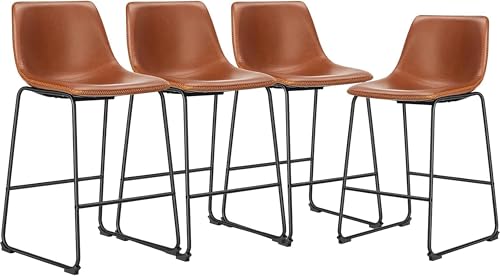
DUMOS Counter Height Bar Stools Set of 4, Faux Leather Metal Bar Chairs | Barstools with Back, Leg, Armless, Upholstered, Kitchen Island, Modern Design, 26 Inch, Brown
Check price on Amazon
VATROS 26" H Counter Height Bar Stools Set of 3, Modern Barrel Counter Stools with Backrest and Arms, Faux Leather Upholstered Accent Barstools for Kitchen Island,Support 450 LBS (Walnut Brown
Check price on Amazon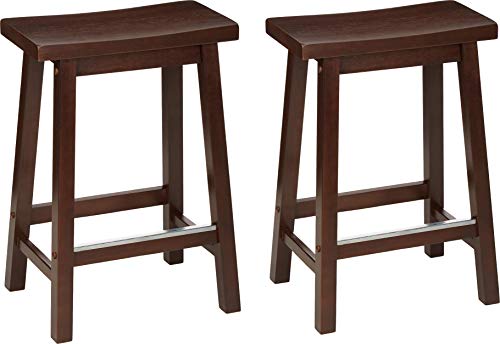
Amazon Basics Solid Wood Saddle-Seat Counter Height Bar Stools for Kitchen Island with Footrest, 24-Inch Height, Walnut, Set of 2
Check price on Amazon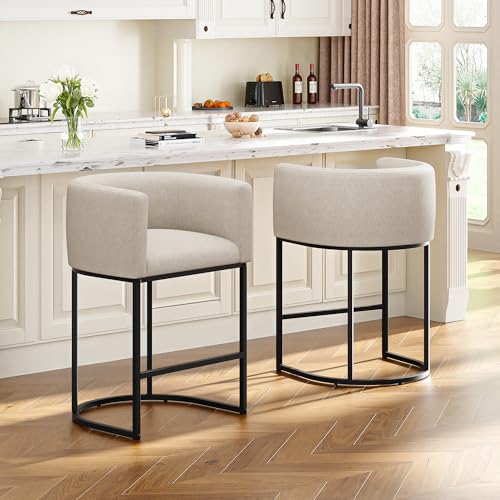
VATROS 26" H Counter Height Bar Stools Set of 2, Modern Barrel Counter Stools with Backrest and Arms, Linen Fabric Upholstered Accent Barstools for Kitchen Island,Support 450 LBS (Beige)
Check price on Amazon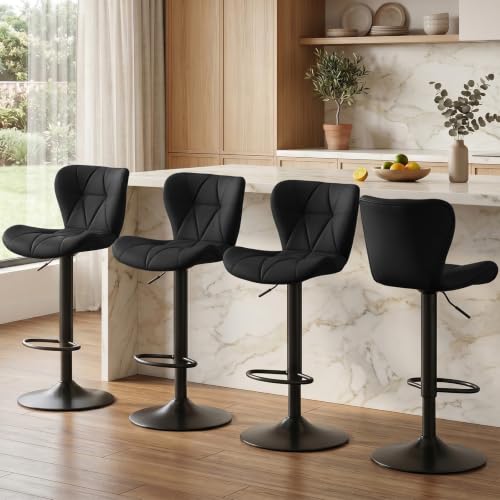
HAPPYMONT Bar Stools Set of 4, PU Leather Adjustable Height Swivel Barstool | Modern, Counter Height Chairs, Back, Footrest, Padded Seat, Kitchen Island, Living Room, Dining Room, Cafe, Black
Check price on AmazonA Practical Checklist Before You Buy
- Measure twice: Confirm counter height, overhang depth, and available floor space. Tape out stool footprints on the floor to visualize spacing.
- Match seat height to surface: 24–26 inches for standard counters, 28–30 inches for bar height.
- Test the footrest: Sit at a similar height in-store if possible; the footrest should meet the soles of your feet without stretching.
- Check weight ratings: Choose stools rated for your household's heaviest regular user, with margin to spare.
- Consider maintenance: Wipe-clean upholstery and sealed wood are easier in kitchens than untreated fabrics and open-grain finishes.
- Think about tucking: Backless and low-back stools slide under the counter; high-back stools may need extra clearance.
- Plan for the long term: A mid-range or premium stool with reinforced joinery typically outlasts two or three entry-level replacements.
If your island connects to a dining area, coordinate your stool selection with your dining chairs so the two zones feel intentional. Our guides to counter height chairs and counter height dining room chairs can help you bridge the styles.
Everyday Care for Island Stools
Kitchen stools benefit from a simple maintenance routine. Wipe upholstery weekly with a mild soap solution, and condition wooden seats every few months to prevent drying and cracking. Check screws and bolts quarterly — swivel mechanisms and footrests loosen with use. For metal frames, a damp cloth is usually enough; avoid abrasive cleaners that dull powder-coated finishes.
If your stools see heavy daily use from children, consider seat cushions or chair pads to protect upholstery and add comfort. Our guide to cushions for dining chairs covers options that work equally well on counter stools.
Frequently Asked Questions
What height stool do I need for a standard kitchen island?
For a standard 36-inch counter, choose stools with a seat height of 24 to 26 inches. This leaves 9 to 12 inches of clearance between the seat and the countertop, which is the comfortable range for most adults.
How much overhang do I need for counter stools?
At least 12 inches of overhang is recommended for knee space, and 15 inches is more comfortable for extended sitting. Without adequate overhang, even properly sized stools feel cramped and force you to sit at an awkward angle.
Are backless stools comfortable for everyday use?
Backless stools work well for quick meals and short sessions, and they tuck away neatly to keep sightlines open. For longer sitting — meals, work, homework — a low-back or mid-back stool provides better lumbar support and is worth considering.
Should I choose swivel or stationary stools for my island?
Swivel stools are ideal if your island opens to a living or dining area, since they let you turn toward the room without moving the stool. Stationary stools are simpler, more durable, and often more stable for households with young children.
How many stools fit at a 6-foot island?
A 6-foot island comfortably seats three stools, assuming at least 12 inches of overhang and roughly 6 inches of space between stool centers. Two larger stools also work if you prefer more elbow room.
What is the best material for kitchen island stools?
Solid hardwood and powder-coated steel are the most durable frame materials for kitchen environments. For seats, wipe-clean upholstery, faux leather, or wooden saddle seats hold up best against spills and daily use.
Ready to Find Your Perfect Island Stools?
Explore our curated selection of counter height stools for kitchen islands — filtered for proper sizing, durable construction, and comfortable everyday use.
View Recommended Stools