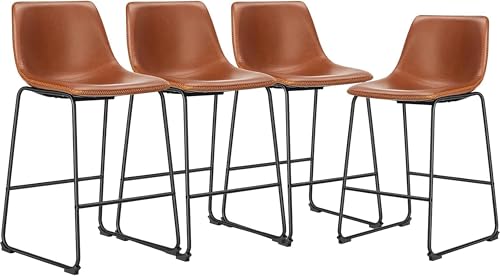
What Defines a Counter Height Chair?
Counter height chairs are seating designed for standard kitchen counters and counter-height tables, which typically stand around 36 inches tall. Their seat heights generally fall between 24 and 27 inches — noticeably taller than standard dining chairs (about 18 inches) but shorter than bar stools, which usually sit at 28 to 32 inches.
This middle ground is precisely what makes them so versatile. They tuck neatly under a kitchen island overhang, they pair naturally with a counter height table, and they work equally well at a counter height dining table in an open-concept space. If your home has a peninsula, an island, or a casual dining zone, counter height chairs are likely the correct specification rather than bar stools.
Counter Height vs. Bar Height vs. Standard Dining
Before shopping, confirm which height category your surface belongs to. Mixing them up is the single most common purchase mistake.
| Category | Counter Surface Height | Ideal Seat Height | Best For |
|---|---|---|---|
| Standard Dining | 28–30 in | 17–19 in | Formal dining rooms, family tables |
| Counter Height | 34–36 in | 24–27 in | Kitchen islands, breakfast bars, casual dining |
| Bar Height | 40–42 in | 28–32 in | Home bars, pub tables, raised peninsulas |
If you are still comparing configurations for a full dining setup, our guide to counter height dining covers how these chairs integrate into complete room layouts. For pure island seating, explore counter height stools for kitchen layouts.
Key Features to Evaluate Before Buying
1. Back Style: Full Back, Low Back, or Backless
Back style is the first decision because it affects comfort, visual weight, and storage.
- Full back chairs — the best choice for extended sitting. They support the lumbar region during long family meals or laptop sessions. Models in our counter height chairs with backs collection are designed for this use case.
- Low or mid backs — a compromise that keeps sightlines open across the kitchen while still offering some support. Popular in open-plan homes.
- Backless stools — ideal when you need to tuck seating fully under the counter. They visually lighten small kitchens but are less comfortable beyond 30 minutes.
2. Swivel vs. Stationary
Swivel chairs make it easy to turn from the counter to conversation without scraping legs across the floor. They are especially valued at kitchen islands where people pivot between cooking and eating. Browse counter height chairs swivel options if rotation matters to you. Stationary chairs, by contrast, are simpler, lighter, and often sturdier in the joint over many years.
3. Arms or Armless
Arms add comfort but consume width and prevent the chair from sliding fully under the counter. If your island has a shallow overhang, armless chairs are the practical pick. For generous overhangs and lounge-style seating, consider counter height bar stools with arms and swivel for a more enveloping feel.
4. Upholstery and Materials
Counter height chairs live in high-traffic, food-adjacent zones. Material choice should follow the household.
- Solid wood frames — classic, repairable, and warm. Look for mortise-and-tenon or reinforced corner joints rather than staples alone.
- Metal frames with powder coating — heavy-duty and resistant to scuffs; excellent for modern and industrial interiors.
- Upholstered seats — performance fabrics and leather handles spills gracefully. Our counter height upholstered chairs guide covers fabric grades and care.
- Rattan and woven seats — breathable and lightweight, well suited to coastal and farmhouse schemes.
5. Footrest and Frame Rigidity
A footrest is not decorative — it is a structural necessity on taller seating. Without one, users dangle their legs, which strains the lower back and encourages rocking that loosens joints over time. Check that the footrest is welded or through-bolted, not merely screwed into thin rails. Give the chair a firm side-to-side test in the showroom or read owner reviews specifically about wobble after six to twelve months.
How Many Chairs Fit Your Island or Counter?
Spacing determines comfort more than any other factor. Use these planning rules:
- Allow 24 to 26 inches of width per chair for comfortable elbow room.
- Leave at least 12 inches of clearance at each end of the counter run.
- For swivel chairs, add roughly 2 inches of extra spacing on each side.
- The counter overhang should be at least 12 inches deep for knee space; 15 inches is better for chairs with arms.
As a practical reference: a 6-foot island comfortably seats three chairs, an 8-foot island seats four, and a 10-foot run seats four to five depending on chair width. If your layout is still undecided, our counter height bar table guide illustrates common configurations.
Style Directions That Work With Counter Height Chairs
Counter height chairs sit in open view, so they should reinforce the room's design language rather than compete with it.
- Modern farmhouse — slatted or spindle backs in painted wood or black metal, paired with warm wood counters. See our contemporary farmhouse dining room ideas for palette guidance.
- Contemporary — clean-lined upholstered backs, tapered legs, and neutral tones. Our contemporary dining room sets article shows how these pieces unify an open plan.
- Industrial — metal frames with wood seats, often with a distressed finish. Durable and forgiving in busy kitchens.
- Transitional — curved-back silhouettes and soft upholstery that bridge traditional and modern rooms. The curved back dining chair guide explains why this shape is so universally comfortable.
Quality Tiers: How to Read the Market
Counter height chairs span a wide quality spectrum. Rather than shopping by numeric figures, classify products by tier and match the tier to your expected usage intensity.
| Tier | Typical Construction | Best For |
|---|---|---|
| Entry-level | Engineered wood or thin metal, stapled joints, basic foam | Occasional seating, rental units, seasonal use |
| Mid-range | Solid wood or reinforced metal, screw-and-bolt joinery, denser foam | Daily family use, kitchen islands in active homes |
| Premium | Hardwood frames, mortise-and-tenon joints, high-resilience foam, performance upholstery | Long-term daily use, heavy households, design focal points |
As a rule, mid-range models typically offer noticeably smoother swivel mechanisms and more consistent frame alignment than entry-level construction, while premium tiers focus on longevity and repairability. Choose the lowest tier that comfortably covers your usage pattern rather than the highest tier you can justify.
Common Mistakes to Avoid
- Buying bar height by accident. Bar stools are too tall for a 36-inch counter — users end up hunched over their plates. Measure twice.
- Ignoring the overhang. Chairs with arms need deeper counters. Measure the underside clearance before committing.
- Overcrowding the run. Squeezing four chairs onto a five-foot island looks fine in photos and feels cramped in practice.
- Skipping the footrest check. A weak footrest is the first component to fail on taller seating.
- Mixing seat heights. Keep all chairs at the same counter consistent for visual calm and predictable comfort.
Care and Longevity Tips
Counter height chairs endure more contact than dining chairs because they are used casually and frequently. Tighten all bolts every six months, apply a wood conditioner to solid wood frames annually, and clean upholstery with a fabric-appropriate cleaner rather than all-purpose sprays. For metal frames, wipe with a damp cloth and dry immediately to preserve the powder coating. If a swivel mechanism begins to squeak, a small application of silicone-based lubricant at the pivot usually resolves it. For broader maintenance routines, see our care and maintenance resources.
Frequently Asked Questions
Counter height chairs typically feature seat heights between 24 and 27 inches, designed to pair with standard 36-inch counter surfaces. For comfortable legroom, aim for a 9 to 12-inch gap between the seat and the underside of the counter.
Allow approximately 24 to 26 inches of width per chair. For a typical 6-foot island, three chairs fit comfortably, while an 8-foot island accommodates four. Always leave at least 12 inches of clearance on each end for easy movement.
Chairs with backs generally provide superior lumbar support and are better suited for extended sitting, such as family meals or work-from-home setups. Backless stools excel in tuck-under spaces and compact areas where visual openness matters.
Solid wood frames, metal legs with powder-coated finishes, and performance upholstery fabrics offer the best durability. For households with children or pets, look for wipe-clean surfaces and reinforced joinery.