
Traditional Dining Room Chandeliers
Discover how to choose a timeless chandelier that anchors your dining room with warmth, elegance, and balanced light. From sizing rules to finish pairings, this guide walks you through every decision.
Explore Chandelier OptionsWhy traditional chandeliers endure: A traditional dining room chandelier is more than a light source. It is the visual anchor of the room, the fixture that frames family meals and formal dinners alike. Getting the size, style, and finish right turns an ordinary dining space into a room that feels deliberate and complete.
What Makes a Chandelier "Traditional"?
Traditional chandeliers trace their design language back to European drawing rooms and grand dining halls. They favor symmetry, ornamentation, and materials that age gracefully. When you shop for a traditional dining room chandelier, you will notice several recurring characteristics:
- Symmetrical silhouettes — round, oval, or tiered frames with evenly spaced arms.
- Ornamental detailing — scrollwork, acanthus leaves, candle-style sleeves, and draped crystal or glass.
- Warm metal finishes — antique brass, aged bronze, polished nickel, and hand-rubbed gold.
- Layered light — multiple bulbs arranged so light diffuses softly across the table.
- Proportional scale — fixtures designed to sit in the center of the room without overwhelming it.
These traits distinguish traditional chandeliers from modern linear pendants or minimalist globe fixtures. They are designed to feel rooted, familiar, and quietly formal. If you are still deciding between lighting categories, our broader dining room lighting guide compares chandeliers, pendants, and sconces side by side.
Sizing Rules That Actually Work
Chandelier sizing is where most dining room projects go wrong. A fixture that is too small disappears against the ceiling; one that is too large competes with the table. Traditional chandeliers are visually dense, so getting the scale right matters even more than with slim modern designs.
The Table-Width Formula
Measure the width of your dining table in feet, then double that number to estimate the ideal chandelier diameter in inches. A 60-inch round table, for example, points to a chandelier around 30 to 36 inches wide. For rectangular tables, apply the same formula using the table's shorter dimension.
The Hanging Height Rule
For an 8-foot ceiling, the bottom of the chandelier should hang roughly 30 to 36 inches above the tabletop. For each additional foot of ceiling height, raise the fixture about 3 inches. This keeps the light below seated guests' eye level while still reading as a strong focal point.
| Table Width | Suggested Chandelier Diameter | Best For |
|---|---|---|
| 48 inches (4 ft) | 24 to 28 inches | Compact dining nooks and breakfast areas |
| 60 inches (5 ft) | 30 to 36 inches | Standard 6-seat dining tables |
| 72 inches (6 ft) | 36 to 42 inches | 8-seat formal dining tables |
| 84 inches (7 ft) or more | 42 to 48 inches | Large banquet and extended tables |
Popular Traditional Styles and When to Use Them
Traditional lighting is not a single look. Several distinct sub-styles fall under the traditional umbrella, and each suits a different dining room personality.
Crystal Chandeliers
Crystal traditional chandeliers bring formal sparkle and are the classic choice for dining rooms with substantial furniture, rich drapery, and a formal table. They reflect light beautifully and read as the centerpiece of the room. These fixtures sit naturally in the top-tier and high-end tier of the traditional category, where craftsmanship and crystal quality drive the difference.
Brass and Bronze Candle-Style Chandeliers
Candle-style arms in antique brass or aged bronze offer a warmer, more relaxed traditional look. They pair well with wood dining tables, upholstered chairs, and neutral palettes. This style spans the mid-range to premium tiers and is often the most versatile choice for transitional interiors.
Lantern and Drum-Inspired Traditional Fixtures
Open-frame lanterns and softly rounded drum shapes give a traditional room a slightly cleaner line while keeping classic proportions. They work well in dining rooms that mix traditional furniture with a lighter, airier finish palette. Entry-level and mid-tier versions of this style are widely available, making it an accessible starting point.
Ornate Scroll and Tiered Chandeliers
For grand dining rooms with high ceilings, tiered chandeliers with scrollwork and layered arms deliver the full traditional statement. These designs are typically premium to luxury tier and deserve a room with generous ceiling height and furniture to match.
Finishes and How They Pair With Your Dining Room
Finish choice determines whether a chandelier feels cohesive or out of place. Traditional dining rooms usually benefit from warm metallic tones that echo wood furniture and brass hardware.
- Antique brass and aged bronze — warm, forgiving, and ideal with oak, walnut, and mahogany tables.
- Polished nickel — brighter and slightly cooler; suits rooms with cooler wall colors or silver-toned accents.
- Hand-rubbed gold — the most formal option; pairs with rich fabrics and dark wood.
- Painted or patinated finishes — add character and work well in farmhouse-leaning traditional rooms.
If your dining room already has a strong metal accent — say, brass cabinet pulls or a nickel-framed mirror — repeat that finish in the chandelier to create visual continuity. For more ideas on layering lighting across the room, see our dining room light fixtures overview and the dedicated dining room chandeliers collection.
Bulbs, Dimming, and Light Quality
Traditional chandeliers often use multiple small bulbs rather than a single high-output source. That arrangement is an advantage: it spreads light evenly across the table and softens shadows.
- Bulb shape — candle-style bulbs suit exposed-arm fixtures; small globes work for enclosed or drum-style frames.
- Color temperature — warm white (around 2700K to 3000K) flatters food and skin tones in dining rooms.
- Dimming — pair the fixture with a compatible dimmer to shift from bright task light to a soft evening glow.
- Lumens over wattage — modern LED bulbs let you match brightness to the room size without guessing at wattage equivalents.
Installation and Placement Considerations
Placement is as important as the fixture itself. A traditional chandelier should be centered over the dining table, not necessarily the room's geometric center. If the table sits off-center due to a buffet, sideboard, or built-in storage, center the chandelier on the table instead.
Check ceiling support before installation. Traditional chandeliers can be heavier than modern pendants, so confirm the electrical box is rated for the fixture's weight. For rooms with sloped or vaulted ceilings, a longer chain or downrod keeps the fixture at the correct height above the table.
If you are still furnishing the room, our guides to dining room table and chair sets and dining area storage help you build a cohesive layout before the chandelier goes in.
Choosing the Right Tier for Your Room
Traditional chandeliers are available across a wide range of quality tiers. Rather than focusing on any single number, think about how the fixture's construction, finish, and detailing match your room's overall investment level.
- Entry-level tier — simpler frames, fewer decorative details, and basic finishes. A solid choice for first apartments and casual dining nooks.
- Mid-range tier — better metalwork, more consistent finishes, and sturdier assembly. The most common choice for everyday family dining rooms.
- Premium tier — refined detailing, higher-grade crystals or glass, and durable finishes designed to age well.
- Luxury tier — hand-finished craftsmanship, dense crystal arrangements, and statement-scale designs for formal dining rooms.
Mid-range models typically offer the most balanced combination of durability and design detail, while premium and luxury tiers reward rooms where the chandelier is the defining feature.
Common Mistakes to Avoid
- Hanging too high. A chandelier that floats near the ceiling loses its relationship to the table.
- Choosing by diameter alone. Visual weight matters too — a dense crystal fixture can look larger than its measured width.
- Ignoring the finish palette. A cool nickel fixture in a warm brass-heavy room can feel disconnected.
- Skipping the dimmer. Traditional chandeliers shine brightest when they can shift between task and ambient modes.
- Forgetting the ceiling box. Confirm support and electrical compatibility before ordering.
How This Fits Into Your Dining Room Plan
A traditional chandelier is one layer of a larger dining room composition. Coordinate it with your table, seating, storage, and decor so the room reads as one deliberate design rather than a collection of separate purchases. Start with the table and chairs, then choose the chandelier to match the finish and formality of the furniture.
Explore related guides to complete the plan:
Recommended Traditional Dining Room Chandeliers
⚠️ AFFILIATE DISCLOSURE: This website contains affiliate links. As an affiliate Associate, we earn from qualifying purchases. If you make a purchase through these links, we may receive a small commission at no additional cost to you. Read our full affiliate policy.
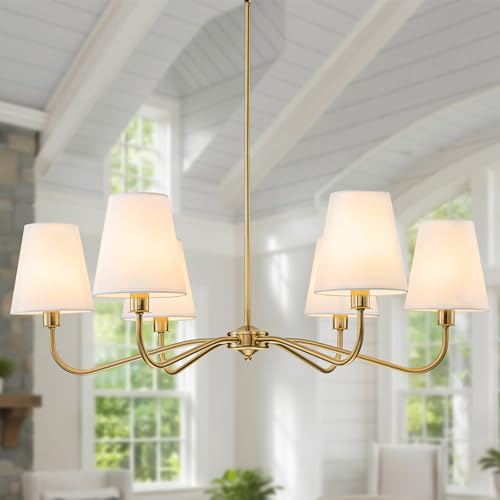
Brass Gold Chandeliers for Dining Room 6 Light Chandelier with Fabric Shade | 36" Antique Modern Chandelier Light Fixture over Table Classic Kitchen Pendant Lights for Living Room Bedroom Entryway Foyer
Check price on Amazon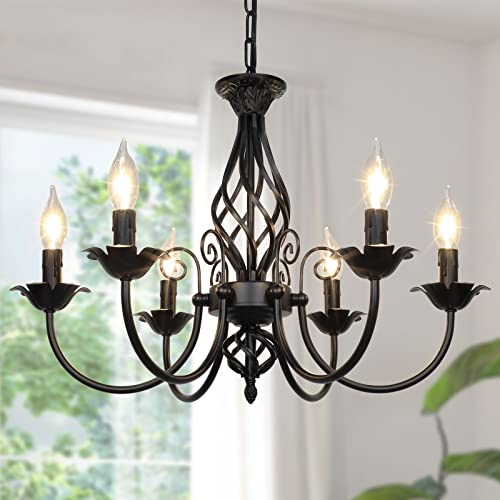
VerRon 22" Matte Black 6-Light Farmhouse Candle Chandelier for Dining Room | Rustic Industrial Pendant Ceiling Light Fixture, Vintage Hanging Lamp for Living Room Hallway Kitchen Foyer, E12 Socket
Check price on Amazon
Livex Lighting 5006-02 Williamsburgh 6-Light Chandelier, Polished Brass
Check price on Amazon
ZemSum Farmhouse Chandeliers for Dining Room Light Fixture Black Chandelier | 8 Lights Farmhouse Light Fixtures Ceiling Lights Hanging Rustic Chandelier for Living Room Bedroom Entryway
Check price on Amazon
KAISITE Modern Gold Chandelier 5-Light Farmhouse Chandelier for Dining Room Industrial Dining Kitchen Light Fixture Over Table Ceiling Chandelier for Bedroom Living Room Foyer Entryway
Check price on Amazon
WECHAET Vintage Crystal Chandeliers for Dining Room Light Fixture, 9-Light Antique Bronze French Empire Chandelier for Foyer Entryway Kitchen Island Living Room, D24″ x H27″
Check price on Amazon
6 Light Modern Brass Gold Chandeliers for Dining Room with Fabric Shade | 36" Modern Kitchen Gold Chandelier Traditional Dining Room Light Fixtre for Bedroom Entryway Living Room
Check price on Amazon
Flower Antique Brass Chandelier, 6-Light Gold Chandeliers for Dining Room | 26" Vintage French Country Chandelier, Mottled Gold Farmhouse Dining Room Light Fixture over Table, Hand-sculpted Leaf, E12
Check price on AmazonFrequently Asked Questions
What size chandelier should I choose for a traditional dining room?
Measure your dining table's width in feet and double that number to get the ideal chandelier diameter in inches. A 60-inch round or rectangular table typically pairs well with a chandelier around 30 to 36 inches wide, depending on the number of arms and the visual weight of the fixture.
How high should a traditional dining room chandelier hang?
The bottom of the chandelier should sit roughly 30 to 36 inches above the tabletop for an 8-foot ceiling. For each additional foot of ceiling height, raise the fixture about 3 inches. This keeps the light comfortably below eye level for seated guests while maintaining a strong focal point.
What finishes suit traditional dining room chandeliers best?
Classic finishes such as antique brass, polished nickel, aged bronze, and hand-rubbed gold pair naturally with traditional interiors. Pairing a warm metallic finish with crystal or glass accents creates the layered, timeless look associated with traditional dining rooms.
Do traditional chandeliers work with dimmer switches?
Yes. Most traditional chandeliers are dimmable when paired with compatible LED or incandescent bulbs and a rated dimmer switch. Dimmable fixtures let you shift from bright task lighting during meals to a soft ambient glow for evening entertaining.
Can a traditional chandelier work in a small dining room?
Absolutely. Scaled-down traditional fixtures — often 24 to 28 inches wide — suit compact dining nooks and small tables. Focus on proportion rather than assuming traditional style requires a large room. A smaller fixture with clean detailing keeps the room feeling intentional rather than crowded.
Should the chandelier match the dining table finish?
It does not need to match exactly, but the tones should relate. Warm brass and bronze finishes pair naturally with wood tones, while polished nickel works better with cooler palettes or painted furniture. Repeating an existing metal accent in the room is usually the safest path to cohesion.
Ready to Light Your Dining Room?
A traditional chandelier is the finishing layer that makes a dining room feel complete. Explore curated options above, confirm your sizing using the formulas in this guide, and choose a finish that ties the room together.
Explore Chandelier Options