
Dining Room Furniture Sets: Complete Buying Guide & Ideas
Choosing a dining room furniture set is one of the most consequential decisions for your home. A coordinated set anchors the room, defines how many people you can host, and sets the visual tone for every meal. This guide walks you through sizing, configuration, materials, and style so you can buy with confidence.
Start With SizingWhat a Dining Room Furniture Set Includes
A dining room furniture set is a coordinated grouping sold as a single collection. The core is almost always a table plus seating, but the piece count varies by collection and by how the manufacturer chooses to number it. Understanding this before you shop prevents surprises at delivery.
- Core set: one dining table plus four chairs (commonly labeled a 5-piece set) or one table plus six chairs (a 7-piece set).
- Extended collections: some sets add a bench, a buffet, a server, or a china cabinet. These are often labeled as 8-piece or 9-piece sets.
- Benches count as one piece: a bench may seat two or three people, so a set with a bench can seat more people than its piece count suggests.
- Leaf and extension pieces: extension leaves are usually not counted in the piece total but materially change seating capacity.
If you are still mapping out the full scope of the room rather than just the table area, our broader guide to dining room furniture covers storage, lighting, and accent pieces alongside the main set.
How to Size a Set for Your Room
Sizing is the single most common source of buying regret. A set that looks proportionate in a showroom can overwhelm a compact dining area, and an undersized set leaves a large room feeling sparse. The rules below are practical minimums you can apply with a tape measure before you order.
Clearance rules
- 36 inches of clear space around the table for chair pull-out and walkway traffic. Reduce to 30 inches only if the room is tight and traffic is minimal.
- 24 inches of table edge per person along the length of a rectangular table. For round tables, allow roughly 28 to 30 inches of circumference per chair.
- 12 to 18 inches between the table edge and the nearest wall or large furniture piece when the chair is pushed in.
Matching room size to set capacity
| Usable dining area | Recommended set | Typical seating |
|---|---|---|
| Under 100 sq ft | Round or square 5-piece set; consider a bench | 4 people |
| 100–150 sq ft | Rectangular 5-piece or compact 7-piece | 4–6 people |
| 150–220 sq ft | 7-piece set, optionally with one bench | 6–8 people |
| Over 220 sq ft | 7-piece or 9-piece set with buffet or china cabinet | 8 or more |
For rooms where every inch counts, the dedicated guide on dining room sets for four breaks down compact layouts in more detail. If you are planning around a fixed table length, the notes on a 60-inch dining room table explain exactly how many seats fit.
Set Configurations: 5-Piece, 7-Piece, and Beyond
Configuration is about how you actually use the room. Formal dining spaces, everyday family meals, and open-concept layouts each favor a different arrangement.
5-piece sets
A table plus four chairs is the most flexible starting point. It suits couples, small families, and rooms under 150 square feet. Many 5-piece sets include an extension leaf, letting you stretch to six seats for holidays without buying a second set. This is the configuration most people should evaluate first.
7-piece sets
A table plus six chairs is the sweet spot for families that host regularly. It seats six comfortably and usually leaves room for a leaf that pushes capacity to eight. Confirm that the table has a leaf mechanism if you expect occasional larger gatherings.
Sets with benches
Bench seating maximizes seats per square foot because a bench tucks fully under the table. A 5-piece set with a bench can seat six. Benches work best against a wall or in a nook. For back support during long meals, look for a dining bench with backrest rather than a backless plank.
Sets with storage pieces
Collections that bundle a buffet or china cabinet solve storage and display in one purchase and guarantee a matched finish. This is a strong option for formal rooms where visual consistency matters. Compare the storage footprint against our overview of dining room storage before committing, and check the capacity notes on a dining room buffet cabinet if you plan to store serveware.
Counter-height and bar-height sets
Taller sets suit open-concept kitchens and casual breakfast zones. They pair naturally with bar stools and kitchen islands. If you are weighing a standard set against a taller one, our guide to dining room bar tables covers the height trade-offs.
Materials and Construction Tiers
Material determines durability, maintenance, and how the set ages. Rather than shopping by number, it helps to think in tiers. The classification below is consistent across this guide and refers to relative market position, not to any specific figure.
| Tier | Typical construction | Best for | Longevity outlook |
|---|---|---|---|
| Entry-level | Engineered wood with printed or thin veneer; particleboard cores; basic hardware | First apartments, temporary setups, guest rooms | Several years with careful use; limited refinishing |
| Mid-range | Engineered core with thicker veneer or rubberwood solids; better joinery and hardware | Everyday family dining, most households | Long service life; light refinishing possible |
| Premium | Solid hardwood frames and tops; mortise-and-tenon or dowel joinery; quality finish | High-use family rooms, buyers who plan to keep the set | Decades; fully refinishable |
| Luxury | Select hardwood, stone or marble tops, artisanal finishes, hand-finished details | Formal dining rooms, design-led interiors | Generational; may require specialist care |
Material notes by surface type
- Solid hardwood: the most durable and the only surface that can be sanded and refinished repeatedly. Oak, maple, walnut, and cherry are common. Expect visible grain variation, which is a feature rather than a defect.
- Engineered wood with veneer: stable across humidity changes and visually consistent. Mid-range veneers are thick enough to survive daily use; entry-level veneers can chip at edges.
- Glass tops: visually light and easy to wipe, which helps small rooms feel larger. They show smudges and need coasters. Tempered glass is the standard expectation.
- Marble and stone: a luxury signal with cool, reflective surfaces. Natural stone is porous and needs sealing; engineered quartz is more stain-resistant.
- Metal frames: steel and aluminum frames bring industrial character and high strength-to-weight ratio. Check for a rust-proof finish on anything near moisture.
Care requirements differ sharply by material. Before you commit, skim the relevant notes in our dining furniture care section so you know what weekly upkeep looks like.
Style Directions That Work
Style is where a set stops being furniture and starts being the room's personality. Four directions cover most buyers well, and each holds up over time better than trend-driven micro-styles.
Modern farmhouse
Painted or lightly distressed wood, turned legs, and bench seating. Warm and forgiving in family homes. Pairs naturally with a dining room bench with back and a long runner. Farmhouse sets work best in rooms with generous natural light.
Mid-century modern
Tapered legs, walnut tones, and clean geometric lines. Compact footprints are common, which makes this direction friendly to smaller rooms. Upholstered seats in mustard, teal, or neutral linen are typical. Our overview of mid-century modern dining chairs covers the chair side of this look.
Traditional and formal
Rich wood finishes, carved detailing, and upholstered chairs with high backs. This is the direction that most often pairs with a china cabinet or hutch. It rewards a dedicated dining room with a chandelier and a rug. For a fully matched formal room, see the notes on a dining room set with china cabinet and buffet.
Minimalist and contemporary
Sleek surfaces, thin profiles, and restrained color. Glass and metal sets, or pale wood with matte finishes, dominate here. Minimalist sets are easy to keep clean and visually expand tight spaces. If you lean this way, the roundup of minimalist dining chairs is a useful companion read.
Chair Comfort and Ergonomics
You will spend more time in the chairs than looking at the table. Comfort is not a luxury add-on; it is the difference between a set you use and a set you avoid.
- Seat height: standard dining chairs sit 17 to 19 inches from floor to seat top, paired with a 28 to 30 inch table height. Keep the gap between seat and table apron at roughly 10 to 12 inches.
- Seat depth: 16 to 18 inches suits most adults. Deeper seats force shorter sitters to perch forward.
- Back height and angle: a back that reaches the mid-shoulder supports long meals. A slight recline of 5 to 10 degrees is more comfortable than a fully vertical back.
- Upholstery: performance fabrics resist spills; leather wipes clean; woven textiles feel warmer but need more care.
- Arms: arm chairs are comfortable but may not tuck under the table. Measure the arm height against the table apron before buying a full set of arm chairs.
For a deeper look at seat geometry and posture, read the guide on dining chair ergonomics. If you are choosing chairs separately from the table, the breakdown of dining chair height clarifies the pairing rules. Cushions are an easy comfort upgrade; sets of four are covered in our notes on dining chair cushion sets.
Beyond the Table: Buffets, Benches, and Lighting
A set does not live alone. Three supporting pieces do most of the work in making a dining room feel finished.
Buffets and sideboards
A buffet or sideboard gives you a serving surface and concealed storage in one footprint. It is the most useful addition to a set that lacks storage. Placement matters: leave at least 36 inches between the buffet front and the table edge so both can be used at once. Our guide to a dining room sideboard covers proportions, and the overview of dining area storage helps you choose between a buffet, a hutch, and built-ins.
Benches
A bench on one long side of the table frees up floor space and seats more people per inch. Benches are especially effective in nooks and against walls. If you are pairing a bench with a standard set, the notes on a dining bench and on dining benches more generally will help you match height and finish.
Lighting
A chandelier or pendant centered over the table is the single highest-impact addition to any set. Hang the fixture 30 to 36 inches above the tabletop, or 60 to 66 inches above the floor. For sizing rules by table shape, see the dining lighting guide and the deeper dining room lighting guide.
Rugs
A rug under the set grounds the furniture and protects the floor. Size it so chairs stay on the rug even when pulled out: add at least 24 inches beyond the table edge on every side. Our notes on dining room rugs explain the sizing math.
Pre-Purchase Checklist
Run through this list before you finalize any dining room furniture set. Each item catches a different category of mistake.
- Measure the room and the delivery path. Room dimensions, doorway widths, stairwell turns, and elevator limits.
- Confirm the exact piece count and seating capacity. Check whether the seventh or ninth piece is a chair, a bench, or a server.
- Verify table dimensions and leaf options. Know the closed and extended lengths, and how many seats each supports.
- Check chair seat height and table height as a pair. A 10 to 12 inch gap between seat and apron is the target.
- Read the construction spec, not just the photo. Look for solid wood vs. engineered components, joinery type, and hardware quality.
- Match the finish to your care routine. Natural stone and high-gloss finishes demand more upkeep than matte wood.
- Plan for assembly. Many sets ship flat-packed. Confirm whether tools and instructions are included and how many people assembly requires.
- Check the return and warranty terms. Large furniture returns are costly to ship; understand the window and who pays.
If this is your first time furnishing a dining space, the broader dining room essentials checklist covers the smaller items that complete a room, and our dining room set ideas collection shows how different configurations read in real layouts.
Recommended Dining Room Furniture Sets
⚠️ AFFILIATE DISCLOSURE: This website contains affiliate links. As an affiliate Associate, we earn from qualifying purchases. If you make a purchase through these links, we may receive a small commission at no additional cost to you. Read our full affiliate policy.

Signature Design by Ashley Caitbrook 7-Piece Dining Set, Gray Wash | Acacia veneer & engineered wood, X-back cushioned chairs, 36x60 inch footprint, Nailhead trim accents
Check price on Amazon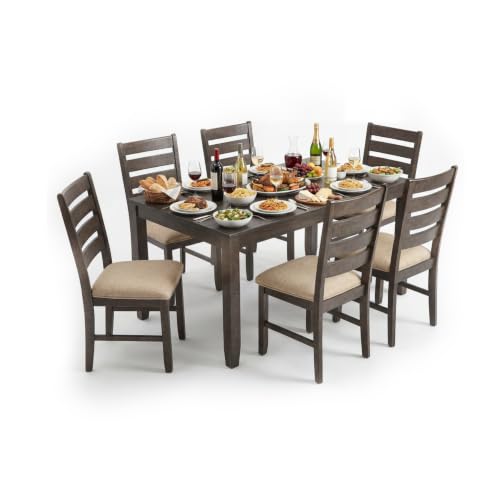
Signature Design by Ashley Rokane 7-Piece Dining Table Set for 6, Brown | Rustic rough-sawn wood veneer table, 6 easy-clean cushioned polyester chairs, Ideal for casual family dining
Check price on Amazon
IRONCK Dining Table Set for 4, Grey | Wood Kitchen Table with Upholstered Chairs for Kitchen Room and Small Spaces
Check price on Amazon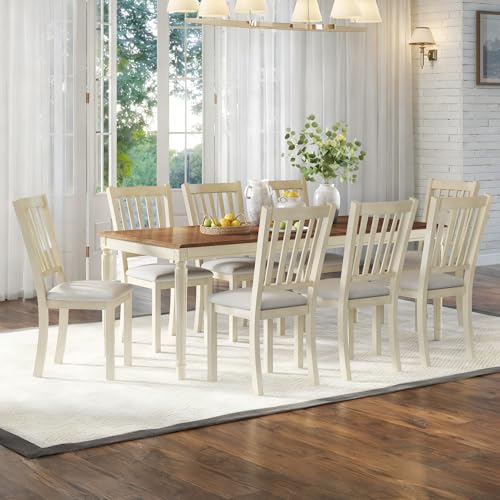
AMERLIFE 9 Piece Farmhouse Dining Table Set with 79" Table, Cream | Solid Rubberwood Frame, 8 Chairs Included, Farmhouse Design, Upholstered Seating, Rustic Cream Finish
Check price on Amazon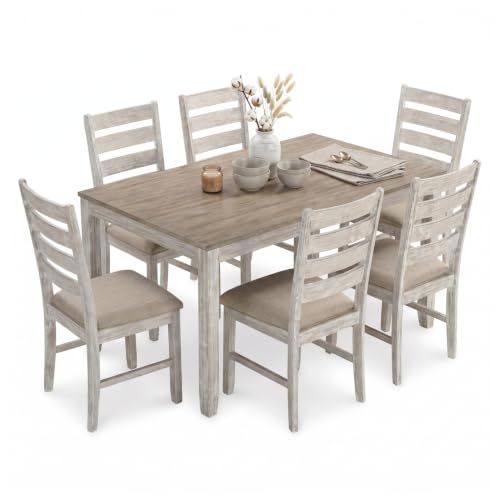
Signature Design by Ashley Skempton 7-Piece Dining Table Set for 6 | Solid wood, engineered wood & acacia veneer construction, 60-in table, Cushioned polyester seating, Two-tone finish
Check price on Amazon
LUXOAK 3-Piece Wood Corner Dining Table Set for 4, Black & Walnut | Breakfast Nook, L-Shaped Corner Bench, Hidden Storage, Space-Saving Design for Small Spaces, Farmhouse Kitchen & Dining
Check price on Amazon
Best Choice Products 5-Piece Dining Set, Compact Mid-Century Modern Table & Chair Set for Home, Apartment w/ 4 Chairs, Padded Seats & Backrests, Wooden Frame - Walnut/Cream
Check price on AmazonFrequently Asked Questions
What is included in a dining room furniture set?
How do I choose the right size dining set for my room?
What is the difference between a 5-piece and 7-piece dining set?
Which material is best for a dining room table?
Can I mix a dining set with existing furniture?
Choosing With Confidence
A dining room furniture set should be chosen in a specific order: size the room, choose the configuration, then choose the material tier, and only then choose the style. Buyers who reverse that order, falling for a look before checking clearance and seat count, are the ones who end up with a set that does not fit. Work through the measurement rules and the pre-purchase checklist above, and the style decision becomes the easy part.
Once your set is in place, the room comes together through the supporting pieces: a centerpiece for the table, a chandelier overhead, and a rug beneath. For a wider view of how those pieces fit together, browse our full dining room furniture sets resources and the room-by-room guidance in dining room styles.