
Dining Room Chairs: The Complete Buying Guide
Everything you need to choose dining chairs that fit your table, your room, and the way you actually live. Compare materials, comfort features, sizing rules, and style families before you commit.
Explore Chair OptionsWhy dining chairs deserve careful thought: Chairs are the most-touched furniture in your dining room. You sit in them for quick breakfasts, long holiday dinners, and everything between. A beautiful table with uncomfortable chairs turns every meal into a countdown, while well-chosen chairs make even a simple weeknight dinner feel relaxed.
This guide walks you through the practical decisions: seat height, frame materials, upholstery choices, arm vs. armless designs, and how many chairs actually fit around your table. By the end, you will know exactly what to look for and how to compare options with confidence.
Recommended Dining Room Chair Picks
⚠️ AFFILIATE DISCLOSURE: This website contains affiliate links. As an affiliate Associate, we earn from qualifying purchases. If you make a purchase through these links, we may receive a small commission at no additional cost to you. Read our full affiliate policy.

DUMOS Dining Chairs Set of 6, PU Leather Kitchen Chairs for Living Room | Upholstered, Wooden Legs, Padded Seat, High Back, Armless, Modern Accent, Dining Room, Restaurant, Brown
Check price on Amazon
FDW | Metal Dining Chairs | Set of 4, Black | 330lbs Load | Stackable Tolix Side Chairs with Backrest | Non-Slip Feet | Indoor/Outdoor Use | Ideal for Kitchen & Restaurants
Check price on Amazon
Signature Design by Ashley Berringer Wood Dining Chairs Set of 2, Brown | Rustic brown finish, Cushioned microfiber seat, Spindle back, 250 lb capacity, Spot clean fabric
Check price on Amazon
VASAGLE Wood Dining Chairs Set of 2, Linen-Look Upholstered Kitchen Chairs | Solid Wood Legs, Ergonomic Curved Backrest, Built-in Handle, Mid Century Modern, for Kitchen Dining Vanity, Cappuccino Beige
Check price on Amazon
Yaheetech Dining Chairs Set of 4 Upholstered Kitchen Chairs Black | Faux Leather High Back Sillas De Comedor, Solid Wood Legs, Adjustable Footpads, Modern Armless Parson Chairs for Dining Room
Check price on Amazon
VASAGLE Dining Chairs Set of 4, Upholstered Kitchen Chairs, PU Leather | Steel Legs, Curved Backrest, for Dining Room, Caramel Brown and Ink Black ULDC090KN03-2J
Check price on Amazon
Signature Design by Ashley Hammis Dining Chair, Set of 2, Dark Brown | Easy-to-clean faux leather cushioned seat, Space-saving rake back design, Sturdy wood frame with saber legs
Check price on Amazon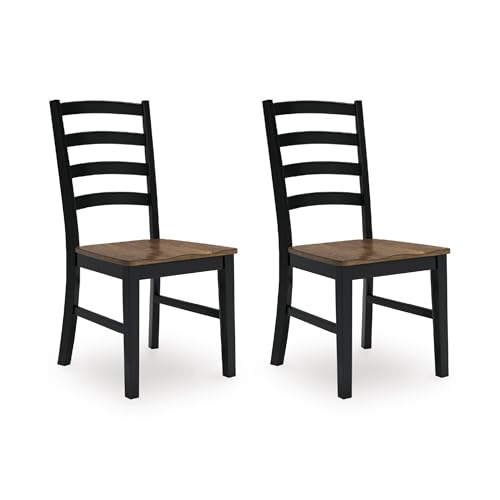
Signature Design by Ashley Wildenauer Dining Chairs Set of 2, Modern Ladderback Dining Chairs with Solid Wood Frame, Two-Tone Finish, Contoured Seat, Black/Brown
Check price on AmazonStart With Sizing: Match Chairs to Your Table
Before style, before fabric, before anything else, get the height right. A chair that does not match your table height creates a constant, low-grade discomfort that no cushion can fix. The good news is that dining chair sizing follows predictable rules.
The Three Standard Seat Heights
Most dining chairs fall into one of three height categories. Check your table or counter height first, then pick the matching chair category.
| Chair Category | Seat Height | Pairs With | Best For |
|---|---|---|---|
| Standard dining chairs | 17–19 inches | Tables 28–30 inches tall | Traditional dining rooms, most formal and casual sets |
| Counter-height chairs | 24–26 inches | Counters and islands 34–36 inches tall | Kitchen islands, breakfast bars, casual family meals |
| Bar-height chairs | 28–30 inches | Bars 40–42 inches tall | Home bars, high pub tables, entertaining zones |
Rule of thumb: leave 10 to 12 inches of clearance between the seat and the table apron so your legs fit comfortably and the chair slides under the table.
How Many Chairs Fit Around a Table?
Allow roughly 24 inches of table edge per person. That gives elbows room and keeps place settings from crowding each other.
- Round table, 36–44 inches: seats 2 to 4 comfortably.
- Round table, 48–60 inches: seats 4 to 6.
- Rectangular table, 60 inches: seats 6 (two on each long side, one at each end).
- Rectangular table, 72 inches: seats 6 to 8 depending on chair width.
- Rectangular table, 84 inches and up: seats 8 to 10.
Also measure the room, not just the table. You need at least 36 inches of clearance between the table edge and walls or other furniture along main walkways, and 18 inches behind chairs on secondary paths. In tight spaces, armless chairs with tapered backs slide under the table and free up floor area between meals.
If you are still choosing the table itself, our guide to dining tables covers size and shape trade-offs in detail. For compact rooms, extendable tables for small spaces let you keep a smaller chair count day to day and add seating for gatherings.
Frame Materials: What Each One Actually Delivers
The frame decides how long a chair lasts and how much maintenance it needs. Here is how the common materials compare in real-world use.
Solid Wood
Solid hardwood frames — oak, maple, ash, walnut, and rubberwood — are the benchmark for dining chairs. They accept repairs, hold joinery well, and develop character over time. Entry-level solid wood chairs often use rubberwood, which is a solid choice for its tier. Mid-range and premium chairs typically use oak, maple, or walnut with mortise-and-tenon or doweled joints.
Check for corner blocks, stretchers between legs, and tight joints. A well-built wooden chair should feel solid with zero wobble when you press on the seat corners. If you want chairs that can be refinished decades from now, this is the category to focus on.
Metal
Steel and aluminum frames suit industrial, modern, and commercial-style dining rooms. High-grade steel with a rust-proof finish handles heavy use and is easy to wipe down. Metal chairs are common in kitchens and casual dining areas, and quality varies widely — look for welded joints rather than spot-welded tabs, and powder-coated finishes over painted ones. Thick-wall tubular steel and reinforced seat pans are the markers of durable construction in this category.
Rattan, Wicker, and Cane
These natural materials bring texture and a coastal or farmhouse feel. Woven seats breathe well in warm climates and add visual lightness to a room. The trade-off is durability: natural cane can dry out and crack, so it performs best in climate-controlled interiors and away from direct sun. For households with young children, a cane back paired with a solid wood frame is more forgiving than an all-woven chair.
Upholstered Frames
Fully upholstered chairs hide their frame, so quality is harder to judge. Look for kiln-dried hardwood frames, sinuous spring or webbing support, and high-density foam of at least 1.8 lb/ft³. Fully upholstered chairs are the most comfortable category for long dinners and suit formal dining rooms, but they demand more care. Our guide to durable dining chairs explains the construction details that separate long-lasting pieces from short-lived ones.
Upholstery Choices: Comfort vs. Maintenance
If you are choosing upholstered or partially upholstered chairs, the fabric decision matters as much as the frame. Here is how the main options behave in daily life.
Performance Fabrics
- Treated polyester and olefin resist stains and wipe clean
- Best all-around choice for families with children
- Look for tight weaves and soil-resistant finishes
- Solid choice for the tier in high-traffic dining rooms
Faux Leather
- Wipes clean instantly; handles spills and crumbs well
- Entry-level and mid-range versions vary in feel and longevity
- Premium polyurethane versions look and wear noticeably better
- Our faux leather dining room chairs guide covers what to check
Cotton and Linen Blends
- Natural look and breathable feel
- Show stains more readily; best for adults-only households
- Removable, washable covers are a practical compromise
- Pair with a stain guard for everyday use
Leather and Top-Grain Options
- Develop a patina over time; very long service life
- Easy to wipe down; avoid sharp objects near the surface
- Top-tier comfort when paired with high-density foam
- Consider armchair versions for head-of-table seating
Regardless of fabric, look at the cushion construction. Tight seat cushions hold their shape better in busy households, while loose cushions are easier to clean and flip. High-density foam with a fiber wrap balances support and softness; low-density foam feels plush in the showroom but flattens within months of daily use.
Style Families: Find the Look That Fits Your Room
Dining chairs come in a handful of recognizable style families. Matching your chairs to the room's existing direction keeps the space coherent without making it look like a showroom set.
Farmhouse and Rustic
Slatted backs, turned legs, and warm wood finishes define this family. Farmhouse chairs pair naturally with plank-top tables and bench seating. If your dining room leans this direction, our farmhouse dining rooms guide shows how chairs, benches, and tables work together. A farmhouse dining table with bench paired with matching chairs at the ends is a classic, space-efficient arrangement.
Modern and Mid-Century
Tapered legs, molded seats, and clean silhouettes characterize modern dining chairs. Mid-century inspired designs often use bentwood or molded plywood with a slightly reclined back. These chairs work well with modern farmhouse dining tables and in small dining rooms where visual lightness matters. Armless versions tuck under the table completely.
Traditional and Formal
Upholstered backs, nailhead trim, and carved details suit formal dining rooms. These chairs are typically taller-backed and heavier, so check that your table apron height allows them to slide in. Formal chairs with arms need more room per seat; plan for at least 26 inches of table edge per armed chair.
Industrial and Loft
Metal frames with wood seats or backs bring an urban edge. These chairs are common in open-plan lofts and kitchens. They pair well with metal-base tables and are easy to clean, but check for floor protection if the frame is raw steel — felt pads are essential on wood floors.
Comfort Features That Matter After Hour One
Almost any chair feels fine for ten minutes. The differences show up during long dinners. These are the features worth checking before you commit.
Seat Depth and Width
A comfortable seat depth is roughly 17 to 19 inches; deeper seats force shorter diners to perch on the edge. Seat width of at least 18 inches per person keeps hips comfortable. For taller diners, look for seats 19 inches deep or more with a slight backward slope, which reduces pressure on the thighs.
Back Height and Angle
Backs that reach the mid-shoulder provide more support than low backs. A slight recline — around 100 to 105 degrees from the seat — is more comfortable for lingering meals than a perfectly upright back. Curved backs that follow the spine outperform flat backs for long sitting sessions.
Arms or No Arms
Armless chairs are more versatile: they slide under the table, tuck into corners, and let you fit more chairs around a table. Armed chairs are more comfortable for head-of-table seating and for diners who like to rest their forearms. A common approach is an armless set with one or two armed captain's chairs at the ends. Our guide to ergonomic dining chairs covers posture support in more detail.
Footrests and Stretchers
Stretchers between the legs add stability and give shorter diners a place to rest their feet. On counter-height and bar-height chairs, a built-in footrest is close to essential for comfort. Check that stretchers are joined with proper joinery, not just screwed in.
Quality Tiers: How to Compare Without Guesswork
Dining chairs span a wide range of construction quality. This tier system describes relative market positioning, so you can compare features fairly across brands.
| Tier | Typical Construction | Expected Lifespan | Best For |
|---|---|---|---|
| Entry-level | Rubberwood or softwood frames, basic joinery, lower-density foam | 3–6 years of daily use | First apartments, guest seating, temporary setups |
| Mid-range | Solid hardwood frames, reinforced joints, higher-density foam, performance fabrics | 8–12 years of daily use | Family dining rooms, everyday use with children |
| Premium | Kiln-dried hardwood, mortise-and-tenon joinery, top-grain leather or premium fabrics | 15+ years with care | Formal dining rooms, long-term households |
| Luxury | Hand-finished hardwoods, traditional joinery, designer upholstery, signature detailing | Decades with maintenance | Heirloom-quality dining rooms, design-forward spaces |
Mid-range chairs usually offer the best balance of durability and comfort for most households. The jump from entry-level to mid-range often matters more than the jump from mid-range to premium.
Look at the joints first: doweled and mortise-and-tenon joints outlast stapled or screwed assemblies by a wide margin. Then check the foam density, the fabric's rub count (performance fabrics above 30,000 double rubs hold up well), and whether replacement parts are available. Feature-rich mid-tier options often include swivel bases, self-storing cushions, or stackable designs for flexible rooms.
Before You Buy: A Practical Checklist
Run through this list before placing an order. It catches the most common mistakes in five minutes.
- Measure the table height and match the chair seat height using the chart above.
- Measure the room clearance — at least 36 inches on main walkways, 18 inches behind chairs on secondary paths.
- Confirm the chair count using the 24-inch rule per place setting.
- Check the table apron height so chair arms and backs slide under cleanly.
- Decide armless vs. armed based on space and whether you want captain's chairs at the ends.
- Pick a fabric that matches your household: performance fabric or faux leather for children, natural blends for adults-only rooms.
- Inspect joints and stretchers — ask for close-up photos if buying online.
- Check floor protection — felt pads on wooden legs, glides on metal frames.
- Verify delivery and assembly — some chairs ship fully assembled, others need leg attachment.
- Keep the care instructions — proper cleaning extends the life of both frame and upholstery.
If your dining room is still coming together, pair your chair choice with a table that fits the same footprint. Our dining room furniture overview and dining room sets guide show how chairs, tables, and storage work as a complete arrangement. For seating that doubles as counter seating, ergonomic bar stools follow the same sizing logic.
Frequently Asked Questions
Allow roughly 24 inches of table edge per person. A 60-inch rectangular table typically seats six, a 72-inch table seats six to eight, and an 84-inch table seats eight to ten. Round tables seat two to four at 36 to 44 inches and four to six at 48 to 60 inches. Always leave at least 36 inches of clearance between the table edge and walls along walkways.
Standard dining chairs have a seat height of 17 to 19 inches and pair with tables 28 to 30 inches tall. Counter-height chairs sit at 24 to 26 inches for counters 34 to 36 inches high. Bar-height chairs sit at 28 to 30 inches for bars 40 to 42 inches high. Leave 10 to 12 inches between the seat and the table apron for leg clearance.
Yes, with the right fabric. Performance fabrics and faux leather resist stains and wipe clean easily, making them the most practical choice for households with children. Look for tight seat cushions, reinforced stitching, and removable or reversible covers. Natural cotton and linen blends are better suited to adults-only rooms or chairs used mainly for formal occasions.
Measure the table footprint and add 18 inches on each side where chairs pull out. Keep at least 36 inches between the table edge and walls or other furniture on main walkways. Armless chairs with tapered backs slide under the table more easily and free up floor space between meals. For very tight rooms, consider a drop-leaf table paired with stackable or folding chairs.
Press on the seat corners — a solid chair should not wobble. Look for corner blocks and stretchers between the legs. Check that joints are doweled or mortise-and-tenon rather than stapled. For upholstered chairs, ask about foam density (1.8 lb/ft³ or higher) and fabric rub count (30,000 double rubs or more for daily use). Mid-range and premium chairs typically show these details clearly in their specifications.
Ready to Choose Your Dining Chairs?
Use the sizing chart and checklist above to narrow your options, then explore the recommended picks that match your table height, room size, and household needs.
Compare Chair Options