
Ergonomic Bar Stool: The Complete Comfort & Selection Guide
Seat height, back support, footrests, and durable materials all shape how a bar stool feels after twenty minutes of sitting. Learn exactly what to look for before you choose.
Explore Recommended OptionsWhy ergonomics matter at the counter: Bar stools are often judged on looks alone, yet they are sat on during breakfast, homework, casual dinners, and evening conversations. A stool with the wrong height or missing support quickly becomes uncomfortable. This guide walks through the measurable details — seat height, clearance, backrest geometry, footrest placement, and material durability — so you can evaluate any ergonomic bar stool with confidence.
What Makes a Bar Stool Truly Ergonomic?
An ergonomic bar stool supports the natural posture of the body while seated at an elevated surface. Unlike a dining chair, it must compensate for the height gap between the floor and the counter. That gap changes how weight is distributed through the hips, thighs, and feet. A well-designed stool addresses four physical realities:
- Seat-to-counter clearance — the space that allows the legs to move freely without the thighs pressing against the counter edge.
- Foot support — a footrest that keeps the feet planted rather than dangling, which stabilizes the pelvis.
- Back engagement — even a low backrest encourages the spine to settle into a supported curve rather than slumping forward.
- Pressure distribution — a contoured or upholstered seat reduces concentrated pressure on the sitting bones during longer meals.
These four factors interact. A stool with perfect height but no footrest still forces the legs to hang, which pulls on the lower back. A stool with a generous backrest but a seat that is too high creates knee pressure against the counter. The goal is balance across all four, not excellence in one.
The Clearance Rule of Thumb
Leave roughly 9 to 12 inches between the top of the seat and the underside of the counter or bar. Too little clearance traps the thighs; too much forces an awkward reach upward. Measure your actual counter overhang before selecting a stool height, since overhangs vary between kitchen islands and raised bars.
Seat Height: The Foundation of Comfort
Seat height is the single most consequential specification. A stool that is one or two inches off will feel noticeably wrong, no matter how well it is built. Standard categories exist for a reason, and matching your surface to the correct category removes most of the guesswork.
| Stool Category | Typical Surface Height | Best For |
|---|---|---|
| Counter-height stool | Around 36 inches | Kitchen islands, peninsulas, and standard breakfast counters |
| Bar-height stool | Around 42 inches | Raised bars, pub tables, and basement entertaining counters |
| Extra-tall stool | Above 42 inches | Specialty high counters and commercial-style bar setups |
| Adjustable-height stool | Variable range | Multi-user households and mixed-height surfaces |
If your household includes children, taller adults, and guests of different statures, an adjustable-height model removes the conflict entirely. If you are furnishing a fixed island, measure twice and commit to the category that matches. For very tall setups, explore dedicated solutions such as extra-tall bar stools with a 36-inch seat height or 40-inch seat height bar stools, which are engineered specifically for elevated surfaces rather than stretched versions of standard designs.
Seat depth also matters. A seat that is too deep forces the back of the knees to press against the edge, restricting circulation. A seat that is too shallow concentrates weight. Aim for a seat depth that allows two to three inches of space behind the knees when seated fully back.
Back Support: How Much Do You Actually Need?
Backless stools are compact, visually light, and easy to tuck under a counter. They suit brief sittings — a quick coffee, a snack, a conversation. But for meals that last longer than fifteen minutes, or for households where the counter doubles as a workspace, back support becomes a meaningful comfort factor.
Backrests on bar stools come in several forms, and each serves a different purpose:
- Low backrest (mid-back) — supports the lumbar region without enclosing the shoulders. Keeps sightlines open and preserves the airy feel of an open-plan kitchen.
- Full backrest — extends higher up the spine, offering more support for extended sitting. Often paired with armrests.
- Contoured lumbar curve — a shaped backrest that follows the natural inward curve of the lower spine. Even a modest contour improves posture more than a flat panel.
- Swivel with back — combines support with rotation, useful at islands where people turn between the counter and the room.
A gentle lumbar curve does more for comfort than a tall flat backrest. When evaluating a stool, look at the profile of the back panel rather than just its height. The same principle applies to seated dining generally, and our guide to ergonomic dining chairs explores how back geometry affects longer meals.
Backrest Height and Visual Weight
Low backrests keep an open-plan kitchen feeling spacious and allow eye contact across the island. Full backrests provide more support but can block sightlines. In small kitchens, a low or mid-height backrest is often the more balanced choice for both comfort and spatial perception.
The Footrest: Small Detail, Large Impact
When the feet dangle, the body compensates by shifting weight forward onto the thighs or by rounding the lower back. A footrest eliminates that compensation. It gives the legs a stable base, which in turn stabilizes the pelvis and allows the spine to rest in a neutral position.
Footrest placement is as important as its existence. The rest should sit at a height where the knees remain at roughly a right angle, with the feet flat rather than pointed. If the footrest is too low, the legs extend and the feet reach; if too high, the knees rise above hip level. Both create tension.
Common footrest designs include:
- Front-mounted bar — a horizontal rail positioned forward of the seat. Simple and easy to clean.
- Full-ring footrest — a continuous hoop around the base. Provides multiple resting positions and suits swivel stools.
- Wraparound footrest — integrated into the frame with a wider resting surface, often found on heavier-duty designs.
Check that the footrest is rated for repeated weight bearing. A reinforced connection at the frame joint is a sign of durable construction, particularly on models intended for daily use.
Materials and Build Quality
Ergonomic comfort is partly structural. A frame that flexes or wobbles undermines every other design decision. Evaluate materials with longevity in mind, especially in kitchens where humidity and frequent cleaning are common.
Upholstery choice affects both comfort and maintenance. Faux leather counter stools are straightforward to wipe clean and suit households with children or frequent snackers. Woven fabrics feel warmer but require more care. Whichever you choose, confirm that the upholstery is firmly attached and that seams are reinforced at high-stress points.
For outdoor-adjacent spaces such as covered patios or sunrooms, prioritize weather-resistant coatings and rust-proof finishes. Indoor-only models may use finishes that degrade with moisture exposure.
Matching Ergonomic Stools to Your Space
The physical context of your kitchen or bar shapes which ergonomic features matter most. A narrow galley kitchen calls for compact, backless or low-back designs. An open-plan island with seating for four benefits from swivel functionality and consistent back support across all seats.
Consider how the stools will be used day to day:
- Breakfast counter — mid-height backrest, easy-clean upholstery, footrest at proper height.
- Work-from-kitchen island — contoured seat, lumbar curve, adjustable height for posture variety.
- Entertaining bar — swivel with a full backrest and a wraparound footrest for longer social sittings.
- Small apartment kitchen — backless or low-back stools that tuck under the counter and preserve visual space.
If your dining area and kitchen island are close together, coordinate the stool style with your dining room furniture so the two zones read as a cohesive whole rather than separate purchases. Finish and material continuity — warm wood tones, consistent metal finishes — does more for cohesion than matching exact shapes.
Stool Count and Spacing
Allow roughly 24 inches of counter width per stool for comfortable elbow room. A four-seat island therefore needs about 8 feet of usable counter length. Cramming stools closer together forces shoulders to angle inward, which undermines the ergonomic benefit of the stool itself.
What to Verify Before You Commit
Before finalizing a choice, run through a short verification list. These checks catch the mismatches that cause returns and long-term dissatisfaction.
- Measure the actual counter height — including the overhang — rather than relying on the nominal surface height.
- Confirm the seat height category matches your measurement within an inch or two.
- Check the weight capacity if the stool will be used by heavier adults or shared across varied users.
- Verify the footrest height relative to your leg length, ideally by testing a similar model or checking published dimensions.
- Review assembly requirements — some models require tools and two people for stable assembly.
- Inspect the return policy in case the visual impression differs from in-person feel.
Feature-rich models within their class often include swivel mechanisms, adjustable height, and reinforced footrests. Entry-level models typically cover the basics — a fixed height, simple backrest, and standard frame. Mid-range designs are where the ergonomic refinements usually appear, such as contoured seats and smoother swivel hardware.
Keeping Ergonomic Stools Comfortable Over Time
Ergonomic performance degrades if hardware loosens or upholstery compresses unevenly. A brief maintenance routine preserves both comfort and appearance.
- Tighten frame bolts and swivel mounts periodically, especially in the first months after assembly.
- Wipe upholstery with a damp cloth and mild soap; avoid abrasive cleaners that strip finishes.
- Inspect footrest welds and joints for movement or stress marks.
- Replace worn floor glides to prevent wobble and floor damage.
- Rotate stool positions occasionally if some seats receive heavier use than others.
For broader furniture upkeep guidance, our care and maintenance resources cover wood, metal, and upholstery routines in more detail.
Frequently Asked Questions
What seat height should an ergonomic bar stool have?
Match seat height to your counter or bar surface, leaving about 9 to 12 inches of clearance between the seat and the underside of the counter. Counter-height stools typically pair with 36-inch surfaces, while bar-height stools suit 42-inch surfaces.
Is back support necessary for a bar stool?
For brief, occasional seating a backless stool can work. For meals, homework, or work-from-kitchen sessions, a low or mid-height backrest with a gentle lumbar curve meaningfully improves posture and comfort over time.
Why does a footrest matter on a bar stool?
A footrest keeps the feet planted, which stabilizes the pelvis and reduces pressure on the thighs and lower back. Without one, dangling feet encourage poor posture and circulation discomfort during longer sittings.
How many stools fit along a kitchen island?
Allow roughly 24 inches of counter width per stool. A four-seat island needs about 8 feet of usable counter length for comfortable elbow room. Crowding stools reduces the ergonomic benefit of each seat.
Which materials are best for daily-use bar stools?
Solid wood and high-grade steel frames provide durable construction. Faux leather or tightly woven upholstery improves pressure distribution and is straightforward to clean. Choose rust-proof finishes in humid or outdoor-adjacent spaces.
Recommended Ergonomic Bar Stool Products
⚠️ AFFILIATE DISCLOSURE: This website contains affiliate links. As an affiliate Associate, we earn from qualifying purchases. If you make a purchase through these links, we may receive a small commission at no additional cost to you. Read our full affiliate policy.

Primy Drafting Chair Tall Office Chair with Flip-up Armrests Executive Ergonomic Computer Standing Desk Chair with Lumbar Support and Adjustable Footrest Ring (Black)
Check price on Amazon
Synorla Ergonomic Tall Drafting Chair-Mesh Desk Chair with Flip-Up Arms | Adjustable Height,Lumbar Support,Adjustable Footrest Ring,Standing Desk,Breathable Backrest
Check price on Amazon
Brick Attic Drafting Chair with Backrest – Adjustable Foot Rest Rolling Stool with Wheels, PU Leather Swivel Stool for Office Spa Studio Lab Counter Salon Home Work Bar Kitchen Shop(Black)
Check price on Amazon
Nalupatio Modern Bar Stools Set of 2, Adjustable Faux Leather Upholstered Swivel Bar Stools, Counter Height Bar Chairs with Back for Kitchen Island, Black
Check price on Amazon
GRUSIGN Bar Stools Set of 2, Modern Swivel Adjustable Bar Chairs, Faux Leather Upholstered Counter Height Bar Stools with Backrest, Comfort Barstools for Kitchen Island, Home Bar, Black
Check price on Amazon
Armless Drafting Chair Tall Office Chair Adjustable Height High Back Ergonomic Desk Chair Drafting Stool Rolling Bar Stools Chairs with Footrest and Wheels
Check price on Amazon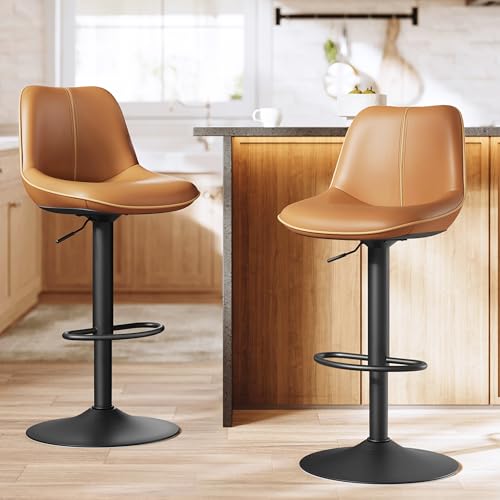
VASAGLE Bar Stools Set of 2, Swivel, Adjustable Height, Spliced Design | Kitchen Stools, Synthetic Leather, Larger Metal Base, Ergonomic Backrest, Steel, Caramel Brown, LYNA Collection ULJB168K01
Check price on Amazon