Ethanol Fireplace: Complete Buying Guide for Modern Homes
Everything you need to know about ventless bioethanol fireplaces — how they work, where to place them, safety essentials, and how to choose the right model for your dining room or living space.
Explore Recommended Models
Why ethanol fireplaces matter for dining spaces: An ethanol fireplace brings real flame ambiance to your dining room without the need for a chimney, gas line, or complex venting. For homeowners researching this category, the key questions are always the same — is it safe, how much heat does it produce, and which type fits my room? This guide answers all of that and more.
How Ethanol Fireplaces Work
An ethanol fireplace — also called a bioethanol fireplace — burns liquid bioethanol fuel in a burner unit to produce a real, open flame. Unlike traditional wood-burning or gas fireplaces, ethanol units do not require a chimney, flue, or gas connection. The fuel burns cleanly, releasing primarily water vapor and carbon dioxide in amounts comparable to a few candles, which is why most models are classified as ventless.
The burner is the heart of the system. Fuel is poured into a reservoir, ignited with a long lighter, and the flame burns until the fuel is consumed or the burner is manually extinguished. Many mid-range and premium models include adjustable dampers or sliding mechanisms that let you control flame height and burn rate. This adjustability is one of the clearest differences between entry-level and mid-range units.
Because there is no venting requirement, ethanol fireplaces can be installed in rooms where a traditional fireplace would be impossible — apartments, dining rooms with shared walls, and open-plan spaces. If you are exploring related heating and ambiance options, you may also want to compare this category with electric fireplaces, which offer a different set of trade-offs.
Types of Ethanol Fireplaces
Ethanol fireplaces come in several form factors, each suited to different rooms and installation constraints. Understanding the categories helps you narrow down the right fit before you start comparing specific models.
Tabletop Units
Compact, portable, and ideal for dining tables or sideboards. Best for ambient flames during meals. Typically entry-level to mid-range in build and burner sophistication.
Wall-Mounted Models
Mount directly on a wall, often with a glass surround. A popular choice for dining rooms and living areas where floor space is limited. Mid-range to premium tier.
Freestanding Units
Floor-standing designs that can be moved between rooms. Some models double as room dividers. Available across essential, balanced, and top-tier categories.
Built-In and Insert Models
Installed into a wall cavity or existing fireplace opening. Offer the most seamless look but require careful planning and often professional installation. Premium and luxury tiers.
For a dining room, wall-mounted and tabletop units are the most common choices because they add ambiance without consuming floor area. Freestanding units work well in open-plan spaces where the fireplace can serve as a visual anchor. Built-in models are typically chosen during renovation, when clearances and ventilation can be planned properly.
If you are still deciding between combustion-based and plug-in options, our guide to DIY vs professional fireplace installation covers the installation considerations that apply to both categories.
Key Benefits and Considerations
Ethanol fireplaces occupy a distinct niche. They are not a direct replacement for a central heating system, and they are not the same as a wood-burning fireplace. Understanding what they do well — and where their limits are — is essential for a confident purchase decision.
What Ethanol Fireplaces Do Well
- Real flame ambiance without venting: The flame is genuine, not an LED simulation. This is the primary reason buyers choose ethanol over electric.
- Flexible installation: No chimney, no gas line, no flue. Wall-mounted and freestanding units can go in rooms where other fireplace types cannot.
- Clean-burning fuel: Bioethanol is a renewable fuel that burns without smoke, soot, or ash. There is no creosote buildup to manage.
- Portability (for some models): Tabletop and many freestanding units can be moved between rooms or repositioned for entertaining.
- Design versatility: Models range from minimalist glass-and-steel designs to sculptural statement pieces that complement modern and farmhouse interiors alike.
What to Keep in Mind
- Supplemental heat only: Heat output is real but modest. Ethanol fireplaces are ambiance-first products, not primary heating solutions.
- Fuel management: You need to store and handle bioethanol fuel safely, and refueling should only be done when the burner is completely cool.
- Ventilation still matters: Even though no flue is required, the room should have some airflow. A cracked window or normal room ventilation is usually sufficient, but sealed, airtight rooms need extra care.
- Burn time is finite: A fill lasts hours, not days. Larger burners and adjustable models give you more control over duration.
Placement in Dining and Living Spaces
Placement has a major impact on both safety and visual effect. In a dining room, the fireplace is usually a secondary focal point — the table remains the center of the room. That makes wall-mounted and tabletop units particularly appealing, since they add warmth and movement to the background without competing with the dining setup.
Key placement principles:
- Keep clear of foot traffic: Position the unit away from walkways, especially in small dining rooms where chairs are pulled in and out.
- Respect clearance distances: Follow the manufacturer's minimum clearances from walls, furniture, and curtains. These distances exist for a reason.
- Avoid drafts: Strong drafts can disturb the flame and affect burn efficiency. Corners and wall recesses are often better than open walkways.
- Consider sightlines: A fireplace at eye level or slightly below creates the most relaxing flame view from a seated position at the dining table.
- Keep it away from table linens and decor: If you use tablecloths, runners, or fabric napkins, make sure the fireplace is well separated from any fabric that could catch a stray spark or come near the flame.
For homeowners furnishing a full dining room, it helps to think of the fireplace as part of a broader composition. Our dining room furniture guide covers how to balance seating, storage, and accent pieces — and where a fireplace fits into that plan. If your dining table is the anchor of the room, a dining table buying guide can help you choose a table that pairs well with a fireplace focal wall.
Ready to see which ethanol fireplace models are worth considering for your dining room? Our recommended picks are curated for real-world use, safety, and design compatibility.
View Recommended Models
Safety Essentials You Must Know
Ethanol fireplaces are safe when used correctly, but they involve an open flame and flammable liquid fuel. That combination demands respect and a clear understanding of the rules. The following safety practices are non-negotiable.
Core Safety Rules
- Never refuel a hot burner. Wait until the burner is completely cool before adding fuel. Refueling a hot or lit burner is the single most dangerous mistake users make.
- Use only manufacturer-approved fuel. Bioethanol fuel quality varies. Using the wrong fuel can cause incomplete combustion, odors, or unsafe flame behavior.
- Store fuel safely. Keep bioethanol in its original, clearly labeled container, away from heat sources, and out of reach of children and pets.
- Never leave a burning fireplace unattended. Extinguish the flame before leaving the room for extended periods or going to bed.
- Keep flammable materials clear. Curtains, table linens, paper decor, and dried floral arrangements must stay well away from the flame.
- Ensure basic ventilation. A slightly open window or normal room airflow is recommended. Avoid using ethanol fireplaces in fully sealed rooms without any air exchange.
- Follow local regulations. Some jurisdictions have specific rules for ventless combustion appliances. Check before installing, especially for built-in units.
For built-in and larger installations, professional installation is strongly recommended. Our guide to DIY vs professional fireplace installation explains when DIY is reasonable and when it is not. The same principle applies to electric fireplaces — the installation method should match the product's requirements and your comfort level.
How to Choose the Right Model
With the basics covered, the selection process comes down to a few practical variables: room size, installation type, burner quality, and how often you plan to use the fireplace. The table below organizes the main product tiers by what they typically offer.
| Tier |
Typical Characteristics |
Best For |
| Entry-Level |
Basic burner, smaller fuel capacity, simpler materials, manual flame control or none |
Occasional ambiance, tabletop use, first-time buyers testing the category |
| Mid-Range |
Adjustable burner, larger fuel reservoir, tempered glass surrounds, better build quality |
Regular use in dining rooms and living areas, wall-mounted installations |
| Premium |
Precision burners, extended burn time, premium materials, refined design details |
Design-focused spaces, frequent entertaining, freestanding statement pieces |
| Luxury |
Custom or built-in designs, commercial-grade components, architectural integration |
Renovation projects, feature walls, high-end dining room design |
Beyond tier, here is a practical checklist to run through before deciding:
- Measure your space. Confirm the unit's footprint, clearance requirements, and flame height relative to your seating position.
- Decide on installation type. Tabletop, wall-mounted, freestanding, or built-in — this choice narrows the field quickly.
- Check burner adjustability. An adjustable burner is worth prioritizing for dining room use, since you may want a lower flame during meals and a fuller flame for evening ambiance.
- Review burn time and fuel capacity. Longer burn time means less refueling, which matters if you use the fireplace frequently.
- Prioritize safety features. Look for cool-touch handles, flame guards, and clear fuel-filling instructions.
- Match the design to your room. A fireplace should complement the table, chairs, and lighting — not fight with them.
If your dining room also includes bar seating or a kitchen island, our ergonomic bar stool guide can help you keep the overall seating plan comfortable and cohesive around the fireplace focal point.
Comparing Ethanol, Electric, and Wood Fireplaces
Buyers researching fireplaces often compare three main options. Each has a distinct profile, and the right choice depends on your priorities: real flame, convenience, or traditional character.
| Feature |
Ethanol Fireplace |
Electric Fireplace |
Wood Fireplace |
| Real flame |
Yes |
No (simulated) |
Yes |
| Venting required |
No |
No |
Yes (chimney/flue) |
| Installation complexity |
Low to moderate |
Low |
High |
| Fuel handling |
Bioethanol liquid |
None (electricity) |
Wood logs |
| Heat output |
Supplemental |
Supplemental to moderate |
High |
| Maintenance |
Low (no ash or soot) |
Very low |
High (ash, creosote, chimney) |
| Best for |
Real flame ambiance in ventless spaces |
Convenience and low maintenance |
Traditional homes with existing chimneys |
In short: choose ethanol when a real flame matters and venting is not an option; choose electric when convenience and zero fuel handling are the priority; choose wood only when you have the infrastructure and are prepared for the maintenance. Many modern dining rooms combine a real-flame ethanol unit with good lighting design for a layered, inviting atmosphere.
Recommended Ethanol Fireplace Models
⚠️ AFFILIATE DISCLOSURE: This website contains affiliate links. As an affiliate Associate, we earn from qualifying purchases. If you make a purchase through these links, we may receive a small commission at no additional cost to you.
Read our full affiliate policy.

SmartFuel Bioethanol Fuel, Denatured Alcohol for Fire Pits, 1 L (Pack of 6) | Plant-Based Denatured Alcohol for Compatible Bio Ethanol Fireplaces, Burners and Stoves, Clean-Burning, Low-Odor Formula
Check price on Amazon
⚠️ Note: The purchase links above are affiliate links. As an Amazon Associate, we earn from qualifying purchases at no additional cost to you.

Burner For Ethanol Fireplace 23,6" Lifetime Warranty
Check price on Amazon
⚠️ Note: The purchase links above are affiliate links. As an Amazon Associate, we earn from qualifying purchases at no additional cost to you.

Bioethanol Fuel 3X1 Liter - Clean Burning Odorless Smokeless Bio Ethanol Fuel
Check price on Amazon
⚠️ Note: The purchase links above are affiliate links. As an Amazon Associate, we earn from qualifying purchases at no additional cost to you.

16 QUARTS Odorless, Smoke-Free Ethanol Fireplace Fuel | Best Flame, Fast Pour, Long Burn, Safety-Tested, Made in USA | Bio Ethanol Fuel for Fire Fire Pit Ethanol Fireplace | e-NRG Bioethanol
Check price on Amazon
⚠️ Note: The purchase links above are affiliate links. As an Amazon Associate, we earn from qualifying purchases at no additional cost to you.

ROUNDFIRE Premium 12 x 1 Liter - Bioethanol Fuel for fireplaces, Stoves and Burners (12 Quart)
Check price on Amazon
⚠️ Note: The purchase links above are affiliate links. As an Amazon Associate, we earn from qualifying purchases at no additional cost to you.
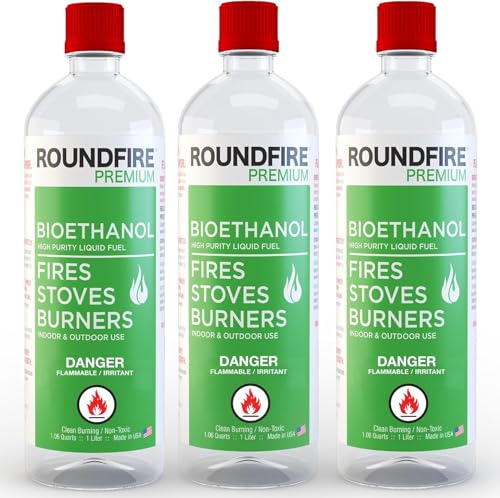
Roundfire Premium Ethanol Fuel - 3 x 1 Liter
Check price on Amazon
⚠️ Note: The purchase links above are affiliate links. As an Amazon Associate, we earn from qualifying purchases at no additional cost to you.

Burner For Ethanol Fireplace 47,2" Lifetime Warranty
Check price on Amazon
⚠️ Note: The purchase links above are affiliate links. As an Amazon Associate, we earn from qualifying purchases at no additional cost to you.

Vass Design 31.5" Linear Bioethanol Fireplace Burner Insert – Heavy-Duty Stainless Steel, Ventless & Clean Burning Ecological Fireplace Insert
Check price on Amazon
⚠️ Note: The purchase links above are affiliate links. As an Amazon Associate, we earn from qualifying purchases at no additional cost to you.
Frequently Asked Questions
Are ethanol fireplaces safe for indoor use?
Yes, when operated according to the manufacturer's instructions. They produce a real flame without requiring a chimney or vent, but proper ventilation, safe fuel handling, and keeping flammable materials away from the flame are essential. Never refuel a hot burner, and never leave a burning fireplace unattended.
How long does an ethanol fireplace burn on one fill?
Burn time varies by model and burner capacity. Smaller tabletop units typically burn for 1 to 3 hours, while larger freestanding and built-in models can burn for 4 to 6 hours or more. Mid-range and premium models often include adjustable burners that let you control flame size and duration.
Do ethanol fireplaces produce heat?
Yes, they produce real heat as a byproduct of combustion. However, they are best understood as supplemental heat sources and ambiance creators rather than primary heating systems. Heat output depends on burner size and fuel consumption rate.
Can I install an ethanol fireplace myself?
Many wall-mounted and freestanding models are designed for straightforward DIY installation. Built-in and larger custom units may require professional installation to ensure proper clearances, ventilation, and compliance with local codes. Our guide to
DIY vs professional fireplace installation walks through the decision.
What type of fuel do ethanol fireplaces use?
They use bioethanol fuel, a clean-burning, renewable alcohol-based fuel. Always use the fuel recommended by the fireplace manufacturer, store it safely in its original labeled container, and keep it away from heat sources and out of reach of children and pets.
Final takeaway: An ethanol fireplace is a strong choice when you want real flame ambiance in a dining room or living space without the structural requirements of a traditional fireplace. Focus your research on the burner quality, safety features, and installation type — those three factors matter more than any single design detail. Once you have narrowed the category, use the product section above to compare specific models and check availability.
