
If Your Counter Is 36 Inches, What Height of Stool Should You Choose?
A 36-inch counter is one of the most common kitchen and bar surfaces in modern homes. The stool you pair with it determines whether every meal and conversation feels comfortable or awkward. Here is the complete fit guide.
The Quick Answer
For a 36-inch counter, the ideal stool seat height is 24 to 26 inches. This range leaves a comfortable 10 to 12 inches of clearance between the seat and the counter surface, which is the standard ergonomic gap for seated dining and socializing.
Most furniture experts recommend a 10–12 inch differential between counter height and seat height. At 36 inches, a 24-inch seat gives you 12 inches of clearance, while a 26-inch seat gives you 10 inches. Both work well, but the choice depends on the user's height and the stool's design.
If you are shopping for seating that matches this exact specification, explore leather counter height stools and island chairs sets of 4 to see how this seat height translates into real-world configurations.
Why the 10–12 Inch Rule Matters
The clearance between the seat and the counter is not a cosmetic detail. It directly affects posture, leg room, and how easily someone can get on and off the stool.
- Too little clearance (under 9 inches): Your thighs get pinched against the counter edge, and you cannot comfortably rest your forearms on the surface.
- Too much clearance (over 13 inches): You have to lean forward or hunch your shoulders to reach the counter, which becomes tiring during long meals or conversations.
- Ideal clearance (10–12 inches): Your elbows rest naturally at counter height, your feet reach the floor or a footrest, and your spine stays neutral.
This is the same principle used across all counter seating, whether you are outfitting a kitchen island or a home bar. It is also why stool height guides distinguish between counter-height and bar-height surfaces.
Counter Height vs. Bar Height: Know the Difference
Before you settle on a stool, confirm that your 36-inch surface is truly a counter rather than a bar. The two categories have different standard heights, and mixing them up is the most common seating mistake.
| Surface Type | Typical Height | Recommended Seat Height | Best For |
|---|---|---|---|
| Standard counter | 36 inches | 24–26 inches | Kitchen islands, breakfast bars, casual dining |
| Bar height | 40–42 inches | 28–30 inches | Home bars, pub tables, raised entertaining zones |
| Standard dining table | 30 inches | 17–19 inches | Formal dining rooms, everyday family meals |
Your 36-inch counter falls squarely into the standard counter category. That means you should be shopping in the counter-height stool segment, not the bar-height segment. A 24–26 inch seat is the correct zone; a 30-inch bar stool would leave only 6 inches of clearance and feel cramped.
If you are also planning seating for a taller surface, the same logic applies with a different number. For example, high back bar stool chairs are built for 40–42 inch bars and are not a substitute for counter seating.
How to Choose Between 24 and 26 Inches
Both seat heights work with a 36-inch counter, but they serve slightly different users and spaces. Use these guidelines to narrow the choice.
Choose 24 inches if:
- Your household members are shorter than average height
- You want maximum knee room under the counter
- The stools have thick cushions that add height to the seat
- Children or older adults will use the seating regularly
Choose 26 inches if:
- Your household members are taller than average height
- You prefer a more upright, supported posture at the counter
- The stools have thin or flat seats
- You want the stool backs to sit visually higher against the counter edge
A useful rule of thumb: measure the seated eye level and elbow height of the primary users. The counter should sit roughly at or slightly below elbow height when seated. If the counter feels too low, move toward the 26-inch option; if it feels too high, move toward 24 inches.
Seat Height vs. Overall Stool Height
One of the most common sources of confusion is the difference between seat height and overall height. When a product listing says a stool is 36 inches tall, that measurement usually refers to the top of the backrest, not the seat.
- Seat height: the distance from the floor to the top of the seat cushion. This is the number that must match your counter.
- Overall height: the distance from the floor to the highest point of the stool, including the backrest. This matters for visual balance and for tucking the stool under the counter.
Always confirm which measurement a listing is quoting before you buy. A stool with a 26-inch seat and a 40-inch backrest has an overall height of 40 inches, and the backrest may rise above the counter line. That is fine aesthetically, but it affects sightlines in open-plan kitchens.
For a deeper look at how back height and seat height interact, compare models such as leather counter height stools with low-profile designs before deciding.
Footrests, Cushions, and Adjustability
Seat height is the primary number, but three secondary factors change the real-world comfort of a 24–26 inch stool.
Footrest height
A footrest should sit roughly 7–9 inches below the seat for comfortable leg support. On a 26-inch stool, look for a footrest around 17–19 inches from the floor. Without a footrest, feet dangle and pressure builds behind the thighs.
Cushion thickness
A thick cushion compresses under weight, so the effective seat height may drop by an inch or more. If you are between 24 and 26 inches, choose the higher seat for a thickly cushioned stool.
Adjustable stools
Adjustable-height stools remove the guesswork entirely. A gas-lift or screw-adjust stool that ranges from roughly 22 to 30 inches can be dialed in to the exact 10–12 inch clearance for your 36-inch counter. These are especially useful in households with users of different heights.
For fixed-height designs, browse high back bar stool chairs and island chair sets to compare footrest placement and cushion profiles.
Clearance and Spacing Around the Counter
Stool height is only half the fit equation. Horizontal clearance determines whether the seating area feels usable or crowded.
- Per stool: allow 24–26 inches of counter width per seat for comfortable elbow room.
- Knee space: provide at least 12 inches of depth under the counter overhang so knees do not hit the cabinet face.
- Walkway behind: leave 36 inches of clear floor behind the stools so people can pass while others are seated.
- Counter overhang: a minimum 12-inch overhang is recommended for counter seating; 15 inches is more comfortable.
If your 36-inch counter is part of an island, these dimensions become especially important. Our guide to kitchen island ideas with seating and storage walks through layout planning in more detail.
Matching Stool Style to Your Counter
Once the height is settled, style and material determine how the seating integrates with the rest of the room. A few practical considerations:
- Backless stools tuck fully under the counter and keep sightlines open. They suit small kitchens and modern minimalist spaces.
- Low-back stools offer light support without blocking views. They are a balanced choice for open-plan layouts.
- High-back stools provide the most support for long sitting sessions but visually divide the kitchen from adjacent rooms.
- Upholstered seats add comfort for daily use; leather and faux leather are easy to wipe clean in cooking zones.
- Wood and metal frames should match the counter material and the room's dominant finishes for a cohesive look.
If your counter is paired with an island that also serves as prep space, consider how the stools look when pushed in. Low-profile designs tend to disappear more gracefully under a 36-inch surface.
Common Mistakes to Avoid
- Buying bar-height stools for a counter. A 30-inch seat on a 36-inch counter leaves only 6 inches of clearance and feels cramped immediately.
- Confusing overall height with seat height. Always verify the seat measurement before ordering.
- Ignoring the footrest. A stool without a footrest at the right height causes leg fatigue during longer meals.
- Underestimating cushion compression. Thick cushions can reduce effective seat height by an inch or more.
- Forgetting horizontal clearance. Stools that are the right height but too wide crowd the counter and block walkways.
- Skipping the test sit. Whenever possible, sit on the stool at counter height before committing, or choose a retailer with a generous return policy.
Frequently Asked Questions
Is a 24-inch stool too short for a 36-inch counter?
No. A 24-inch seat leaves 12 inches of clearance, which is at the upper end of the recommended range. It is a good choice for shorter users, for stools with thick cushions, and for households that want extra knee room.
Can I use a 26-inch stool on a 36-inch counter?
Yes. A 26-inch seat leaves 10 inches of clearance, which is the lower end of the recommended range. It suits taller users and stools with thin seats, and it creates a more upright seated posture.
What if my counter is slightly off from 36 inches?
Measure the actual height from the floor to the top of the counter, not the cabinet box. If the surface is 35–37 inches, the 24–26 inch seat range still applies. Adjust within the range based on user height and cushion thickness.
Should the stool back rise above the counter?
It can, and many designs do. A backrest that rises a few inches above the counter adds visual interest and support. Just be aware that taller backs can block sightlines in open-plan spaces.
How many stools fit at a 36-inch counter?
Allow 24–26 inches of counter width per stool. A 72-inch counter comfortably seats three; a 96-inch counter seats four. Always leave at least 36 inches of walkway behind the seating.
Are adjustable stools a good option for a 36-inch counter?
Yes. An adjustable stool that covers roughly 22–30 inches lets you fine-tune the clearance to exactly 10–12 inches and accommodates users of different heights. It is especially useful in multi-generational households.
Recommended Counter Height Stools for 36-Inch Counters
⚠️ AFFILIATE DISCLOSURE: This website contains affiliate links. As an affiliate Associate, we earn from qualifying purchases. If you make a purchase through these links, we may receive a small commission at no additional cost to you. Read our full affiliate policy.
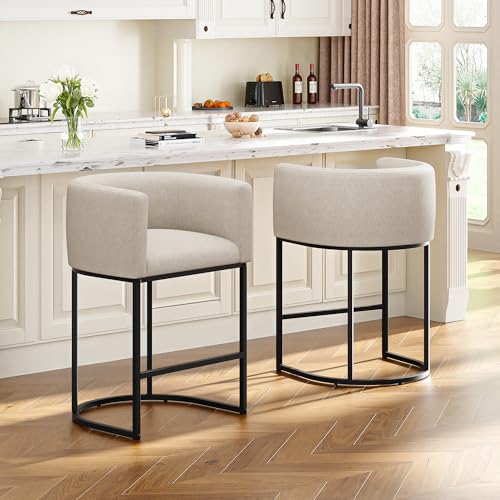
VATROS 26" H Counter Height Bar Stools Set of 2, Modern Barrel Counter Stools with Backrest and Arms, Linen Fabric Upholstered Accent Barstools for Kitchen Island,Support 450 LBS (Beige)
Check price on Amazon
VATROS 26" H Counter Height Bar Stools Set of 3, Modern Barrel Counter Stools with Backrest and Arms, Faux Leather Upholstered Accent Barstools for Kitchen Island,Support 450 LBS (Walnut Brown
Check price on Amazon
VATROS 26" H Counter Height Bar Stools Set of 3, Modern Barrel Counter Stools with Backrest and Arms, Linen Fabric Upholstered Accent Barstools for Kitchen Island, Support 450 LBS, Beige
Check price on Amazon
VATROS 26" H Counter Height Bar Stools Set of 4, Modern Barrel Counter Stools with Backrest and Arms, Linen Fabric Upholstered Accent Barstools for Kitchen Island,Support 450 LBS (Beige)
Check price on Amazon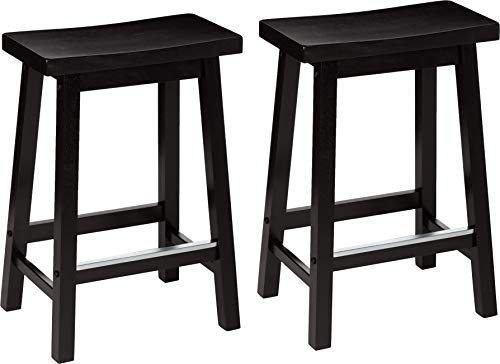
Amazon Basics Solid Wood Saddle-Seat Counter Height Bar Stools for Kitchen Island with Footrest, 24-Inch Height, Black, Set of 2
Check price on Amazon
GOTMINSI Counter Height Bar Stool, Classic Upholstered 24 Inches Counter Height Stools Set of 4 barstools with Solid Wood Legs and Grey Fabric
Check price on Amazon
TAVR 24 inch Counter Height Stools Set of 3, Hold up to 500 lbs, Brown | Armless Faux Leather Bar Stools with Sturdy Alloy Steel Legs & Soft Backrest for Kitchen Island, Coffee Shop, Brown
Check price on Amazon