
Kitchen Benches: The Complete Buying Guide
Everything you need to know before choosing a kitchen bench — styles, materials, sizing, placement, and how to match a bench to your table and daily routine.
Why kitchen benches deserve your attention: A well-chosen bench can seat more people in less floor space than individual chairs, tuck neatly under the table when not in use, and bring a relaxed, family-friendly feel to breakfast nooks, kitchen islands, and open-plan dining areas. This guide walks you through the decisions that matter most so you can buy with confidence.
What Is a Kitchen Bench and Who Is It For?
A kitchen bench is a backless or low-back seating piece designed to slide under a dining table, kitchen island, or breakfast nook. Unlike a standalone chair, a bench encourages shared seating: children can slide along it easily, adults can squeeze in one more guest without hunting for an extra chair, and the visual footprint stays calm and uncluttered.
Benches work especially well in these situations:
- Breakfast nooks and corner dining areas — where a bench can follow the wall line and free up walking space.
- Kitchen islands with overhang — where a bench on the working side balances the visual weight of stools on the other side.
- Open-plan kitchens — where a bench reads as furniture rather than a cluster of loose chairs.
- Family homes with young children — a continuous seat is easier to climb onto and safer than tipping chairs.
- Small dining rooms — a bench pushed fully under the table can reclaim meaningful floor area between meals.
If you are still weighing bench versus chair seating, our guide to kitchen bench seating breaks down the trade-offs in detail. For corner layouts specifically, kitchen banquettes offer built-in storage that a freestanding bench cannot match.
Kitchen Bench Styles: Which One Fits Your Space?
Bench styles fall into a few broad families. Each carries a different visual weight, storage capability, and practical trade-off.
Backless Benches
The most versatile option. They tuck completely under the table, suit both casual and formal settings, and can double as a landing spot for bags or folded laundry in a pinch. Best for narrow kitchens where every centimeter counts.
Benches with Backs
More comfortable for long meals and better for older guests who need lumbar support. The back adds visual height, so they suit larger kitchens and open-plan spaces where a low bench might feel lost.
Storage Benches
A hinged or lift-off seat reveals a compartment for table linens, board games, or seasonal serveware. Ideal for kitchens short on cabinet space, though the mechanism and interior finish add weight and complexity.
Upholstered Benches
Fabric or faux-leather cushioned tops soften hard kitchen surfaces and invite lingering. Look for removable, washable covers if the bench sits near cooking or eating zones with children.
Beyond these four families, you will also encounter bench-and-table sets designed as a matched pair. These remove the guesswork of matching heights and finishes, and they are a sensible starting point if you are furnishing a nook from scratch. Our overview of kitchen breakfast nooks covers how to lay out a matched set.
Choosing the Right Material for Your Kitchen
Kitchen environments are tough on furniture: heat, moisture, spills, and daily wiping. The material you choose determines how the bench ages and how much upkeep it demands.
- Solid wood — warm, repairable, and ages gracefully. Hardwoods such as oak, maple, and birch resist dents better than softer species. Expect a mid-range to premium tier depending on the species and joinery. Regular oiling keeps the surface resilient.
- Painted or lacquered MDF — a stable, smooth surface that holds color evenly and wipes clean easily. Entry-level to mid-range options often use this construction; check that edges are sealed against moisture.
- Metal frames with wood or upholstered tops — industrial-style benches built on steel or aluminum frames are durable and easy to clean underneath. They suit modern and farmhouse kitchens alike.
- Wicker and rattan — light, airy, and visually warm, but better suited to dry breakfast areas than the splash zone around a sink or hob.
- Upholstered tops — performance fabrics and wipe-clean faux leather are the practical choice for family kitchens. Natural linen looks beautiful but stains readily.
Whatever the material, check the finish on the seat edges and feet. These are the first points to show wear, and a reinforced edge or protective glide extends the bench's service life considerably.
Sizing Your Bench: The Numbers That Matter
Getting the dimensions right is the single most important step. A bench that is too tall blocks the table edge; one that is too deep pushes diners away from the table and cramps legroom.
- Seat height: For a standard dining table around 30 inches high, aim for a bench seat height of roughly 17 to 18 inches. For counter-height tables around 36 inches, look for benches around 24 to 26 inches. For bar-height setups, benches in the 28 to 30 inch range pair correctly.
- Seat depth: Around 14 to 16 inches is comfortable for dining. Deeper than 18 inches and shorter diners will struggle to reach the table without sitting forward.
- Length: Allow roughly 24 inches of bench length per adult diner, and 18 to 20 inches per child. A 60-inch bench comfortably seats two adults and a child.
- Clearance: Leave at least 12 inches between the bench front and the table edge when in use, and confirm the bench slides fully under the table when pushed in, if tucking away is part of your plan.
If you are also choosing the table, our guide to the height of a standard kitchen table explains how table height and seat height interact. And if your bench will sit beside a counter rather than a table, the principles in our bar height guide apply directly.
Comparing Bench Tiers: What Changes as You Move Up
Rather than quoting figures, it helps to understand what separates one tier of kitchen bench from another. The table below uses a consistent three-tier framework applied throughout this guide.
| Tier | Typical Construction | Best For |
|---|---|---|
| Essential tier | Painted or veneered engineered wood; simple screw-and-dowel joinery; basic felt pads on feet. | First apartments, casual breakfast nooks, and households that expect to replace furniture within a few years. |
| Balanced tier | Solid wood frames or hardwood tops; reinforced corner blocks; removable upholstery covers on cushioned models. | Family kitchens and everyday dining where the bench will see daily use and occasional spills. |
| Top-tier | Kiln-dried hardwood throughout; mortise-and-tenon joinery; performance upholstery; storage mechanisms with soft-close hardware. | Long-term primary dining spaces, heritage homes, and open-plan kitchens where the bench is a permanent focal piece. |
The jump from essential to balanced tier usually delivers the biggest improvement in day-to-day satisfaction: tighter joinery means less wobble, and better materials mean the bench survives the first few years of heavy use. Moving to top-tier buys longevity and a more refined finish, but it is a worthwhile investment mainly when the bench will stay in the same home for many years.
Matching a Bench to Your Table and Chairs
A kitchen bench rarely lives alone. It sits beside chairs, against a wall, or under a table with a distinct style. A few principles keep the combination coherent:
- Mix finishes deliberately. A wooden bench paired with an upholstered chair set works when one material echoes something else in the room — the floor, the cabinet fronts, or the lighting.
- Match seat heights. A bench and chairs sharing one table should have seat heights within an inch of each other, or the table will feel uneven to sit at.
- Consider the wall side. A bench against a wall can be slightly deeper and more relaxed; a bench on the open side should be shallower so it does not intrude into walkways.
- Repeat shapes. If your chairs have turned legs, a bench with turned legs will feel intentional. If your chairs are sleek and modern, a clean-lined bench follows suit.
If your bench will sit under a pendant or chandelier, our guidance on hanging dining room lights helps you position the fixture so the bench does not crowd the light's spread.
Storage and Multi-Function Benches
Kitchen space is always contested, which is why storage benches have become a fixture in well-planned kitchens. A lift-top bench can absorb items that would otherwise clutter worktops: tablecloths, napkin rings, seasonal centrepieces, and children's craft supplies.
Before choosing a storage bench, check two things. First, the interior height — a compartment shallower than about eight inches will struggle to hold folded linens. Second, the lid mechanism. Hinged lids need clearance behind the bench to open; a lift-off lid needs somewhere to be set down while the bench is open. If neither is workable in your layout, a plain bench plus a nearby kitchen buffet may serve you better.
Placement and Layout Tips
Where the bench goes determines how the whole kitchen flows. A few placement rules of thumb:
- Wall-anchored benches are the most space-efficient. They eliminate the need to walk behind the seat and turn a narrow strip into usable dining space.
- Island benches should sit on the side away from the main cooking zone, so diners are not in the path of hot pans and busy prep work.
- Leave walking clearance. Keep at least 36 inches between the bench edge and the nearest counter or wall when the bench is in use, and 24 inches when it is tucked away.
- Protect the floor. Felt glides under wooden feet prevent scratches on hardwood and tile; rubber or plastic glides are better on concrete.
- Consider the view. A bench facing a window or into the room feels more sociable than one facing a blank wall.
If your bench will sit at an island rather than a table, our guides to island seating and kitchen island chairs cover the complementary seating arrangements in more depth.
Care and Maintenance
Kitchen benches take more punishment than most furniture, so a small maintenance routine pays off:
- Wipe spills promptly, especially on painted and upholstered surfaces.
- Re-oil solid wood tops every few months, or whenever the surface starts to look dry.
- Vacuum upholstery weekly and spot-clean with a fabric-appropriate cleaner; rotate removable cushions to even out wear.
- Check the feet and tighten any fixings every season — loose glides are the most common cause of wobble.
- Keep the bench out of direct sunlight to prevent uneven fading, particularly on painted and stained finishes.
Frequently Asked Questions
Is a kitchen bench more comfortable than a chair?
For short meals and casual breakfasts, a bench is comfortable and encourages relaxed conversation. For long dinner parties, especially for guests who need back support, chairs are usually the better choice. Many homes combine both: a bench on the wall side and chairs on the open side of the table.
How many people can sit on a kitchen bench?
As a rule of thumb, allow about 24 inches of bench length per adult and 18 to 20 inches per child. A 60-inch bench seats two adults and a child comfortably; an 80-inch bench seats three adults.
Can a kitchen bench be used outdoors?
Only if it is explicitly rated for outdoor use. Indoor benches made from MDF or with non-weatherproof upholstery will swell, crack, or fade quickly in damp or sunny conditions. For patio dining, look for teak, powder-coated metal, or weather-resistant synthetic wicker.
What seat height should a bench be for a standard table?
For a table around 30 inches high, look for a bench seat height of roughly 17 to 18 inches — the same height as a standard dining chair seat. For counter-height tables around 36 inches, choose benches around 24 to 26 inches.
How do I stop a bench from scratching my floor?
Fit felt glides to wooden or metal feet for hardwood and tile floors, and use rubber-backed glides on concrete. Re-check the glides every few months and replace them before they wear through.
Ready to Choose?
Start with the space: measure the wall or table side where the bench will live, then shortlist the seat height and length that fit. Next, decide whether you need back support, storage, or a simple backless profile, and pick a material that suits how often the bench will be wiped and used. With those four decisions made, the remaining choice is largely a matter of style — and our product recommendations below can help you compare options within each tier.
Recommended Kitchen Benches for Every Dining Space
⚠️ AFFILIATE DISCLOSURE: This website contains affiliate links. As an affiliate Associate, we earn from qualifying purchases. If you make a purchase through these links, we may receive a small commission at no additional cost to you. Read our full affiliate policy.

HOOBRO Dining Benches, Pair of 2 Industrial Kitchen Table Benches, Wooden Indoor Benches, Durable and Stable, for Dining Room, Kitchen, Living Room, Bedroom, Rustic Brown BF02CD01
Check price on Amazon
HOOBRO 39.3'' Bamboo Dining Bench, Farmhouse Kitchen Table Bench, Kitchen & Living Room Furniture, Easy to Assemble, Sturdy and Stable, Mocha MA03CD01G2
Check price on Amazon
VASAGLE Dining Bench Set of 2, 42.5'' Kitchen Bench | Industrial Style, Steel Metal Frame, for Kitchen, Dining Room, Living Room, Entryway, Rustic Brown and Black, UKTB33X
Check price on Amazon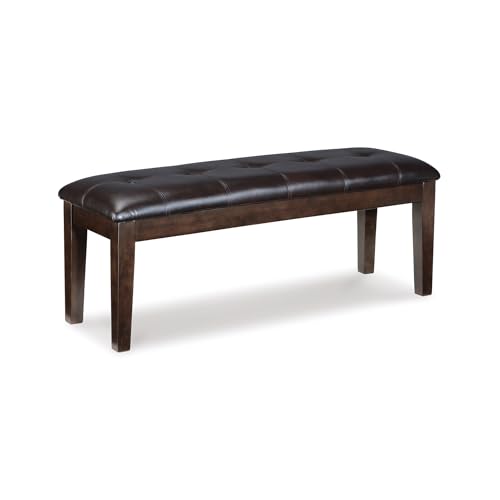
Signature Design by Ashley Haddigan 1-Piece Dining Bench, Faux Leather | Classic button tufted seat, Wood and engineered wood frame, 18.75 in seat height, 2-person capacity, Dark brown finish
Check price on Amazon
Signature Design by Ashley 1-Piece Wood Dining Bench, 48" 2-Tone Farmhouse | Sturdy solid wood frame with mango veneer and MDF substrate seat, Space-saving 48-inch profile, Wildenauer Series
Check price on Amazon
HOOBRO 39.3'' Bamboo Dining Bench, Farmhouse Kitchen Table Bench, Kitchen & Living Room Furniture, Easy to Assemble, Sturdy and Stable, Black BK03CD01G2
Check price on Amazon
HOOBRO Dining Bench, 47.2 Inch Dining Table Bench, Industrial Style Kitchen Bench, Steel Frame, Easy to Assemble, for Kitchen, Dining Room, Rustic Brown and Black BF45CD01
Check price on Amazon
NDOHCUO Breakfast Nook Bench, L Shaped Storage Bench with Cushion, Natural | Fluted Kitchen Corner Dining Bench with Hidden Storage for Dining Room, Entryway, Cloakroom
Check price on AmazonStill Comparing Bench Options?
Explore our related guides on breakfast nooks, island seating, and bench-and-table pairings to complete your kitchen layout.
Explore Kitchen Furniture Guides