
Marble Top Sideboard: The Complete Buying Guide for Your Dining Room
Learn how to choose a marble top sideboard that combines elegant stone character with practical dining room storage — from material grades and base styles to sizing, care, and styling.
Start With the ChecklistWhy a marble top sideboard earns its place: A sideboard is the workhorse of the dining room — it holds serveware, linens, and glassware, and it doubles as a serving station during meals and gatherings. Adding a marble top elevates that function into a design statement. Stone surfaces resist heat and scratches, wipe clean easily, and bring a natural, tactile richness that wood alone cannot match. This guide walks you through every decision so you can buy with confidence.
What Exactly Is a Marble Top Sideboard?
A marble top sideboard is a storage cabinet — typically with doors, drawers, or a combination of both — topped with a slab of natural or engineered marble. It sits against a dining room wall, in a hallway, or in an open-concept living area, providing closed storage plus a durable display and serving surface.
Compared with an all-wood buffet, the stone top changes how the piece behaves. Marble handles hot dishes and condensation without ring marks, making the sideboard a practical buffet station. The stone also reflects light, which helps smaller or darker dining rooms feel brighter. If you are still deciding between a sideboard and a larger buffet, our guide to the long buffet cabinet covers the trade-offs in storage capacity and footprint.
Marble sideboards pair naturally with stone-topped dining tables. Homeowners who want a cohesive look often coordinate with a marble top dining table or explore the broader range of marble stone tables to keep materials consistent across the room.
Natural Marble vs. Engineered Stone: Which Top Suits You?
The stone top is the defining feature, so it deserves the closest scrutiny. Most marble top sideboards use one of three stone categories. Each sits at a different position in the market, and each behaves differently in daily use.
Natural Marble
Premium tierGenuine quarried stone with unique veining. Cool to the touch, heat-resistant, and visually rich. Requires sealing and mindful care around acidic foods and drinks.
Best for: buyers who value authenticity and one-of-a-kind character.
Engineered Marble (Marble-Look Quartz)
Mid-rangeGround stone mixed with resin. More uniform veining, lower porosity, and easier maintenance than natural stone. A solid choice for busy family dining rooms.
Best for: households that want the marble look with fewer care demands.
Sintered Stone / Porcelain Slab
High-end tierDense, non-porous, and highly scratch- and stain-resistant. Often used in commercial-grade furniture. Veining is printed, so patterns repeat across pieces.
Best for: heavy daily use, entertaining, and low-maintenance preferences.
Whichever stone you choose, check the edge profile and thickness. A 20mm slab with a polished edge reads more substantial than a thin veneer. Also confirm whether the top is sealed at the factory; natural marble benefits from periodic resealing, while engineered and sintered surfaces generally need none.
Base Styles and Materials: Matching the Stone to the Frame
The base determines the sideboard's style language and how well it fits your room. The most common pairings are:
Popular Base Options
- Solid wood base: Warm, traditional to transitional. Oak, walnut, and mahogany bases complement veined stone beautifully. Look for dovetail drawers and adjustable shelving.
- Metal frame: Slim steel or iron legs give a modern, airy look. Powder-coated finishes resist chipping. Ideal for industrial and contemporary dining rooms.
- Wood and metal mix: A wood cabinet body on a metal frame balances warmth with a lighter visual footprint — a strong choice for open-concept spaces.
- Lacquered or painted base: Crisp white or deep charcoal bases make the marble top the focal point. Check for a factory finish rather than a painted veneer.
- Pedestal or plinth base: A continuous plinth looks grounded and formal; raised legs make cleaning underneath easier and add visual lightness.
Consider how the sideboard relates to your dining seating. A wood-heavy sideboard can feel grounded beside leather dining chairs set of 6, while a metal-framed marble sideboard suits a lighter, more contemporary arrangement. If your dining room leans mid-century, the clean lines of a mid-century modern dining room layout pair naturally with a stone-topped credenza.
Storage Configuration: Doors, Drawers, and Interior Layout
A sideboard is only as useful as its storage. Before choosing a design, list what you actually need to store — serving platters, table linens, glassware, wine, or board games. Then match the configuration to that list.
Storage Features Worth Prioritizing
- Adjustable shelves: Essential for tall pitchers, cake stands, and stackable dinnerware.
- Felt-lined drawers: Protect flatware and silver from scratches and tarnish.
- Soft-close hinges: Reduce noise and prevent door slamming in busy households.
- Cable management cutouts: Useful if the sideboard will host a coffee station or small appliance.
- Interior dividers: Keep platters upright and wine bottles from rattling.
- Anti-tip hardware: A must for tall or narrow sideboards, especially in homes with children or pets.
If your dining room also needs a display and storage anchor for a larger collection, compare sideboard capacity with a full marble dining room table set setup, which sometimes includes coordinating case goods. For serving-heavy households, prioritize a sideboard with a wide, uninterrupted top surface — stone handles heat and spills better than wood, so it becomes a true buffet station.
Sizing Your Marble Top Sideboard to the Room
Scale matters. An undersized sideboard looks lost against a long wall, while an oversized one crowds chair pull-out and circulation. Use the table below as a starting point, then measure your actual wall and clearance.
| Room Type | Suggested Width | Clearance to Plan | Best For |
|---|---|---|---|
| Compact dining nook | 36–48 in | 30–36 in walkway | Apartment dining, breakfast corners |
| Standard dining room | 60–72 in | 36–42 in walkway | Six- to eight-seat dining tables |
| Formal dining room | 72–84 in | 42+ in walkway | Large tables, holiday entertaining |
| Open-concept wall | 60–80 in | Balance with seating zones | Multi-use living-dining areas |
Height also matters. Standard sideboards sit 30–36 inches tall. A taller model (38–42 inches) works as a standing serving station but can block sightlines in open layouts. Pair the sideboard proportionally with your table: a long sideboard against the wall visually balances a long dining table in the center of the room.
Caring for a Marble Top: Sealing, Cleaning, and Prevention
Marble is forgiving but not indestructible. A simple routine keeps the surface looking new for decades.
Marble Top Care Routine
- Seal natural marble once or twice per year with a stone sealer; engineered and sintered surfaces generally need no sealing.
- Wipe spills promptly with a soft, damp cloth. Blot acidic spills (citrus, vinegar, wine) immediately and rinse with water.
- Avoid acidic and abrasive cleaners. Use a pH-neutral stone cleaner or mild dish soap diluted in water.
- Use coasters and trivets under hot dishes and glasses, even though stone resists heat — prevention protects the finish.
- Prevent scratches by placing felt pads under decorative items and avoiding dragging ceramics across the surface.
- Control sunlight with curtains or blinds to prevent uneven aging and fading of the base finish.
Wood bases need their own attention. Dust regularly and polish every few months, following our broader guidance on dining furniture upkeep. If you plan to pair the sideboard with a stone dining table, the care routine overlaps neatly with what a marble dining table requires.
Styling a Marble Top Sideboard
The stone top is a canvas. Keep the arrangement intentional rather than cluttered:
Styling Ideas That Work
- Anchor with a lamp or vase on one side and leave the other side clear for serving.
- Layer heights — a tall vase, a medium bowl, and a low tray create rhythm without crowding.
- Use a tray to corral candles, coasters, and small decor, protecting the stone and making cleanup easy.
- Coordinate with lighting above the dining table so the sideboard reads as part of one composition. Our guide to light fixtures for dining room layouts can help.
- Rotate seasonal decor to keep the sideboard feeling fresh without buying new pieces.
If the sideboard sits in a living-dining combination, match its finish and scale to surrounding case goods. Readers planning a coordinated room often use our resource on matching living room and dining room furniture to keep materials consistent.
Final Buying Checklist for a Marble Top Sideboard
- Measure the wall, walkway clearance, and doorways on the delivery path.
- Confirm the stone type and thickness, and whether the top is factory-sealed.
- Check base material, joinery quality, and drawer hardware.
- Verify storage layout against what you actually own and plan to store.
- Ask about anti-tip hardware and delivery/assembly requirements.
- Review the care instructions for both the stone and the base finish.
- Confirm the return policy and warranty terms before ordering.
Frequently Asked Questions
Is a marble top sideboard durable enough for daily use?
What size marble top sideboard fits a standard dining room?
How do I care for a marble top sideboard?
Does a marble top sideboard match modern and traditional interiors?
Are marble top sideboards heavy and hard to move?
Ready to Choose Your Marble Top Sideboard?
Explore curated options below and compare features like stone type, storage layout, and base material — then decide with confidence.
View Recommended OptionsRecommended Marble Top Sideboards
⚠️ AFFILIATE DISCLOSURE: This website contains affiliate links. As an affiliate Associate, we earn from qualifying purchases. If you make a purchase through these links, we may receive a small commission at no additional cost to you. Read our full affiliate policy.

63" Buffet Cabinet with Faux Marble Top, Curved Sides, 4 Doors, Walnut | Mid Century Modern Sideboard Cabinet, Adjustable Shelves, Large Storage Credenza for Dining Room, Living Room, Entryway
Check price on Amazon
Yechen 63 Inch Sideboard Buffet Cabinet with Faux Marble Top and Storage | Adjustable Shelf, Curved Sides, Metal Handle, Mid Century Modern Credenza for Kitchen Living Room Entryway
Check price on Amazon
66.5" Sideboard Buffet Cabinet with Storage, Modern Credenza | Arched Doors&Adjustable Shelves, Large Wood Accent Cabinet for Living Room Entryway
Check price on Amazon
Yechen 63 Inch Sideboard Buffet Cabinet, Faux Marble Top, 4-Door Storage | Adjustable Shelf, Curved Sides, Metal Handle, Mid Century Modern Credenza for Kitchen Living Room Entryway
Check price on Amazon
TaoHFE Marble Top Narrow Sideboard Cabinet,White Marble Side Buffet Cabinet | Modern Side Buffet Cabinet With Storage,Kitchen Island narrow sideboard for kitchen for living room
Check price on Amazon
FavourLife Sideboard Cabinet, 55'' Buffet Cabinet with Faux Marble Top & Adjustable Shelf, Modern Fluted Storage Cabinet, Accent Credenza Sideboard for Kitchen, Living Room, Entryway
Check price on Amazon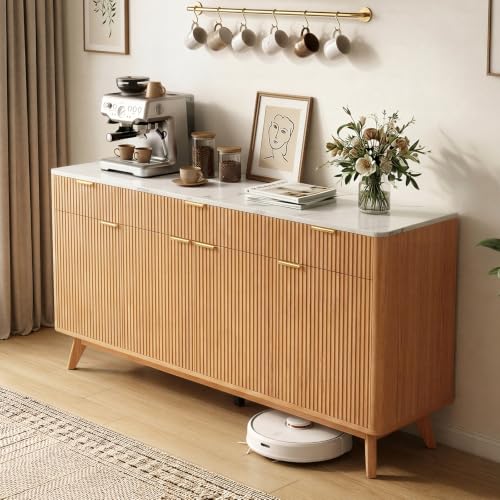
Marsdorgan 67" Large Sideboard Buffet Cabinet with Storages, Oak | Storage Cabinet with 3 Drawers & 4 Doors, Modern Coffee Bar Buffet with Faux Marble Top for Dining Room Living Room Hallway
Check price on Amazon