
Matching Living Room and Dining Room Furniture: A Complete Cohesion Guide
Learn how to create a seamless visual flow between your living and dining spaces with practical advice on color palettes, material coordination, furniture scale, and transitional styling — no guesswork required.
Why this guide matters: In modern homes, the living room and dining room often share a single open space — or sit just a doorway apart. When these two areas feel disconnected, the entire home feels unsettled. Matching furniture across both rooms isn't about buying identical sets; it's about creating a cohesive design language that lets each space serve its purpose while still feeling like part of the same home.
Whether you're furnishing a new home, refreshing an open-concept layout, or finally tying together two rooms that have always felt slightly off, this guide walks you through the decisions that matter most: palette, materials, proportion, lighting, and the finishing details that make coordination look effortless.
Understanding What "Matching" Really Means
The biggest misconception about matching living room and dining room furniture is that everything must come from the same collection or share the exact same finish. In practice, showroom-perfect matching often looks flat and impersonal in a real home. What actually creates harmony is visual continuity — shared cues in color, texture, and proportion that guide the eye smoothly from one zone to the next.
Think of it as a conversation rather than a copy. The living room might lead with a relaxed, upholstered tone, while the dining room answers with a structured wood table and complementary seating. The two rooms don't repeat each other — they respond to each other.
The 70/30 Rule of Coordination
Aim for roughly 70% shared design elements (color family, wood tone, metal finish) and 30% distinct character (different silhouettes, contrasting textures, or one statement piece per room). This ratio keeps the spaces clearly related without making them feel like duplicates.
Step 1: Build a Shared Color Palette
Color is the fastest way to visually connect two adjacent rooms. You don't need identical wall colors or matching upholstery — you need a shared palette that repeats in different proportions across both spaces.
Choose a Base, a Bridge, and an Accent
- Base color: The dominant neutral that appears in both rooms — warm white walls, greige upholstery, or a soft oatmeal rug. This is your foundation.
- Bridge color: A mid-tone that appears in both spaces but in different amounts. A muted olive, warm terracotta, or deep navy works well as a bridge because it's noticeable without dominating.
- Accent color: A smaller dose of contrast — brass hardware, a patterned cushion, a ceramic vase — that ties the two rooms together without overwhelming either one.
A practical example: if your living room sofa is a warm greige and your walls are soft white, carry that same greige into the dining room through upholstered chair seats or a sideboard finish. Then introduce a bridge tone — say, muted sage — in living room throw pillows and a dining room table runner. The accent could be aged brass light fixtures that appear in both zones.
Watch the Undertones
Two neutrals can look identical in isolation but clash once placed side by side. Always compare swatches under the actual lighting of both rooms. A warm white in a north-facing living room can read completely different from the same paint in a sun-drenched dining area.
Step 2: Coordinate Wood Tones and Materials
Wood is usually the largest source of visual weight in a dining room and a major component in living rooms too — coffee tables, media consoles, shelving. Coordinating wood tones is where most people either succeed beautifully or stumble.
The Two Safe Approaches
- Same family, different depth: Keep all wood in the same undertone family — for example, warm mid-browns — but vary the depth. A lighter oak coffee table in the living room can coexist with a deeper walnut dining table if both share a warm base. For inspiration on lighter wood tones, explore light oak dining table options that pair well with neutral living room pieces.
- Deliberate contrast with a unifying element: Pair a very light wood in one room with a very dark wood in the other, and bridge them with a shared metal finish — blackened steel legs, brass pulls, or matte nickel hardware. This works especially well in modern and industrial-leaning interiors.
What you want to avoid is the "almost match" — two woods that are close but not quite the same, which reads as a mistake rather than a choice. If the tones are within a shade or two, commit to making them identical. If they're clearly different, make the difference intentional and echo it elsewhere.
Introducing Stone and Glass
If your dining room features a marble dining table or a stone-top sideboard, you already have a cool, elegant material in the mix. Carry a hint of that stone into the living room through a marble-topped side table, a stoneware vase, or a travertine coffee table. The repetition doesn't need to be literal — it just needs to be recognizable.
Glass is another useful bridge. A glass-top coffee table in the living room can visually connect with glass cabinet doors in the dining room, or with stemware displayed on an open shelf. Both materials read as light and reflective, which helps open-concept spaces feel airier.
Step 3: Balance Scale and Proportion
Even with a perfect palette, mismatched scale can make two rooms feel unrelated. A delicate, leggy mid-century dining set next to a heavy, rolled-arm sofa creates visual tension — the eye struggles to reconcile the two weights.
Match Visual Weight, Not Literal Size
What matters is that the visual weight of furniture feels balanced across the two zones. A bulky, deep-seated sectional in the living room pairs naturally with a substantial dining table and solid-back chairs. A slim, airy sofa works better alongside a mid-century modern dining table with tapered legs.
| Living Room Visual Weight | Dining Room Pairing | Why It Works |
|---|---|---|
| Light & airy — leggy sofa, glass or metal coffee table | Slim dining table with tapered legs, open-back chairs | Both read as open and uncluttered; the eye moves freely |
| Balanced — upholstered sofa, wood coffee table | Solid wood dining table with upholstered or woven chairs | Consistent mid-weight presence in both zones |
| Heavy & grounded — deep sectional, chunky console | Substantial table with thick top, solid-back or arm chairs | Neither room feels under-furnished or visually overwhelmed |
Walk the Sightline
Stand in the doorway or the natural threshold between the two rooms. The furniture heights should stair-step rather than jump. If the dining chairs are noticeably taller than the sofa back, consider whether a lower dining table or a taller living room piece would smooth the transition.
Step 4: Use Lighting and Metal Finishes as Connectors
Lighting is one of the most underrated coordination tools. A chandelier over the dining table and a floor lamp beside the sofa may seem unrelated, but if they share a finish — both aged brass, both matte black, both brushed nickel — they quietly link the two rooms.
If you're choosing new fixtures, consider coordinating the fixture style itself. For example, a matching kitchen and dining room light fixtures approach can be extended to the living room by selecting a pendant or semi-flush fixture in the same finish family. Explore options like a light fixture above dining table styles that also suit living room pendant placement.
Metal Finish Families
- Warm metals: Aged brass, antique bronze, copper. These create a traditional, inviting feel and pair well with warm woods.
- Cool metals: Brushed nickel, polished chrome, stainless steel. These suit modern and minimalist interiors and pair well with cool-toned woods and stone.
- Matte dark metals: Matte black, gunmetal, blackened steel. These work as unifying neutrals across many styles — industrial, modern farmhouse, contemporary.
You don't need every metal in the two rooms to match. A good rule is to limit the total to two metal families, and make sure each room contains at least a small element from both. That way neither room feels like it's from a different design scheme.
Step 5: Design the Transition Between Zones
In an open-concept home, the threshold between living and dining areas is often invisible — no wall, no doorway, just a change in function. How you handle that transition determines whether the two zones feel like one room or two rooms shoved together.
Tools for a Graceful Transition
- Rugs: Use a large living room rug and a separate dining room rug, but choose rugs that share a color or pattern family. The gap between them creates a natural boundary while the shared palette keeps continuity.
- Sideboards and consoles: A long buffet cabinet placed along the shared wall or behind the sofa can act as a visual anchor that belongs to both zones. Its finish and hardware should echo elements in the living room.
- Repeated shapes: If the living room has a round coffee table, consider a round dining table or round mirror in the dining area. Repetition of shape reads as intentional design.
- Height layering: Use a tall plant, floor lamp, or shelving unit near the boundary to create a soft visual separation without blocking sightlines.
For open-plan homes with a large table, a long dining table can double as a visual bridge if its finish matches the living room coffee table or media console. The key is that the eye can trace a material or color from one piece to the next across the space.
Step 6: Choose Styles That Pair Naturally
Some design styles lend themselves to cross-room matching more easily than others. Here's how common styles translate between living and dining rooms.
| Style | Living Room Cue | Dining Room Cue | Shared Element |
|---|---|---|---|
| Mid-Century Modern | Tapered-leg sofa, walnut coffee table | Walnut dining table, molded or spindle chairs | Warm wood tones, organic curves |
| Modern Farmhouse | Slipcovered sofa, reclaimed wood console | Farmhouse table, cross-back chairs | Distressed wood, soft neutral fabrics |
| Contemporary | Low-profile sofa, glass or stone coffee table | Marble or glass dining table, sleek chairs | Clean lines, reflective surfaces |
| Industrial | Leather sofa, metal-frame shelving | Metal and wood dining table, metal chairs | Blackened steel, exposed hardware |
| Transitional | Upholstered sofa, wood side tables | Classic wood table, upholstered chairs | Balanced proportions, neutral palette |
If you're working with a mid-century living room, a mid-century modern dining room set will feel like a natural extension. If your living room leans industrial, look for a metal dining room chairs selection that repeats the same frame finish as your living room shelving or console legs.
Step 7: Coordinate Seating Materials
Seating is the most-used furniture in both rooms, and it's also the most visible. Coordinating upholstery and frame materials between the sofa and dining chairs creates an immediate sense of cohesion.
Upholstery Pairings
- Leather sofa + upholstered dining chairs: This is a classic pairing. The leather brings warmth and durability to the living room; the fabric dining chairs add softness and acoustic comfort. Choose a fabric that echoes a secondary color from the living room.
- Fabric sofa + leather dining chairs: The reverse also works beautifully. A leather dining room chairs selection in a warm cognac or deep espresso can reference a leather ottoman or accent chair in the living room.
- All-fabric approach: If both rooms use fabric, vary the texture — a bouclé sofa with linen dining chairs, or a velvet sofa with performance-weave chairs. Matching color families with contrasting textures is a designer favorite.
If you prefer a more polished look, consider a leather dining chairs set of 6 that matches the leather tone of a living room armchair or ottoman. The repetition of material reads as deliberate and high-end.
Don't Forget the Chair Frames
The legs and frames of dining chairs are visible even when the table is set. If your living room furniture uses black metal legs, consider dining chairs with black metal frames rather than wood. This small repetition carries more visual weight than most people expect.
Common Matching Mistakes to Avoid
- The showroom clone: Buying an entire matching collection for both rooms often looks sterile. Break the set with one or two contrasting pieces.
- Ignoring lighting direction: A wood finish that looks warm in a south-facing living room can look flat in a north-facing dining room. Test finishes in the actual rooms.
- Over-coordinating metals: Using the same metal finish on every single piece can look monotonous. Two metal families, mixed thoughtfully, is more interesting.
- Forgetting the floor: Rugs and flooring play a major role in cohesion. If the living room has a warm rug and the dining room has cool flooring, add a dining rug with warm undertones to bridge the gap.
- Neglecting scale at the threshold: The pieces closest to the boundary between the two rooms have the biggest impact on perceived cohesion. Prioritize coordination there.
Frequently Asked Questions
Do living room and dining room furniture have to match exactly?
No. Exact matching often looks impersonal. Aim for shared color families, coordinated wood undertones, and consistent metal finishes, while allowing each room to have its own character and function.
Can I mix wood tones between the two rooms?
Yes, as long as the mix is intentional. Either stay within one undertone family (all warm or all cool) and vary the depth, or create a deliberate light-versus-dark contrast bridged by a shared metal or stone element.
How do I coordinate an open-concept space without a wall?
Use area rugs to define each zone, repeat a color or material across both areas, and place a transitional piece — like a sideboard or console — near the boundary. Lighting fixtures in the same finish family also help unify the space.
Should the dining chairs match the living room sofa?
They should relate, not necessarily match. A leather sofa pairs well with fabric dining chairs, and a fabric sofa pairs well with leather or woven dining chairs. The connection can be through color, texture, or frame finish rather than identical upholstery.
What if my living room and dining room are in separate rooms with a wall between them?
You have more freedom, but coordination still helps the home feel cohesive. Focus on repeating one or two elements — a color, a wood tone, or a metal finish — so the rooms feel related when viewed from the hallway or doorway.
Ready to Furnish with Confidence?
Use the recommendations above to build a living and dining space that feels intentional, cohesive, and uniquely yours. Browse our curated furniture picks below to start comparing options that work together.
Recommended Furniture for Matching Living and Dining Rooms
⚠️ AFFILIATE DISCLOSURE: This website contains affiliate links. As an affiliate Associate, we earn from qualifying purchases. If you make a purchase through these links, we may receive a small commission at no additional cost to you. Read our full affiliate policy.

7 Pieces Dining Table & Chairs Set for 4-8 People, Brown | 71 Inch Kitchen Table with 6 Chairs, Rectangle Dining Table with Wooden Legs for Dining Room, Living Room, Brown
Check price on Amazon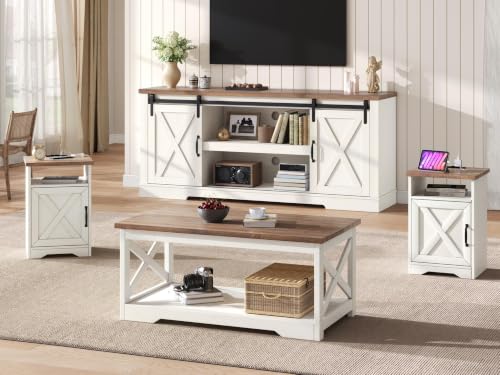
AMERLIFE 4 Piece Farmhouse Table Set with 66" TV Stand, Distressed White | Coffee Table & 2 End Tables, TV Stand with Sliding Barn Door Design, Charging Station, USB Ports, Living Room Furniture
Check price on Amazon
AMERLIFE Living Room Furniture Set, 59" Barnwood TV Stand with Fireplace | Farmhouse Fireplace TV Stand for Living Room, 40" Coffee Table and 2 End Tables, 4 piece Living Room Table Set
Check price on Amazon
Dining Table Set for 4,Kitchen Table and Chairs for 4, Round Dining Room Table with Upholstered Chairs, 5 Piece Space Saving Circle Wood Kitchen & Dining Room Dinner Dinette Table Set (Vintage, 42In)
Check price on Amazon
BERRYMERRY 62.2" Fluted Wave TV Stand and Coffee Table Set of 2 | Lift Top,Walnut,Living Room Set,Brown,Drawer,Mid Century Modern,Entertainment Center,62inch,Wave Pattern
Check price on Amazon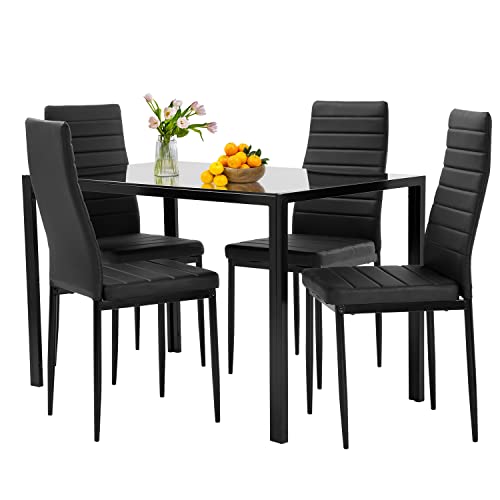
FDW | 5-Piece Dining Table Set | Black | Glass Kitchen Table | With 4 Upholstered Chairs and Faux Leather Cushions | Space-Saving and Modern Design | Easy to Assemble | for Dining Room
Check price on Amazon