
Metal Counter Bar Stools: The Complete Buying Guide
Everything you need to choose durable, comfortable, and stylish metal counter bar stools for your kitchen island, breakfast bar, or home bar. Compare materials, heights, styles, and features before you decide.
EXPLORE RECOMMENDED MODELSWhy metal counter bar stools deserve your attention: Metal counter bar stools combine structural strength with a surprisingly wide range of design languages. From industrial lofts to modern farmhouse kitchens, they anchor seating areas with a slim footprint and a reputation for long-term durability.
This guide walks you through the decisions that matter most: seat height, frame material, finish quality, comfort features, and how to match a stool style to your space. By the end, you will know exactly what to look for before checking availability on your preferred retailer.
What Are Metal Counter Bar Stools?
Metal counter bar stools are seating designed for counter-height surfaces, typically around 36 inches from the floor. Their frames are constructed from steel, aluminum, or iron, often finished with powder coating, brushed metal, or a rust-proof treatment. Unlike bar-height stools that pair with taller pub tables, counter stools sit lower and tuck neatly under a kitchen island or breakfast bar.
The metal frame is the defining feature. It gives these stools a slim visual profile, high load capacity, and resistance to daily wear. Many models combine a metal frame with upholstered seats, wooden tops, or backrests, which softens the industrial look and broadens the style range.
Because the category spans entry-level to commercial-grade, the quality gap between models is significant. The sections below explain exactly where that gap shows up so you can judge which tier fits your household.
Why Choose Metal Counter Bar Stools?
Homeowners often compare metal, wood, and upholstered stools before committing. Metal earns its place for several practical reasons:
- Durability: High-grade steel and aluminum frames resist warping, cracking, and loosening joints far better than many wood alternatives in high-traffic seating areas.
- Stability: A well-welded metal base keeps the stool planted, which matters on kitchen islands where people lean and swivel.
- Low maintenance: A damp cloth handles most cleaning. There are no wood grains to refinish and no deep fabric seams on the frame itself.
- Design flexibility: Metal frames suit industrial, modern, farmhouse, and transitional interiors. Finish choices from matte black to brushed brass let you steer the look.
- Slim footprint: Narrow legs free up floor space and make small kitchens feel less crowded.
The trade-off is surface temperature and hardness. Bare metal seats feel cold and unforgiving, which is why most mid-range and premium metal counter bar stools include a padded seat or a wooden top. If comfort is a priority, prioritize models with cushions or contoured seats.
Getting the Height Right: The Most Important Decision
Height mismatches are the single most common buying mistake. A stool that is too tall crowds the counter; one that is too short leaves the sitter hunched. Use the table below as your starting reference, then measure your actual counter overhang before ordering.
| Counter Height | Recommended Stool Seat Height | Typical Clearance | Best For |
|---|---|---|---|
| 34–36 inches (standard counter) | 24–27 inches | 9–12 inches | Kitchen islands, breakfast bars, peninsulas |
| 36–39 inches (high counter) | 26–29 inches | 9–11 inches | Raised bar counters, pass-through counters |
| 40–42 inches (bar height) | 28–30 inches | 10–12 inches | Home bars, pub tables (borderline counter/bar) |
| 42+ inches (standard bar) | 30–32 inches | 10–12 inches | Full bar counters (consider bar-height stools instead) |
Pro Tip: The 10–12 Inch Rule
Aim for 10 to 12 inches between the seat surface and the underside of your counter. This range allows comfortable legroom and lets most adults rest their forearms on the counter without slouching. If you are between sizes, choose the lower option for a kitchen island and the higher option for a dedicated bar area. Also check the counter overhang: at least 12 inches of overhang is needed for knees to fit comfortably under the counter with a backless stool.
Frame Materials and Finish Quality
The metal itself shapes durability, weight, and feel. Here is how the common options compare:
| Material | Key Strengths | Considerations | Position in Market |
|---|---|---|---|
| Powder-coated steel | Heavy-duty, scratch-resistant, holds color well | Slightly heavier to move; chips can expose bare metal | Essential tier to premium |
| Stainless steel | Rust-proof, easy to clean, modern look | Can show fingerprints; colder to the touch | Mid-tier to commercial-grade |
| Aluminum | Lightweight, rust-resistant, easy to rearrange | Less rigid than steel; check weld quality | Starter tier to mid-range |
| Iron / wrought iron | Very stable, ornate styling options | Heavier; requires a rust-proof finish | Mid-range to high-end tier |
Finish matters as much as the base metal. A quality powder-coated finish resists scratches and cleans easily. Brushed or satin finishes hide fingerprints better than polished chrome. If your stools live near a sink or in a humid climate, confirm that the frame carries a rust-proof or weather-resistant coating. On welded frames, inspect the joints: smooth, fully penetrated welds signal a solid build, while visible gaps or spatter suggest lower manufacturing tolerances.
Entry-level models often use thinner tubing and fewer reinforcement points. Mid-range stools typically add cross-bracing and better glides. Premium and commercial-grade tiers bring thicker gauge steel, reinforced footrests, and finishes tested for heavy daily use. Paying attention to these construction details is a more reliable guide than any single specification.
Styles and Design Options
Metal counter bar stools come in several recognizable silhouettes. Each one fits a different room and functional need:
- Backless stools: The cleanest look for small kitchens. They tuck fully under the counter and keep sightlines open. Best for occasional seating and tight overhangs.
- Low-back stools: A small backrest adds support without blocking the view. A balanced choice for open-concept kitchens where the island faces a living area.
- Full-back stools: Offer proper back support for longer meals and work-from-kitchen sessions. Choose these if the counter doubles as a dining or laptop spot.
- Swivel stools: A swivel seat makes it easier to get in and out and to turn toward conversation. Check the swivel mechanism quality, as it is a common wear point.
- Adjustable-height stools: Useful when multiple people share the counter or when you are unsure about the ideal height. Gas-lift or threaded mechanisms vary in smoothness by tier.
Industrial styles lean on exposed rivets, matte black frames, and wooden seats. Modern minimalist designs favor slim tubular frames and monochrome finishes. Farmhouse-inspired options pair a metal frame with a distressed wood seat. If you want a softer industrial look, browse leather bar stools with backs or explore metal bar stools with backs for added support.
Comfort Features That Actually Matter
Comfort is where cheap-feeling stools reveal themselves. Prioritize these features:
- Seat padding: A cushioned seat transforms the experience. High-density foam holds its shape; low-density foam compresses within months.
- Footrest placement: A well-positioned footrest reduces pressure on the thighs and lower back. It should sit roughly 8 to 10 inches below the seat.
- Seat contour: Slightly scooped seats distribute weight better than flat metal plates.
- Back support: If anyone will sit for more than 30 minutes, a backrest is worth the visual weight.
- Floor protection: Rubber or felt glides prevent scratches on hardwood and tile. Many mid-range models include them; on entry-level stools you may need to add them.
For a deeper dive into comfort across all stool types, see our guide to extra tall bar stools at 32-inch seat height if you are seating at a true bar counter, or compare the more compact 24-inch metal bar stool set for standard counter heights.
Matching Metal Counter Bar Stools to Your Space
The right stool depends on where it sits and how the room is used:
- Kitchen island: Backless or low-back stools keep sightlines open. Match the finish to your cabinet hardware or faucet for a cohesive look.
- Open-concept kitchen: Choose low-back or full-back stools with a consistent style that bridges the kitchen and living area. A swivel seat helps guests turn toward the conversation.
- Home bar or basement bar: Full-back and adjustable stools make longer sitting sessions comfortable. Consider leather or padded seats for a lounge feel.
- Small apartments: Slim metal frames and backless designs save floor space and make the counter feel less cluttered. Our guide to grey and gold bar stools sets shows how a coordinated set can anchor a compact space.
- Industrial or loft interiors: Matte black frames with wooden seats and exposed hardware reinforce the aesthetic.
Count and spacing: Allow about 24 inches of width per stool for comfortable elbow room. For a typical 6-foot island, that means two to three stools. Measure the overhang: backless stools need at least 12 inches of overhang to tuck away, while stools with backs need slightly more depth behind them.
Care and Maintenance
Metal counter bar stools are low-maintenance, but a few habits extend their life:
- Wipe frames with a damp cloth and mild soap, then dry immediately to avoid water spots.
- Avoid abrasive pads and harsh chemical cleaners that can dull powder-coated finishes.
- Tighten bolts and check glides every few months, especially on swivel models.
- For upholstered seats, vacuum regularly and spot-clean according to the fabric care label.
- If the finish chips, touch it up promptly to prevent rust on exposed steel.
For broader furniture care advice, see our dining care and maintenance guides. And if you are still weighing stool categories, the full bar stools buying hub covers backless, swivel, and adjustable options side by side.
How to Evaluate Quality Before You Buy
Use this checklist to compare models objectively, regardless of the tier:
- Weight capacity: Check the rated load. Commercial-grade models typically publish higher capacity ratings and reinforced frames.
- Welds and joints: Look for smooth, continuous welds. Reinforced cross-bracing adds stability.
- Finish durability: Powder coating and rust-proof treatments outlast painted or bare finishes.
- Glide quality: Replaceable floor glides are a sign of thoughtful design.
- Seat construction: High-density foam and reinforced upholstery hold up better over time than thin padding.
- Assembly design: Clear instructions, included hardware, and pre-drilled holes signal a well-engineered product.
Reader reviews are useful for spotting recurring issues such as wobbling, finish chipping, or loose swivels. Pay more attention to comments about long-term use than to unboxing impressions.
Common Buying Mistakes to Avoid
- Skipping the height measurement: Measure your actual counter and overhang, not just the standard number.
- Choosing looks over comfort: A stool that looks great but lacks a footrest or padding will be avoided by family members.
- Ignoring floor protection: Metal legs without glides will mark hardwood floors.
- Buying too few: Under-buying forces awkward seating. Plan for 24 inches of width per person.
- Mismatched finishes: Decide whether you want the metal to match, contrast, or blend with existing hardware before ordering.
Recommended Metal Counter Bar Stools
⚠️ AFFILIATE DISCLOSURE: This website contains affiliate links. As an affiliate Associate, we earn from qualifying purchases. If you make a purchase through these links, we may receive a small commission at no additional cost to you. Read our full affiliate policy.

FDW | 24" Metal Bar Stools | Black | Set of 4 | 330lbs Load Capacity, Counter Height, Stackable, Stools with Footrest | Space-Saving Design | For Kitchen, Bar, Patio & Cafe
Check price on Amazon
FDW | 24" Metal Bar Stools | Bronze | Set of 4 | 330lbs Load Capacity, Counter Height, Stackable, Stools with Footrest | Space-Saving Design | For Kitchen, Bar, Patio & Cafe
Check price on Amazon
WENTMENT Metal Bar Stools Set of 4 Counter Height Black Barstools with Removable Back 24" Kitchen Bar Stools
Check price on Amazon
Furmax 30'' Metal Bar Stools Set of 4, Stackable for Indoor Outdoor, Black | Water-proof & Rust-proof, Sturdy metal, No Assembly, Stools with Footrest, Counter height, For Kitchen, Bar, Patio & Cafe
Check price on Amazon
24 Inch Metal Bar Stools Set of 2, Stackable for Indoor Outdoor, Black | No Assembly, Waterproof & Rustproof, 300LBS Capacity, Space-Saving Stackable, Backless, Easy to Move, Non-Slip Feet
Check price on Amazon
Flash Furniture 24" Commercial Grade Metal Counter Height Stool with Footrest, Modern Vertical Slat Back Stool for Restaurants and Kitchens, Silver
Check price on Amazon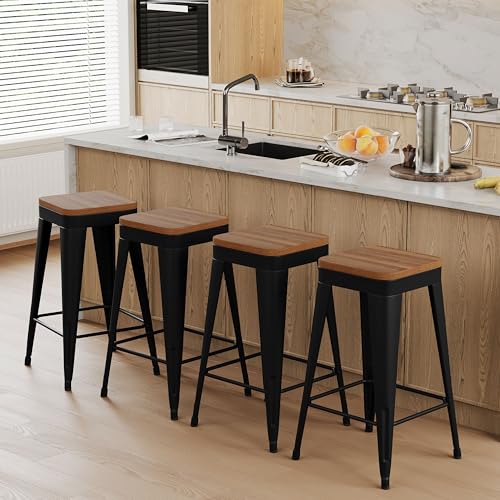
POINTANT Bar Stools Set of 4 Metal Bar Stool Counter Height Bar Stools Black, Modern 24" Bar Chairs Without Back,Wooden Seat Bar Stool Counter Height
Check price on AmazonRelated Guides You May Find Helpful
- 24-Inch Metal Bar Stools Set of 2
- Metal Bar Stools with Backs Set of 2
- Extra Tall Bar Stools at 32-Inch Seat Height
- Leather Bar Stools with Backs
- Grey and Gold Bar Stools Set of 3
- Grey and Gold Bar Stools Set of 4
- Mid-Century Modern Bar Stools Set of 3
- Rattan Counter Stools
- Pink Bar Stools
- Pub Stool Set
- Bar Stools Buying Hub
- Kitchen Island with Butcher Block Top and Seating
- Small Dining Room Layout Guide
- Dining Care and Maintenance
Frequently Asked Questions
What height should metal counter bar stools be?
For standard counters around 36 inches high, choose a seat height between 24 and 27 inches. This leaves roughly 9 to 12 inches of clearance between the seat and the counter underside, the comfort zone for most adults. Always measure your actual counter before ordering.
Are metal counter bar stools durable enough for daily use?
Yes. Stools made from high-grade steel or aluminum with a rust-proof finish are extremely durable. Look for reinforced welds, a powder-coated or brushed finish, and a weight capacity rated for regular household use. Commercial-grade versions are even more robust.
Do metal counter bar stools scratch floors?
They can if the legs are bare metal. Choose stools with protective floor glides, rubber caps, or felt pads. Many mid-range and premium models include these as standard, protecting hardwood, tile, and vinyl flooring.
How do I clean metal counter bar stools?
Wipe the frame with a damp cloth and mild soap, then dry immediately to prevent water spots. Avoid abrasive cleaners that can dull the finish. For upholstered seats, vacuum regularly and spot-clean according to the fabric care label.
How many stools fit at a kitchen island?
Allow about 24 inches of width per stool. A 6-foot island comfortably seats two to three stools; an 8-foot island seats three to four. Also confirm your counter overhang supports the stool depth you choose.
Backless or backrest — which is better?
Backless stools keep sightlines open and tuck away in small spaces. Backrests provide better support for longer sitting sessions. For a kitchen island used mainly for quick meals, backless or low-back works well; for a counter that doubles as a workspace, choose a full back.