
Mid-Century Modern Round Pedestal Dining Table: Complete Buying and Styling Guide
A mid-century modern round pedestal dining table is one of the most versatile pieces you can bring into a home. The circular top softens a room, the central pedestal keeps the perimeter clear for chairs and legroom, and the clean silhouette fits everything from compact apartments to open-plan entertaining spaces. If you have already decided that this is the table shape and style you want, this guide will help you choose the right version for your room, understand what separates an entry-level table from a premium one, and style it so it looks intentional rather than merely placed.
Quick Facts: What Defines This Table Style
- Round top: typically 40 to 60 inches in diameter, with no corners to navigate around.
- Single central pedestal: a column or tulip-shaped base with spreading feet that keeps all seating positions free of legs.
- Mid-century cues: tapered profiles, splayed or sculptural feet, warm walnut or teak tones, and minimal ornamentation.
- Best room fit: small and medium dining rooms, breakfast nooks, open-concept kitchens, and conversation-friendly entertaining spaces.
- Typical seating: four people at smaller diameters, six at mid-size diameters, and six to eight on the largest versions.
Why a Round Pedestal Table Works So Well
The case for a round pedestal table comes down to three practical advantages. First, the round shape removes the awkward corner seat that rectangular tables often produce, so every chair position feels like a proper seat rather than an afterthought. Second, the pedestal base frees the floor beneath the tabletop, which means chairs can be pushed in fully and guests can cross their legs without bumping a leg. Third, the circular footprint allows smoother circulation around the table, which matters in rooms where the dining area doubles as a passageway to the kitchen or living space.
From a design standpoint, mid-century modern styling keeps these tables visually light. Rather than a heavy block of wood, you get a slender column, often with a sculpted or tulip profile, resting on a compact base. The result is a table that reads as elegant without being formal, and that pairs naturally with the sloped arms and tapered legs of mid-century seating. If you are building a coordinated dining room, a matching mid-century dining room set is one route, while pairing a standalone table with mid-century modern dining room chairs gives you more freedom over materials and proportions.
Choosing the Right Diameter for Your Room
The single most important decision is table diameter, because it determines both seating capacity and how much breathing room remains around the table. As a general rule, allow at least 36 inches of clearance between the table edge and any wall or piece of furniture so chairs can be pulled out comfortably. In tighter rooms, 30 to 32 inches can work if the table is not positioned against a main walkway.
For a two-person household that occasionally hosts, a 36 to 40 inch round top is compact and efficient. A 44 to 48 inch table comfortably seats four and is the most common size for apartments and breakfast areas. At 54 inches, four people have generous elbow room and six can be seated for casual meals. Tables of 60 inches and above seat six to eight and begin to function as a true formal dining surface, though they demand a correspondingly larger room.
If you expect to host larger groups regularly, consider whether an extendable option is a better long-term fit. An oval extendable dining table preserves some of the rounded softness while adding length for holidays, and an oval pedestal dining table keeps the clear-floor benefit of a central base. For a fixed round table with a built-in rotating center, a large round dining room table with lazy Susan is worth considering for shared-plate dining traditions.
Understanding Pedestal Base Designs
Not all pedestals are equal, and the base design affects stability, floor protection, and visual weight. The most recognizable mid-century profile is the tulip base, a single stem that flares outward into a broad, flat foot. Tulip bases look refined but can wobble if the foot is too small for the tabletop diameter, so check that the base footprint is proportionate.
The second common design is the four-foot pedestal, where a central column splits into four splayed legs. This design offers excellent stability and a distinctly mid-century silhouette, and the spreading feet are usually fitted with adjustable glides. A third variation uses a cross or X-shaped base, which reads slightly more architectural and pairs well with rectangular or oval tops.
Whatever the shape, inspect three things: the connection between the column and the tabletop, the presence of adjustable leveling glides, and whether the base includes a stretcher or internal brace. A reinforced column-to-top connection is the difference between a table that stays solid for years and one that develops a wobble within months.
Materials and Finish Options
Walnut is the signature material of mid-century modern furniture, prized for its warm, chocolate-toned grain and its ability to look sophisticated without heavy finishing. Teak is the other classic choice, lighter and slightly more golden, and it ages gracefully with a soft patina. Solid hardwood tops are the most durable option and can be refinished if the surface dulls over time, while veneered tops over engineered cores are common in mid-tier and entry-level tables and can look excellent when the veneer is thick and well-bonded.
Marble-topped versions add a polished, slightly more luxurious character. A marble top round dining table brings visual brightness and a cool contrast to warm wood chairs, but marble requires sealing and mindful care around acidic foods. Glass tops make a room feel more open and reflect light, which helps in smaller or darker spaces, though they show fingerprints more readily. For a natural, organic look, a live edge walnut dining table offers a different interpretation of wood grain, and a round oak dining table provides a paler, more contemporary alternative to walnut.
Finish matters as much as species. A matte or satin oil finish highlights the grain and feels warmer to the touch, while a high-gloss lacquer creates a more polished, reflective surface. For mid-century modern interiors, satin and matte finishes tend to feel more authentic than high gloss.
Quality Tiers: What Separates Each Level
Because this category spans a wide range of construction quality, it helps to think in tiers rather than in specific figures. The table below describes what you can generally expect as you move from entry-level to luxury construction. Use it to match the build quality to how intensively the table will be used.
| Tier | Typical Construction | Best For | Considerations |
|---|---|---|---|
| Entry-level | Engineered wood core with thin veneer, painted or powder-coated metal pedestal, basic hardware | Light daily use, starter apartments, occasional dining | Lighter overall weight; check base stability and veneer edges carefully |
| Mid-range | Thicker veneer over sturdy core or partial solid wood, welded steel pedestal, adjustable glides | Everyday family dining, mixed-use open-plan spaces | Good balance of durability and design; verify the column-to-top joint |
| Premium | Solid hardwood top, sculpted tulip or splayed pedestal, reinforced internal bracing, quality finish | Daily use in busy households, long-term ownership | Heavier and more stable; finish can usually be refreshed |
| Luxury | Book-matched veneers or solid slabs, marble or stone tops, hand-finished detailing, commercial-grade joinery | Design-led interiors, formal dining, statement pieces | Requires careful care routine; best in dedicated dining spaces |
Across every tier, the details that matter most are the same: a stable base, a well-finished edge on the tabletop, consistent grain alignment on veneered surfaces, and glides that can be adjusted to keep the table level on uneven floors. A mid-range table with excellent joinery will usually outperform a premium table with a poorly braced pedestal.
Matching Chairs and Seating
Chair height and back profile have a large effect on how a round pedestal table feels in the room. For a standard 29 to 30 inch table height, choose dining chairs with a seat height around 18 inches. Mid-century chairs with tapered legs, slim frames, and open backs keep the visual weight low so the table does not appear crowded. Upholstered seats add comfort for longer meals, while woven or cane backs add texture and keep the silhouette airy.
If you want the convenience of a complete coordinated look, a mid-century round dining table set for 4 removes the guesswork on proportions. For a mixed approach, pair the table with linen dining room chairs for a softer, more contemporary feel, or with a leather wood dining chair for a warmer, more grounded look. A single high back dining chair can work as a host seat if you want a subtle focal point.
If your dining area connects to a kitchen counter or island, consider coordinating stools rather than matching chairs. A mid-century modern bar stools set of 3 keeps the visual language consistent across the open space. Households with young children may prefer chairs that are easy to wipe down; the guidance in the kid-friendly dining section is useful when balancing style with practicality.
Styling a Round Pedestal Table
A round table offers a natural centerpiece position, and the pedestal base means you can style underneath without obstruction. Keep the centerpiece low and roughly circular so sightlines across the table stay open. A shallow bowl, a low cluster of candles, or a small vase with a single stem works better than a tall arrangement that blocks conversation.
Table linens are where a round table really shines. A round tablecloth drapes evenly with no corner overhang to manage, and a circular runner or a set of placemats reinforces the geometry. Cloth napkins in a natural fiber add warmth and are easy to fold into a simple roll. If you are setting a full table for guests, our dinner set for 4 overview covers the plate, bowl, and glass combinations that suit a round four-seat arrangement.
Lighting should be centered directly over the table. A single pendant or a small chandelier scaled to the table diameter (roughly half the table width) creates a focused pool of light that makes the round shape feel deliberate. Avoid a fixture that is wider than the table, as it will visually overwhelm the top.
Care and Long-Term Maintenance
Wood-topped pedestal tables benefit from a simple routine: dust with a soft cloth, wipe spills promptly with a slightly damp cloth, and avoid placing hot dishes directly on the surface. Use coasters and trivets consistently, and keep the table out of direct, prolonged sunlight to prevent uneven fading. A satin or matte finish can be refreshed periodically with a wood conditioner formulated for the finish type.
Check the pedestal hardware every few months. Screws and bolts in the column-to-top connection can loosen with daily use, and a quick tightening prevents the wobble that otherwise develops over time. If the floor is uneven, adjust the leveling glides rather than shimming the base, since shims can slip and scratch the floor. Marble and glass tops need their own routines: marble should be sealed and kept away from acidic spills, while glass benefits from a streak-free cleaner and a protective pad underneath heavy centerpieces.
Common Mistakes to Avoid
- Choosing the diameter before measuring the room. Tape out the table footprint on the floor, including chair pull-out space, before committing.
- Ignoring the base footprint. A pedestal that is too small for the top will feel unstable; a base that is too wide defeats the clear-floor advantage.
- Overfilling the table with chairs. A 48 inch table with six chairs feels cramped; four chairs will feel more comfortable.
- Pairing heavy chairs with a light pedestal. Visual weight should be balanced so the table does not look top-light.
- Placing the table against a wall. A round table works best with circulation on all sides; if space is tight, consider a drop leaf folding dining table instead.
Frequently Asked Questions
How many people can a round pedestal dining table seat?
A round pedestal dining table typically seats four people at a 40 to 48 inch diameter, four to six at 54 inches, and six to eight at 60 inches or more. Because there are no corner legs, chairs can be tucked in evenly around the perimeter.
What is the difference between a pedestal base and a four-leg base?
A pedestal base concentrates support in a central column with spreading feet, leaving the entire perimeter free for seating and legroom. A four-leg base distributes support to the corners, which can interfere with chairs but suits rectangular and square tables.
Are round pedestal tables good for small dining rooms?
Yes. Round tables have no sharp corners and allow smoother circulation, while the pedestal base frees up floor space beneath the tabletop. In compact rooms, a round table often feels more open than a rectangular table of similar seating capacity.
Which materials suit a mid-century modern round pedestal dining table?
Walnut and teak veneers, solid hardwood, marble tops and glass tops are all common in mid-century modern design. Wood tops with tapered or tulip pedestals are the most classic, while marble and glass add a more polished, contemporary look.
Recommended Mid-Century Modern Round Pedestal Dining Tables
⚠️ AFFILIATE DISCLOSURE: This website contains affiliate links. As an affiliate Associate, we earn from qualifying purchases. If you make a purchase through these links, we may receive a small commission at no additional cost to you. Read our full affiliate policy.

Hansweld Round Dining Table, 31.5" Tulip Table (Faux Walnut) | with Thickened Tabletop & Metal Pedestal, Mid Century Modern Bistro Circle Table for Kitchen, Small Places, Dinner Room, Cafe
Check price on Amazon
Andehomy 55" Fluted Round Dining Table for 4-6, Mid-Century Modern Kitchen Table with Rotating Tray, 2-Tier Storage Shelf, Wood Sliding Doors and Pedestal Base, Walnut
Check price on Amazon
Hansweld Round Dining Table, 31.5" Tulip Table (Black) | with Thickened Tabletop & Metal Pedestal, Mid Century Modern Bistro Circle Table for Kitchen, Small Places, Dinner Room, Cafe
Check price on Amazon
TRUNBACK Round Dining Table, 24" Circle Pedestal Table with Thickened Top & Metal Base, Mid-Century Modern Coffee Table for Living Room, Kitchen, Small Spaces, Natural Wood
Check price on Amazon
Einhomn Round Dining Table for 4-6, Kitchen Table with Sturdy Double Arc & Rounded Base & Backboard Clasp Desktop, Mid-Century Modern Circle Dinner Table for Dining Living Room, Space Saving, Walnut
Check price on Amazon
MECHYIN Round Dining Table for 4, 43" Mid Century Kitchen Table with Sculptural U-Shaped Pedestal Base, Walnut Dinner Table for Kitchen, Dining Room, Apartment
Check price on Amazon
Comtrysail Round Dining Tulip Table for 4, Mid-Century Modern Table with Sturdy Metal Pedestal for Kitchen, Bistro, Cafe, Leisure (Black, 31.5 INCH)
Check price on Amazon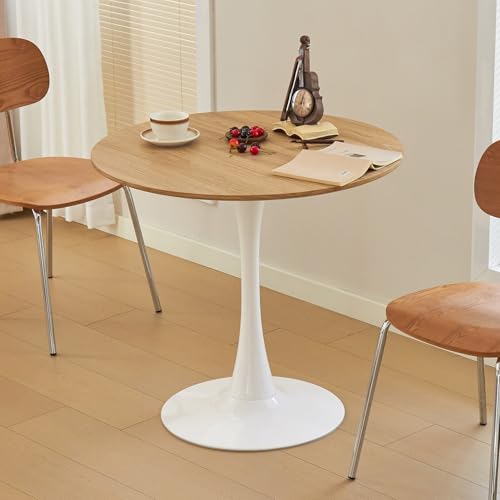
Hansweld Round Dining Table, 31.5" Tulip Table (Faux Oak) | with Thickened Tabletop & Metal Pedestal, Mid Century Modern Bistro Circle Table for Kitchen, Small Places, Dinner Room, Cafe
Check price on AmazonReady to Choose Your Table?
Review the recommended options above, compare the base designs and tabletop materials against your room dimensions, and pick the configuration that fits how you actually dine.
Explore Round Dining Options