
Oval Pedestal Table: The Complete Buying & Design Guide
An oval pedestal table blends graceful curves with a space-saving base. Learn how base types, seating capacity, materials, and room layout work together so you can choose with confidence.
Start ExploringWhy an oval pedestal table deserves your attention: Unlike four-legged tables that put a leg at every corner, an oval pedestal table concentrates support beneath the center of the top. That single decision changes how people sit, how the table fits a room, and how the surface looks in a dining space. This guide walks through the practical details — from single and double pedestal bases to seating math, material choices, and styling — so you can match a table to your room and your routines.
Recommended Oval Pedestal Tables & Matching Pieces
⚠️ AFFILIATE DISCLOSURE: This website contains affiliate links. As an affiliate Associate, we earn from qualifying purchases. If you make a purchase through these links, we may receive a small commission at no additional cost to you. Read our full affiliate policy.

Modway Lippa 48" Mid-Century Modern Dining Table with Oval Top in Walnut
Check price on Amazon
Oval Wood Dining Table for 4-8 with Double Pedestal Base, Kitchen Furniture | Wood kitchen table, oval tabletop, double pedestal base, seating for 4 to 8, dining room table, living room
Check price on Amazon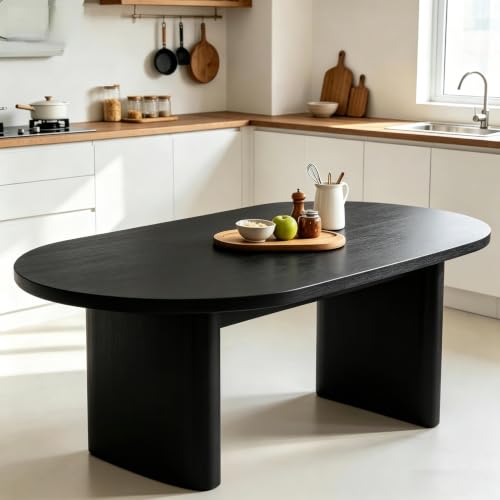
Oval Wood Dining Table for 4-8 with Double Pedestal Base, Kitchen Furniture | Wood kitchen table, oval tabletop, double pedestal base, seating for 4 to 8, dining room table, living room
Check price on Amazon
Avenomora Extendable Walnut Dining Table, 39.3-70.8", Fluted Pedestal Base | Modern Convertible Dining Table With Double-Pedestal Base and Rounded Edges for Kitchen, Flexible Space-Saving Design
Check price on Amazon
Merax Rustic Expandable Pedestal Dining Table, 39" Round to 57" with Extension Leaf, Rubberwood Base, Farmhouse Kitchen Table for 4-6, Walnut
Check price on AmazonWhat Is an Oval Pedestal Table?
An oval pedestal table is a dining table with an elliptical or oval top supported by one or more central pedestals rather than corner legs. The pedestal is usually a thick column or a cluster of columns anchored to a wide, low foot. Because support sits under the middle of the table, the perimeter stays open — no leg interrupts a guest's knees or a chair's tuck-in.
Oval tops trace their lineage to formal dining traditions, where the elongated shape allowed hosts to seat more guests along a graceful curve. The pedestal base adds visual lightness: from most angles, the table appears to float on a single sculpted stem. That combination of soft outline and open underside is what makes the oval pedestal format so appealing in both traditional and modern rooms.
This format differs from a standard four-legged oval table in one key way: chair placement. On a pedestal model, chairs can be spaced evenly around the entire oval, including the rounded ends, without anyone straddling a leg. If you often seat six to eight people and want a flowing, uninterrupted table edge, the pedestal design is worth serious consideration.
Single vs. Double Pedestal: Choosing the Right Base
The base determines stability, seating flexibility, and the table's visual weight. Most oval pedestal tables fall into two families:
Single Pedestal
A single central column works best on smaller ovals — typically those seating four to six. The compact footprint frees up floor space and makes the table easier to reposition. A single pedestal suits breakfast areas, kitchens, and compact dining rooms. For tight footprints, the round-and-oval family of small tables pairs naturally with this base style; a 36-inch round dining table shares the same space-saving logic, while an oval extends the usable surface for serving platters.
Double Pedestal
Two pedestals, connected by a stretcher or a trestle bar, carry longer ovals that seat six to ten. The twin supports distribute weight across the span and reduce wobble at the ends. Double pedestal tables often include a third leg or center support for extra rigidity. If your household regularly hosts larger gatherings, a double base is the sturdier choice. The same load-sharing principle appears in long rectangular formats such as a solid wood extendable dining table, where central support keeps a long top stable.
Quick Comparison
| Base Type | Best For | Seating Range | Footprint Character |
|---|---|---|---|
| Single pedestal | Compact dining rooms, kitchens, breakfast areas | 4–6 | Open and unobtrusive floor plan |
| Double pedestal | Formal dining rooms, large households, entertaining | 6–10 | Stable span, more structural presence |
| Pedestal with stretcher | High-traffic family tables needing extra rigidity | 6–8 | Reinforced base, traditional look |
How Many People Can an Oval Pedestal Table Seat?
Seating capacity depends on the oval's length, width, and the size of your chairs. As a working rule, allow about 24 inches of table edge per person for comfortable dining. The curved ends of an oval are more generous than they look — a well-proportioned end can host a full place setting, not just a decorative chair.
- Small ovals (roughly 42–48 inches long): seat 4 comfortably, with two along each long side.
- Mid-size ovals (roughly 60–72 inches long): seat 6 — two per long side and one at each end.
- Long ovals (roughly 84–96 inches long): seat 8, or 6 with generous elbow room.
- Extra-long ovals (100 inches and above): seat 10 with a double pedestal.
Chair choice matters as much as table length. Slimmer armless chairs let you fit more seats along a curve; wide armchairs need extra spacing. If you plan to mix seating styles, test the arrangement in your room with painter's tape before committing. For a coordinated look, explore dining room table and chairs set for 4 options that pair matched seating with a curved top.
Materials and Finishes: What to Expect by Tier
The material of an oval pedestal table affects durability, maintenance, and the room's mood. Use the tier framework below to compare options on a like-for-like basis rather than by any single figure.
Entry-Level Tier
Engineered wood tops with veneer finishes and metal or composite pedestals. These tables offer good value for their tier and suit first apartments, casual breakfast nooks, and spaces where the table may be replaced as needs change. Expect straightforward assembly and lighter weight.
Mid-Range Tier
Solid wood tops — oak, birch, or acacia — paired with turned or tapered wood pedestals. The mid-range tier typically delivers smoother joinery and a more substantial feel than entry-level options, plus better resistance to daily use. This is the sweet spot for most family dining rooms.
Premium Tier
Hardwoods such as walnut, maple, or mango with hand-finished pedestals, often featuring carved details or fluted columns. Premium-tier tables are built for long-term investment, with thicker tops and reinforced feet. The mango hardwood dining table category illustrates how dense, close-grained wood handles everyday wear while developing character over time.
Luxury Tier
Marble, stone, or exotic-wood tops with custom pedestal designs. Luxury-tier pieces function as statement furniture and often include hand-applied finishes and precision-matched veneers. They require mindful care but reward with a one-of-a-kind presence. If you're drawn to stone surfaces, the marble and stone tables overview explains how to protect and maintain them.
Care Basics
Wood tops benefit from coasters, trivets, and a regular polish routine. Stone tops need sealed surfaces and prompt wiping of acidic spills. Upholstered or painted pedestals should be dusted with a soft cloth. For deeper maintenance guidance, the chair repair and furniture care resources cover refinishing and structural fixes that apply to pedestal bases as well.
Will an Oval Pedestal Table Fit Your Room?
Oval pedestal tables are forgiving in layout because the curved top softens traffic flow and the central base keeps the floor visually clear. Still, measure before you commit.
- Clearance: Aim for at least 36 inches between the table edge and walls or large furniture so chairs can pull out comfortably.
- Walking paths: Leave 42–48 inches along main walkways where people carry plates and platters.
- Room shape: Ovals suit both rectangular and square dining rooms. In narrow rooms, orient the long axis parallel to the longer wall.
- Ceiling height: A pedestal base draws the eye downward and outward, so low-ceiling rooms feel less cramped than with chunky corner legs.
For small spaces, the same open-underneath advantage appears in the wood circle table format — a round top on a compact base. If your dining zone doubles as a kitchen or workspace, consider a table with storage built in, similar to a kitchen island table with storage and seating, which merges prep and dining functions.
Styling an Oval Pedestal Table
The oval shape invites symmetry and softness. A few principles keep the table looking intentional:
Centerpiece Placement
Use a low, elongated centerpiece — a runner of candles, a shallow bowl, or a trailing plant — to follow the oval's curve. Explore dining room centerpieces for arrangements that suit curved tops.
Linens
Oval or elliptical tablecloths drape more gracefully than rectangular ones on a curved edge. A table runner across the short axis adds visual interest without hiding the shape.
Lighting
Hang a fixture centered over the pedestal, not over the foot. The kitchen table chandelier guide explains how to size a pendant for curved tables.
Place Settings
Alternate chargers and plates around the curve for a balanced look. The formal place setting walkthrough covers spacing and layering.
For a cohesive aesthetic, the mid-century modern style pairs beautifully with tapered pedestals and slim chair profiles, while modern minimalist rooms benefit from a single sculptural base and an uncluttered top.
Buying Checklist for an Oval Pedestal Table
- Measure twice: Table length, width, height, and the room's clearance in all directions.
- Confirm base type: Single pedestal for compact rooms; double for six or more seats.
- Check stability: A wide foot or cross-stretcher reduces rocking on uneven floors.
- Match chair height: Standard dining tables sit around 28–30 inches high; counter-height versions need taller seating.
- Review materials: Solid wood for longevity, stone for statement appeal, veneer for lighter weight.
- Plan the finish: Warm neutrals and dark stains both work on ovals; choose based on the room's light.
- Verify assembly and delivery: Pedestal tables often ship in multiple boxes; check what's included.
If you're furnishing a first dining space, the dining area furniture overview helps you sequence purchases. For households that prefer a slightly more compact round format, the round table with chairs comparison provides a useful counterpoint to the oval.
Frequently Asked Questions
Is an oval pedestal table stable enough for daily family use?
Yes, provided the foot is wide and the top is properly attached. Double pedestals with a stretcher offer the most rigidity for larger ovals. On uneven floors, adjustable glides under the foot help eliminate rocking.
Can I use a rug under an oval pedestal table?
Absolutely. Choose a rug that extends at least 24 inches beyond the table edge on all sides so chairs stay on the rug when pulled out. An oval or rectangular rug works best — round rugs can make the seating area feel tight at the ends.
Do oval tables save space compared to rectangular tables?
They don't necessarily use less floor area, but the absence of corner legs improves chair placement and circulation. In narrow rooms, the softened edges can make movement feel easier.
What chair styles pair well with a pedestal base?
Armless chairs tuck neatly under the table and suit the curved edge. Upholstered chairs add softness; wooden spindle or slat-back chairs keep the look lighter. Avoid very wide armchairs if you need to seat six or more.
How do I protect a wood pedestal table top?
Use coasters, felt-backed placemats, and trivets under hot dishes. Wipe spills promptly and reapply a wood conditioner periodically. Avoid placing the table in direct sunlight for extended periods.