
Patio Dining Set with Bench and Umbrella Hole: The Complete Buying Guide
A bench-and-table outdoor dining set with a built-in umbrella hole combines space efficiency, shade, and group seating. This guide explains how to size it, evaluate materials, choose the right bench style, and care for it through every season.
Compare Top PicksWhy this configuration matters: A patio dining set with bench and umbrella hole solves two common outdoor problems at once — seating more people in less footprint, and keeping the table shaded without a freestanding canopy. If you are still comparing broader options, our overview of the outdoor patio dining set covers the full category before you narrow down to this bench-and-shade layout.
What Defines a Patio Dining Set with Bench and Umbrella Hole?
This setup pairs a dining-height outdoor table with at least one bench instead of, or alongside, individual chairs. The umbrella hole is a pre-drilled opening through the tabletop center, usually between 1.5 and 2 inches in diameter, that accepts a patio umbrella pole. Together, the three components create a compact dining zone that works on decks, patios, and poolside areas.
Buyers typically land on this configuration for three reasons: it seats more people per linear foot, benches tuck completely under the table when not in use, and the umbrella hole eliminates the need for a separate umbrella stand that eats floor space.
How to Size the Set for Your Patio
Measurement is the most common failure point in outdoor dining purchases. Work from your available floor area outward, not from the table dimensions inward.
- Seating clearance: leave at least 24 inches behind each seating side so people can push back and stand up. Thirty inches is more comfortable for regular entertaining.
- Umbrella swing zone: an open umbrella extends over the seating area, so confirm the canopy does not collide with railings, walls, or a pergola frame.
- Bench depth: a backless bench needs roughly 12 to 16 inches of depth; a backed bench needs more, similar to a chair.
- Table length: a 60-inch rectangular table generally seats four to six with a bench plus chairs; 72 inches and above handles six to eight.
If your space is tight, our guide to the patio table and chair set explains how mixed seating layouts compare against an all-chair arrangement. For longer tables, the rectangular patio dining table with umbrella hole reference covers tabletop geometry and hole placement in more depth.
Sizing Reference by Group Size
| Group Size | Typical Table Length | Recommended Seating Mix | Best For |
|---|---|---|---|
| 4 people | 48–60 inches | One bench + two chairs | Small decks, couples, starter setups |
| 6 people | 60–72 inches | One or two benches + chairs | Family dining, regular entertaining |
| 8 people | 72–84 inches | Two benches + end chairs | Large patios, extended family meals |
Materials: The Single Biggest Longevity Decision
Outdoor furniture fails from moisture, UV exposure, and temperature cycling. The frame and tabletop material determine how well a set survives those pressures.
Powder-Coated Aluminum
The most common frame material for mid-range and premium sets. Aluminum is light enough to reposition alone and will not rust. Powder coating adds a durable, chip-resistant color layer. Look for fully welded joints rather than bolted connections for rigidity.
Steel
Heavier and often found in entry-level tiers. Steel needs a rust-proof finish and careful inspection of weld points. It performs well when the coating is intact but demands more attention in coastal or humid climates.
Teak and Acacia Wood
Teak is a long-term investment material with natural oils that resist rot. Acacia is a solid choice for the mid-tier, though it benefits from seasonal oiling. Both develop a silver patina outdoors unless treated, which many buyers consider desirable.
High-Density Polyethylene (HDPE)
All-weather lumber that will not splinter, rot, or fade quickly. It is heavier than aluminum and often used for benches specifically. Feature-rich for its class in terms of maintenance-free ownership.
Tabletop Materials
Slatted aluminum and HDPE tops drain water efficiently and stay lighter. Glass tops look refined but need care with impact and heat. Stone and ceramic tops resist scratching but add significant weight — confirm the set is movable if you plan to rearrange seasonally.
Bench Styles and When to Choose Each
The bench is the defining element of this configuration, and the style you pick changes both comfort and access.
- Backless bench: slides fully under the table, maximizes clearance, and works well on narrow patios. Less supportive for long meals.
- Backed bench: more comfortable for extended sitting and gives the set a built-in look. Requires more room behind it and blocks some under-table storage.
- Curved bench: pairs with round or oval tables and improves conversation flow, but is harder to fit against straight railings.
- Storage bench: adds a lift-up seat for cushions and covers. Practical for small patios with no shed space.
- Convertible bench-to-table designs: niche but useful for very tight spaces.
If you are sourcing pieces separately rather than as a matched set, our overview of picnic table with benches layouts explains how bench-to-table ratios affect seating comfort, and poly wood bench options cover the most maintenance-free bench material.
The Umbrella Hole: Details Buyers Overlook
The umbrella hole is a small feature with several practical implications.
- Hole diameter: confirm the opening matches your umbrella pole. Adapter rings are available but add a step.
- Base requirements: most umbrellas need a weighted base beneath the table, sized to the canopy. A large canopy on an undersized base is a wind hazard.
- Table frame reinforcement: well-built tables reinforce the area around the hole. Thin tabletops can crack under lateral umbrella load in wind.
- Umbrella tilt: crank-and-tilt mechanisms let you shade different sides through the day without moving the base.
- Storage: if you close the umbrella frequently, check that the table has a cap or plug for the hole to keep rain and debris out.
For buyers who want shade over a full seating area rather than just the table, the patio table and chairs with umbrella guide compares umbrella-only setups against other shade solutions.
Features Worth Prioritizing
- Welded jointsRigidity matters more than cosmetic detailing on outdoor frames.
- Adjustable feetLeveling glides compensate for slightly uneven patio slabs.
- Cushion drainageQuick-dry foam and mesh backs prevent waterlogging after rain.
- Reinforced umbrella openingA metal collar around the hole resists cracking.
- Stackable or nesting benchesUseful if you occasionally clear the patio entirely.
- UV-resistant finishPrevents color fade on darker frames and cushions.
Care and Seasonal Maintenance
A bench-and-umbrella set needs less upkeep than many buyers expect, provided the routine is consistent.
- Wipe standing water off tabletops and bench seats after rain, especially on wood surfaces.
- Rinse aluminum and HDPE frames monthly with mild soap; avoid abrasive pads on powder coating.
- Oil teak and acacia once or twice per season if you want to preserve the original tone.
- Remove and store cushions during extended wet periods to prevent mildew in seams.
- Close or remove the umbrella in high wind, and check the base weight each season.
- Cover the set during long inactive stretches, but let it dry fully first.
For maintenance routines that apply across outdoor and indoor dining furniture, see our care and maintenance section. If your long-term plan involves refinishing a wooden bench, the refinishing wood table walkthrough covers surface preparation steps that transfer to bench slats.
Common Layout Mistakes to Avoid
- Placing the set against a wall: leaves no room to slide the bench out. Keep at least one long side open.
- Ignoring umbrella shadow: a canopy positioned over the table can shade the bench unevenly. Test the tilt before settling on placement.
- Mixing bench heights with chair heights: confirm all seating is dining height, not counter height, unless you deliberately choose a pub-style table.
- Skipping the clearance check: a set that fits the footprint but blocks a door swing or grill zone becomes frustrating quickly.
How This Set Compares to Alternatives
A bench-and-table set is not the right answer for everyone. Here is a quick relative comparison.
| Setup | Seating Efficiency | Comfort | Best For |
|---|---|---|---|
| Table + bench + umbrella hole | High | Moderate to high with cushions | Compact patios, families, shade-focused dining |
| Table + all chairs | Moderate | High | Entertaining where guests move often |
| Picnic-style table with attached benches | High | Moderate | Casual, rustic, or park-style settings |
| Bar-height set | Moderate | Varies | Poolside, standing socializing |
If you are weighing bench seating against individual chairs more broadly, the patio dining sets with swivel chairs guide covers the comfort-first alternative.
Recommended Patio Dining Sets with Bench and Umbrella Hole
⚠️ AFFILIATE DISCLOSURE: This website contains affiliate links. As an affiliate Associate, we earn from qualifying purchases. If you make a purchase through these links, we may receive a small commission at no additional cost to you. Read our full affiliate policy.

NTC Flexa Extendable Outdoor Dining Table, 63"–94.5" Solid Wood Patio Table for Patio Dining Sets with Umbrella Hole, Seats 6–10, Weather Resistant, Easy Assembly, Natural
Check price on Amazon
Vexwalx Outdoor Dining Set, Aluminum Dining Table Set for 6, Patio Table and Chairs Set with Umbrella Hole, All Weather HDPS Outdoor Table and Chairs for 6 (7-Piece, Gray-Teak)
Check price on Amazon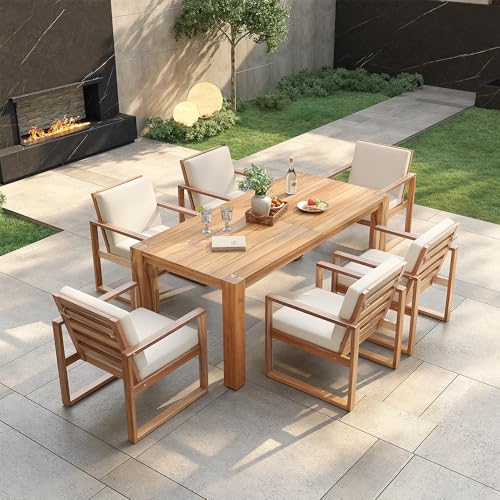
Hlcodca 7 Piece Patio Dining Table Set with Umbrella Hole, Outdoor Acacia Wood Furniture Set with Removable Cushion for Garden, Backyard, Lawn, Poolside (Beige,Light Teak)
Check price on Amazon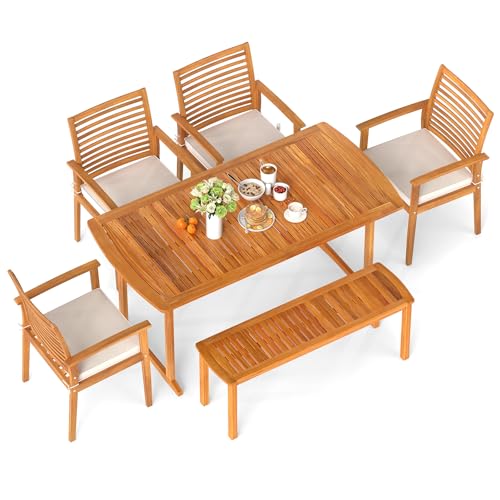
Tangkula 6 Pieces Outdoor Acacia Wood Dining Set, Rectangle Patio Dining Table with Umbrella Hole and 4 Cushioned Chairs and Bench, for Backyard Garden Poolside Deck
Check price on Amazon
Wisteria Lane 7-Pieces Acacia Outdoor Patio Dining Table and Chairs for 6 | Outdoor Dining Set with Umbrella Hole, Patio Dining Furniture Set with Removable Cushions for Backyard, Porch, Deck
Check price on Amazon
Oasbira Outdoor Dining Set, 7 Piece Aluminum Patio Table and Chairs Set, All Weather Patio Dining Furniture Set with Umbrella Hole for Backyard, Deck, Poolside (Charcoal)
Check price on Amazon
Patiomore 5 Piece Patio Dining Set Outdoor Furniture Set, Square Metal Patio Dining Table with Umbrella Hole & 4 Swivel Dining Chairs for Garden Lawn Yard
Check price on AmazonFrequently Asked Questions
What size patio dining set with a bench fits a small deck?
For a small deck, look for a compact rectangular table seating four to six people, often measuring around 60 to 72 inches in length, paired with a single backless or backed bench. Measure your usable deck space and leave at least 24 to 30 inches of clearance behind each seating side for comfortable movement.
Is a bench more practical than chairs for an outdoor dining set?
A bench is practical because it seats more people per linear foot and tucks neatly under the table, which saves space. Chairs offer more individual comfort and easier access, so many buyers combine one bench with chairs for a balanced setup.
What does an umbrella hole actually require from my patio table?
An umbrella hole is a pre-drilled opening, typically 1.5 to 2 inches in diameter, that runs through the center of the tabletop. It works best with a base or weighted stand beneath the table, and you should confirm the hole diameter matches your umbrella pole before purchase.
How do I protect a bench and table left outside all season?
Choose weather-resistant materials such as powder-coated aluminum, teak, or high-density polyethylene. Use fitted covers during long inactive periods, wipe up standing water, and apply manufacturer-recommended treatments to wood surfaces each season.
Final Buying Checklist
Before you commit, run through these points in order.
- Measure the patio footprint and confirm 24 to 30 inches of clearance on every seating side.
- Decide on bench style — backless for space, backed for comfort, storage for small patios.
- Confirm the umbrella hole diameter matches your pole and that a weighted base fits beneath the table.
- Match material to climate: aluminum or HDPE for humid and coastal areas, teak for long-term durability.
- Check joint construction and coating quality rather than relying on appearance alone.
- Verify cushion drainage and UV resistance if cushions are included.
- Plan storage for the umbrella and cushions during off-season months.
Once these are settled, the choice becomes straightforward — and the product comparison above gives you a starting point for matched sets that meet these criteria.