
Reclaimed Wood Dining Table: Complete Buying & Design Guide
Everything you need to know before investing in a reclaimed wood dining table — from timber sourcing and construction to sizing, finishes, care, and styling for a character-rich dining room.
Explore the GuideWhy reclaimed wood? A reclaimed wood dining table brings history, texture, and sustainability to the heart of your home. Each plank carries a story — old barn beams, factory flooring, or salvaged bridge timbers — giving your dining space warmth and authenticity that new timber simply cannot replicate. This guide walks you through the key decisions so you can choose a table that fits your lifestyle and design vision.
What Exactly Is a Reclaimed Wood Dining Table?
A reclaimed wood dining table is crafted from timber that has already served a previous life — typically sourced from decommissioned barns, warehouses, factories, ships, or historic buildings. Instead of being discarded, the wood is cleaned, de-nailed, kiln-dried, and re-milled into table tops and bases. The result is a piece of furniture with distinctive grain patterns, nail holes, knots, and weathered textures that are impossible to fake authentically.
Unlike newly harvested timber, reclaimed wood is prized for its environmental advantages. It diverts waste from landfills, reduces demand for freshly cut lumber, and often features tighter grain and greater density due to the age and slow growth of old-growth trees. If sustainability matters to you, this category is one of the most responsible choices in dining furniture today.
Common Types of Reclaimed Wood for Dining Tables
Barn Wood
Salvaged from old barns, this wood often shows deep weathering, nail holes, and a rugged patina. It pairs beautifully with farmhouse and rustic interiors. Oak and pine are the most common species found in barnwood.
Factory & Warehouse Timber
Old factory flooring and structural beams provide dense, hard-wearing wood with industrial character. Maple, oak, and heart pine are typical. The tight grain makes these tops resistant to everyday wear.
Reclaimed Teak
Often salvaged from old boats, bridges, or colonial buildings, reclaimed teak is naturally rich in oils and highly durable. It resists moisture well and develops a beautiful honey-brown tone over time.
Salvaged Pine & Fir
Softer than oak or teak, reclaimed pine and fir offer a warmer, more relaxed look. They are common in farmhouse tables and often feature prominent knots and natural checking that add rustic charm.
Reclaimed Elm
Elm from old buildings or water towers delivers dramatic grain patterns and a distinctive golden-brown hue. It is a favorite for statement tables in mid-range and premium tiers.
Mixed Species
Some makers combine multiple reclaimed species in a single top, creating a patchwork aesthetic. This approach maximizes material reuse and produces one-of-a-kind tabletops with rich visual variation.
Key Factors When Choosing a Reclaimed Wood Dining Table
1. Construction & Joinery
The way a table is built determines how long it will last. Look for mortise-and-tenon joinery or dovetail joints on the base and apron — these are hallmarks of durable construction. Avoid tables held together primarily with screws or staples, which can loosen over time. For the tabletop, check whether planks are joined with glue and dowels, or whether the maker uses a breadboard-end design that allows the wood to expand and contract with humidity changes.
2. Wood Grade & Character
Reclaimed wood is graded informally by character level. High-character boards show nail holes, knots, checking, and color variation — ideal if you want maximum rustic personality. Cleaner reclaimed boards are more uniform and suit transitional or modern farmhouse spaces. Decide how much "story" you want visible before you start comparing options.
3. Finish & Protection
The finish is critical for a dining table because it faces daily spills, heat, and scratching. Common options include:
- Oil-based or hardwax oil finishes — penetrate the wood and enhance natural grain; can be spot-repaired easily.
- Polyurethane or conversion varnish — form a protective film on top; more resistant to moisture but harder to repair if damaged.
- Natural / unfinished — requires regular oiling; best for those who enjoy hands-on maintenance and want the most authentic feel.
Whichever finish you choose, confirm that it is food-safe and suitable for dining use. A well-finished top should resist rings from glasses and wipe clean without fuss.
4. Sizing & Seating Capacity
Measure your space carefully before committing. As a rule of thumb, allow at least 30 inches (76 cm) of clearance per diner along the table edge, and 36 inches (91 cm) of space between the table and walls or other furniture for comfortable chair movement. A standard 6-seater table typically runs 60–72 inches long; 8-seaters need roughly 84–96 inches. If your room is tight, consider a rectangle small dining table or a oval wooden dining table to soften traffic flow.
5. Base Style & Stability
Leg styles range from heavy farmhouse turned legs to sleek metal T-bases and pedestal designs. A pedestal dining table base frees up legroom and is excellent for smaller rooms, while a pedestal wooden table pairs beautifully with reclaimed tops. Always check the base's weight rating and ensure it is stable enough to prevent wobble on uneven floors.
Reclaimed Wood Dining Table Quality Tiers
Reclaimed wood tables span a wide range of craftsmanship and material quality. Rather than discussing numbers, here is a tier-based framework to help you compare options consistently.
| Tier | Typical Characteristics | Best For |
|---|---|---|
| Entry-level | Mixed reclaimed species, simpler joinery, thinner tops (around 1 inch), basic oil or lacquer finish. Character is present but less pronounced. | First apartments, casual dining nooks, and buyers testing the reclaimed aesthetic. |
| Mid-range | Solid reclaimed oak or pine tops (1.25–1.5 inches thick), mortise-and-tenon joints, breadboard ends, and a durable hardwax oil finish. Consistent character with fewer filler pieces. | Family dining rooms and open-concept kitchens where daily use is expected. |
| Premium | Single-species old-growth timber, thick tops (1.75–2 inches), hand-selected boards with deliberate character placement, and premium joinery throughout. | Design-conscious households wanting a statement table with heirloom potential. |
| Luxury / heirloom tier | Rare reclaimed species (old-growth teak, elm, or heart pine), custom dimensions, hand-finished surfaces, and artisan joinery. Each table is effectively one of a kind. | Formal dining rooms, custom homes, and collectors of fine furniture. |
Tiers reflect relative craftsmanship and material quality, not absolute product rankings. A well-built mid-range table can outperform a poorly executed premium one.
Advantages and Trade-Offs of Reclaimed Wood Tables
✔ Advantages
- Unique character — no two tables are identical
- Environmentally responsible choice
- Often denser, more stable old-growth timber
- Warm, inviting aesthetic that suits many styles
- Repairable surfaces; can be refinished over time
✘ Trade-Offs
- Natural imperfections (nail holes, cracks) may require acceptance
- Heavier than many new-wood tables
- Color and grain can vary significantly between planks
- Requires periodic oiling or refinishing depending on finish
- Availability of specific species can be inconsistent
Caring for Your Reclaimed Wood Dining Table
Proper care keeps a reclaimed table looking its best for decades. Here are practical routines:
- Daily: Wipe with a soft, slightly damp cloth. Avoid soaking the surface — reclaimed wood is porous where nail holes and checks exist.
- Weekly: Dust with a microfiber cloth. For oil-finished tables, apply a thin coat of hardwax oil every few months.
- Spills: Blot immediately. Use coasters and trivets for hot dishes and beverages to prevent rings and heat marks.
- Humidity: Keep indoor humidity between 35% and 55% to minimize expansion and contraction. Avoid placing the table near radiators or air vents.
- Sunlight: Rotate decor and use window treatments to prevent uneven fading from direct sunlight.
For deeper restoration tips, see our guide on refinishing a wood table and refinishing tables generally.
Styling Your Reclaimed Wood Dining Table
A reclaimed wood top is a strong visual anchor — keep the surrounding palette relatively calm so the table's character can shine. Here are a few pairing ideas:
- Farmhouse: Pair with parson dining chairs in linen slipcovers and a reclaimed wood bench for a relaxed, family-friendly look.
- Industrial: Combine a heavy reclaimed top with a metal pedestal table base and padded bar stools at a nearby island.
- Modern rustic: Choose sleek padded dining chairs in a neutral fabric to contrast the rugged tabletop.
- Eclectic: Mix rattan dining chairs with a reclaimed table for a warm, textural blend.
- Tabletop decor: Use placemats in natural fibers and a simple ceramic centerpiece to avoid visual clutter.
If your space leans toward a more polished wood look, compare this category with our guide to real wood dining tables and rectangular wooden dining tables.
Recommended Reclaimed Wood Dining Tables & Matching Pieces
⚠️ AFFILIATE DISCLOSURE: This website contains affiliate links. As an affiliate Associate, we earn from qualifying purchases. If you make a purchase through these links, we may receive a small commission at no additional cost to you. Read our full affiliate policy.

LKJephalotrope Industrial Reclaimed Wood Dining Table 63 Inches | Rustic industrial table crafted from reclaimed timber with steel legs, suitable for kitchen or dining room spaces.
Check price on Amazon
DM Furniture 76" Reclaimed Wood Trestle Dining Table for 6-8 Walnut | FSC, Dining Room, Kitchen, Restaurant, Baluster Legs, Vintage Farmhouse style, Anti-wobble Stretcher, Floor-protective Pads
Check price on Amazon
DM Furniture Rustic Farmhouse Dinning Table, Reclaimed Solid Wood Kitchen & Dining Room Table for 4-6 People, 59" Wooden Rectangular Kitchen Table with Trestle Base for Dining/Kitchen Room, Walnut
Check price on Amazon
DM Furniture 76" Reclaimed Wood Dining Table for 6-8 Weathered Brown | FSC, Dining Room, Kitchen, Restaurant, Baluster Legs, Vintage Farmhouse style, Anti-wobble Stretcher, Floor-protective Pads
Check price on Amazon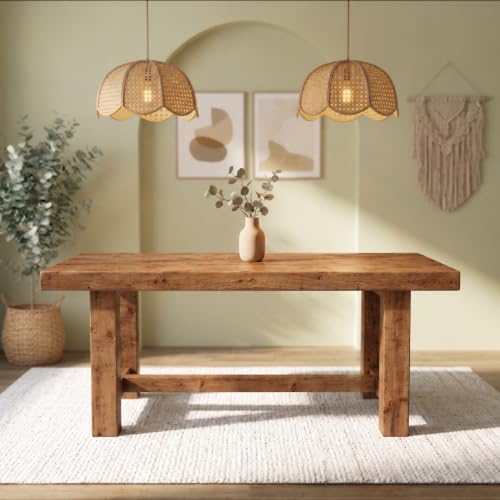
TRIBEWOOD 63-Inch Solid Wood Rectangular Dining Table for 4-6 People | Farmhouse Kitchen Table with Trestle Base, Real Wood Dining Tables for Dining Room,Apartment ,Elegant Details, Easy Assembly
Check price on Amazon
Signature Design by Ashley Extendable Dining Table, Grayish Brown, Seats 8 | Wood, Acacia veneer, Engineered wood, Rectangular farmhouse style, 2 extension leaves, Moriville Series
Check price on Amazon
DM Furniture 47" Round Dining Table with Wooden Pedestal Base, Reclaimed Pine Wood Dinner Table for 4, Heavy Duty Pedestal Table for Kitchen/Dining Room/Living Room/Restaurant, Walnut
Check price on AmazonFrequently Asked Questions
Is reclaimed wood durable enough for daily dining use?
Yes — when properly finished and maintained, reclaimed wood tables are highly durable. Old-growth timber is often denser than new wood, and a quality hardwax oil or polyurethane finish protects against spills and scratches. Regular oiling keeps the surface resilient.
Will the table have cracks and nail holes?
Most reclaimed tables retain some natural imperfections such as nail holes, checking, and color variation — that is part of their charm. If you prefer a cleaner look, ask for "clean-grade" reclaimed boards, which are selected for more uniform appearance.
How do I prevent wobbling on uneven floors?
Choose a base with adjustable leveling feet, or add felt pads of varying thickness under the legs. A sturdy pedestal or trestle base generally offers more stability than thin four-leg designs.
Can I use a reclaimed wood table outdoors?
Standard indoor reclaimed tables are not intended for full outdoor exposure. If you want an outdoor dining surface, look for weather-resistant finishes or consider a dedicated patio dining table designed for the elements.
How often should I re-oil the table?
For oil-finished tables, reapply a thin coat every 3–6 months depending on use. If water stops beading on the surface, it is time to re-oil. Polyurethane-finished tables generally need less frequent maintenance but can be refinished if scratched.
Ready to Bring Home a Reclaimed Wood Dining Table?
Explore our curated selection of reclaimed wood dining tables and matching seating above, or continue reading our related guides to refine your choice.
View Recommended Tables